





How Cooling Systems Affect Electric Power Transformer Life and Efficiency
How Cooling Systems Affect Electric Power Transformer Life and Efficiency
Cooling systems directly determine whether an electric power transformer delivers its expected efficiency, overload capability, insulation life, and operating reliability.
For technical evaluators, cooling design should be assessed as a core performance factor, not a secondary accessory added after electrical ratings are selected.
A transformer may meet voltage, capacity, and loss specifications on paper, yet still face accelerated aging if its heat removal capacity is inadequate.
Cooling systems play a decisive role in the service life, efficiency, and operational reliability of an electric power transformer. For technical evaluators, understanding how oil, air, and advanced cooling configurations control winding temperature is essential when assessing thermal performance, insulation aging, load capability, and lifecycle cost. This article examines the practical impact of transformer cooling design on long-term power system value.
Why Temperature Is the Critical Transformer Life Variable
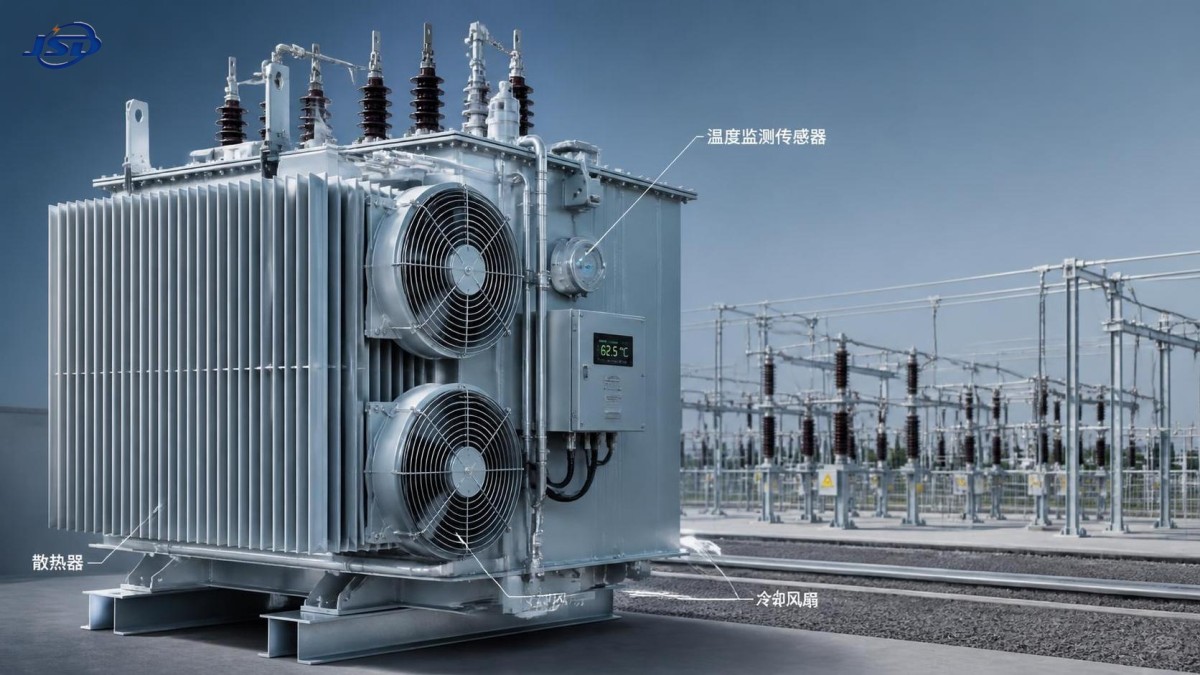
Every electric power transformer produces heat during normal operation. Core losses create relatively constant heat, while winding losses rise significantly as load current increases.
That heat must travel from conductors and magnetic steel through insulation, oil, tank surfaces, radiators, and finally into surrounding ambient air.
If this thermal path is restricted, the hottest point inside the winding rises faster than the externally measured oil temperature suggests.
Hot-spot temperature matters because cellulose insulation ages chemically. As insulation loses mechanical strength, it becomes less able to withstand short circuits, vibration, and thermal stress.
Industry practice commonly recognizes that insulation aging accelerates sharply with elevated temperature. Even modest sustained overheating can materially reduce expected transformer life.
Therefore, a cooling system is not merely intended to prevent immediate failure. Its primary value is preserving insulation condition throughout decades of operation.
Technical evaluators should distinguish between top-oil temperature and winding hot-spot temperature. The latter is generally more relevant when judging insulation aging risk.
A unit operating within an acceptable top-oil limit may still experience excessive hot spots if oil circulation, winding duct design, or radiator performance is poor.
Heat also affects oil quality. Higher oil temperatures accelerate oxidation, increase acidity, promote sludge formation, and degrade heat-transfer performance over time.
This creates a damaging cycle: degraded oil transfers heat less effectively, which raises operating temperature and accelerates additional oil and insulation deterioration.
For long-life distribution and power applications, thermal performance must therefore be evaluated as a combined insulation, oil, mechanical, and loading issue.
How Cooling Methods Change Operating Capability
Transformer cooling classifications identify the insulating medium and the method used to circulate that medium and reject heat to the environment.
For oil-immersed equipment, common configurations include ONAN, ONAF, OFAF, and OFWF. Each represents a different balance of simplicity, cost, capacity, and controllability.
ONAN means oil natural, air natural. Heat causes oil to circulate naturally, while radiators release heat through natural convection and radiation.
Because it has no cooling fans or oil pumps, ONAN construction is mechanically simple and usually offers strong reliability with limited maintenance requirements.
However, natural cooling has a finite thermal capability. When loading rises or ambient temperature increases, oil and winding temperatures can rise rapidly.
ONAF adds forced-air cooling through radiator fans. The oil still circulates naturally, but fan-driven air significantly improves radiator heat rejection.
This arrangement is widely used where an electric power transformer needs higher intermittent capacity without the complexity of pumped-oil cooling equipment.
Fans can be staged according to oil temperature or load level. This reduces auxiliary power consumption during light-load periods while supporting demand peaks.
OFAF uses forced oil circulation and forced air cooling. Pumps move oil through the cooling circuit, reducing thermal resistance around high-loss winding regions.
Such systems support larger ratings and more demanding duty cycles, but they introduce additional components requiring monitoring, maintenance, and failure contingency planning.
OFWF systems use forced oil and water cooling. They provide high heat-transfer capability where water infrastructure is available and installation conditions justify greater complexity.
Dry-type transformers follow different cooling principles, commonly using natural air or forced air. Their thermal margins, enclosure design, and ambient conditions require separate evaluation.
Efficiency Depends on Cooling, but Not in a Simple Way
Cooling cannot eliminate transformer losses. Core losses and copper losses remain governed primarily by magnetic design, conductor size, material quality, and load level.
Yet cooling substantially influences the temperature at which those losses occur, which affects resistance, auxiliary consumption, and usable operating capacity.
Winding resistance increases as copper temperature rises. Higher resistance produces higher load losses, so inadequate cooling can slightly worsen efficiency under heavy loading.
The difference may appear modest for one operating hour, but continuous industrial, renewable, and infrastructure loads can make lifetime energy costs meaningful.
Forced cooling also consumes energy. Fans, pumps, controls, and monitoring systems create auxiliary losses that must be included in a realistic efficiency assessment.
Accordingly, the best solution is not automatically the most powerful cooling system. It is the configuration matched to load profile, ambient conditions, and reliability priorities.
An oversized forced-cooling package may add capital expense and parasitic consumption without creating proportional economic value for a lightly loaded transformer.
Conversely, selecting only natural cooling for a transformer with recurring peak demand can limit available capacity and increase thermal aging costs.
Technical evaluations should compare total ownership performance, including no-load loss, load loss, cooling auxiliary energy, maintenance demand, and expected insulation life.
For transformers serving variable renewable generation, cooling control should also reflect rapid loading changes rather than relying solely on a fixed average-load assumption.
What to Check When Assessing Thermal Design
Start with the actual load profile. Annual average load alone is insufficient because short, frequent, or seasonal peaks can determine winding hot-spot exposure.
Request projected hourly or interval load data where possible. This reveals whether the transformer needs continuous capacity, cyclic capacity, or occasional emergency overload capability.
Ambient temperature is equally important. A cooling system proven in a mild climate may provide inadequate temperature margin in high-temperature outdoor installations.
Evaluate maximum ambient temperature, solar exposure, site elevation, ventilation restrictions, dust concentration, and proximity to walls or neighboring heat sources.
Transformer placement affects radiator performance. Restricted air paths can recirculate hot air, reducing the temperature difference needed for effective heat dissipation.
For outdoor oil-filled units, installation clearances should support unobstructed airflow. A stated minimum distance of 1.5 meters from walls is often operationally relevant.
Review thermal test data rather than relying only on a cooling designation. Temperature-rise results provide stronger evidence of how the completed design behaves at rated conditions.
Also verify the applicable insulation thermal class, guaranteed top-oil rise, average winding rise, calculated hot-spot allowance, and permissible ambient temperature range.
Cooling redundancy deserves specific attention for critical loads. A fan or pump failure should not immediately force an unplanned outage before operators can respond.
Ask whether the transformer can continue operating at a reduced rating after loss of one fan bank, oil pump, or control circuit.
Monitoring provisions are another decision point. Oil temperature indicators, winding temperature indicators, fan controls, alarms, and remote communication improve operational visibility.
For data centers, hospitals, petrochemical plants, and public facilities, remote thermal alarms can be as important as the nominal cooling capacity itself.
Oil Choice Influences Cooling and Fire-Risk Decisions
Insulating liquid selection changes thermal performance, environmental considerations, fire safety, and maintenance strategy. Mineral oil remains widely used because of established supply and operating experience.
Natural ester liquids, including FR3 vegetable oil, offer a different performance profile. They can provide higher fire points and strong moisture tolerance for cellulose insulation.
Natural ester fluid has higher viscosity than conventional mineral oil, particularly at lower temperatures. Designers must account for this when sizing radiators and oil circulation paths.
In a properly engineered transformer, ester fluid can support long insulation life while improving fire-safety positioning for installations near sensitive facilities or dense urban areas.
Evaluators should avoid treating liquid selection as an isolated environmental preference. The fluid, thermal design, insulation system, and cooling arrangement must work together.
They should also confirm that temperature sensors, gaskets, paint systems, oil-processing procedures, and maintenance guidance are compatible with the selected insulating liquid.
Cooling Design and Overload Capability
Overload capability is often misunderstood as a permanent capacity increase. In reality, it is a time-limited thermal allowance that consumes part of the transformer’s aging margin.
A well-designed cooling system can help manage short-term overloads by limiting oil and winding temperature rise during demand peaks or contingency operating conditions.
However, acceptable overload depends on initial oil temperature, ambient temperature, load duration, insulation condition, and the transformer’s prior thermal history.
For example, copper-wound 33 kV equipment may permit short-term loading up to 150% of rated capacity for no more than two hours.
That capability requires active temperature monitoring, including confirmation that oil temperature remains at or below 95 degrees Celsius under the applicable operating conditions.
Technical evaluators should require a documented loading guide or thermal calculation. A generic overload statement without ambient and temperature assumptions is not sufficient.
They should also determine whether fans start automatically before the critical threshold is reached. Delayed fan operation can reduce the practical value of the overload allowance.
Where loading peaks are predictable, staged forced-air cooling may offer a cost-effective approach that preserves normal operating efficiency while providing reserve thermal capacity.
Applying These Principles to 33 kV Distribution Projects
In 33 kV distribution networks, cooling decisions affect more than the transformer itself. They influence service continuity, equipment footprint, fire protection, and expansion planning.
A 33 kV to 400 V transformer serving industrial processes may experience a substantially different thermal duty from one supplying a rural feeder or commercial facility.
Mining, petrochemical, renewable-energy, and urban infrastructure projects commonly need detailed evaluation of cyclic loading, high ambient exposure, and reliability consequences.
Hospitals and data centers require another level of scrutiny because power continuity has direct safety or business-critical implications during fan failures and peak demand.
Jinshida’s 33kV Oil-Immersed Power Distribution Transformer range covers capacities from 30 kVA to 25,000 kVA for 33 kV to 0.4 kV distribution applications.
Its configuration can use FR3 vegetable oil and is designed for applications including industrial plants, renewable-energy grid connections, public facilities, and urban distribution conversion.
When reviewing such equipment, evaluators should compare guaranteed losses, cooling configuration, protection requirements, site conditions, and the expected duty cycle as one package.
An efficiency value exceeding 99% can be attractive, but it should be interpreted alongside temperature-rise performance and the auxiliary energy required by the specified cooling arrangement.
For projects requiring high enclosure protection, an IP65 requirement should be considered carefully because enclosure design can affect ventilation and external heat rejection.
Maintenance Signals That Protect Thermal Performance
Cooling performance can decline gradually, often before operators observe a serious temperature alarm. Preventive inspection is therefore essential for maintaining design thermal capability.
Radiator surfaces should remain clean and unobstructed. Dust, vegetation, corrosion, blocked airflow, and damaged fins reduce the effective area available for heat transfer.
Fan operation should be verified through functional tests, not only by checking that automatic controls are enabled. Direction, vibration, noise, and current draw matter.
For pumped systems, operators should monitor pump performance, oil-flow indications, filter condition, leak points, and backup supply arrangements for cooling auxiliaries.
Oil testing can identify moisture, acidity, dissolved gases, and degradation products that may indicate overheating or reduce the oil’s long-term heat-transfer effectiveness.
Trend data is more valuable than isolated readings. A slowly increasing temperature rise at similar load and ambient conditions can reveal declining cooling performance early.
Thermal imaging can also help identify abnormal radiator temperatures, poor electrical connections, fan issues, or localized tank hot spots during inspections.
Conclusion: Select Cooling for the Real Duty, Not Only the Nameplate
The cooling system of an electric power transformer is central to efficiency, insulation preservation, loading flexibility, and overall lifecycle cost.
Natural cooling can provide dependable, low-maintenance service where loads and ambient conditions are moderate. Forced cooling adds capacity but also adds auxiliary energy and maintenance obligations.
The strongest technical decision combines thermal test evidence, realistic load analysis, ambient assessment, insulation and oil selection, cooling redundancy, and monitoring capability.
For critical 33 kV projects, evaluators should confirm that the transformer can control winding hot-spot temperature throughout normal, peak, and contingency operating conditions.
That approach turns cooling from a catalog specification into a measurable asset for longer transformer life, stable efficiency, and dependable power delivery.

Get a Quote
Regardless of whether you require general advice or specific support, we are happy to help you.
Send Us Your Inquiry Today

Jinshida Electric remains committed to contributing to global energy development through professional manufacturing and superior service.