





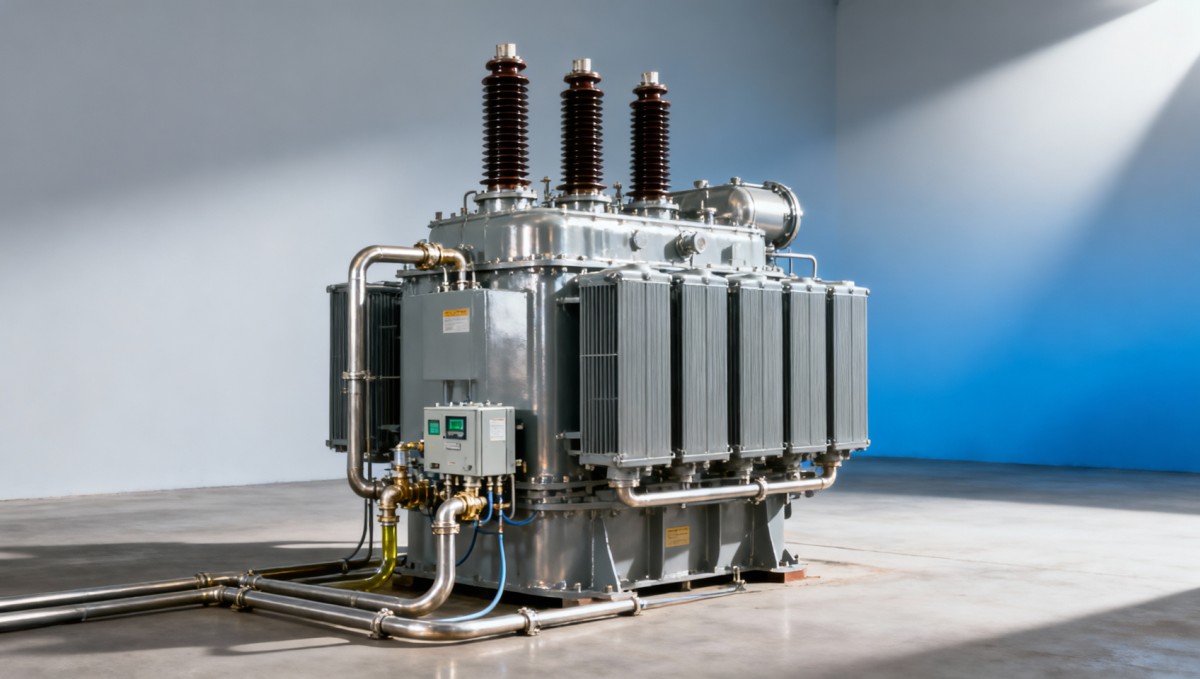
What rising dissolved gas levels mean in a 110 kV transformer
Rising dissolved gas levels in a 110 kV transformer mean that gas is accumulating in the insulating oil, but they do not establish the cause or severity on their own. The immediate question is whether the change reflects an active internal fault, a change in operating conditions, or a sampling issue. A confirmed, accelerating rise deserves more attention than a single elevated reading that has remained stable for years.
A useful assessment combines the individual gases, their rates of change, operating history, and other condition indicators. The practical decision is whether to repeat the sample, investigate cooling or loading, intensify monitoring, or escalate for an urgent operating decision. Treating every increase identically can lead to unnecessary outages or delayed intervention.
Establish whether the increase is real
Before interpreting a new DGA report, compare it with previous results from the same oil compartment. Confirm the sampling point, dates, units, laboratory method, and any recent oil treatment. A main-tank sample and a sample from a separate on-load tap changer compartment describe different operating environments and should not be combined into one trend.
Sampling and handling can affect results. Air bubbles, an inadequately flushed sampling connection, unsuitable containers, or poor sealing can alter the measured gas composition. An unexpected step change should trigger a review of sample quality and, where operating conditions permit, a prompt repeat sample using the established procedure.
Check whether the apparent increase exceeds the normal variation of the measurement method. Percentage changes can look dramatic when the original concentration was close to the detection limit. A ratio calculated from two very small gas concentrations may also suggest a fault category without providing a reliable diagnosis.
Recent maintenance can interrupt the trend. Oil replacement, topping up, vacuum processing, and degassing change gas concentrations without necessarily changing the underlying condition. After treatment, gases retained in paper insulation may redistribute into the oil. Establish a new baseline while retaining the earlier history.
Read the gas pattern before assigning a fault
Dissolved gas analysis detects products formed as oil and solid insulation undergo electrical or thermal stress. Different stresses tend to produce different gas patterns, but the patterns overlap. Use them to form a working explanation and choose follow-up checks, rather than treating one gas as proof of a particular defect.
New or rapidly increasing acetylene in main-tank oil merits prompt escalation. Normal switching can generate acetylene in a separate oil-filled tap changer compartment, so establish where the gas originated. A possible tap changer contribution needs investigation; it should not automatically dismiss an abnormal main-tank result.
Carbon oxides also require context. Carbon monoxide alone does not establish severe paper damage, and the carbon dioxide-to-carbon monoxide ratio is not a standalone measure of insulation condition. Where cellulose deterioration is suspected, combine DGA with suitable aging indicators, such as furan analysis where applicable, and the transformer’s insulation and oil-treatment history.
Gas-ratio methods and graphical tools can help classify a valid pattern. Their usefulness falls when concentrations are too low, multiple processes overlap, or oil processing has disturbed the gas balance. A diagnostic label is stronger when it agrees with the trend and operating evidence.
How fast are the gases rising?
Concentration describes the accumulated gas present in the sampled oil. Rate of change helps assess whether a process may be active. A transformer with a longstanding, stable gas inventory presents a different concern from one developing a rapid increase from a low baseline.
For an initial trend calculation, subtract the previous concentration from the current concentration and divide by the elapsed time. Use consistent units, such as parts per million per day. Calculate individual gas rates as well as any aggregate measure used in the maintenance program. A total can conceal a significant change in one diagnostic gas.
Two samples provide an average rate over one interval; they do not reveal when the increase occurred. It might have developed steadily or during a short event. Further samples or suitable online monitoring can show whether the trend is continuing or accelerating. Interpret those results alongside the timing of load changes, alarms, and disturbances.
A concentration rate in ppm per day is not the same as the total volume of gas produced. Oil volume and gas distribution matter when comparing transformers. Different designs, preservation systems, ages, and operating histories also limit direct comparisons between units.
There is no universal gas concentration that makes every 110 kV transformer safe or unsafe. The voltage rating alone cannot define an action threshold. Apply the asset’s established DGA criteria, manufacturer guidance, and relevant diagnostic framework, then assess the actual trend and supporting evidence.
Match the DGA timeline to operating conditions
Place sampling dates and gas trends alongside load, ambient temperature, top-oil temperature, available winding-temperature indications, cooling status, and tap changer activity. The relationship between these records often makes the next investigation clearer.
If thermal gases begin increasing during heavier loading, inspect whether fans and pumps start correctly and whether the required cooling stages are available. Check radiator condition, valve positions, control circuits, and temperature-sensor plausibility. A cooling problem can increase thermal stress without an electrical defect being the initial cause.
Normal indicated temperatures do not exclude a localized hot spot. A defective internal connection, circulating current, or other concentrated heat source may generate gases while bulk oil temperature remains within its usual range. Continued gas growth at ordinary load deserves investigation even when the temperature display appears normal.
Where gases track demand peaks, load management may reduce thermal stress while the cause is investigated. At an industrial park or renewable-energy site, a 1MW/2MWh Liquid Cooling Container Energy Storage System can support peak-demand management if its connection point, dispatch strategy, and available capacity actually reduce loading through the affected transformer. Its battery cooling system manages battery temperature; it does not cool transformer oil or repair an internal fault. Any load-relief proposal therefore needs a site-specific electrical assessment.
Also review through-faults, protection operations, unusual switching events, and recent work. DGA can indicate a developing problem even without a protection trip. Conversely, an abnormal protection event requires investigation even if the next oil sample shows only a modest change.
Choose the response according to the evidence
The response should reflect the credibility of the result, the suspected mechanism, and the consequences of continued operation. Avoid allowing a routine sampling schedule to determine the urgency of an abnormal trend.
- A small, isolated change with no supporting abnormality: review sampling quality and measurement variation, then arrange confirmation at an interval appropriate to the suspected condition.
- A repeatable thermal-gas increase associated with loading: investigate cooling performance and operating duty, consider authorized load adjustments, and shorten the monitoring interval.
- Persistent growth with no clear operating explanation: escalate for engineering assessment and select targeted diagnostics based on the gas pattern and transformer history.
- Rapid acceleration, new main-tank acetylene, or gas growth accompanied by protection or physical abnormalities: obtain an urgent operating assessment under the site’s abnormal-condition procedure. An outage may be necessary.
Do not delay an urgent operating response simply to obtain another routine laboratory result. Gas relay operation, sudden-pressure indications, abnormal noise, or other signs of an internal fault can change the decision immediately. A repeat sample supports diagnosis; it does not override protection evidence.
Sampling intervals should answer a specific question: could a consequential change occur before the next result becomes available? Stable historical gas levels may justify routine trending. A suspected active fault needs closer observation, with laboratory turnaround included in the decision.
Online DGA can improve visibility where the trend is changing quickly or outages carry significant consequences. Check which gases the monitor measures and how its readings compare with laboratory results. A single-gas monitor can reveal a change but offers less diagnostic detail than a multi-gas system. Establish a consistent comparison before interpreting differences between instruments as transformer deterioration.
Use follow-up tests to resolve a specific uncertainty
Additional testing is most useful when it addresses a working hypothesis. For a suspected thermal problem, review cooling operation, temperature records, load balance, and accessible external connections. Thermography may identify external heating, but it cannot exclude a fault inside the tank.
If electrical activity is suspected, specialist partial-discharge investigation or other electrical diagnostics may be appropriate. The method depends on the suspected defect, available access, and whether the unit remains energized. Plan offline tests around the evidence; a broad test package is less useful than a focused investigation that can change the operating decision.
When paper-insulation involvement is a concern, examine moisture and aging indicators alongside DGA. Moisture distribution between oil and paper changes with temperature, so one oil-moisture result should not be treated as a direct measurement of paper condition.
Oil filtration or degassing can lower measured concentrations, but a lower reading after treatment does not demonstrate that the gas-producing source has disappeared. Preserve the pre-treatment results, document the work, and monitor for renewed generation. Otherwise, treatment can obscure the trend needed to judge whether corrective work succeeded.
Make the next action clear in the condition report
A useful report connects the evidence to a decision. Record the sampled compartment, comparable historical results, individual gas changes, sampling limitations, operating conditions, and relevant alarms. State the suspected mechanism and the evidence that supports it, while identifying any competing explanation that would change the response.
Then specify who reviews the next result, when it is due, and which changes trigger escalation. Attach the recent DGA history and operating timeline when seeking support from the transformer manufacturer or diagnostic specialist. “Continue monitoring” becomes actionable only when the interval and decision criteria are clear.
The immediate task is to establish whether gas generation is active and how much time is available to investigate. Confirm the trend, identify the most consequential gas pattern, connect it with operating evidence, and choose a response that can detect deterioration before the next operating decision is due.

Get a Quote
Regardless of whether you require general advice or specific support, we are happy to help you.
Send Us Your Inquiry Today

Jinshida Electric remains committed to contributing to global energy development through professional manufacturing and superior service.