





Copper-Winding Distribution Transformers for Retrofit Projects: Cost, Losses, and Service Life
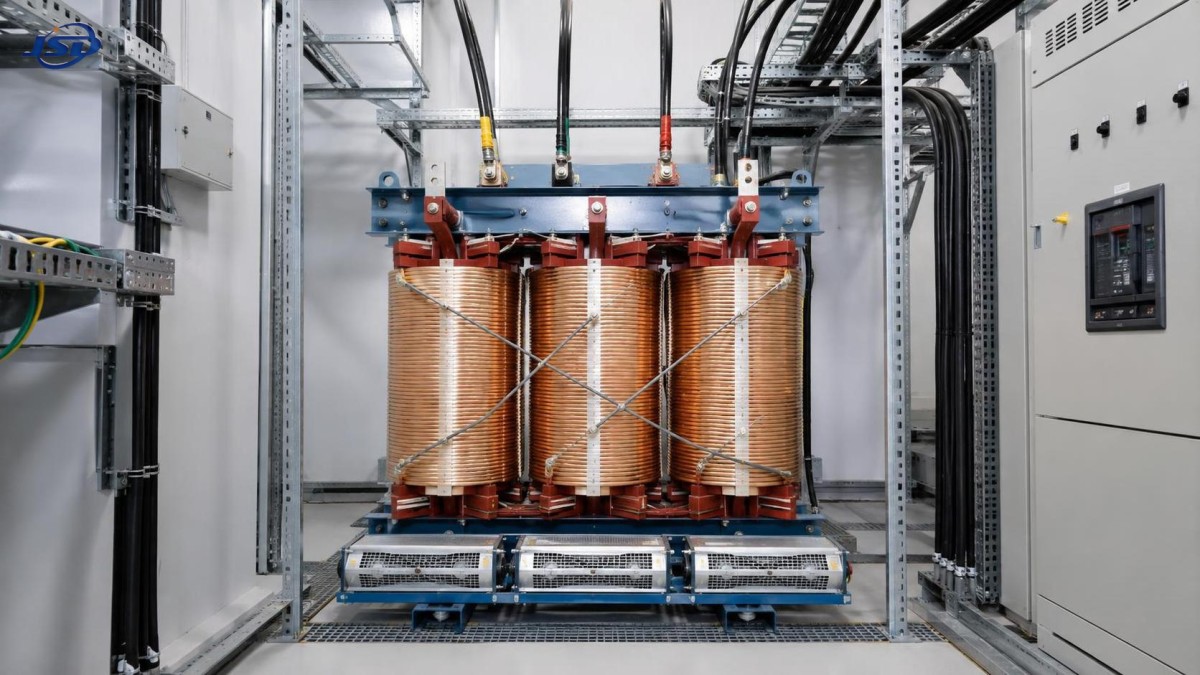
For a retrofit project, approving a copper winding distribution transformer is usually justified when the existing unit runs for long hours, carries a meaningful load, or serves a process where an unplanned outage costs more than the transformer itself. The purchase price will often be higher than a comparable aluminum-wound alternative, but that difference is only one part of the financial decision.
A retrofit changes the calculation because the transformer is being placed into an operating asset, not designed into a blank site. The owner already has a load profile, an energy bill, space limitations, protection settings, outage windows, and a history of equipment performance. Those facts can make lifecycle cost much more important than the lowest delivered quotation.
For financial approvers, the practical question is not whether copper is universally superior. It is whether the expected reduction in losses, thermal stress, maintenance exposure, and replacement risk is sufficient to justify the additional capital tied up at the start.
Start with the operating profile, not the winding material
Copper is a better electrical conductor than aluminum, but that fact alone does not establish project value. A well-designed aluminum transformer can meet duty requirements, while a poorly specified copper unit can still create operating problems. The comparison has to begin with the conditions the transformer will actually face after commissioning.
Three details deserve early attention:
- Load duration: A transformer energized around the clock has continuous no-load losses, even during light-demand periods. Load losses then rise with the square of current as demand increases.
- Load level and volatility: A unit operating close to its rating, subject to recurring peaks, or exposed to fluctuating industrial or renewable-generation loads has less thermal margin than one used intermittently at modest loading.
- Cost of interruption: In a facility with limited redundancy, a transformer failure can involve production loss, temporary power arrangements, damaged schedules, and a rushed replacement purchase.
A copper winding distribution transformer tends to make the strongest financial case where utilization is sustained and service continuity has economic value. For a lightly loaded building with predictable demand and easy replacement access, the payback case may be weaker. Treating both projects as identical because they require the same kVA rating is a common approval error.
Losses should be converted into an operating-cost model
The most useful purchase comparison separates no-load loss from load loss. No-load loss comes primarily from the core and remains present whenever the transformer is energized. Load loss is associated with current flowing through windings and other components, so it rises as loading increases.
Winding material has its clearest connection to load losses. Copper's conductivity can allow lower winding resistance within a given design, helping reduce resistive heating. Yet a quotation that simply states “100% copper” does not tell an approver what the annual energy cost will be. The supplier should state guaranteed loss values at the relevant rated condition and the applicable temperature basis, alongside the required test documentation.
A disciplined review uses the site's own assumptions:
- Expected energized hours per year.
- Estimated average load and peak-loading pattern.
- Expected energy price or the internal energy-cost assumption used for capital projects.
- Whether demand charges, constrained capacity, or avoided generation losses materially affect the project.
- The period over which the asset will be evaluated.
Load loss cannot be estimated by multiplying rated load loss by average loading. Because it changes approximately with the square of current, a transformer at 50% load produces roughly one-quarter of the rated current-related loss, while operation near full rating carries much more weight in the annual total. A project with short, high peaks may therefore produce a different result from one with the same average demand but steady loading.
Loss capitalization is often a better decision tool than a bare equipment-price comparison. It assigns a present economic value to each watt of specified no-load and load loss over the review period. The method does not require a claim about future electricity prices; it requires the organization to use the same energy-cost and discounting assumptions it applies elsewhere in its capital process. Once those assumptions are visible, competing bids can be compared on a common basis.
There is also a practical limit. A lower-loss design is not automatically the lowest-cost selection if it requires a disproportionately large premium, creates a footprint problem, or introduces delivery risk that conflicts with the shutdown schedule. The point is to quantify the trade, not to assume that efficiency always overrides capital discipline.
Service life is mainly a heat-management and execution question
Financial models often assign a long life to every distribution transformer and stop there. In a retrofit, the more relevant issue is whether the replacement can maintain insulation condition and mechanical integrity under the actual electrical and environmental duty.
Lower winding resistance can reduce heat generated in the windings for a comparable duty, supporting lower temperature rise or greater thermal margin, depending on the design. That margin matters because insulation aging accelerates when hot-spot temperatures remain elevated. It can also matter where summer ambient temperature, restricted ventilation, harmonic currents, recurring overloads, or enclosure constraints leave little room for error.
Still, copper windings do not eliminate the principal causes of early transformer trouble. Poor connections, inadequate protection coordination, moisture ingress, incorrect tap selection, insufficient cooling clearance, high harmonic loading, and short-circuit stress can shorten useful life regardless of conductor choice. A financial approval that relies on “longer service life” should require the design and installation conditions that make that claim credible.
For an oil-immersed outdoor retrofit, review the cooling arrangement, radiator clearance, cable-entry sealing, grounding, surge protection, oil containment, and access for inspection. For a dry-type application, ventilation paths, room temperature, dust exposure, and available airflow need the same attention. A lower-loss transformer installed in a poorly ventilated location may not deliver the intended thermal benefit.
Mechanical strength deserves its own review
Transformer windings must withstand electromagnetic forces during external faults. Copper has favorable mechanical characteristics for winding construction, but short-circuit capability is a complete design issue involving conductor geometry, bracing, clamping, insulation, and manufacturing control. It should be evaluated against the available fault level at the installation point and the clearing performance of upstream protection.
This distinction matters during a retrofit because replacing a transformer can alter the electrical arrangement around it. A new unit may have a different impedance, connection group, rating, or tap range than the old one. Those changes can affect fault current, parallel-operation behavior, voltage regulation, and relay settings. The cost of correcting a coordination problem after installation can quickly outweigh a modest saving in the original purchase order.
What to request before approving the capital spend
A technically complete quotation gives finance and engineering a common basis for review. The objective is not to prescribe every manufacturing detail; it is to prevent a low first-cost bid from hiding material differences in losses, thermal capability, accessories, testing, or scope.
IEC 60076 is commonly used as a reference framework for power-transformer requirements and testing, but citing a standard is not a substitute for a project-specific specification. The bid package should make clear which losses are guaranteed, which tests are required, what tolerances apply, and whether accessories such as temperature indicators, pressure protection, monitoring devices, and cooling controls are included.
For a wind-farm retrofit, this discipline becomes more important because the transformer may see variable generation output, remote access constraints, and exposure to weather. A Transformer for Wind Power Generation configured for 630kVA to 5000kVA duty can illustrate the type of specification questions to settle: 0.69kV low-voltage interface, 10kV, 20kV, or 35kV high-voltage selection, Dyn11 or Yyn0 connection, available tap positions, ONAN or ONAF cooling, outdoor construction, and IEC 60076 compliance. Those are system decisions, not interchangeable line items.
Where the initial-price comparison goes wrong
The most frequent mistake is comparing only price per kVA. This can reward a proposal with higher losses, narrower thermal margin, omitted accessories, or an installation scope that will reappear as a change order. It may also overlook a transformer that is physically unsuitable for the existing pad, cable routes, lifting path, or enclosure.
A second mistake is assigning an assumed service life without considering operating stress. If a project replaces a unit because of repeated overheating, poor voltage performance, or fault damage, then the replacement analysis should identify the root condition. Simply fitting a copper-wound unit of the same rating may leave the underlying problem in place. The correct answer could involve a higher capacity, a different impedance, improved cooling, harmonic mitigation, adjusted protection, or changes to the load arrangement.
A third mistake is treating all copper claims as equivalent. Material declaration should sit alongside measurable design outputs: winding resistance, guaranteed losses, temperature-rise performance, test results, and documented construction requirements. The approver does not need to audit a factory process, but the procurement package should permit a meaningful acceptance decision.
When the premium is likely to be justified
A copper winding distribution transformer is usually easier to defend when the retrofit supports continuous industrial loads, critical infrastructure, constrained substations, remote renewable assets, or installations where heat and outage exposure have real economic consequences. In those cases, lower resistive loss and stronger thermal headroom can support a lifecycle case that a first-cost comparison misses.
It is less compelling to approve a premium solely because copper is specified. The project should show the load profile, expected loss cost, installation constraints, and reliability consequences in enough detail to distinguish a justified investment from a material preference.
The approval decision becomes clearer when the procurement team presents two numbers side by side: the delivered and installed capital cost, and the modeled cost of owning the transformer under the facility’s expected duty. Add the cost of a realistic outage scenario and the value of thermal margin where it is relevant. That is the point at which winding material becomes a financial decision rather than a procurement label.

Get a Quote
Regardless of whether you require general advice or specific support, we are happy to help you.
Send Us Your Inquiry Today

Jinshida Electric remains committed to contributing to global energy development through professional manufacturing and superior service.