





Choosing a power transformer manufacturer for site-specific duty
Choosing a power transformer manufacturer for site-specific duty begins with the actual electrical and physical conditions at the point of installation. A nameplate rating establishes a basic operating envelope, yet it does not reveal whether the unit can tolerate the duty cycle, harmonic content, switching events, ambient temperature, access limitations, or maintenance constraints of a particular project. Selection evidence should connect the proposed transformer design to the site data rather than relying on a generic catalogue designation.
The first technical question is the load profile. A transformer supplying a nearly constant process load is evaluated differently from one serving intermittent crushers, large motors, welding equipment, rectifier loads, battery charging systems, or renewable energy converters. Maximum demand, load duration, expected growth, power factor, starting current, and simultaneous operation of downstream equipment all affect winding temperature and voltage performance. A unit that appears adequately sized from connected kVA alone may face repeated thermal cycling or voltage dip conditions that shorten insulation life.
Define the duty before comparing designs
A usable request for quotation should state the primary and secondary voltages, frequency, rated power, vector group, impedance range, tap arrangement, cooling method, insulation level, installation altitude, and applicable standard. It should also identify whether the transformer is indoor, outdoor, containerized, underground, mobile, or installed in a restricted-access electrical room. Leaving these points open until after quotation often leads to revisions that affect lead time, dimensions, accessory selection, and test scope.
Grid characteristics deserve equal attention. Available fault level at the high-voltage bus, neutral grounding method, upstream protection coordination, expected voltage variation, and the presence of capacitor banks or converter-fed loads can materially change the design requirement. Impedance is particularly important: lower impedance can reduce voltage drop during motor starting, while higher impedance may be needed to limit available short-circuit current. Neither direction is automatically preferable. The proposed value must work with the protection study and the downstream load behavior.
Harmonics require explicit treatment rather than a vague request for “harmonic resistance.” Rectifiers, variable-frequency drives, UPS systems, arc equipment, and some renewable energy interfaces can create non-sinusoidal current that increases eddy-current loss and localized heating. The specification should provide harmonic spectra or, where that is unavailable, identify the load technology and operating modes. A power transformer manufacturer can then assess winding conductor arrangement, stray-flux control, derating, neutral loading, and thermal margins based on traceable assumptions.
Environmental duty is often where nominally comparable offers diverge. Maximum and average ambient temperature, minimum temperature during transport or energization, solar exposure, humidity, salt contamination, dust, ventilation, seismic demand, flooding risk, and corrosive atmospheres affect both construction and service life. At higher elevations, reduced air density changes external insulation and cooling performance. In a humid or dirty setting, bushing creepage distance, gasket quality, tank finish, breather arrangement, cable-box sealing, and drainage details may be as important as the active part design.
Read the design evidence behind the quotation
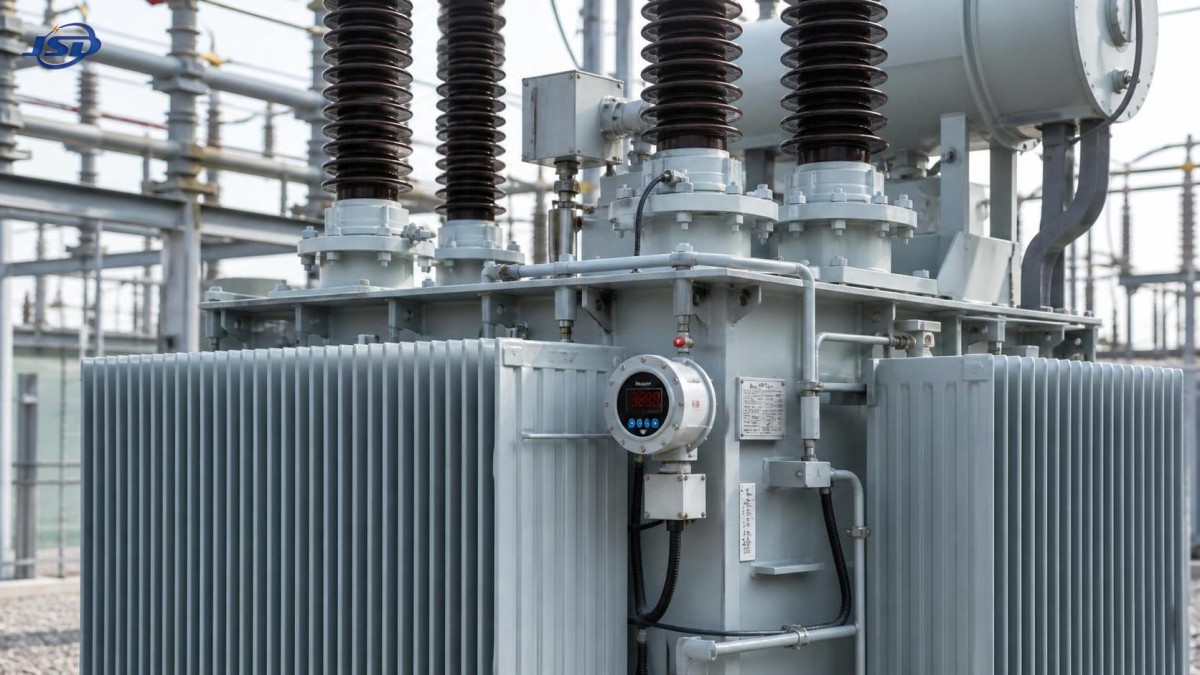
A technically credible quotation separates guaranteed values from preliminary estimates and identifies the conditions used for each value. Rated losses, no-load current, impedance, temperature rise, sound level, mass, oil quantity, outline dimensions, terminal arrangement, and accessory list should be available in a controlled data sheet. Ambiguous statements such as “standard accessories included” are difficult to evaluate because site interfaces are frequently hidden in those details.
Core and winding materials deserve focused review. High-permeability grain-oriented silicon steel is commonly used for efficient magnetic cores, but material selection alone does not establish performance. Core step-lap arrangement, clamping method, flux density, insulation coating control, and no-load test results influence losses and noise. Winding performance depends on conductor quality, paper or pressboard insulation system, mechanical bracing, transposition where applicable, drying process, and the ability to withstand short-circuit forces. The design package should explain the insulation temperature class and the basis for the declared temperature rise.
For oil-immersed equipment, examine the complete dielectric system. This includes the oil specification, oil preservation arrangement, radiators, conservator where used, pressure relief device, oil level indication, temperature monitoring points, drain and sampling valves, and sealing design. A well-designed tank is not merely a container. It must retain oil under expected thermal movement, withstand handling loads, resist corrosion in its installed environment, and permit practical access for inspection. Weld quality, leak testing, surface preparation, coating system, and transport bracing are relevant manufacturing controls.
Ask for the short-circuit withstand basis. The transformer must survive mechanical and thermal stresses created by a fault until the protective device clears it. This review ties together calculated fault levels, impedance tolerance, winding support structure, clamping, and protection clearing time. A statement that a unit is “short-circuit proof” without reference to the declared system conditions provides little engineering value.
Special conditions need a matched construction
Mining and tunnel installations illustrate why application labels cannot replace a detailed duty definition. Limited ventilation, high humidity, conductive dust, confined handling paths, cable termination constraints, and potentially hazardous atmospheres change the required arrangement. The equipment classification, enclosure details, cable-box construction, protection method, and permissible operating conditions must be confirmed against the installation hazard assessment. A product title alone cannot establish suitability for an explosive-gas or combustible-dust location.
For example, a review of an Mining Flameproof Transformer may include high-voltage operation at 6 kV or 10 kV, low-voltage requirements such as 380 V, 660 V, or 1140 V, and the required connection configuration. Where a high-voltage winding has plus or minus 5% taps, confirm whether the intended operating procedure requires de-energized tap selection or an on-load regulating function; these are not interchangeable. A low-voltage cable connection box with accessible secondary terminals can support site-specific reconnection, but the terminal layout, cable entry size, gland arrangement, bending radius, and earthing provisions must match the actual cables.
Temperature and altitude limits must be treated as design inputs. A reference condition such as an ambient maximum of +40 degrees C, a daily average of +25 degrees C, an annual average of +20 degrees C, an outdoor minimum of -20 degrees C, relative humidity up to 95% at +25 degrees C, and altitude not above 1,000 m is meaningful only when it matches the site record. Any departure may require a revised thermal calculation, different oil characteristics, altered clearances, improved sealing, or a lower declared output. Natural oil and air cooling also depends on adequate clearance around radiators and an installation layout that does not recirculate hot discharge air.
Quality control is visible in the records
A manufacturer assessment should examine the documented route from approved drawings to final test release. Design review records establish the agreed electrical and mechanical configuration. Material traceability helps confirm that core steel, conductor, insulation, bushings, oil, tap equipment, and protection accessories correspond to the approved bill of materials. Process controls matter most at stages that cannot be fully inspected after assembly: conductor insulation, winding compression, lead support, core grounding, vacuum drying, oil filling, and final sealing.
Routine tests should be stated clearly, with reports linked to the supplied unit. Depending on the transformer type and applicable standard, relevant evidence can include ratio and vector-group verification, winding resistance measurement, impedance and load-loss measurement, no-load loss and current measurement, applied-voltage testing, induced-voltage testing, insulation resistance checks, and leak testing. The acceptance plan should identify any additional type, special, or witness tests before production begins. Adding them after the active part is assembled may be impractical or may change the delivery sequence.
Test values need interpretation, not just a pass mark. Losses affect operating cost and heat rejection. Impedance affects fault duty and voltage regulation. Winding resistance deviations can point to connection or conductor issues when assessed with temperature correction. A failed or borderline test should trigger a documented nonconformance process, root-cause review, corrective action, and retest record. Releasing equipment on the basis of an unexplained deviation creates a future dispute at the site.
Prevent interface failures before shipment
Many transformer problems originate in interfaces outside the active part. Confirm high- and low-voltage terminal positions, phase marking, bushing type, cable-box access, neutral terminal location, earthing pads, control wiring terminals, alarm contacts, marshalling-box ingress protection, and lifting points against the civil and electrical drawings. The total installed height, radiator projection, door opening, crane capacity, route turning radius, and foundation loading can invalidate an otherwise compliant design.
Transport must be planned with the same discipline. Determine whether oil is shipped in the tank, separately, or partially filled; whether bushings, radiators, conservator components, and protection devices are removed for transit; and what dry-air or nitrogen preservation method is used. Shock indicators can provide useful evidence where rough transport is a concern, but they do not replace receipt inspection. On arrival, inspect the package condition, tank pressure where applicable, oil level, seals, accessories, paint damage, and impact indicators before unloading records are closed.
Installation documentation should establish torque values, oil processing requirements, grounding arrangement, relay settings interfaces, pre-energization tests, and the conditions for energizing after storage. Oil dielectric tests, insulation resistance, ratio checks, vector-group confirmation, winding resistance measurements, bushing inspection, and functional tests of alarms or trips may be appropriate depending on the equipment and duration of storage. The commissioning sequence must be coordinated with protection settings and downstream equipment readiness; energizing a transformer before the associated circuits are controlled can introduce avoidable risk.
Compare lifecycle exposure, not only initial scope
Initial purchase cost can obscure differences in losses, maintainability, spare parts, documentation quality, and outage exposure. The useful comparison is the installed and operating arrangement over the intended duty period. Consider access to replacement bushings, tap components, gaskets, gauges, fans where fitted, and compatible insulating oil. Consider whether routine sampling can be performed safely, whether radiators can be isolated for maintenance, and whether cable connections can be inspected without disturbing unrelated equipment.
Service information should be specific enough to support future diagnosis. As-built drawings, connection diagrams, test certificates, instruction manuals, packing lists, accessory schedules, and preservation instructions should identify the actual serialised equipment. A generic manual cannot resolve a disagreement over terminal positions, tap configuration, alarm contacts, or installed accessories years later.
The final selection should be based on a controlled technical comparison in which deviations are visible. Each exception to the electrical specification, environmental conditions, test plan, dimensions, accessories, delivery configuration, or documentation requirements needs a written disposition. That discipline exposes whether two quotations are genuinely equivalent and ensures the chosen power transformer manufacturer has committed to the conditions that the installed transformer will face.

Get a Quote
Regardless of whether you require general advice or specific support, we are happy to help you.
Send Us Your Inquiry Today

Jinshida Electric remains committed to contributing to global energy development through professional manufacturing and superior service.