





Where an 11kV dry type transformer makes sense over oil filled units
Where an 11kV dry type transformer usually has the stronger case
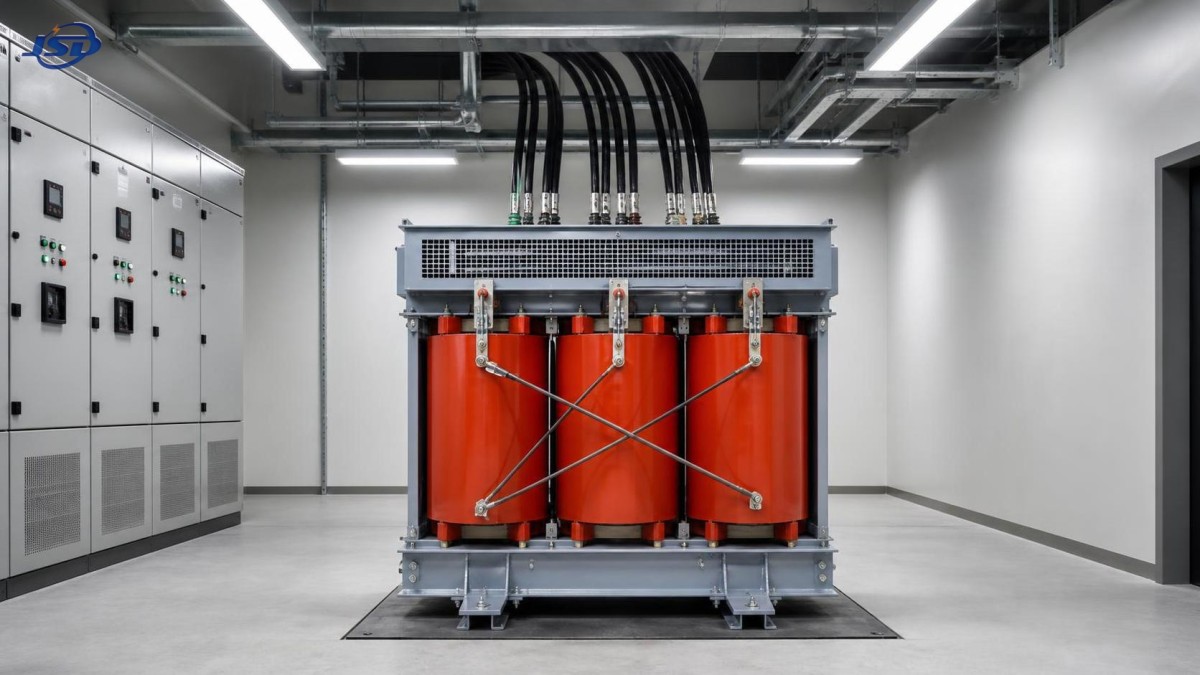
An 11kV dry type transformer is often the better choice when the installation sits close to people, equipment, or finished interior space and when the consequences of oil leakage or fire loading are difficult to accept. In practice, that usually points to indoor substations in commercial buildings, process areas inside factories, hospitals, transport terminals, data-related facilities, and renewable energy buildings where the transformer room is part of a larger occupied structure rather than a remote yard.
At 11kV, the decision is rarely about whether dry type technology can perform the electrical task. The real question is whether the site conditions, access constraints, operating pattern, and risk profile favor a transformer built around air cooling and solid insulation over one that depends on insulating liquid. Where the project has limited space for bunding, strict cleanliness expectations, or difficult oil handling procedures, dry type designs often align better with the job.
That does not make oil filled units obsolete. They remain common where outdoor installation is straightforward, higher overload tolerance is needed, or larger ratings make liquid cooling more practical. But for many medium-voltage indoor applications, the selection starts to shift once civil works, maintenance exposure, and operational constraints are considered alongside nameplate data.
Indoor locations change the decision quickly
The strongest argument for a dry type unit usually appears when the transformer must be placed inside the building envelope. An oil filled transformer installed indoors may require additional fire separation, containment measures, drainage planning, ventilation coordination, and a more cautious approach to emergency response. Those items are manageable, but they affect layout, approvals, and construction interfaces.
A dry type transformer reduces several of those complications because there is no insulating oil to store, sample, filter, replace, or contain after a leak. In a basement electrical room, rooftop plant room, mezzanine service zone, or enclosed production building, that difference can be more important than a small difference in initial equipment cost.
Material handling also becomes simpler in many indoor projects. A cast resin or vacuum-pressure-impregnated dry type transformer can often be moved into position without the same concerns about oil-filled shipping, on-site liquid filling, or contamination introduced during handling. That matters where access depends on freight elevators, temporary openings, or staged installation after architectural finishes are already in place.
Places where cleanliness and leakage control matter
Some applications are judged less by transformer efficiency curves and more by what happens if something goes wrong nearby. Food processing areas, pharmaceutical support buildings, electronics manufacturing spaces, metro stations, and public-use facilities often place a premium on keeping the electrical installation clean, contained, and easy to inspect. In those settings, avoiding insulating oil can remove one entire class of housekeeping and incident management concern.
There is also a practical maintenance aspect. If a site does not want oil sampling routines, dissolved gas analysis planning, or the possibility of seepage around gaskets and fittings over time, a dry type unit may fit the operating philosophy better. The transformer still needs inspection, cleaning, temperature monitoring, torque checks where applicable, and attention to ventilation paths, but the maintenance profile changes in a way many indoor operators find easier to manage.
When fire strategy is a design driver
Fire performance is one of the most common reasons to favor dry type technology, but it needs to be handled carefully. A dry type transformer is not “risk free,” and poor ventilation, dust accumulation, loose terminations, or sustained overheating can still create serious problems. The advantage is narrower: there is no combustible insulating oil inside the tank, so the fire load and spill scenario are different from an oil filled unit.
That difference can matter in mixed-use buildings, tunnels, airports, underground substations, and industrial plants where a transformer room is surrounded by occupied or operationally sensitive areas. If the fire protection concept would become significantly more complicated with oil containment, additional barriers, or special drainage, a dry type option often becomes easier to justify.
For the same reason, sites with limited access for firefighting or difficult smoke control pathways may lean toward dry type arrangements. The transformer still needs correct clearances, temperature class compatibility, and protection settings that suit the load profile, but the overall hazard picture can be easier to integrate into the building design.
Short cable runs and load centers inside the facility
An 11kV dry type transformer makes more sense when it can be installed closer to the actual load center. Locating the transformer indoors near major low-voltage distribution boards or motor control areas can reduce long secondary cable runs, lower voltage drop concerns, and simplify coordination between the medium-voltage switchgear and downstream distribution equipment.
That layout is common in high-rise developments, shopping centers, hospitals, and manufacturing buildings with concentrated low-voltage demand. In such cases, the cost comparison should not stop at the transformer itself. Outdoor oil filled placement may require longer low-voltage cabling, more penetrations, larger cable pathways, and extra installation labor. A dry type transformer room placed close to the load can offset part of the equipment premium through simpler downstream distribution.
Environmental conditions where dry type performs well, and where it may not
Dry type does not automatically suit every harsh site. It performs well in clean, ventilated, moderately controlled environments. It can also work in tougher industrial conditions if the enclosure, cooling path, and maintenance plan are matched to the environment. Dust, conductive particles, corrosive vapors, and salt-laden air can all change the picture.
For example, in a cement plant or metal-processing area with heavy airborne dust, coil surfaces and ventilation channels may need more frequent cleaning. In coastal or chemical environments, the selection of enclosure material, anti-corrosion treatment on metal parts, and creepage distance arrangement become more important. If the room has poor airflow or repeated high ambient temperatures, the thermal margin of the transformer may become the main limiting factor. Under those conditions, an oil filled unit installed outdoors might still be the more forgiving solution.
Altitude is another point that is sometimes missed. Air cooling becomes less effective as elevation increases, so derating or design adjustment may be necessary depending on site conditions. That is not a reason to avoid dry type by default, but it should be addressed early rather than discovered after the room dimensions and ventilation scheme have already been fixed.
Construction and installation details that often tilt the choice
Dry type transformers are often selected because the civil and mechanical package around them can be cleaner. There may be no need for an oil pit, containment curb, or liquid drainage design. The transformer room can often be treated more like a controlled electrical equipment space and less like an area that must anticipate liquid release.
Several installation details still deserve close attention:
- Ventilation should be based on actual heat rejection and room airflow path, not on a generic louver size copied from another project. Dry type units depend directly on moving air across the coils.
- Access dimensions matter. Coil-and-core assemblies, enclosure sections, and cable termination space should be checked against door widths, turning radii, and lifting points before the room is finalized.
- Noise can become a hidden issue indoors. Structure-borne vibration, room acoustics, and proximity to occupied spaces should be considered, especially in hospitals, offices, and residential mixed-use buildings.
- Cable termination geometry must be realistic. At 11kV, bending radius, stress control accessories, phase spacing, and segregation are not details to leave for the installation contractor to “solve on site.”
These issues do not argue against dry type. They simply show that dry type success depends heavily on room design and installation discipline, while oil filled success depends more heavily on external containment and liquid-related risk controls.
Common coil and insulation forms in an 11kV dry type transformer
Not all dry type transformers are built the same way, and the internal construction affects where they make sense. Cast resin designs encapsulate the windings in epoxy-based resin systems and are commonly chosen where moisture resistance, mechanical robustness, and consistent insulation performance are priorities. Vacuum-pressure-impregnated designs use resin or varnish impregnation rather than full casting and may appear in applications where weight, thermal behavior, or procurement preference points that way.
The core is typically built from grain-oriented electrical steel laminations, and losses, noise level, and assembly quality depend heavily on core processing and clamping accuracy. On the winding side, conductor material, insulation class, partial discharge control, and thermal sensor integration deserve attention during technical review. A dry type transformer may look simple from the outside, but manufacturing discipline around winding tension, curing, resin quality, and terminal assembly has a direct effect on service stability.
This matters during selection because two units with the same voltage ratio and kVA rating can behave differently in humid rooms, dusty rooms, frequent start-stop loading, or installations with repeated thermal cycling.
Where renewable energy and modern infrastructure often favor dry type
In solar and wind support facilities, the choice depends on whether the transformer sits in an outdoor skid, a compact electrical building, or an indoor service area. Where the medium-voltage transformer is placed inside a power conversion building or equipment room, a dry type unit often fits the layout better and reduces concern about liquid containment inside a compact enclosure.
Transport infrastructure shows a similar pattern. Stations, depots, tunnels, and airport buildings frequently place electrical equipment inside constrained service spaces with high expectations for cleanliness and controlled risk. In those environments, an 11kV dry type transformer can be easier to integrate than an oil filled unit that would require additional protective measures around the fluid system.
Commercial developments also tend to favor dry type where the substation is part of a podium, basement, or technical floor. The more the transformer room behaves like an interior utility space rather than a detached yard installation, the stronger the dry type argument becomes.
Where oil filled units may still be the better answer
There are still many situations where an oil filled transformer should remain on the table. Outdoor sites with ample space, straightforward bunding, and easy maintenance access often suit oil filled designs very well. The same is true when the transformer rating is high enough that liquid cooling brings clear practical advantages, or where load patterns include frequent peaks that would leave little thermal headroom for an indoor dry type unit.
Very hot climates, dirty industrial yards, or installations with weak room ventilation can also shift the balance. If maintaining clean airflow through a dry type enclosure is likely to be a constant struggle, the apparent simplicity of dry type may disappear in operation. In those cases, putting an oil filled unit outdoors and keeping the building free of transformer heat may be the cleaner engineering decision.
Procurement mistakes that lead to the wrong comparison
One frequent mistake is comparing only transformer purchase prices while ignoring the surrounding works. Another is assuming every dry type transformer has the same enclosure needs, sound level, or overload behavior. Selection quality improves when the comparison includes the room, cable routing, access method, fire strategy, ventilation, spare parts expectations, and maintenance practices.
It is also easy to understate transportation and installation constraints. A unit that fits electrically may still be difficult to bring into a basement after the building structure is complete. Conversely, an outdoor oil filled unit that looks cheaper on paper may trigger costly civil additions once spill containment and separation distances are fully developed.
Specification language should be precise about ambient temperature, altitude, enclosure rating, cooling method, tap arrangement, impedance, temperature monitoring, and termination configuration. Ambiguous specifications tend to produce quotations that are impossible to compare fairly.
Questions worth resolving before the specification is fixed
Several points usually determine whether dry type genuinely makes sense:
- Is the transformer room inside an occupied or operationally sensitive building zone?
- Will liquid containment, drainage, or fire separation materially complicate the project layout?
- Can the room provide dependable ventilation under peak load and high ambient conditions?
- Does the environment stay clean enough for exposed cooling paths, or will dust and contamination become a maintenance burden?
- Are cable routes shorter and simpler if the transformer is placed indoors near the low-voltage distribution center?
- Do access dimensions support delivery, lifting, coil clearance, and future replacement without major demolition?
If several of those answers point toward indoor simplicity, controlled risk, and manageable cooling, an 11kV dry type transformer is often the more coherent choice. If the project depends on outdoor placement, high thermal tolerance, or operation in a harsh environment with little room conditioning, oil filled equipment may remain the more practical option.
The right selection usually emerges from the installation context rather than from a general preference for one transformer family. At 11kV, dry type makes the most sense where the transformer must live comfortably inside the building, close to the load, with low tolerance for liquid-related complications and a clear path for ventilation, inspection, and cable termination.

Get a Quote
Regardless of whether you require general advice or specific support, we are happy to help you.
Send Us Your Inquiry Today

Jinshida Electric remains committed to contributing to global energy development through professional manufacturing and superior service.