





When an ONAN transformer is the right cooling choice for outdoor use
An ONAN transformer is the right outdoor cooling choice when the required load can be carried with natural circulation of insulating oil and natural air flow around the tank, without depending on fans or pumps. In practical terms, that usually suits installations where the daily load profile is steady or moderately variable, the ambient conditions are known, and the project values mechanical simplicity, low auxiliary power demand, and straightforward maintenance. If the transformer can stay within its permitted temperature rise under those site conditions, ONAN often becomes the most robust option rather than the most basic one.
The outdoor setting matters because heat rejection is never judged from nameplate rating alone. A unit placed in open air with clear spacing, moderate solar exposure, and no recirculation of hot air behaves differently from the same rating installed inside a tight wall enclosure or near other heat sources. An ONAN design depends on convection on both sides of the thermal path: oil must rise through the windings and radiators, and air must move across the external cooling surfaces. When both flows remain unobstructed, the arrangement can be stable for long service periods with fewer moving parts to inspect or replace.
The usual physical arrangement is familiar: a sealed or conservator-equipped tank, core and windings immersed in mineral oil or another specified insulating fluid, and corrugated walls or radiator banks sized to dissipate heat under rated conditions. Copper or aluminum windings may be used depending on design objectives. Core steel quality, clamping pressure, winding duct geometry, and radiator surface area all influence whether natural cooling is adequate. Two transformers with similar kVA ratings can behave differently if one has tighter winding ducts, smaller radiator banks, or a less favorable tank layout for oil circulation.
Where ONAN fits outdoor duty well
Outdoor substations with predictable feeder loading are a common fit. So are industrial distribution points where the process load is substantial but not marked by repeated short-term peaks beyond the continuous thermal capability of the transformer. In wind and solar balance-of-plant systems, ONAN can also make sense when output patterns, site temperature, and transformer placement do not force a higher cooling class. The absence of fan motors and control wiring can be especially useful at remote sites where auxiliary equipment adds maintenance burden and fault points.
An ONAN transformer can also be appropriate where dust, salt-laden air, or insects would make forced-air systems harder to maintain. Fans pull contaminants into cooling passages and across radiator surfaces; natural air cooling reduces that active ingestion effect. This does not eliminate contamination risk, especially in coastal or cement-heavy environments, but it may slow the rate at which deposits interfere with thermal performance.
Another good match is any installation that wants low dependence on station service power. Forced cooling equipment typically needs a reliable auxiliary supply, control logic, protection for motor circuits, and periodic functional testing. ONAN avoids most of that. If the transformer must stay serviceable during station auxiliary disturbances, a passive cooling mode has obvious advantages.
That said, “outdoor use” by itself is not enough to justify ONAN. A hot site with poor air movement, high elevation, dark surfaces exposed to intense sun, and continuous near-limit loading may push the design toward ONAF or another cooling class. The right question is whether passive thermal performance remains acceptable after the real installation penalties are accounted for.
Thermal conditions that make or break the decision
Load profile is often the first dividing line. A transformer serving a stable daytime demand or a feeder with long operating plateaus is easier to evaluate under ONAN cooling than one exposed to repeated overload spikes. Natural cooling responds more slowly than forced cooling because there is no active boost in air-side heat transfer when temperature rises. If short overloads are expected, the thermal model has to consider oil time constant, winding hot-spot rise, and recovery period instead of relying on average load alone.
Ambient temperature must be treated as a site condition, not a catalog assumption. An outdoor transformer in a temperate climate with nighttime cooling may perform comfortably under ONAN operation. The same unit on a concrete pad in a high-heat region, with radiant heat from nearby equipment and little nighttime relief, may have too little thermal margin. Elevation also matters because lower air density reduces cooling effectiveness. At enough altitude, natural air cooling becomes less effective even if the transformer rating looks acceptable at standard conditions.
Wind can help or hurt depending on layout. Light natural airflow across radiators is beneficial, but turbulent recirculation between walls, fences, and adjacent equipment can trap hot air near the tank. Placement close to barriers, acoustic enclosures, or fire walls may reduce the effective performance of an ONAN transformer unless clearances and ventilation paths are considered during civil and mechanical layout.
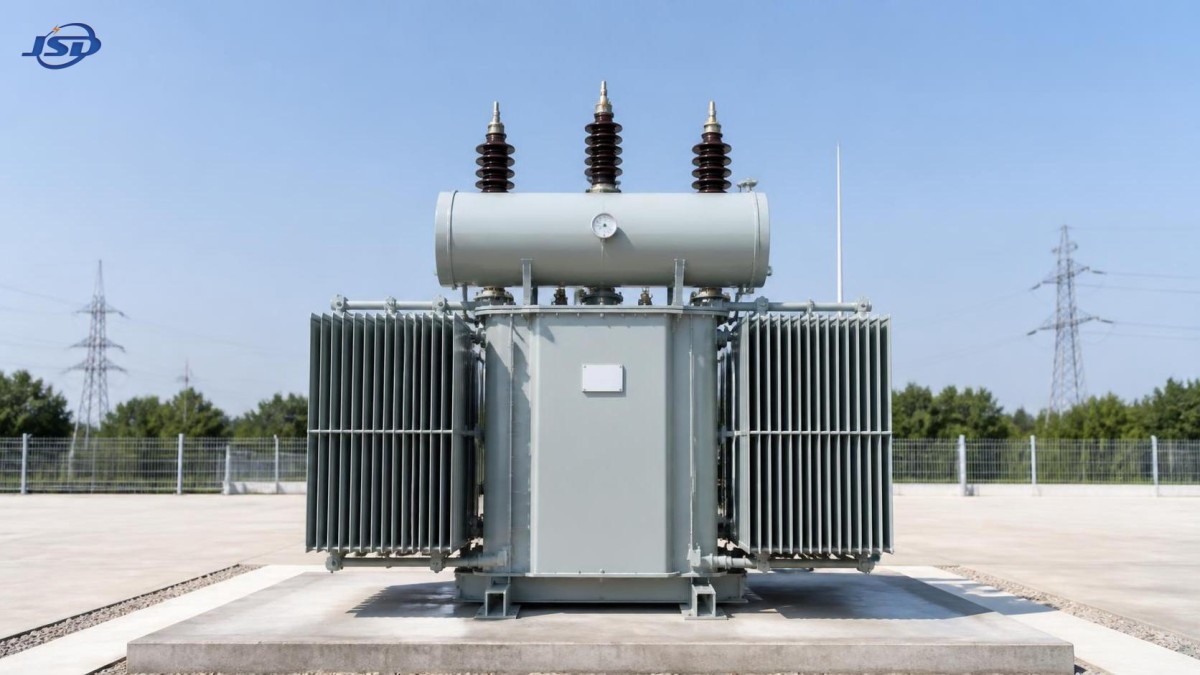
Solar loading is frequently underestimated. Direct sun on the tank and radiators raises external surface temperature and reduces the temperature gradient available for heat dissipation. In exposed yards, the effect may be significant enough to narrow operating margin during the hottest period of the day. Shade structures are sometimes considered, but they must not block vertical air movement around the cooling surfaces. A poorly designed canopy can solve one heat source while creating another problem.
When passive cooling is preferable to forced cooling
There are situations where ONAN is chosen not because the transformer is small, but because operational simplicity outweighs the benefit of higher cooling stages. Fan-assisted systems increase rating flexibility, yet they also add devices that age differently from the transformer itself. Motors, contactors, thermostatic controls, wiring terminations, and fan blades all need inspection. In isolated outdoor locations, that extra maintenance scope may be harder to justify than accepting a lower but thermally secure ONAN rating.
Noise can also influence the cooling choice. Fan noise may be undesirable near residential boundaries, buildings, or sensitive plant areas. An ONAN transformer still produces core and load-related sound, but it avoids the additional acoustic contribution of running fans. If the project already sits close to a noise limit, passive cooling may provide more layout freedom.
Another advantage appears during low-load operation. Forced-air systems may cycle on and off, which adds switching wear and intermittent control issues over time. ONAN operation is inherently continuous and passive. For applications where the transformer spends most of its life below peak rating, the simpler arrangement can be a better engineering fit than installing extra cooling capacity that is only occasionally needed.
Design details worth reviewing before approval
Radiator configuration deserves close attention. A banked radiator design with adequate oil passage and external fin area often performs better than a compact arrangement squeezed for transport convenience. Corrugated tank walls may be suitable for some ratings, but once the thermal duty increases, dedicated radiators usually provide more dependable surface area. The question is not simply how many radiator panels are present, but whether their spacing, oil headers, and external exposure allow effective natural circulation.
Oil path design inside the active part is equally important. Natural cooling depends on buoyancy-driven flow through winding ducts. If the vertical ducts, spacers, and barriers are not arranged to support smooth circulation, winding hot spots may rise faster than bulk top-oil temperature suggests. This is one reason detailed thermal design review matters more than broad assumptions such as “outdoor transformers cool well in open air.”
Surface finish and corrosion protection should also be matched to the environment. Outdoor service exposes the tank, radiators, conservator, hardware, and cable box surfaces to ultraviolet exposure, moisture, and possibly industrial contaminants. A coating system that resists peeling and corrosion helps preserve heat transfer because heavy rusting and coating failure can degrade external surfaces over time. In coastal conditions or chemically aggressive atmospheres, material selection for fasteners, radiator fittings, and gasket interfaces becomes more significant.
Bushing arrangement can indirectly affect cooling suitability. Side-mounted cable boxes, high-current terminations, or confined bus duct interfaces may restrict the clear air envelope around the tank. In some layouts, a transformer that is thermally acceptable in free-standing form becomes marginal after cable chambers, barriers, and protection structures are attached. The cooling class should be judged on the installed geometry, not the uncluttered general arrangement drawing.
Common misjudgments in outdoor ONAN selection
A frequent mistake is treating ONAN as the default choice whenever the rated power appears moderate. Thermal acceptability depends on more than the kVA number. Harmonic content from converters, rectifiers, and variable-speed drives can increase losses in windings and structural parts. If the application includes non-linear load, stray losses and hot-spot behavior may require a more conservative cooling assessment.
Another misjudgment is assuming that occasional overload is harmless because the site is outdoors. Outdoor air does not automatically provide extra reserve. If high ambient temperature coincides with overload periods, the transformer may have less thermal headroom than expected. Repeated short-duration overloads can be particularly misleading because bulk oil temperature may remain moderate while winding hot spots cycle much higher.
It is also common to overlook maintenance access during the selection phase. ONAN reduces routine work associated with fans, but it still requires access for oil sampling, bushing inspection, gasket checks, radiator cleaning, and infrared scanning. If the transformer is boxed into a narrow bay or crowded by cable trenches and fences, the theoretical maintenance advantage becomes less meaningful.
Transport assumptions create another problem. Large radiators may be shipped detached to meet route limits on width or height. If site assembly is constrained, or if there is a risk of handling damage during lifting and bolting, the installation sequence needs to be understood early. An ONAN design with extensive external radiator banks may be simple in operation and still demand careful assembly discipline on site.
Installation conditions that support reliable ONAN operation
Pad elevation, levelness, and oil-tight containment details are usually discussed for structural and environmental reasons, but they also affect cooling practicality. A level installation helps maintain intended oil distribution and reduces avoidable stress on bushings and pipework. Clearance around radiator faces and beneath cable boxes should allow free air movement and routine cleaning. Debris accumulation from weeds, packaging materials, or drifting dust can compromise natural airflow more than expected.
Outdoor cable entry and termination design should avoid creating heat pockets adjacent to the tank. Metal enclosures wrapped tightly around low-voltage connections may trap heat and reflect it back toward the transformer wall. The same applies to temporary covers or weather shields added after commissioning. Small site modifications can change the thermal environment enough to matter over long operating periods.
Commissioning should include more than insulation and ratio checks. Initial load behavior, top-oil temperature trend, cooler surface temperature uniformity, and any sign of restricted oil flow are worth observing during the first sustained loading period. Uneven radiator temperatures may indicate circulation issues, blocked valves if detachable radiators are used, or trapped air that needs to be addressed according to the manufacturer’s filling and venting procedure.
Maintenance expectations are lower, not absent
An ONAN transformer removes fan maintenance from the equation, but the outdoor environment still drives routine inspection needs. Radiator surfaces can collect dust, seed fibers, salt deposits, or oily film from nearby industrial activity. Cleaning intervals depend on the site. In many places, visual inspection will show whether deposits are only cosmetic or dense enough to interfere with airflow and heat transfer.
Oil condition remains central. Moisture ingress through aging seals, breather issues on conservator designs, or temperature cycling can gradually affect dielectric and thermal performance. Dissolved gas analysis, moisture testing, and inspection for leaks or paint damage stay relevant whether the transformer is passively cooled or not. The lack of fans does not reduce the need to monitor the health of the insulating system.
Infrared inspection can be particularly useful outdoors because it may reveal local hot spots at terminals, connections, or radiator sections under normal service. The findings should be interpreted carefully, taking sun exposure and emissivity into account. A sun-heated surface late in the afternoon can look warmer for reasons unrelated to internal loading.
How ONAN compares with stepping up to ONAF
Where the operating margin is narrow, the decision often comes down to whether the project prefers a larger ONAN transformer or a smaller unit with fan-assisted stages. A larger passive design may occupy more space and add transport weight, but it avoids auxiliary cooling components. An ONAF arrangement may reduce tank size for the same peak duty, yet it introduces controls, fan maintenance, spare parts planning, and failure modes associated with the cooling equipment itself.
The comparison should include the real duty cycle. If peak loading is rare and short, a conservatively sized ONAN transformer may be easier to live with over time. If high loading is frequent, ambient temperature is elevated, or future expansion is likely, forced cooling can offer useful headroom. Neither option is automatically superior; the better choice depends on whether the outdoor installation can support passive heat rejection with acceptable thermal reserve.
In many outdoor applications, an onan transformer is the right answer when the thermal design matches the actual site rather than an idealized one. Clear air paths, realistic ambient assumptions, manageable load variation, and enough radiator capacity usually matter more than broad preferences for simple or advanced cooling. Once those conditions are reviewed carefully, the choice tends to become straightforward.

Get a Quote
Regardless of whether you require general advice or specific support, we are happy to help you.
Send Us Your Inquiry Today

Jinshida Electric remains committed to contributing to global energy development through professional manufacturing and superior service.