





Solving Condensation and Insulation Failures in Outdoor Current Transformer Installations
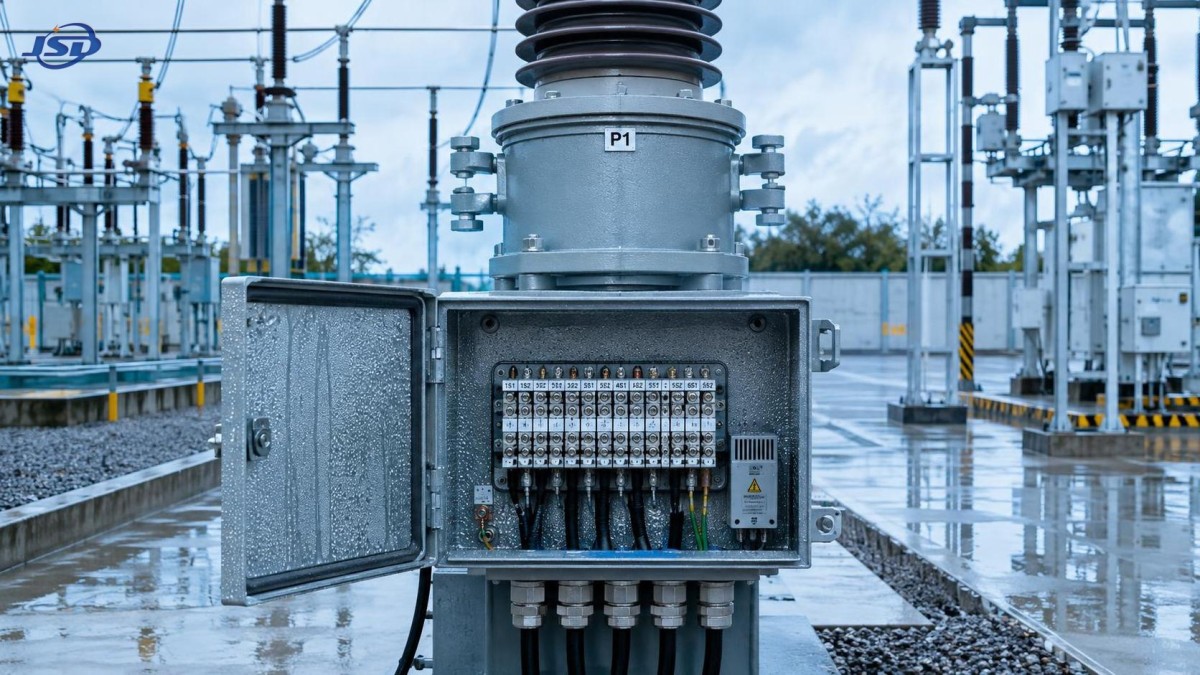
Condensation in an outdoor current transformer installation should be treated as an insulation-management problem, not simply a weather-related nuisance. A light film of moisture may disappear when the temperature rises, but repeated wetting inside a terminal box, junction enclosure, marshalling cabinet, or CT secondary circuit can gradually lower insulation resistance, corrode connections, distort metering signals, and create conditions for a protection malfunction.
For after-sales maintenance personnel, the immediate question is usually practical: is this a temporary surface condition, or evidence that moisture has entered a part of the installation where it can damage insulation? The answer depends less on whether condensation is visible at the inspection moment and more on where it appears, how often it returns, and whether the enclosure can dry without trapping humid air.
An outdoor current transformer can operate reliably in wet climates when its insulation system, cable entries, enclosure sealing, drainage, and maintenance routine work together. Failures become more likely when moisture is allowed to cycle repeatedly between vapor and liquid inside a confined space, especially around secondary terminals and low-voltage wiring.
Why condensation becomes an electrical fault
Condensation forms when a surface falls below the dew point of the surrounding air. Outdoor installations are particularly exposed during cool nights after warm, humid days, after rainfall, near coastal areas, and where equipment is heated during operation and cools quickly after de-energization. A metal enclosure may look well sealed from the outside while still experiencing significant internal condensation because the air trapped inside already contains moisture.
The CT body itself may have an outdoor-rated primary insulation design, yet the secondary terminal compartment is often the more vulnerable area. Secondary circuits operate at lower voltage, but their reliability matters directly to protection relays, meters, remote terminal units, and supervisory systems. A moisture-contaminated secondary circuit can introduce leakage paths, intermittent contact resistance, false alarm conditions, or inaccurate current measurements even before a dramatic insulation breakdown occurs.
Repeated condensation is more damaging than one isolated wet event. Each cycle can leave behind contaminants carried by moisture: dust, salt, industrial deposits, cable-gland residue, or corrosion products. Once these deposits become damp, they can create conductive tracking paths across terminal blocks and insulation surfaces. Drying the compartment may restore acceptable readings temporarily, while the underlying contamination remains and causes the same fault during the next humid period.
Start by locating the moisture path
Do not assume that every wet terminal box has a failed gasket. Moisture reaches outdoor transformer assemblies through several routes, and the correction must match the route. Replacing a seal will not solve a breathing and temperature-cycling problem; adding a heater will not solve standing water entering through a damaged cable gland.
The first inspection should establish whether the moisture is entering from outside, condensing from internal air, or being retained because water cannot escape. Useful observations include the location of water marks, condition of cable entries, evidence of rust at fasteners, condition of door gaskets, drainage openings, and the pattern of moisture on internal surfaces.
- Water concentrated below a gland plate or door seam often points to direct ingress through damaged seals, loose fittings, poorly terminated conduits, or a distorted enclosure door.
- Fine droplets on broad internal metal surfaces more often indicate condensation caused by temperature changes and humid trapped air.
- Corrosion around terminals, ferrules, or cable lugs suggests a recurring condition rather than a single rainwater event.
- Wet insulation near the bottom of an enclosure may result from blocked drains, cable ducts that draw in water, or condensation collecting at the coldest point.
- Localized moisture near one cable entry can indicate an oversized gland, missing sealing insert, cracked cable sheath, or an entry orientation that allows water to follow the cable inward.
Inspection should include the supporting installation, not just the current transformer. A CT mounted in an open yard, on a gantry, or within switchgear can be affected by poorly routed control cables, an unsealed trench, a damaged marshalling-box roof, or water splash from adjacent drainage. The visible fault location is not always the point of entry.
Separate immediate recovery from permanent correction
When moisture is found around a CT secondary circuit, the first priority is to make the circuit safe and preserve protection integrity. Follow the site isolation and CT-secondary handling procedure. Secondary circuits must never be left open while the primary conductor is energized unless the design and operating procedure explicitly provide for it. An open CT secondary can develop hazardous voltage and damage connected equipment.
After the circuit is made safe, remove free water and dry the enclosure thoroughly. A dry cloth alone is often insufficient where deposits have formed. Inspect terminal blocks, shorting links, test terminals, cable lugs, fuse holders, relay-interface terminals, and insulation barriers. Clean contamination using a method compatible with the materials and site procedure, then allow adequate drying time before insulation testing or return to service.
Do not treat a favorable insulation-resistance reading taken immediately after drying as the whole diagnosis. It indicates the condition at that moment, but it does not prove the moisture source has been removed. Record the measurement method, test voltage where applicable, ambient conditions, circuit configuration, and any disconnected electronic equipment. Comparing readings obtained under different test arrangements or different humidity conditions can lead to a false conclusion.
A permanent correction usually involves one or more physical improvements:
- Replace hardened, compressed, cracked, or incorrectly fitted door and cover gaskets.
- Retorque or replace cable glands, ensuring the gland range matches the actual cable diameter and the cable sheath is undamaged.
- Seal unused gland openings with correctly rated blanking plugs rather than improvised tape or filler.
- Correct cable routing so rainwater cannot run along a cable into the enclosure.
- Restore drainage paths, while ensuring they do not become a direct route for splash water or insects.
- Repair enclosure damage that prevents the door from closing evenly or maintaining gasket compression.
- Use controlled anti-condensation heating where the enclosure design and site conditions justify it.
Heaters help only when the enclosure is prepared for them
Anti-condensation heaters are frequently specified as a cure for moisture, but their performance depends on installation details. Their purpose is usually to keep internal surfaces slightly warmer than the surrounding air, reducing the chance that humid air reaches its dew point. They are not intended to compensate for rainwater entering through failed seals or for water accumulating from an unsealed cable trench.
A heater also needs a suitable control arrangement. Continuous heating may consume unnecessary energy and can shorten component life in some compact enclosures. Thermostat and humidity-based control can be useful, but the sensor must be placed where it reflects enclosure conditions rather than a local hot spot. The heater should be positioned so that it warms the air volume without overheating cable insulation, terminal blocks, or sensitive electronic devices.
Maintenance teams should verify that the heater supply is energized, protective devices are intact, wiring is sound, and the heater has not failed open. A heater may be installed but ineffective because its auxiliary supply was never commissioned, was isolated during another maintenance activity, or is controlled by a failed thermostat. Checking its presence is not enough.
For enclosed distribution equipment, the environmental performance of the whole assembly matters. For example, an American-Type Pad-Mounted Substation with an IP54 (NEMA 3R) enclosure can reduce exposure to dust and external moisture, but enclosure protection does not eliminate the need to inspect cable entries, internal temperature cycling, drainage, and auxiliary anti-condensation arrangements. IP classification describes defined enclosure protection conditions; it should not be interpreted as a guarantee that internal condensation cannot occur in every climate or installation layout.
Insulation failure symptoms that deserve escalation
Some signs call for more than enclosure maintenance. If a current transformer shows recurring low insulation resistance after drying, visible tracking, cracked insulation, carbonized surfaces, oil leakage where relevant to the construction, abnormal partial-discharge indications from the site monitoring system, or unexplained protection and metering irregularities, the issue may extend beyond the secondary box.
Before condemning the CT, confirm the test boundary. Secondary wiring, terminal blocks, connected relay inputs, test switches, surge protection devices, and moisture-contaminated cable sections can all affect the result. Divide the circuit into logical sections where site procedures allow. Testing the transformer secondary separately from outgoing wiring can distinguish internal degradation from an external cable or panel problem.
Visual inspection alone cannot establish insulation health, but it can reveal whether a measured problem is likely to recur. A clean, dry terminal compartment with intact seals and correct drainage is a different risk condition from one that dries only after technicians open the door and wipe it down.
Installation details that prevent repeat failures
Many recurring service calls originate in installation details that appear minor during commissioning. Cable entries should face or route in a way that discourages water tracking. External cables need adequate support so their weight does not pull on glands over time. Conduit systems should be examined for condensation and water migration from underground sections. A sealed top enclosure connected to a wet cable trench can still receive moisture from below.
Door alignment also matters. If hinges sag or fastening points are uneven, one portion of the gasket may appear intact while another has insufficient compression. Repainting or cleaning an enclosure should not leave gasket contact surfaces rough, contaminated, or coated with material that prevents an even seal.
Where the installation is exposed to salt-laden air, industrial dust, or frequent wet-dry cycles, inspection intervals should reflect that exposure rather than follow a calendar alone. The practical trigger for increased attention is evidence of recurring moisture, corrosion, or weather-related electrical irregularity. A site with stable dry readings and no ingress evidence does not require the same intervention as one where condensation appears after each major temperature swing.
Build the maintenance record around trends
A useful record for an outdoor current transformer installation is short but specific. Document enclosure condition, gasket and gland status, evidence of water paths, heater operation, drainage condition, insulation-test configuration, readings, ambient conditions, and corrective work completed. Include photographs when permitted by site practice, especially before cleaning removes the moisture pattern.
Trend information is more useful than a single pass or fail result. If resistance readings decline after humid weather and recover after drying, the enclosure may still be protecting the primary insulation while the secondary system is approaching a reliability problem. If corrosion reappears at the same terminal group, replacing terminals without addressing the ingress route only delays the next outage.
The most effective response is usually modest and targeted: identify how moisture enters or condenses, restore the enclosure’s ability to shed and drain water, keep internal surfaces above the dew point where needed, and verify insulation with the circuit correctly isolated. That approach protects both the current transformer and the protection, metering, and control functions that depend on it.

Get a Quote
Regardless of whether you require general advice or specific support, we are happy to help you.
Send Us Your Inquiry Today

Jinshida Electric remains committed to contributing to global energy development through professional manufacturing and superior service.