





Key Specifications for Copper-Winding Power Transformers in Utility Substation Tenders
A utility tender should not treat copper windings as a shorthand for transformer quality. Copper is often the preferred conductor material for demanding substation duty because of its electrical and mechanical characteristics, but procurement decisions still depend on the complete design: losses, insulation coordination, cooling, fault performance, interfaces, testing, and the supplier’s ability to document what is being offered.
For a copper winding power transformer, the most useful tender approach is to define the service duty first, then require bidders to state guaranteed values and design assumptions against the same schedule. This makes quotations comparable and reduces the risk of selecting a unit that looks compliant on nameplate data but is poorly matched to the network.
Start with the operating duty, not the conductor material
Rated power and primary/secondary voltage establish the basic transformer size, but they do not describe how hard the transformer will work. Before drafting technical requirements, identify the expected load profile, transformer role, network arrangement, ambient conditions, altitude, indoor or outdoor installation, and likely future expansion.
A transformer supplying a lightly loaded distribution feeder has different priorities from one serving an industrial process, a renewable-energy connection, or a critical urban substation. Repeated overload, frequent tap-changer operation, harmonic currents, poor ventilation, and high fault levels can all change the appropriate design.
Copper windings can offer practical benefits where compact design, mechanical strength, and thermal performance are important. Yet a copper design with insufficient cooling margin or weak insulation details is not automatically a better purchase than a well-engineered alternative. The tender should therefore assess copper winding construction as one element of a defined performance package.
Specify losses as guaranteed values
Losses are among the most important commercial and technical comparison points because they affect operating cost throughout the transformer’s service life. Tender documents should separate no-load loss from load loss rather than requesting a general statement that the transformer is “high efficiency.”
No-load loss is present whenever the transformer is energized and is mainly associated with the magnetic core. Load loss rises with current and is influenced by winding resistance, stray losses, conductor arrangement, and cooling conditions. A supplier may optimize one figure while allowing the other to increase, so procurement teams need both values stated at the declared rating, tap position, and cooling mode.
Ask bidders to identify the temperature basis used for load-loss guarantees and how auxiliary power for cooling equipment is treated. A transformer intended to operate with fans or pumps for substantial periods should not be evaluated only on a base cooling rating that does not reflect actual operating practice.
Insulation design must reflect the site and system
Voltage class alone is not an insulation specification. The insulation system must withstand normal operating voltage, switching events, lightning-related surges where applicable, and the environmental stresses expected at the installation site. Tender requirements should clearly state insulation levels, terminal configuration, neutral treatment, and the system conditions relevant to the transformer.
For oil-immersed units, the quality of the insulation system depends on more than the oil itself. Winding insulation, conductor covering, pressboard structures, lead supports, clamping arrangements, oil preservation, and moisture control work together. Requirements for sealed tank construction, conservator arrangements, or other oil-expansion systems should match the owner’s maintenance strategy and climate conditions.
Temperature-rise limits also deserve close attention. A lower temperature rise can provide useful thermal margin, but the correct requirement depends on loading pattern, cooling medium, design life expectations, and the insulation materials used. Requiring an unrealistically low rise without considering the system duty may increase cost and size without solving a real operating problem.
Cooling choice affects capacity, maintenance, and resilience
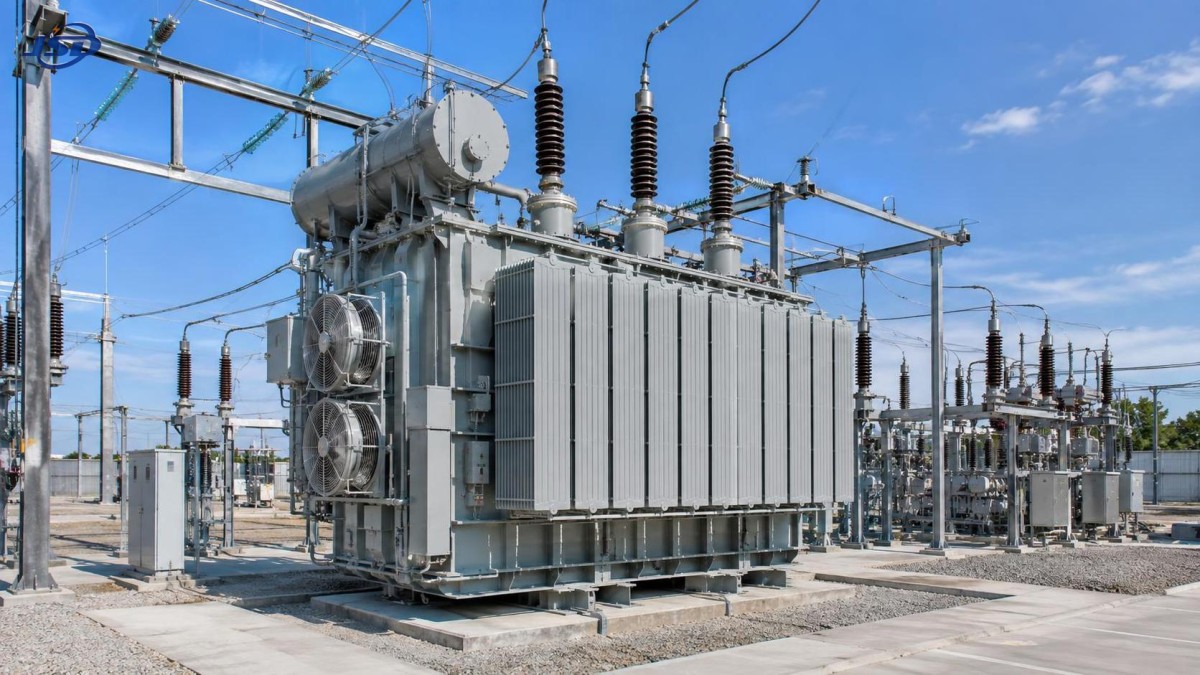
Cooling mode should be selected around the required duty rather than copied from an earlier tender. Natural cooling designs are simpler and reduce dependence on auxiliary equipment. Forced-air or forced-oil stages can provide higher capacity in a smaller footprint, but they introduce fans, pumps, control circuits, alarms, and maintenance responsibilities.
The tender should state the required rated capacity at each cooling stage, the expected control philosophy, redundancy expectations for auxiliary equipment, and the alarms or trip functions required for abnormal conditions. It should also require the supplier to explain what capacity remains available if a fan group, pump, or associated control component is unavailable.
This point becomes more important at constrained substations. A compact transformer with intensive cooling may appear attractive during bid review, but access for radiator cleaning, fan replacement, oil sampling, and future inspection must be workable at the actual site.
Short-circuit withstand is a design requirement, not a checkbox
Network fault duty can impose severe electromagnetic and mechanical forces on transformer windings. Copper conductors contribute useful mechanical robustness, but fault withstand depends equally on winding geometry, radial and axial bracing, clamping pressure, leads, tap connections, and the entire active-part assembly.
Procurement teams should provide the relevant system fault information and require a clear short-circuit withstand declaration. A generic statement of compliance is less useful than a documented design basis tied to the tendered voltage, impedance, winding arrangement, and network conditions. Where the transformer will operate close to large generators, heavy industrial loads, or a strong transmission system, this review should receive the same attention as the rated power.
Do not assume that increasing impedance is always the answer to higher fault current. It may reduce fault contribution, but it also affects voltage regulation and parallel operation. The appropriate impedance must be coordinated with the rest of the substation and connected network.
Tap changer requirements should follow the voltage-control duty
An off-circuit tap changer may be suitable where seasonal or commissioning adjustments are sufficient. An on-load tap changer is appropriate when the transformer must regulate voltage while energized, but it adds a high-use mechanical component that needs a defined operating duty and maintenance plan.
Specify the tap range, step size, rated current, control mode, remote control needs, interlocking, position indication, and interface requirements. Also distinguish between a tap range that is technically available and one that supports the required rated output across the expected operating range. For transformers expected to operate in parallel, tap arrangement, vector group, impedance, and voltage ratio require coordinated treatment.
Ask for the evidence that makes bids comparable
The tender evaluation should separate promised performance from demonstrated compliance. Require a submission package that includes a guaranteed technical data schedule, general arrangement drawings, terminal and bushing details, losses, impedance, cooling ratings, insulation information, protection and monitoring scope, and a clear list of exclusions or deviations.
Routine test documentation is essential, but project risk sometimes justifies additional review of design calculations, factory inspection points, or specified tests relevant to the duty. The exact test scope should match the transformer type and the consequences of failure. A bidder that provides a complete, internally consistent data package is easier to evaluate than one offering broad claims with gaps in the interfaces.
Acceptance criteria should also cover practical items: oil containment provisions, transport mass and dimensions, lifting and jacking points, cable-box or bushing arrangements, earthing terminals, marshalling cabinet location, spare parts, installation documentation, and commissioning support. These details often cause more site delay than the major electrical ratings.
Evaluate the transformer as part of the substation system
A transformer cannot be selected in isolation from switchgear, protection, cables, earthing, and reactive-power equipment. Vector group affects protection and parallel operation. Neutral arrangements influence fault protection. Bushing current rating and terminal clearances must suit the connected conductors. Instrument transformers, sensors, and remote monitoring should align with the substation control architecture.
Projects that combine substations with solar generation, battery storage, or controlled loads need particular care. Harmonic currents, reverse power flow, variable loading, and bidirectional operating patterns may alter the thermal and voltage-control assumptions. The transformer requirement should describe these conditions instead of leaving suppliers to make incompatible assumptions.
For the storage side of a wider distributed-energy project, a modular low-voltage solution such as the 51.2V Stackable LiFePO4 Energy Storage Battery may be relevant to the system architecture. It is not a substitute for substation transformer specification; it is a separate component whose inverter interface, charging profile, expansion plan, and protection coordination must be evaluated alongside the transformer and grid-connection design.
Common tender mistakes that create expensive ambiguity
- Copying a legacy specification: Previous ratings, losses, impedance, and cooling arrangements may not suit the new network or loading profile.
- Requesting copper without defining winding performance: Material alone does not establish short-circuit strength, losses, temperature rise, or service life.
- Comparing headline prices only: A lower purchase price can conceal higher losses, reduced monitoring, weaker accessories, or exclusions that reappear during installation.
- Leaving interfaces vague: Unclear bushing locations, cable terminations, protection signals, and control-voltage requirements can create late engineering changes.
- Ignoring maintainability: A technically compliant design may still be difficult to inspect, cool, transport, or repair at the intended site.
A practical bid-review sequence
Start by confirming the electrical duty: voltage ratio, rated capacity, tap range, vector group, impedance, neutral arrangement, and fault conditions. Then assess thermal and efficiency performance through guaranteed losses, temperature-rise basis, cooling stages, and auxiliary power needs. Review insulation, terminals, and environmental design next, followed by protection, monitoring, drawings, transport constraints, testing, and service documentation.
Only after the technical offers have been normalized should commercial comparison carry full weight. This sequence prevents procurement teams from accepting an attractive price for a design that has shifted risk into operating losses, substation interfaces, or future maintenance.
Jinshida Electric Power Technology Co., Ltd. supports power transmission and distribution projects with a focus on reliable manufacturing, controlled quality processes, and engineering support for grid, industrial, renewable-energy, and infrastructure applications. In a substation tender, the most productive supplier discussion is one based on the actual duty and a complete technical schedule. That is how copper winding construction becomes a verified part of a reliable transformer solution rather than an unexamined line item.

Get a Quote
Regardless of whether you require general advice or specific support, we are happy to help you.
Send Us Your Inquiry Today

Jinshida Electric remains committed to contributing to global energy development through professional manufacturing and superior service.