





How to Choose an Oil Immersed Distribution Transformer for Rural and Urban Grids
Choosing for the grid you actually have, not the one on paper
Choosing the right oil immersed distribution transformer is rarely just a nameplate exercise. On rural and urban grid projects, the same rated capacity can behave very differently once it meets the real site: long rural feeders with wide voltage fluctuation, compact urban substations with tighter noise limits, mixed commercial loads, rooftop solar backfeed, or difficult maintenance access. For project managers, that means transformer selection has to connect electrical parameters with construction conditions, operating habits, and lifecycle risk.
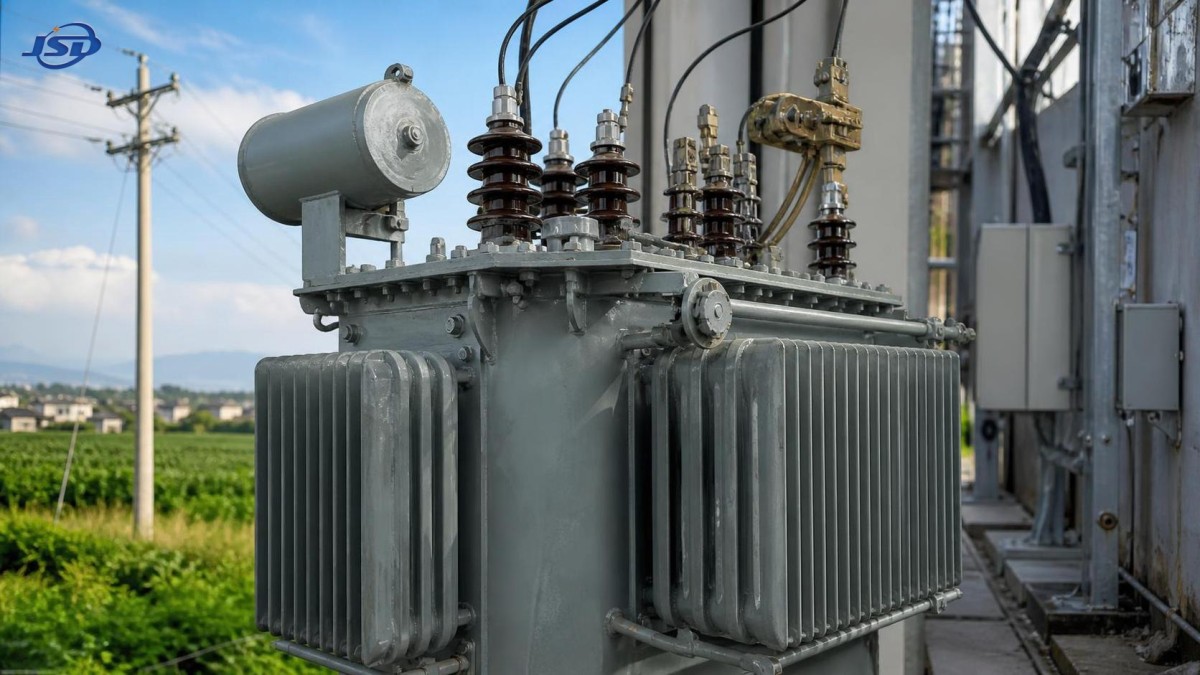
An oil immersed distribution transformer is often preferred because it offers strong overload tolerance in many practical applications, stable heat dissipation, and a mature maintenance framework. But “suitable” depends on context. A rural utility extension and an urban infill project may both specify 15kV/0.4kV, yet the right design margin, loss balance, tank structure, and protection details can be quite different.
A common mistake is to start with price per kVA and work backward. In practice, the better sequence is load profile, network condition, installation environment, then procurement comparison. That order usually leads to fewer unpleasant surprises after energization.
Start with the load shape, not just connected load
The first question is not simply “What capacity do we need?” but “How will this transformer be used across the day and across seasons?” In rural grids, demand may be sparse for much of the day and spike during irrigation, grain processing, or seasonal heating and cooling. In urban networks, loading is often denser and more continuous, but with sharper peaks from commercial buildings, residential towers, EV charging, or small industry.
That distinction matters because transformer losses are split between no-load loss and load loss. If the unit will sit energized year-round with relatively light average loading, no-load loss deserves close attention. If the project expects sustained higher loading, conductor and winding-related load loss becomes more financially relevant over time. The lowest purchase price is not always the lowest owning cost.
It is also worth checking whether the load is balanced across phases and whether harmonics are expected. Rural users with many single-phase branches can create imbalance. Urban buildings with elevators, drives, data equipment, and power electronics can stress the transformer differently. If the actual load quality is poor, a transformer that looks adequate on paper may run hotter than expected.
Rural and urban projects fail in different ways
Rural projects are often limited by distance, exposure, and serviceability. Long distribution lines can produce voltage drop, especially at peak demand or when conductor sizes are constrained. In that setting, tap arrangement becomes more than a technical footnote. It affects whether downstream users receive acceptable voltage during real operating conditions. If the local network has known seasonal variation, the tap range should be reviewed against field voltage records rather than assumed.
Urban projects, on the other hand, usually compress more risk into less space. The transformer may sit close to occupied buildings, underground or semi-enclosed rooms, cable basements, roadside kiosks, or prefabricated substations. Here, heat dissipation, clearance, fire separation, ventilation, and noise become immediate selection factors. A technically sound transformer can still become the wrong choice if the site cannot support safe oil containment or maintenance access.
This is where experienced manufacturers tend to ask better questions early. Companies such as Jinshida Electric Power Technology, which focus on the R&D, manufacturing, and application of power transmission and distribution equipment, generally understand that transformer suitability is tied to project conditions, not only catalog data. For buyers, that kind of technical dialogue often matters more than a broad product list.
Voltage level, tap range, and impedance deserve more attention than they usually get
For many distribution projects, the basic voltage class may be straightforward, but the details still deserve verification. Primary and secondary voltage ratings should match the actual grid architecture, not the historical default. If there is local distributed generation, unusual feeder behavior, or planned network reinforcement, those should be reflected in the specification.
Tap changer configuration should be selected with operating reality in mind. In a stable urban feeder, standard off-circuit taps may be enough. In rural systems where source voltage varies more significantly, the practical value of tap flexibility is higher. The point is not to overcomplicate the design, but to avoid a transformer that needs repeated field adjustment to remain usable.
Short-circuit impedance is another item that procurement teams sometimes treat as a fixed formality. It is not. Impedance affects fault current and voltage regulation. Too little attention here can create coordination issues with protection devices or affect voltage performance under load. This parameter should be checked against the rest of the network, especially when replacing existing transformers in partially upgraded systems.
Environment changes the right answer
An oil immersed distribution transformer that performs well in a mild, open site may need different treatment in a coastal, dusty, high-altitude, or high-temperature location. Corrosion protection, radiator arrangement, bushing selection, sealing reliability, and oil preservation details all become more important once the operating environment gets harsher.
For rural deployment, dust ingress, animal interference, lightning exposure, and difficult access for maintenance are recurring concerns. In dense urban areas, oil leakage control, low-noise design, and compact footprint often move up the priority list. Not every project needs a highly customized unit, but every project benefits from asking what can go wrong at the site within the first five years.
That is also why it helps to review the mechanical design, not only electrical ratings. Tank strength, lifting points, base channel dimensions, cable interface arrangement, and transport limitations can all affect installation risk. A transformer that is easy to produce is not always easy to deliver into a narrow city site or a remote rural location.
Losses, efficiency, and temperature rise: what to compare in a bid review
When comparing bids, ask suppliers to clarify the basis of their loss figures and confirm the relevant standard and cooling conditions. Buyers sometimes compare one quotation’s low no-load loss against another quotation’s low load loss and assume both are equally favorable. They are not unless the loading profile is similar and the test basis is consistent.
Temperature rise should also be reviewed with realism. In hot climates or enclosed urban substations, small differences in thermal design can influence aging rate and overload headroom. If the project anticipates future demand growth, a transformer with a little more thermal margin may reduce replacement pressure later. That does not mean oversizing by habit; it means understanding whether today’s “normal” load will still be normal after network expansion.
In many medium-voltage distribution applications, a unit such as the 15kV/0.4kV Oil-Immersed Power Distribution Transformer fits typical step-down requirements, but suitability still depends on the surrounding feeder conditions, installation method, and load behavior. The model number alone should never close the discussion.
Protection, maintenance, and what operations teams will care about later
Project teams often focus heavily on procurement and commissioning, while operations teams inherit the real consequences. Before final selection, it is worth checking which accessories are standard, which are optional, and which are genuinely useful for the site. Oil level indication, temperature monitoring, pressure relief, drain and sampling valves, and clear terminal marking are not glamorous topics, but they directly affect maintainability.
For remote rural assets, simpler and more robust arrangements are often easier to live with. For urban installations with higher service expectations, better monitoring may be justified if it supports fault response or preventive maintenance. The right balance depends on how the owner actually manages the asset fleet. There is no universal “fully equipped” answer that makes sense everywhere.
Ask one practical question during evaluation: if this transformer develops an issue in year three, how fast can spare parts, technical support, and troubleshooting guidance be provided? A supplier’s manufacturing capability matters, but so does after-sales discipline. This is one reason many buyers prefer manufacturers with an established engineering team, controlled production processes, and a consistent quality management approach rather than traders assembling quotations from multiple unknown sources.
A short checklist for decision-makers
If the selection process is getting too abstract, bring it back to a few grounded checks:
- What is the actual daily and seasonal loading pattern?
- How stable is the primary-side voltage, and does the tap range fit that reality?
- Is the site rural-exposed or urban-constrained, and what does that change in design priority?
- Are losses being compared on the same basis across suppliers?
- Will installation, ventilation, oil containment, and maintenance access work in practice?
- Does the supplier provide technical review, documentation clarity, and service support beyond shipment?
These questions sound basic, but they tend to reveal the difference between a transformer that merely meets a specification and one that actually fits the grid asset strategy.
The better choice is usually the one with fewer hidden compromises
For rural and urban grids alike, choosing an oil immersed distribution transformer is really an exercise in matching equipment behavior to network reality. Capacity, voltage ratio, and price are only the visible layer. The more consequential decisions often sit underneath: loss structure, tap suitability, environmental durability, thermal margin, maintainability, and supplier reliability.
The safest buying decisions usually come from suppliers willing to discuss trade-offs openly. Jinshida Electric’s positioning around quality-focused manufacturing, technical capability, and reliable power support reflects the kind of partnership many infrastructure and industrial projects look for when the goal is not just delivery, but stable operation over time.
If you are narrowing options now, review the one-line diagram, feeder conditions, site limitations, and expected load growth before finalizing the transformer schedule. That extra round of technical checking is often cheaper than solving the wrong selection after installation.

Get a Quote
Regardless of whether you require general advice or specific support, we are happy to help you.
Send Us Your Inquiry Today

Jinshida Electric remains committed to contributing to global energy development through professional manufacturing and superior service.