





BESS Container Layout Explained: How Internal Design Affects Safety and Serviceability
BESS Container Layout Explained: How Internal Design Affects Safety and Serviceability
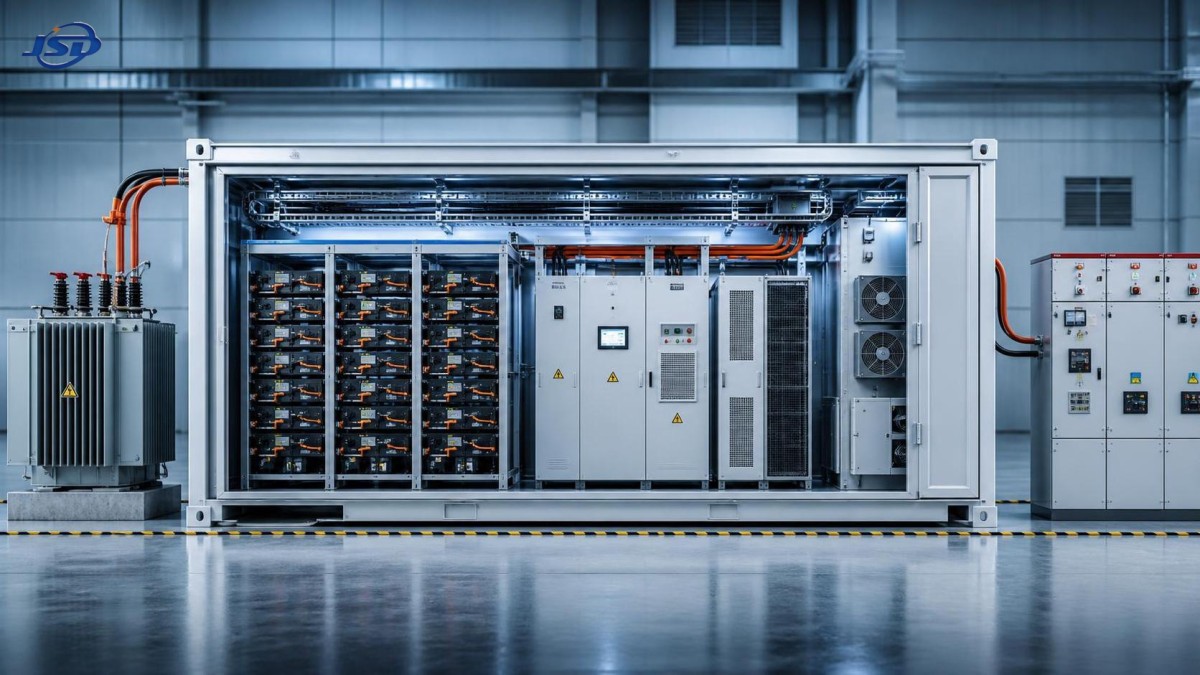
For technical evaluators, a well-designed bess container is not just a steel shell around batteries, power conversion equipment, and auxiliaries. The internal arrangement determines how heat moves, how faults are isolated, how quickly technicians can access components, and how practical the system remains after years of operation. Layout decisions that look minor on a drawing often become decisive in the field—especially when maintenance windows are short, ambient temperatures are high, or grid-side reliability expectations are strict.
This matters even more when energy storage is integrated with transformers, switchgear, and other power distribution assets. In many projects, the container does not operate as a standalone product. It becomes part of a wider electrical architecture, and that means internal design has to support cable discipline, protection coordination, thermal stability, and safe intervention under real operating conditions.
Why layout deserves as much attention as battery chemistry
Buyers often begin with battery type, capacity, cooling method, and PCS rating. Those are obviously important, but layout is where system intent becomes operational reality. A container can use acceptable components and still create service problems if modules are too tightly packed, if cable trays cross maintenance paths, or if HVAC airflow is blocked by structural partitions.
In practical evaluations, internal layout usually affects five areas at the same time: thermal performance, fire and fault containment, electrical segregation, maintainability, and installation efficiency. These factors are linked. For example, widening a service aisle may improve access to racks and BMS devices, but it may also change airflow behavior or reduce the space available for fire suppression piping. Good design is not about maximizing one metric; it is about making the system workable as a whole.
Battery rack spacing and the thermal path
Inside a bess container, heat does not disappear just because cooling equipment is specified. It follows the geometry of the enclosure. Rack spacing, clearance from side walls, air inlet and return locations, and the placement of cable bundles all influence whether cooling is even or uneven.
A common technical concern is temperature stratification. If hot air collects above upper modules or at the back of dense rack rows, cell temperature deviation can widen. That can affect balancing behavior and may accelerate aging in some sections of the system. Air-cooled designs therefore depend heavily on disciplined internal routing and unobstructed circulation paths. Evaluators should not only ask for HVAC capacity; they should ask how that capacity is distributed across the actual internal arrangement.
This is one reason many experienced manufacturers treat enclosure design, battery arrangement, and thermal management as a coordinated engineering task rather than separate procurement items. Companies such as Jinshida Electric Power Technology Co., Ltd., with a background in power transmission and distribution equipment, typically approach the container as part of a broader electrical system—where safety margins, thermal consistency, and service access have to coexist with stable power delivery.
Service aisles are not wasted space
One of the easiest mistakes in early evaluation is treating aisle space as a packaging inefficiency. In reality, inadequate access can increase lifecycle cost very quickly. Technicians need room to inspect terminations, replace sensors, verify BMS connections, access fire system components, and safely isolate faulty sections. If a person cannot reach a device without removing adjacent parts, the system may be maintainable in theory but not in practice.
This becomes critical when containers are deployed in industrial or infrastructure projects where downtime carries operational consequences beyond the storage asset itself. If the energy storage system supports a transformer-fed process load, a delayed intervention can affect upstream and downstream equipment planning. Technical teams should therefore review door swing, working clearance, panel opening space, lighting, and the route a technician must follow to reach the deepest service points.
A useful rule during review is simple: every frequently inspected component should be accessible without partial dismantling, and every safety-critical component should be accessible under fault isolation procedures. If the design cannot meet that test, layout is likely too dense.
Cable routing is a safety issue, not just a neatness issue
Cable routing inside a bess container often receives less attention than battery module arrangement, but it has direct implications for fault risk and maintenance quality. Power cables, communication lines, grounding conductors, and auxiliary control wiring should not compete for the same physical path without clear segregation logic. Poor routing can make troubleshooting harder, increase the chance of mechanical damage, and complicate future upgrades or part replacement.
Evaluators should look for clean separation between DC power circuits, AC circuits, and low-voltage control wiring wherever practical. Bend radius, fastening points, labeling visibility, and penetration sealing also matter. If cables cross ventilation pathways or obstruct detector coverage, the layout is already creating secondary risks.
Transformer integration adds another layer. Where the storage system interfaces with step-up transformers or distribution equipment, external cable exit points and internal terminations should reduce stress, simplify testing, and support safe isolation. A layout that looks compact indoors may create site cable congestion outdoors if the entry and exit logic is poorly planned.
Fire detection and suppression depend on physical arrangement
No fire protection scheme should be assessed independently from layout. Detector placement, suppression nozzle coverage, venting paths, and compartment boundaries all depend on the geometry inside the enclosure. If battery racks block sensor response zones or if structural partitions create stagnant pockets, detection may be slower than intended. If suppression hardware cannot reach the relevant zone effectively, the specification may look compliant on paper while underperforming in a real event.
Because project standards and local code requirements vary, technical reviewers should verify how the manufacturer aligns the enclosure layout with the applicable design basis. It is reasonable to ask for the logic behind detector locations, separation distances, emergency shutoff access, and maintenance procedures for the fire system itself. The right question is not only “what suppression medium is used?” but “how does the internal arrangement support fast detection, isolation, and post-event serviceability?”
In many mid-scale applications, an air-cooled product such as the 500kW/1MWh Air Cooling Container Energy Storage System is evaluated not just for power and energy rating, but for whether the internal arrangement gives enough separation between battery sections, auxiliaries, and service zones to support predictable operation over time.
The role of auxiliary equipment placement
Auxiliaries are often what make or break serviceability. HVAC units, control cabinets, BMS devices, fire panels, lighting, and environmental sensors should be positioned so they can be inspected without entering unsafe proximity to energized sections. When these devices are squeezed into leftover spaces, the result is usually longer service time and a greater chance of human error.
There is also a reliability angle. Condensation-prone corners, high-vibration locations, and hot recirculation zones are poor choices for sensitive controls. Technical teams comparing vendors should examine whether auxiliary placement appears intentional and system-level, or merely convenient for assembly.
What to review during technical comparison
A layout review becomes more useful when it moves beyond brochure diagrams. The following questions usually reveal whether the design has been developed with operation in mind:
- Can technicians access battery racks, BMS nodes, and major terminals without removing adjacent assemblies?
- Are airflow paths clear, with no obvious conflict between cable trays, partitions, and HVAC circulation?
- Is there sensible separation between DC, AC, and control wiring?
- Do detector and suppression layouts appear coordinated with the physical rack arrangement?
- Are emergency isolation points visible and reachable under realistic working conditions?
- Does the container interface cleanly with transformers, switchgear, and site cable routing?
These are not abstract checklist items. They influence commissioning speed, routine inspection quality, and how manageable the system will be after several years of thermal cycling, dust exposure, and repeated access.
Why manufacturing discipline still matters after the layout is approved
Even a strong design can be weakened by inconsistent manufacturing execution. Bracket tolerances, cable dressing, labeling practice, sealing quality, and installation of auxiliary devices all affect whether the delivered container matches the intended layout. This is where a rigorous quality management system becomes more than a corporate statement. In power equipment projects, repeatability matters because small assembly deviations can change airflow, clearances, and inspection convenience.
For suppliers with roots in transmission and distribution equipment, there is often a practical advantage: they tend to think in terms of electrical interfaces, protection logic, and long-term field stability rather than enclosure packaging alone. That mindset is valuable when storage systems are deployed alongside substations, industrial feeders, or renewable integration projects where equipment coordination is just as important as internal battery arrangement.
A balanced layout usually outperforms a maximally dense one
It is tempting to favor the design that fits the most energy into the smallest footprint. Sometimes that is the right decision. But density should be weighed against maintainability, thermal uniformity, and intervention safety. A slightly less compact bess container may prove more robust over the asset lifecycle if it allows cleaner cable routing, better airflow, and faster fault isolation.
That tradeoff should be discussed openly during evaluation. If two systems appear similar on headline ratings, ask to see internal arrangement drawings, service clearances, equipment zoning, and maintenance logic. In many cases, those details say more about future operating reality than the top-line capacity figure.
For teams reviewing containerized storage linked to transformers, grid support, industrial power, or new energy integration, the next step is usually not a generic vendor comparison. It is a layout-specific review against site conditions, operating philosophy, local standards, and maintenance practice. That is where strong designs separate themselves from merely compact ones.

Get a Quote
Regardless of whether you require general advice or specific support, we are happy to help you.
Send Us Your Inquiry Today

Jinshida Electric remains committed to contributing to global energy development through professional manufacturing and superior service.