





Energy Storage Container Procurement Guide: Specs, Compliance, and Delivery Risks
Procuring an energy storage container involves more than comparing prices. For buyers in power and industrial projects, the right choice depends on technical specifications, regulatory compliance, safety standards, and delivery reliability. This guide outlines the key factors that influence procurement decisions, helping you reduce project risk, avoid costly delays, and select a solution that supports stable, efficient, and long-term energy performance.
In practice, many procurement problems appear late—during transport approval, site acceptance, grid connection, or commissioning—not at the quotation stage. That is why buyers who treat an energy storage container as a simple metal enclosure with batteries inside often face budget overruns and schedule pressure later. The procurement task is not just buying equipment; it is buying performance, compliance, and project certainty.
What buyers are really purchasing
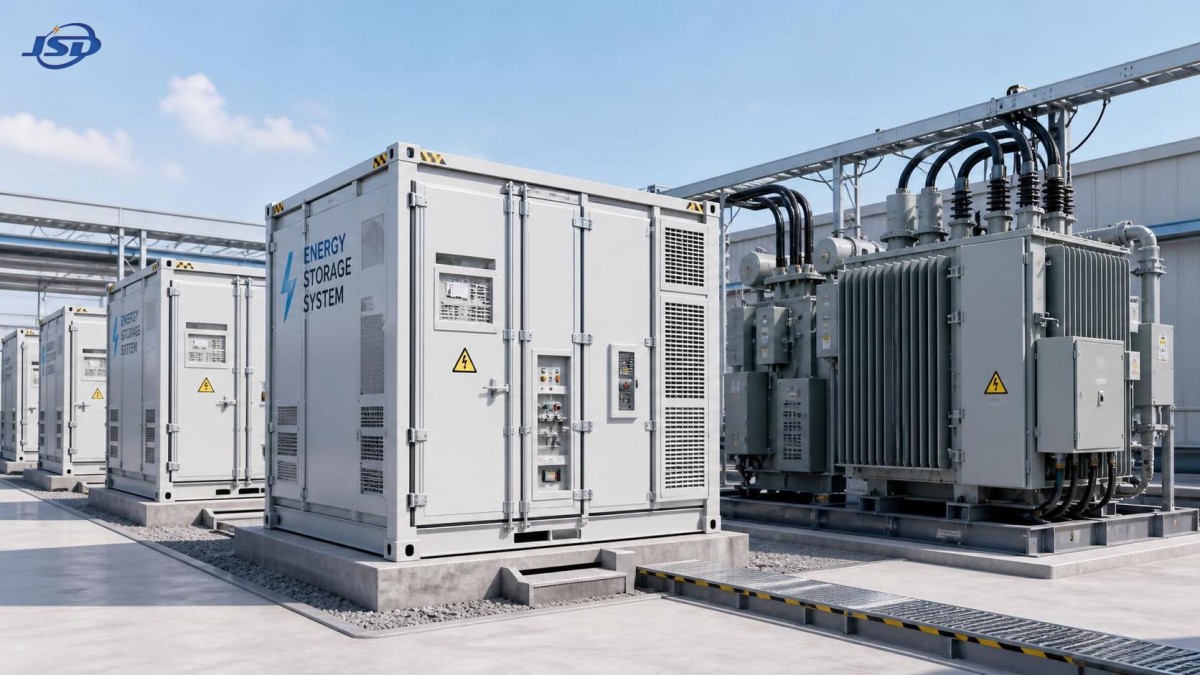
An energy storage container is usually a prefabricated system integrating battery racks, battery management system (BMS), thermal management, fire protection, auxiliary power, control components, and sometimes power conversion equipment depending on the delivery scope. From a procurement perspective, the key question is not “How many MWh does it hold?” but “What exactly is included, under which operating conditions, and with what acceptance criteria?”
Suppliers may use the same rated capacity headline while offering very different system boundaries. One quotation may cover only the battery container, while another includes HVAC, fire suppression, local EMS interface, internal cabling, monitoring, and factory testing. Some also include PCS and medium-voltage integration in a complete skid or station package; others do not. Without clarifying scope, price comparison becomes misleading.
For industrial and utility-related projects, buyers should define the commercial boundary early:
- Battery container only, or full AC-side storage solution
- Included internal auxiliaries and safety systems
- SCADA/EMS communication scope
- Site services, commissioning, and training
- Spare parts and warranty response obligations
Specifications that affect cost more than buyers expect
Procurement teams often focus on nameplate energy capacity, but cost and suitability are strongly influenced by several less visible specifications.
Cell chemistry and system architecture
LFP remains the mainstream choice for many stationary applications because of its safety profile and market maturity. Even so, not all LFP-based systems are equivalent. Cell format, module design, pack architecture, and DC voltage range can affect maintenance access, thermal consistency, fault isolation, and long-term degradation behavior.
Buyers should ask not just which chemistry is used, but how the supplier manages:
- Cell consistency and traceability
- Thermal runaway detection and propagation mitigation
- Rack-level isolation strategy
- Replacement logic for failed modules or packs
Usable capacity versus nominal capacity
A frequent source of procurement confusion is the difference between nominal energy and usable energy. Contract documents should clearly state depth of discharge assumptions, auxiliary consumption, operating temperature impacts, and end-of-life capacity commitments. A container rated at a certain nominal MWh may deliver meaningfully less usable energy under actual site conditions.
Charge-discharge rate
Project economics differ sharply between applications such as peak shaving, renewable smoothing, backup support, and frequency response. A 0.5P system and a 1P system can look similar externally but differ in thermal design, battery stress, PCS matching, and lifecycle economics. If the load profile is not aligned with the selected C-rate, buyers may overpay for performance they do not need or underbuy for the intended duty cycle.
Environmental design conditions
Ambient temperature, altitude, humidity, corrosive atmosphere, dust load, and seismic conditions all influence the final configuration. In hot regions, HVAC sizing becomes a major design variable affecting auxiliary consumption and battery life. In coastal or mining-adjacent environments, enclosure corrosion protection, filtration, and internal electrical component selection become more critical.
This is also where related power equipment matters. Projects combining storage, substations, and heavy industrial loads may require compatible upstream and downstream equipment planning. In certain mining or hazardous-area power systems, buyers may also need to coordinate storage-related procurement with specialized equipment such as Mining Flameproof Transformer units, especially when system safety classification and site power distribution constraints affect package design.
Compliance is not a paperwork issue
For many buyers, compliance becomes urgent only when shipping starts or local authorities request documentation. That is too late. An energy storage container may need to satisfy overlapping requirements from electrical safety, fire protection, transportation, grid code, building rules, and local environmental regulations.
The relevant standards vary by country and project type, so buyers should avoid assuming that a product accepted in one market is automatically deployable in another. Commonly referenced standards and requirements may include:
- IEC or UL standards applicable to battery systems and electrical assemblies
- UN 38.3 for lithium battery transport testing
- Local fire code requirements
- Grid interconnection and utility acceptance rules
- Container structural and transport compliance documentation
- EMC and low-voltage directives where applicable
Specific standard applicability depends on system scope and destination market, and some project owners impose additional internal specifications beyond public regulation. Where requirements are unclear, buyers should mark them as 【待核实】 instead of relying on supplier assumptions.
The commercial risk is straightforward: if certification responsibility is not allocated in the contract, the buyer may absorb redesign cost, delayed customs clearance, or failed site acceptance. Compliance should therefore be written into the technical agreement, not left in marketing brochures.
Safety evaluation should go beyond fire suppression claims
Most suppliers now highlight multiple layers of battery safety, but procurement teams should examine how those layers work together in failure scenarios. Declared fire suppression is only one part of the risk picture.
Questions worth asking include:
- What triggers alarm, shutdown, isolation, and suppression actions?
- Is gas detection included, and what gases are monitored?
- How is thermal runaway propagation tested or validated?
- What are the ventilation and pressure relief arrangements?
- Can a fault in one rack be isolated without losing the full container?
- What are the emergency response procedures for transport, storage, and site operation?
Factory demonstrations are useful, but buyers should distinguish between component-level certification and full system-level safety validation. In some tenders, this difference is overlooked, and it becomes a problem when insurers, EPC contractors, or end users ask for evidence during project execution.
Delivery risk often starts with upstream supply chain visibility
Lead time is one of the most underestimated risks in storage procurement. A supplier may commit to a container delivery date, but actual schedule reliability depends on cells, BMS electronics, HVAC units, fire protection components, and power electronics availability. Buyers should assess where the real bottlenecks sit.
Recent market cycles have shown that cell price declines do not automatically translate into stable delivery. Demand volatility, export controls, shipping constraints, and certification queues can all affect timelines. For overseas projects, the packaging, dangerous goods handling process, route planning, and port compliance may matter as much as factory output.
Useful supplier due diligence questions include:
- Who are the approved cell suppliers and how many are qualified?
- Which critical components are single-sourced?
- What is the current production capacity and order backlog?
- What FAT slot availability exists before shipment?
- How are shipping batteries classified and documented for export?
- What is the historical on-time delivery performance for comparable projects?
If the project schedule is tight, buyers should request a milestone-based delivery plan covering engineering freeze, component procurement, assembly, testing, shipping readiness, and commissioning support. A single promised ex-works date is not enough to manage risk.
Price comparison without lifecycle context can lead to wrong decisions
The cheapest bid is often not the lowest-cost option over the project term. A better procurement comparison includes both upfront and downstream costs:
- Usable energy delivered over warranty life
- Expected degradation under the actual operating profile
- Auxiliary power consumption, especially HVAC load
- Maintenance complexity and spare part availability
- Warranty exclusions and performance guarantee conditions
- Replacement cost for modules, packs, or key electronics
One practical mistake is evaluating systems on $/container or even $/nominal kWh alone. For buyers supporting industrial, grid-support, or renewable projects, a more meaningful comparison is often cost per warranted usable kWh over the expected application cycle, adjusted for operating conditions.
Warranty language deserves close attention. Capacity retention guarantees may be tied to narrow temperature bands, annual throughput limits, or approved control strategies. If the real project duty cycle exceeds those assumptions, the buyer may discover that the headline warranty offers less protection than expected.
Inspection and acceptance should be defined before purchase order release
Many disputes arise because technical acceptance criteria were not detailed early enough. Buyers should define factory acceptance test (FAT) and site acceptance test (SAT) items before production starts. Otherwise, both parties may have different expectations regarding what constitutes a deliverable-ready energy storage container.
FAT scope may include:
- Visual and dimensional inspection
- Wiring and labeling verification
- Insulation and grounding checks
- BMS communication and alarm logic testing
- HVAC and auxiliary system operation
- Fire protection system checks within permissible testing limits
- Documentation package review
For some projects, a full performance test at factory level may be limited by shipping state-of-charge constraints, test infrastructure, or integration boundaries. That should be acknowledged contractually. Buyers should not assume every supplier can execute a full-load integrated test in-house unless this is confirmed in advance.
The importance of interface management
Storage containers rarely operate in isolation. They connect to PCS, transformers, switchgear, EMS, fire systems, civil works, and sometimes renewable generation assets. Procurement failures often come from interface ambiguity rather than from the storage container itself.
Typical interface risks include:
- Mismatch between battery DC window and PCS operating range
- Communication protocol incompatibility with plant control systems
- Auxiliary power requirement not aligned with site supply design
- Transformer and protection settings not coordinated with storage behavior
- Foundation, crane access, and cable routing constraints discovered too late
This is especially relevant in projects where storage is added to existing substations or industrial facilities. Legacy infrastructure can impose practical limits that change container selection. In some cases, selecting a well-specified container still does not solve integration risk if the broader electrical system has not been reviewed. Buyers dealing with mixed power equipment packages may need parallel technical assessment of components such as switchgear, transformers, and, in specialized hazardous environments, a second review of equipment like the Mining Flameproof Transformer to ensure compliance across the full power distribution chain.
Questions that separate qualified suppliers from quotation traders
Not every company offering storage containers controls engineering depth, production quality, or after-sales capability. Procurement teams should test supplier maturity through operational questions, not just brochures:
- Can they provide project references with similar climate, duty cycle, and export destination?
- Do they manufacture core assemblies or mainly integrate third-party parts?
- How do they manage traceability from cell to finished system?
- What nonconformance process is used during production?
- Can they support remote diagnostics and fault analysis after commissioning?
- How fast can they deliver replacement parts internationally?
For overseas buyers, service responsiveness may matter more than small differences in initial quotation. A supplier with stronger technical documentation, clearer acceptance standards, and better export execution often reduces total procurement risk more effectively than a lower-priced but less structured vendor.
A practical buying approach
For most procurement teams, the best results come from treating storage procurement as a risk allocation exercise. Clarify the system boundary, lock critical performance definitions, verify applicable standards for the destination market, and test delivery realism against component supply and logistics constraints.
When an energy storage container is procured correctly, it supports more than installed capacity targets. It helps protect schedule certainty, reduces compliance surprises, and improves long-term operational value. When procured on headline price alone, it can create downstream costs that are far larger than the original savings.
That is the main procurement judgment: not whether a supplier can build a container, but whether the proposed container can arrive compliantly, integrate smoothly, perform under the actual duty cycle, and remain supportable throughout the project life.

Get a Quote
Regardless of whether you require general advice or specific support, we are happy to help you.
Send Us Your Inquiry Today

Jinshida Electric remains committed to contributing to global energy development through professional manufacturing and superior service.