





When to Use a Pad-Mounted Transformer in Commercial and Utility Distribution
Choosing the right distribution transformer is rarely just a technical detail. In commercial and utility projects, it affects site layout, public safety, installation speed, maintenance access, and long-term operating cost. A pad-mounted transformer is often selected because it offers a compact and protected way to step voltage down close to the load, especially where overhead equipment is undesirable or impractical. But it is not the best answer for every project.
Understanding when this equipment makes sense requires looking beyond the basic definition. The real question is usually whether the site conditions, load profile, and network design justify a ground-level enclosed transformer rather than a pole-mounted unit, an indoor transformer room, or another distribution arrangement.
What makes a pad-mounted transformer different in practice
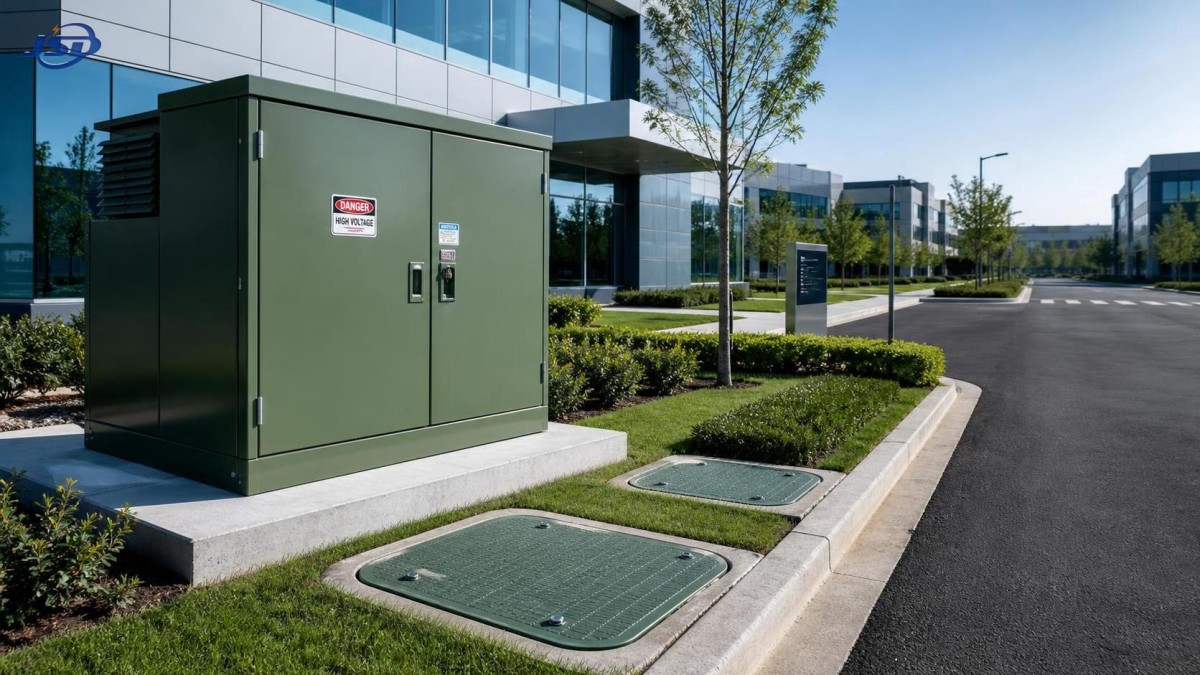
A pad-mounted transformer is a ground-installed distribution transformer housed in a locked steel enclosure, typically used in underground distribution systems. It is designed so that live parts are not openly exposed, which makes it suitable for areas with public access, dense development, and projects where appearance and safety matter as much as electrical performance.
In practical terms, its role is straightforward: medium-voltage power arrives through underground cables, the transformer steps it down, and low-voltage power is delivered to the end-use distribution network. What makes it attractive is not only the voltage conversion, but the way it fits modern infrastructure planning.
Compared with pole-mounted solutions, pad-mounted units are usually easier to integrate into urban streetscapes, commercial campuses, residential developments, data-adjacent facilities, and public infrastructure zones. Compared with indoor transformer rooms, they can reduce building space requirements and simplify some civil design decisions, although site protection and access planning still matter.
When it is usually the right choice
The most common use case is underground distribution. Once a project adopts underground medium-voltage cable routing, the logic for pad-mounted equipment becomes much stronger. This is especially true in city districts, retail parks, office complexes, hospitals, schools, airports, and mixed-use developments where overhead lines are restricted by planning rules, aesthetics, right-of-way limits, or safety concerns.
Utility distribution networks also use pad-mounted transformers in neighborhoods and roadside installations where a compact, tamper-resistant, weather-protected design is preferred. In these environments, the equipment supports a cleaner network layout and reduces dependence on poles in congested or visually sensitive areas.
Commercial and light industrial sites often benefit when loads are spread across a campus rather than concentrated in a single building. Installing transformers closer to the point of use can improve cable economy on the low-voltage side and make expansion easier if the site has phased development plans.
Another strong application is infrastructure with high public visibility. Municipal projects, transit facilities, tourism zones, and institutional campuses frequently prioritize enclosed ground-mounted equipment because it aligns better with safety management and urban design requirements.
Why commercial projects often prefer it
For commercial developers, the appeal is usually a combination of footprint efficiency, appearance, and risk control. A pad-mounted transformer removes the need for visible overhead structures and can reduce the pressure on indoor electrical room allocation. In high-value buildings, freeing internal space has real design and economic value.
It also helps where project stakeholders are sensitive to public interaction with electrical assets. The lockable cabinet design offers a more controlled interface than exposed external equipment, which is one reason it is common in shopping centers, business parks, and public-facing properties.
That said, the commercial case is strongest when the broader distribution design supports it. If a site already requires substantial underground cabling, multiple service points, or landscaped utility zones, the transformer fits naturally. If the project is small, remote, or cost-driven with simple overhead access, a pad-mounted option may not be the most economical decision.
Why utilities use it in some networks but not others
From a utility perspective, the choice is rarely about one transformer alone. It is about network architecture, service restoration strategy, land use, outage exposure, and maintenance practice. Pad-mounted transformers are widely used in underground residential distribution and in urban feeder systems because they match the physical and operational character of those networks.
They are less universally favored in rural overhead systems, where pole-mounted transformers may remain more practical and lower cost. In sparsely populated areas, the benefits of enclosure aesthetics and underground compatibility may not justify the civil work and cable cost required.
Utilities also consider fault isolation, switching arrangements, and service continuity. In loop-fed systems or sectionalized underground networks, pad-mounted designs can support organized cable termination and protected access. Where network reliability targets are high, this integration can matter as much as the transformer itself.
Site conditions that strongly influence the decision
Many early-stage comparisons focus too much on rated capacity and not enough on the site. In reality, location conditions often decide whether a pad-mounted transformer is appropriate.
Space is the first factor, but “space available” does not simply mean enough ground area for the cabinet. The installation also needs clearance for operation, maintenance, cable bending radius, ventilation, and safe access. A cramped corner near vehicle traffic, drainage runoff, or future construction activity can create long-term problems even if the unit technically fits.
Flood risk is another major issue. Ground-mounted equipment in low-lying or poorly drained areas requires careful civil planning. Local codes, utility practices, and project risk standards may require elevated pads or specific water management measures. These requirements vary by region and should be checked project by project.
Ambient environment matters too. Coastal corrosion, industrial contamination, dust, heat, and solar exposure can affect enclosure life and thermal performance. This is one reason some buyers compare outdoor oil-filled pad-mounted designs with alternatives used in more controlled environments.
In projects where indoor fire strategy, building integration, or environmental sensitivity changes the equipment decision, other transformer formats may enter the discussion. For example, in certain substations, industrial buildings, or renewable interfacing points, a dry-type solution such as the 35kV Three-Phase Cast Resin Dry-Type Distribution Transformer may be considered where enclosure style, installation environment, and fire-performance expectations differ from a typical outdoor pad-mounted arrangement.

Where pad-mounted transformers may not be the best fit
Despite their broad use, they are not automatically the best solution for every commercial or utility distribution project.
If the distribution network is predominantly overhead and serves dispersed loads, pole-mounted transformers can remain more cost-effective and easier to deploy. If the site has severe flood exposure or no secure outdoor equipment zone, indoor transformer rooms or elevated alternatives may be more appropriate.
Projects with highly constrained maintenance access can also run into difficulties. A transformer that is easy to place during construction can become difficult to service once landscaping, barriers, parking, or later building expansions surround it. This is a common planning error in commercial developments.
There are also cases where stakeholders assume pad-mounted units are inherently “low maintenance” and therefore suitable for any unattended location. That is too simplistic. They still require inspection, asset management, and protection coordination within the wider system. Enclosure protection improves operational safety, but it does not eliminate maintenance responsibility.
Common misconceptions in early research
One frequent misunderstanding is to treat pad-mounted transformers as a universal upgrade from pole-mounted equipment. In reality, they are a better fit only when the distribution method, land use, and project priorities support them.
Another misconception is that the transformer purchase price determines the business case. For commercial and utility planners, the more relevant comparison is installed system cost and lifecycle performance. Underground cable works, civil pads, site barriers, switching arrangements, and maintenance access all affect the economics.
There is also confusion between “safer” and “risk-free.” Pad-mounted units improve protection through enclosed construction, but safe operation still depends on compliant installation, grounding, cable termination quality, access control, and local operating procedures.
A further mistake is ignoring standards and utility-specific requirements. Specifications vary by country, voltage class, insulation type, fault level, and network practice. Buyers in cross-border sourcing should verify applicable standards, test requirements, and approval conditions with the serving utility or local engineering authority. Exact requirements may differ and should be treated as project-specific rather than assumed.
How to judge suitability at the research stage
For readers in the information-gathering phase, the best way to evaluate a pad-mounted transformer is to ask a few practical questions.
Is the project based on underground distribution, or is that still undecided? If underground service is likely, the case becomes stronger.
Will the installation be in a public-facing, space-sensitive, or visually controlled environment? If yes, the enclosed ground-mounted format may align well with planning and safety expectations.
Does the site offer stable, accessible outdoor space with acceptable drainage, clearance, and maintenance access? If not, another approach may be more reliable over the asset’s lifetime.
Is the load expected to grow in phases? Distributed site development can make localized ground-mounted transformation more attractive, especially where future expansion is easier outdoors than inside a completed building.
Are there local utility standards or customer-side electrical rules that influence approved equipment types? This point is often underestimated, especially in export-oriented procurement and multinational project development.
Once those questions are answered, the transformer choice usually becomes clearer. The decision is less about whether pad-mounted technology is “good” in general and more about whether it matches the physical, operational, and regulatory logic of the project.
What matters most going forward
Pad-mounted transformers will likely remain important as distribution systems become more urban, more space-constrained, and more integrated with commercial development, EV infrastructure, and decentralized energy assets. Their relevance grows where underground networks expand and where asset protection, visual impact, and site efficiency are part of the design brief.
At the same time, selection decisions are becoming more context-driven. Buyers and planners are no longer comparing transformers only by capacity and voltage. They are weighing resilience, installation environment, maintenance practicality, and compliance risk. In some cases, adjacent technologies—including dry-type designs such as the 35kV Three-Phase Cast Resin Dry-Type Distribution Transformer—enter the conversation when the site or safety strategy changes the preferred installation model.
For anyone trying to understand when to use a pad-mounted transformer, the clearest answer is this: use it when the distribution system is underground or public-facing, when outdoor space can be properly managed, and when the project benefits from a compact, enclosed, ground-level solution. Avoid assuming it is the default choice. In power distribution, the right transformer is the one that fits the network, the site, and the operating reality at the same time.

Get a Quote
Regardless of whether you require general advice or specific support, we are happy to help you.
Send Us Your Inquiry Today

Jinshida Electric remains committed to contributing to global energy development through professional manufacturing and superior service.