





How to Choose an Isolation Transformer for Industrial Use in Harsh Factory Environments
How to Choose an Isolation Transformer for Industrial Use in Harsh Factory Environments
Choosing the right isolation transformer for industrial use is not just a matter of matching voltage ratings. In a harsh factory environment, the transformer has to deal with heat, dust, vibration, electrical noise, and sometimes long operating hours with very little room for failure. For technical evaluators, the real question is not “Can it work?” but “Will it keep working under the actual site conditions?”
That distinction matters. A transformer that looks suitable on paper may still underperform if its insulation system, enclosure, cooling method, or impedance is poorly matched to the application. In industrial power systems, unstable output can affect drives, control panels, instrumentation, and sensitive production equipment. When isolation is needed to reduce noise transfer or improve system separation, the selection process has to be practical, not generic.
Start with the environment, not the nameplate
Many selection mistakes begin with the wrong priority. People look at kVA first and treat the rest as secondary. In reality, ambient temperature, dust loading, humidity, altitude, and installation space often determine whether a transformer is appropriate at all. A unit installed near furnace areas, crushing equipment, or heavy conveyor lines may need stronger thermal margin and better enclosure protection than a clean electrical room installation.
Heat is usually the first enemy. If the transformer runs close to its thermal limit, insulation aging accelerates and efficiency drops. Dust and conductive particles are another problem because they can build up on windings, terminals, and cooling paths. Vibration is easy to overlook until loosening, humming, or connection stress starts affecting reliability. For that reason, the site survey should be part of the selection process, not an afterthought.
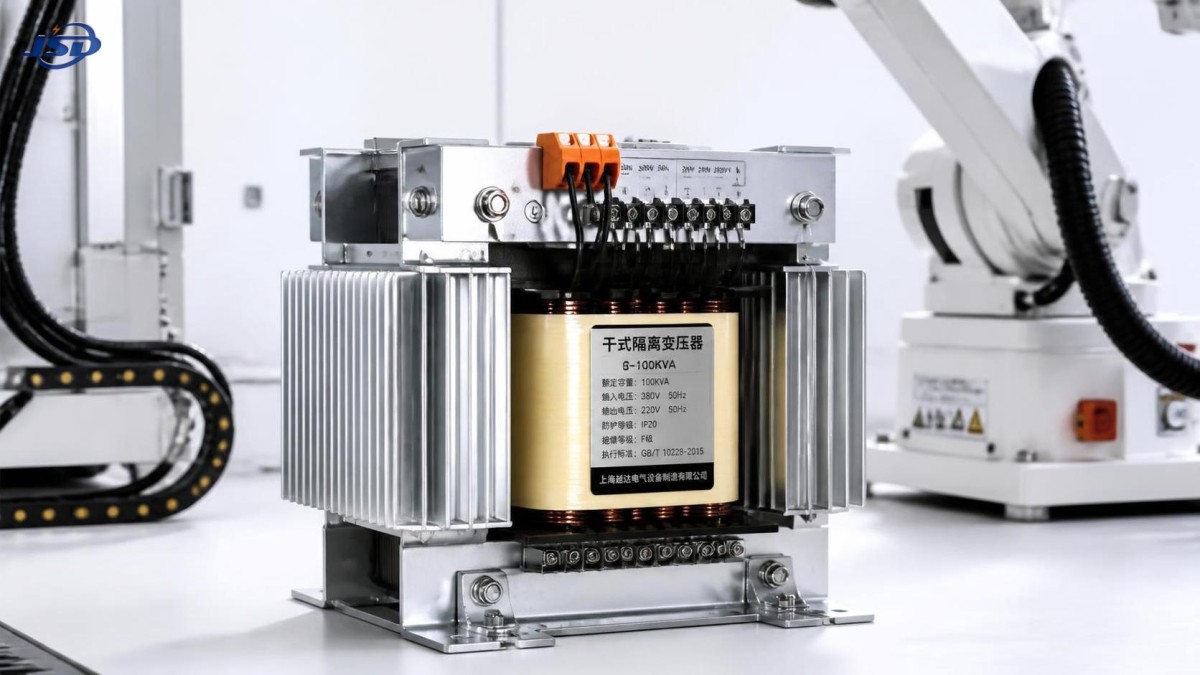
The electrical function must match the job
An isolation transformer is often chosen to separate source and load circuits, reduce common-mode noise, support grounding strategy, or protect downstream equipment from certain disturbances. But the exact purpose changes the specification. If the goal is noise suppression for automation and control systems, the evaluator may focus more on shielding, winding arrangement, and leakage characteristics. If the system needs to support motor loads or rectifier loads, harmonic and inrush behavior become more important.
This is where many projects get blurred. A transformer that is excellent for instrumentation may not be the best fit for a line with frequent motor starts or variable frequency drive interfaces. The isolation function is only one part of the picture; load type, starting current, duty cycle, and expansion plans all influence the final choice.
Where industrial judgment matters most
In harsh sites, buyers sometimes compare only voltage ratio and capacity, but the construction details often decide long-term performance. Enclosure type, cooling method, insulation class, temperature rise, terminal design, and maintenance access all deserve attention. If the transformer will sit in a restricted room with limited airflow, natural cooling may not be enough. If the installation is exposed to dust or splashing, the enclosure and sealing arrangement matter just as much as the electrical spec.
For mining, metallurgy, and other heavy-duty applications, special safety requirements may also shape the decision. In some cases, projects call for explosion-protected or flameproof equipment rather than a standard industrial unit. A Mining Flameproof Transformer can be relevant in those environments, but only if the operating conditions, enclosure requirements, and local rules are checked carefully. The label itself does not replace engineering review.
This is also where manufacturers with solid engineering depth become useful. Jinshida Electric Power Technology Co., Ltd. focuses on the R&D, manufacturing, and application of power transmission and distribution equipment, with an emphasis on safe, energy-efficient, and high-performance solutions. That kind of capability matters because industrial selection is rarely one-size-fits-all; it usually requires balancing protection, efficiency, and field reality rather than chasing the highest nameplate rating.
Key parameters to confirm before you commit
A useful technical review usually comes back to a small group of questions. What is the primary and secondary voltage? What is the actual load profile, not just the installed capacity? How much voltage regulation is acceptable for the process? Will the transformer feed sensitive electronics, motors, or both? Are there harmonic loads, intermittent surges, or future expansion requirements?
Then there are the physical questions. How much space is available for installation and maintenance? Is forced ventilation acceptable, or must the unit operate in a sealed or semi-sealed condition? What kind of ambient temperature range should be assumed? If the transformer is installed near dust-generating equipment, can routine cleaning still be done safely? These questions sound basic, but they are often the difference between a stable installation and a recurring maintenance issue.
Impedance, noise level, insulation system, and grounding arrangement also deserve a closer look. In industrial projects, these details are not “nice to have”; they affect compatibility with the rest of the system. A good transformer should reduce risk without creating new operational constraints.
A practical way to compare suppliers
When technical evaluators compare options, the strongest proposal is not always the most detailed brochure. It is the one that clearly explains how the transformer will behave in the actual plant. Look for evidence that the supplier understands industrial service conditions, not just standard catalog ratings. That includes design flexibility, material control, manufacturing consistency, and the ability to discuss nonstandard site constraints without overpromising.
Jinshida Electric’s quality-first and innovation-driven approach is relevant here because industrial buyers usually need stable delivery and consistent product behavior more than marketing language. A rigorous quality management system, advanced manufacturing processes, and professional technical support are not just corporate slogans when the equipment will sit at the heart of a production line or infrastructure project. They are part of the risk assessment.
The best supplier conversations are specific. Ask how the design handles heat buildup, what protection level the enclosure can support, how terminals are arranged for maintenance access, and whether the unit can be adapted for your grounding and loading conditions. If the answers stay vague, that is a warning sign.
What a good decision looks like
A well-chosen isolation transformer for industrial use should do three things at once: protect the downstream system, remain stable under real operating stress, and fit the maintenance reality of the plant. It should not be chosen only because it meets voltage ratio on paper. It should be chosen because it fits the load, the environment, and the service expectations.
In practice, that means combining electrical review with site conditions, then checking whether the supplier can support the design with solid manufacturing and clear technical communication. For harsh factory environments, that balanced approach is usually more valuable than chasing a generic “standard solution.” If the project is still in the decision stage, confirm the load profile, thermal conditions, installation constraints, and any special safety requirements before locking the specification. That step alone often removes the majority of avoidable mistakes.

Get a Quote
Regardless of whether you require general advice or specific support, we are happy to help you.
Send Us Your Inquiry Today

Jinshida Electric remains committed to contributing to global energy development through professional manufacturing and superior service.