





When a genset open type is a better fit than a silent enclosure
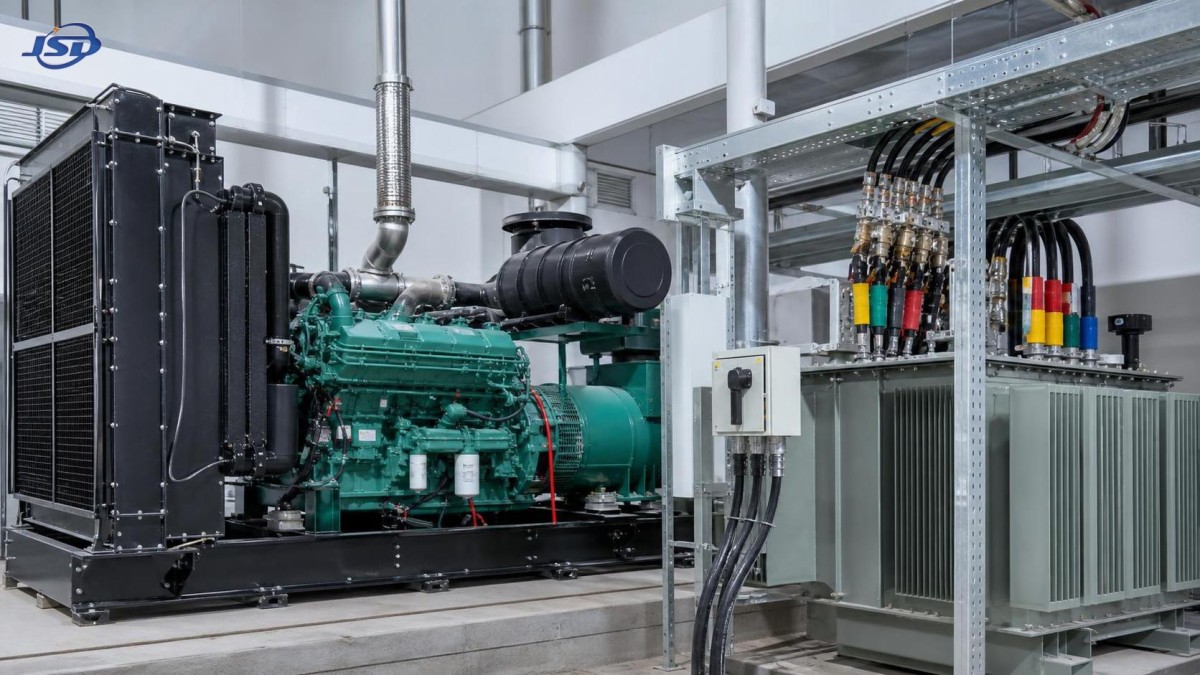
A genset open type is usually the better fit when the site already controls its own acoustic environment and the real pressure points are access, cooling, installation speed, and capital discipline. In a factory utility yard, a water treatment plant, a substation expansion, or a temporary infrastructure package, the question is often not whether a silent enclosure looks more complete, but whether that enclosure solves a problem that actually exists on site. If surrounding noise limits are manageable, if the unit can sit inside a dedicated equipment zone, and if service access matters more than sound attenuation, an open configuration often aligns more closely with the job.
The first technical advantage is physical accessibility. On an open unit, the alternator, engine block, radiator, battery connections, fuel lines, vibration mounts, control wiring, and exhaust routing are easier to inspect without removing large panels or working through narrow service doors. That matters during commissioning and it matters even more later, when a recurring alarm has to be traced under time pressure. A silent enclosure reduces direct exposure to weather and lowers noise, but it also adds another layer between the machine and the maintenance task. If the site expects frequent inspection, load-bank testing, fuel system cleaning, or replacement of consumables in tight shutdown windows, the simpler access path of a genset open type can reduce downtime risk.
Heat management is another practical reason. Enclosed machines depend heavily on the quality of the canopy airflow design and on the local installation clearances around the intake and discharge paths. If a silent set is placed too close to a wall, inside a poorly ventilated room, or near recirculating hot air, radiator performance can fall off quickly. An open set still needs proper ventilation planning, but it gives more flexibility when the installation is inside a mechanical room with engineered air movement, roof exhaust, or ducted intake. In hot regions, dusty process areas, or sites with long daily run hours, easier heat rejection can become more important than sound reduction, especially where derating margins are already narrow.
Cost should be judged beyond the purchase line item, but the upfront difference is still real. A silent enclosure adds steelwork, internal acoustic treatment, doors, sealing details, mounting hardware, and often more complex assembly. If the site is already building a generator room, acoustic wall, or fenced utility compound, paying again for a soundproof canopy may duplicate protection that the project has already designed elsewhere. In those cases, the lower initial cost of a genset open type can free budget for items that affect reliability more directly: fuel polishing, cable tray upgrades, larger day tanks, better switchgear coordination, or higher-grade transformer interfaces.
That last point matters in power projects where the generator is not an isolated asset. The genset may be tied into low-voltage distribution, step-up equipment, transfer schemes, harmonic-sensitive loads, or renewable balance-of-plant systems. A project can save money on enclosure type and lose it back many times over if the electrical integration is weak. Attention usually belongs on alternator voltage regulation, fault current behavior, grounding method, neutral treatment, transformer impedance match, and the startup sequence of large motors or variable-speed drives. In sites that combine standby generation with renewable export or collection systems, related equipment such as Transformer for Wind Power Generation may sit in the same overall power architecture, which makes coordination studies and protection settings more important than external generator styling.
Where open type usually makes more sense
Industrial plants are a common example because equipment noise is often already part of the environment. In a manufacturing compound with compressors, cooling towers, pumps, and process exhaust systems, the incremental noise of an open generator may remain acceptable if the unit runs in a designated utility area. The open layout also helps when the maintenance team needs clear side access for filters, belts, injectors, and cable terminations. A silent enclosure still has value if the generator sits close to offices or perimeter walls, but it is not automatically the smarter selection inside every industrial project.
Controlled utility sites also favor open sets. If the generator sits inside a secure power house, a masonry room, or a fenced electrical yard with restricted access, the enclosure itself may add less value. What matters more is whether the room has adequate combustion air, whether the exhaust route avoids heat buildup, and whether service lifting can be done without dismantling surrounding structures. Open units are often easier to align with overhead lifting plans because major components remain visible and accessible.
Temporary or phased infrastructure work can point the same way. During construction power, emergency reinforcement, or staged energization, schedules move quickly and layout assumptions change. Open machines are easier to inspect on arrival, easier to connect to temporary fuel and cable systems, and often easier to adapt when the final civil arrangement is not ready. If the operating window is limited or the location is remote from occupied buildings, spending extra on a silent canopy may not improve project performance.
Where silent enclosures still hold the advantage
An open unit is not the default answer. If the generator will sit near residential boundaries, hospital wings, hotel service areas, school buildings, public roads, or office clusters, acoustic control may drive the selection from the start. The same applies where local approval conditions are strict or where operation at night is expected. Weather exposure is another factor. In coastal air, blowing sand, freezing precipitation, or heavy seasonal rain, a canopy can reduce contamination and direct exposure, though it does not replace proper corrosion protection or environmental sealing. A site with weak security may also benefit from the physical barrier of an enclosure, even if the acoustic benefit is secondary.
The common mistake is to compare only the base machine and ignore the installation concept. A silent set placed in a cramped yard can still be hard to service and can still overheat. An open set installed in a well-designed room with louver sizing, exhaust extraction, drainage, and access clearances may operate more cleanly than a poorly positioned enclosed set outdoors. The equipment type should follow the site arrangement, not the other way around.
Selection points that usually decide the issue
Noise is the obvious item, but it should be treated as a measured requirement, not an assumption. If there is no enforced boundary condition and no nearby occupied space, a silent canopy may be solving a non-critical problem. If there is even moderate uncertainty about future neighbors, permit conditions, or nighttime operation, then acoustic margin deserves more weight.
Maintenance access should be reviewed at the drawing stage, not after shipment. Look at door swing, filter removal path, radiator cleaning access, top lifting clearance, battery replacement route, and the space needed to pull a starter motor or injector line. Open type wins here in a very direct way. What looks like a compact, neat enclosed package in a brochure can become awkward once it is placed between walls, cable trenches, and fuel piping.
Cooling air path deserves more engineering attention than it usually gets. For room-installed open units, confirm intake area, discharge routing, pressure drop across louvers, and whether hot air can recirculate. For enclosed outdoor units, confirm that the canopy discharge is not blocked by parapets, containers, or stacked materials. If the project operates at altitude or in high ambient temperature, derating assumptions should be reviewed early rather than left to factory standard values.
Transport and rigging can change the decision as well. An enclosed set may ship as a more self-contained package, but it is also bulkier and sometimes less forgiving when crane reach, doorway size, or indoor turning radius is limited. An open generator can be easier to place inside a building shell before cladding is completed, especially when the exhaust system, fuel connections, and acoustic treatment are part of the site works rather than the machine package.
Corrosion and finish are worth checking in detail. With open units, painted baseframes, radiator guards, terminal boxes, and exposed fasteners face the environment more directly if the installation is not fully indoors. In chemical plants, wastewater zones, or marine-adjacent sites, the real question is not open versus silent by itself, but what surface treatment, cabinet protection, and ingress control the surrounding atmosphere requires. A silent enclosure made from thin sheet metal with poor edge protection can deteriorate faster than a robust open set inside a properly designed room.
Transformer-related considerations that are often overlooked
In generator projects connected through transformers, enclosure choice should not distract from electrical compatibility. An open genset feeding a step-up transformer may need extra attention to cable routing, electromagnetic separation from control circuits, and physical support for flexible connections under vibration. Neutral grounding method must match the downstream protection philosophy. If the transformer inrush behavior, motor starting profile, or nonlinear load content is not reviewed early, the generator may appear undersized or unstable even when the prime mover itself is healthy.
This is especially relevant where standby generation interacts with distributed energy assets, switching automation, or collection systems used in wind and other renewable applications. The generator package, transformer arrangement, and protection relays have to be treated as one operating chain. In such layouts, the enclosure type is a secondary decision compared with synchronization logic, breaker duty, voltage dip tolerance, and the thermal behavior of interconnected equipment during repeated starts or transfer events.
Typical misjudgments during procurement and installation
- Assuming a silent enclosure removes the need for acoustic engineering. Exhaust attenuation, room breakout noise, and reflected sound from hard surfaces may still require separate treatment.
- Choosing open type for lower cost without assigning responsibility for weather shielding, drainage, and room ventilation in the project scope. The savings disappear quickly when these items are discovered late.
- Leaving service clearance undefined. A unit can fit the floor plan and still be nearly impossible to maintain once cable ladders, fuel pipework, and wall penetrations are installed.
- Ignoring contamination from dust, fibers, oil mist, or salt-laden air. Open machines are more exposed unless the installation envelope is well controlled.
- Treating the generator and transformer as separate purchases with no coordination on impedance, grounding, cable termination space, or protection settings.
If the site can control access, ventilation, and environmental exposure, a genset open type often matches the actual operating need better than a silent enclosure. The stronger choice usually comes from reading the installation conditions honestly: where the machine will sit, how it will be serviced, what it will feed, and which constraints are real rather than assumed.

Get a Quote
Regardless of whether you require general advice or specific support, we are happy to help you.
Send Us Your Inquiry Today

Jinshida Electric remains committed to contributing to global energy development through professional manufacturing and superior service.