





Evaluating SBH15 Transformers for Distribution Upgrades: Efficiency, Cost, and Lead Time
A distribution upgrade can look straightforward on a single-line diagram: replace aging transformers, add capacity where loads have grown, and reduce energy losses. The purchasing decision becomes harder when the transformer will remain energized around the clock, electricity costs are material, and the construction schedule leaves little room for late deliveries. In that situation, an SBH15 amorphous alloy transformer is usually worth evaluating when low no-load loss is a priority, but it should not be selected on loss figures alone.
The practical decision is to compare the annual value of reduced core loss against the higher initial purchase price, confirm that the transformer fits the actual load profile, and obtain a realistic manufacturing and logistics schedule before committing the upgrade program. It can be a strong choice for long-energized distribution points with moderate or variable loading. It may be less compelling where transformers operate only intermittently, where load loss dominates the energy bill, or where the required delivery date cannot accommodate the selected design.
Why the operating profile matters more than the nameplate price
Two transformers with the same rated capacity can create very different ownership costs. The main reason is that transformer losses are not all produced in the same way. No-load loss, often called core loss or iron loss, occurs whenever the transformer is energized, even when little or no load is connected. Load loss rises with current and is affected by the actual loading level.
An amorphous alloy core is designed to reduce no-load loss compared with conventional core materials. That characteristic has the greatest value at substations, building distribution rooms, utility feeders, and industrial auxiliary networks where equipment remains energized for most or all of the year. A transformer serving a lightly loaded residential development overnight or a facility with fluctuating production may spend many hours carrying relatively modest load, yet its core remains magnetized continuously. In such cases, no-load loss can represent a meaningful portion of avoidable energy consumption.
By contrast, a transformer supplying a short-duration process load may have fewer energized hours, or it may operate near a high load factor where winding losses deserve equal or greater attention. Buyers should avoid treating “energy-efficient” as a universal answer. The relevant question is: which loss component is costing the project more over its real operating schedule?
Start with an annual loss-cost calculation
The first comparison should use supplier-tested loss values at the same capacity, voltage class, impedance, tap arrangement, cooling method, and applicable design conditions. Comparing a low-loss option with a standard unit of different ratings or different guaranteed parameters can make the result meaningless.
A practical model separates the cost of no-load and load losses:
- Annual no-load energy loss = no-load loss in kW × energized hours per year.
- Annual load energy loss = rated load loss in kW × average load factor squared × operating hours per year.
- Annual loss cost = annual energy loss × the applicable electricity cost.
The squared load-factor relationship is important. A transformer averaging 50% load does not normally incur 50% of its rated load loss; the simplified estimate is closer to 25%. Actual profiles can be more complex, especially where large motors, rectifiers, electric vehicle charging, or cyclic production loads are involved, but the formula is a useful screening tool.
For the purchase decision, calculate the annual savings between the candidate designs, then compare that savings with the price premium. A basic simple-payback view can help prioritize options, but it should not be the only measure. A more complete evaluation considers the expected energized life, energy-price assumptions used internally, maintenance access, network loss targets, and any cost assigned to future replacement or service interruption.
Do not use a single annual average load without checking whether it conceals strong peaks. Peak demand affects conductor heating, voltage regulation, and overload margin. An SBH15 design may reduce core loss substantially, but it does not remove the need to select adequate capacity and suitable impedance for the installation.
Information needed before asking for comparable quotations
A buyer can obtain more useful quotations by issuing a concise technical schedule rather than requesting only “a transformer of this kVA.” At minimum, establish rated power, primary and secondary voltage, frequency, vector group, required tap range, impedance tolerance, installation type, cooling arrangement, ambient temperature, altitude, enclosure or protection requirements, and whether the unit will be energized continuously.
Load information should include present demand, expected growth, average loading, peak loading, seasonal variation, nonlinear load content, and any planned parallel operation. Where these figures are uncertain, ask engineering staff to provide interval data from meters rather than relying solely on connected load totals. Connected load often overstates normal loading but can still reveal future expansion needs.
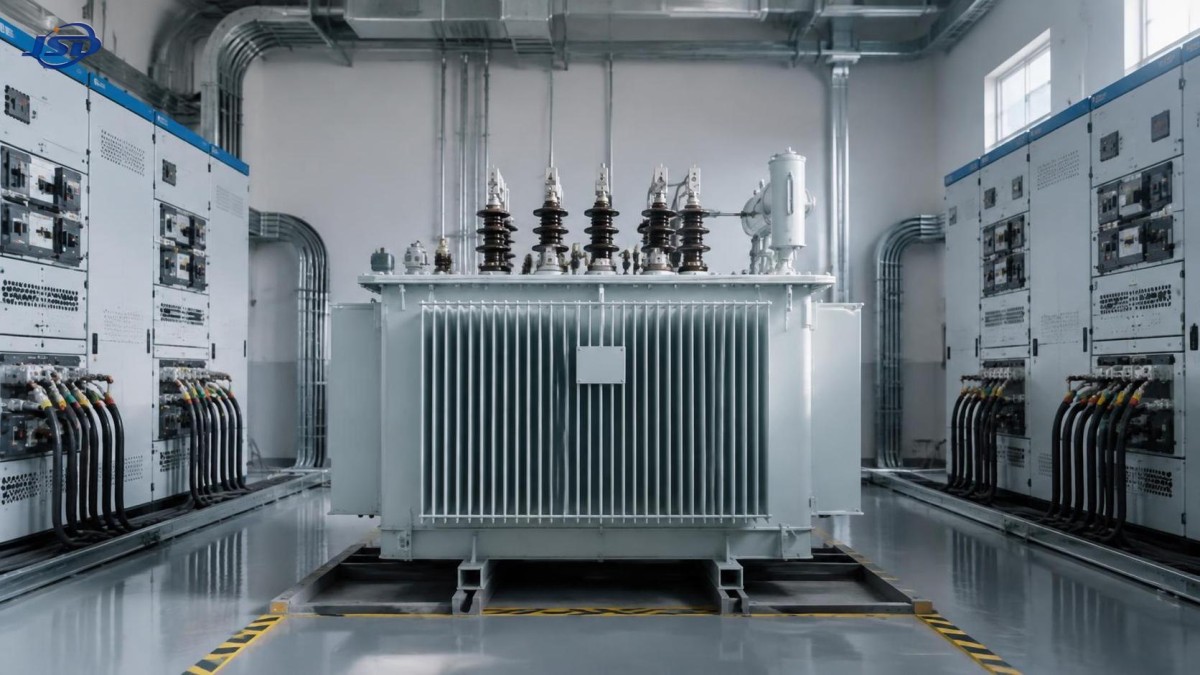
What to compare in an SBH15 quotation
The label “SBH15” should be treated as a starting point, not as a complete technical specification. Manufacturers may offer different configurations, accessories, winding materials, insulation systems, loss guarantees, and mechanical arrangements. A lower quoted purchase price can reflect a different scope rather than a better commercial outcome.
Loss values should be read with their measurement conditions. Load losses are generally referenced to a stated winding temperature, and an unqualified figure may not be directly comparable between suppliers. Ask whether quoted values are guaranteed maximums or nominal design values. For a long-life asset, that distinction matters more than a small difference in the sales presentation.
Where an amorphous alloy design can create trade-offs
The core material is not simply interchangeable with conventional electrical steel. Amorphous alloy has different mechanical and magnetic characteristics, so the manufacturer’s core construction, clamping approach, transport protection, and assembly control are relevant. The buyer does not need to prescribe the factory process, but should confirm that the supplier has a defined quality-control approach for the offered design and can provide the agreed routine-test documentation.
Noise should also be reviewed at the installation level. Core design, magnetic flux density, enclosure arrangement, mounting surface, room acoustics, and nearby reflecting walls all influence perceived sound. If the transformer is planned near apartments, offices, schools, or a hospital service area, include a clear sound requirement in the inquiry and identify the measurement condition expected. A low-loss transformer is not automatically the quietest unit in every physical setting.
Physical size and weight can affect replacement planning. Before issuing an order, confirm foundation loading, door openings, lifting routes, crane capacity, cable bending space, high-voltage and low-voltage termination orientation, and clearances for inspection. These checks are especially important in retrofit rooms, where an efficient unit that cannot be moved into position without building modifications may disrupt the schedule.
Lead time is a technical risk as well as a commercial risk
When an upgrade is tied to an outage window, the requested delivery date should be broken into milestones: drawing approval, material preparation, manufacturing, testing, packing, dispatch, transport, and site receipt. A promise of “available soon” is not enough unless the configuration, voltage, accessories, and testing scope are already fixed. Custom ratings, special bushings, nonstandard terminal boxes, unusual impedance requirements, and project-specific paint or enclosure details can all affect the production sequence.
Drawing approval is frequently underestimated. A supplier may be ready to manufacture, but production should not proceed on assumptions about cable entry direction, terminal markings, protection-device settings, or dimensions. Delayed approval can consume schedule contingency even when the factory itself is operating normally. Establish who has authority to approve drawings, how technical changes will be recorded, and whether a revised delivery date must be issued after a design change.
For urgent programs, it can be reasonable to standardize the transformer specification across several locations where the electrical conditions permit it. Standardization may simplify review, spare planning, and delivery coordination. It should not force incompatible impedance, voltage, or installation conditions onto every site simply to obtain a shorter lead time.
Protect the commissioning schedule
The transformer is only one part of a distribution upgrade. Switchgear, protection panels, cables, civil works, and standby power arrangements may each become the critical path. Where temporary generation is required to keep essential loads active during a planned changeover, the backup source must be coordinated with the transfer equipment, grounding arrangement, load sequence, voltage, and frequency requirements.
For sites that need temporary or continuing standby supply in noise-sensitive areas, a Silent Canopy Diesel Generator Set may be considered as part of the continuity plan. The available configurations cover prime power from 50kVA to 500kVA and standby power from 55kVA to 550kVA, with 50Hz or 60Hz operation, three-phase four-wire output, optional ATS, and optional remote monitoring. Its use does not replace transformer planning: generator capacity must be checked against starting currents, nonlinear loads, transfer timing, and the actual priority-load schedule.
When the lower-loss option is likely to justify its premium
An SBH15 amorphous alloy transformer is generally easier to justify where the unit will remain energized for long periods, the load factor is moderate rather than continuously high, energy loss is assigned a meaningful internal cost, and the project expects a long operating life. It can also align well with programs that must reduce distribution losses across multiple similar installations, provided the equipment specifications are genuinely comparable.
The case is weaker when the transformer is energized only for limited periods, when estimated load losses dominate because of sustained high loading, when the anticipated operating period is short, or when the loss premium cannot be supported by the owner’s energy-cost assumptions. In those cases, a conventional design with carefully controlled load loss, appropriate capacity, and faster availability may produce a better project outcome.
There is also a middle case: the lower-loss design may be technically attractive, but the delivery date is too tight. Rather than accepting an unverified lead-time promise, compare alternatives using the same installed-date requirement. The cost of missing an outage window, extending temporary generation, or delaying building energization can outweigh a portion of the lifetime loss savings.
Turn the decision into purchase-order controls
Once the preferred option has been chosen, convert the evaluation points into contract requirements. The purchase order should identify the approved technical specification, guaranteed losses, test requirements, drawings, accessories, delivery terms, packing requirements, and documentation to be supplied before dispatch. It should also state the handling process for deviations. A change to voltage ratio, impedance, tap range, terminal orientation, or loss value should not disappear inside a revised drawing without formal acceptance.
Before shipment, verify that the routine-test report corresponds to the ordered serial number and that ratings, vector group, taps, impedance, and loss values are clearly recorded. On site, inspect the unit for transport damage, oil leakage where applicable, loose accessories, damaged bushings, missing seals, and mismatch between the nameplate and approved documentation. Installation crews should then confirm grounding, cable connections, protection settings, tap position, and phase relationships before energization.
The strongest purchasing decision is rarely the one with the lowest initial quote or the lowest isolated loss figure. It is the option whose loss profile fits the real duty cycle, whose technical scope is fully comparable, and whose manufacturing schedule supports the required energization date without creating avoidable commissioning risk.

Get a Quote
Regardless of whether you require general advice or specific support, we are happy to help you.
Send Us Your Inquiry Today

Jinshida Electric remains committed to contributing to global energy development through professional manufacturing and superior service.