





Where an indoor dry type transformer works better than oil filled units
When safety, low maintenance, and indoor installation flexibility matter most, an indoor dry type transformer often outperforms traditional oil filled units. For technical evaluators comparing transformer options, the real question is not which technology is “better” in the abstract, but where each one delivers the best fit. In many modern buildings, industrial facilities, and infrastructure projects, dry type designs offer advantages that go beyond fire safety alone. They can simplify permitting, reduce auxiliary containment requirements, and make equipment placement easier in space-constrained electrical rooms. At the same time, they are not a universal replacement for oil filled transformers, especially where higher capacity, outdoor exposure, or cost sensitivity dominate the decision.
For evaluation work, it helps to frame the comparison around operating environment, safety obligations, thermal behavior, maintenance resources, and lifecycle constraints rather than nameplate ratings alone. That is usually where selection errors happen: a transformer is chosen based on initial price or habit, while the practical realities of the site are only considered later.
Why indoor environments change the selection logic
An indoor installation introduces a very different risk profile from an outdoor pad or pole-mounted location. Inside a plant, hospital, data facility, metro station, or commercial complex, the transformer is often closer to people, critical loads, and building systems. That changes how technical teams weigh fire behavior, ventilation, leak management, acoustic impact, and access for maintenance.
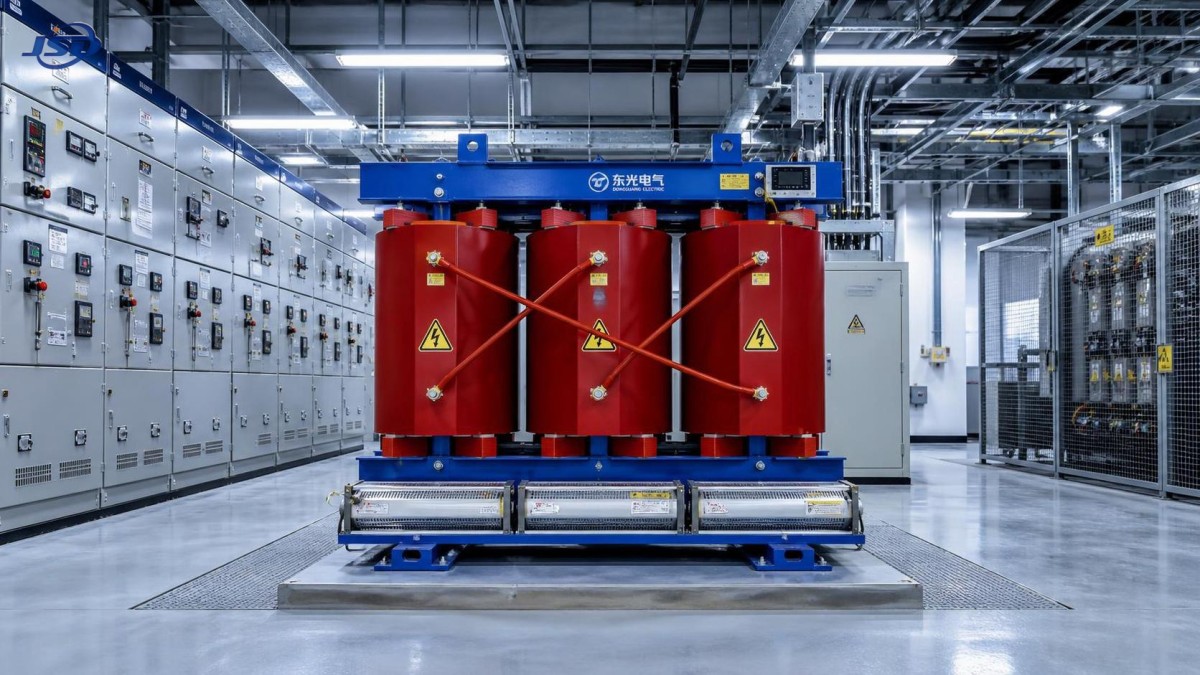
An indoor dry type transformer removes one of the main concerns associated with oil filled equipment: the presence of insulating liquid that can create spill, contamination, and fire management issues if a fault occurs. This does not mean dry type units are risk-free, but it does mean the consequence profile is often easier to manage in occupied or enclosed spaces. In projects where the electrical room is integrated into the main structure rather than isolated outside, this difference matters early in design approval.
Technical evaluators usually see this most clearly when working with architects, MEP consultants, EHS teams, and insurers. A transformer decision that appears straightforward in an electrical single-line diagram can become more complicated once building code interpretation, fire compartment design, oil containment, or emergency response planning is brought into the discussion.
Applications where dry type units typically work better
The strongest case for dry type transformers tends to appear in locations where indoor placement is unavoidable and where operators want to reduce the site burden associated with liquid-filled equipment.
Commercial and public buildings
Office towers, shopping centers, hotels, hospitals, airports, schools, and mixed-use developments often favor dry type transformers because they are easier to integrate into internal substations or service rooms. In these projects, the transformer is part of a larger building compliance strategy. Fire load, evacuation planning, indoor air management, and proximity to occupied areas all influence equipment approval.
Hospitals and data-related facilities add another layer: continuity expectations are high, and operators prefer equipment arrangements that simplify routine inspection and reduce the chance of fluid-related incidents inside the building envelope.
Light industrial plants with clean indoor conditions
Factories producing electronics, pharmaceuticals, food, packaging, or precision components often install transformers indoors near production zones or utility corridors. If the environment is relatively clean, temperature-controlled, and not overloaded with conductive dust or corrosive vapors, dry type transformers can be a strong fit. Their lower maintenance burden is especially useful where the maintenance team is focused on process uptime rather than substation-intensive servicing.
Infrastructure with difficult access or high safety sensitivity
Metro systems, tunnels, rail facilities, underground substations, high-rise utility floors, and certain renewable-energy support buildings often benefit from dry type equipment because access for oil handling, leak response, or major fluid maintenance may be difficult. In such settings, reducing complexity around containment and fire protection can be more valuable than achieving the lowest possible purchase price.
Retrofit projects inside existing buildings
Retrofit work is often where the practical advantages become obvious. Existing buildings may not have been designed for oil containment pits, fluid barriers, or large clearances for outdoor replacement options. A dry type transformer can sometimes be installed with fewer structural or civil modifications, which changes the economics of the project even if the unit price itself is higher.
What technical evaluators should actually compare
In practice, the decision should be based on total installation reality, not only transformer technology labels. Several factors usually separate a well-judged choice from a costly mismatch.
1. Fire and environmental risk management
This is the most obvious advantage of dry type transformers indoors, but it is often oversimplified. The benefit is not simply “no oil.” The broader point is that eliminating insulating liquid can reduce the need for associated mitigation measures such as spill containment, drainage treatment, and some fire protection provisions, depending on local code and project design. Exact requirements vary by jurisdiction and application, so any code assumption should be treated as project-specific and verified against local regulations and applicable standards.
For technical evaluators, the question is: how much secondary infrastructure is required if an oil filled unit is placed indoors? In many cases, the answer affects room layout, civil work, approval timeline, and insurance review.
2. Ventilation and thermal performance
Dry type transformers are often selected for safety reasons, but they require disciplined thermal evaluation. Heat dissipation characteristics differ from oil immersed designs, and poor room ventilation can compromise performance or accelerate insulation aging. If a dry type transformer is installed in a small indoor room without adequate airflow, the theoretical safety advantage does not compensate for a bad thermal design.
That is why load profile matters. Continuous high loading, harmonic-rich conditions, and elevated ambient temperatures should be reviewed carefully. In some heavy-duty applications, oil filled units still offer better thermal headroom or overload tolerance. Dry type works better when the site can support proper cooling and when loading conditions are realistically understood, not assumed from nameplate diversity factors.
3. Maintenance philosophy
Where site maintenance teams are limited, dry type transformers often make operational sense. There is no insulating oil to sample, filter, or monitor for leakage-related concerns. Routine inspection is still necessary, including checks for dust accumulation, ventilation condition, connections, partial discharge risk indicators, and insulation cleanliness, but the maintenance regime is usually simpler.
This matters in distributed facilities, commercial portfolios, or industrial groups where transformer oversight is not the core competency of the site team. The lower maintenance complexity can reduce lifecycle uncertainty, especially across multiple indoor substations.
4. Space and installation constraints
Indoor electrical rooms are rarely oversized. Access routes, door dimensions, lifting limits, floor loading, and transformer replacement pathways can all affect what is practical. Dry type transformers often fit better into indoor switchroom planning because they avoid some of the ancillary provisions linked to liquid-filled equipment. However, evaluators should still verify actual dimensions, service clearances, and heat rejection needs rather than assuming dry type automatically saves space.
5. Acoustic considerations
Noise is not always decisive, but it becomes important in hospitals, office complexes, hotels, and residential-adjacent commercial buildings. Both transformer types can generate objectionable hum if poorly specified or badly installed. The issue is less about type alone and more about core design, enclosure, mounting, vibration transmission, and room acoustics. In indoor occupied environments, this factor deserves more attention than it often receives during early specification.
Where oil filled units may still be the better choice
A balanced evaluation should also recognize where dry type is not the stronger option. Oil immersed transformers continue to perform well in many utility, industrial, and outdoor distribution applications, particularly where higher ratings, harsher duty, or lower first cost per kVA are key priorities.
If the transformer is installed outdoors with adequate clearance and containment planning, the dry type advantage may narrow quickly. Likewise, in heavy industrial plants with very high load density, difficult ambient conditions, or strong cost pressure, oil filled units may remain the more practical solution.
That is also why product context matters. For example, a distribution network or rural utility application may be much better served by an outdoor solution such as a Pole-Mounted Oil-Immersed Single-Phase Transformer, where indoor safety constraints are not the main driver at all. Comparing technologies without comparing use cases leads to poor selection logic.
Common mistakes in indoor transformer selection
One frequent mistake is treating dry type as the default premium option without checking environmental suitability. Dry type transformers can suffer in dirty, humid, corrosive, or poorly ventilated rooms. If the installation area has conductive dust, chemical vapors, or recurring condensation, the expected reliability advantage may disappear unless protection measures are strong.
Another mistake is underestimating harmonic effects. Buildings with VFDs, UPS systems, rectifiers, EV charging infrastructure, and nonlinear loads may impose extra heating stress. Evaluators should confirm whether K-factor or other harmonic-related design considerations apply for the specific load mix and applicable standards. This is not unique to dry type transformers, but thermal margin becomes especially important indoors where room cooling is already constrained.
A third error is comparing purchase prices without including project-side costs. An oil filled transformer may appear less expensive at the equipment level, yet the total installed cost indoors can change significantly once fire separation, oil containment, room adaptation, and compliance measures are included. In some retrofit projects, these secondary costs are what ultimately justify dry type selection.
Standards and compliance should be reviewed early, not late
Technical teams should verify the standards framework relevant to the project before finalizing the technology choice. Transformer design, temperature rise, fire behavior, enclosure requirements, efficiency, and testing expectations may be governed by different standards depending on market and voltage class. Applicable references can include IEC or IEEE/ANSI frameworks, local building codes, fire regulations, energy efficiency requirements, and utility or owner specifications. Specific standard applicability should be treated as project-dependent and confirmed during detailed evaluation rather than assumed from supplier literature.
That point is especially important in export or multinational project work. The “best” indoor dry type transformer on paper may still be the wrong choice if it does not align with the local certification path, site environmental class, or owner maintenance practices.
How to make the decision with fewer blind spots
A useful evaluation approach is to ask five practical questions:
- Will the transformer be located close to occupied spaces, critical systems, or inside the main building envelope?
- Can the room provide the thermal environment a dry type unit needs under real load conditions?
- Would oil containment, fire protection, and compliance measures make an oil filled indoor installation more complex than it first appears?
- Does the site have the maintenance capability to support the chosen technology over its service life?
- Are there environmental conditions such as dust, moisture, or corrosive agents that could undermine dry type reliability?
If the answer pattern points toward indoor safety sensitivity, moderate-to-high importance of maintenance simplicity, and manageable environmental conditions, an indoor dry type transformer often becomes the more rational choice. If the project instead points toward high-capacity outdoor service, harsher load duty, or strict first-cost pressure, oil filled alternatives may remain preferable.
The most reliable selections usually come from teams that evaluate the transformer as part of the whole electrical environment rather than as a standalone item. That includes the room, the load, the code context, the maintenance model, and the cost of risk. In exactly those situations, dry type technology tends to show where it works better—not everywhere, but very clearly in the places that matter most.

Get a Quote
Regardless of whether you require general advice or specific support, we are happy to help you.
Send Us Your Inquiry Today

Jinshida Electric remains committed to contributing to global energy development through professional manufacturing and superior service.