





What to consider when selecting a transformer for building retrofits
Choosing a transformer for building retrofit work is rarely a simple “replace like for like” exercise. In older commercial, residential, hospital, school, or mixed-use buildings, the transformer often sits at the intersection of several competing constraints: limited electrical room space, undocumented load growth, tighter energy-efficiency expectations, aging distribution infrastructure, and stricter safety compliance than when the original system was installed.
For project managers and engineering leads, the practical question is not just which transformer fits the design load on paper. It is which option reduces project risk over the next 10 to 20 years while still working within shutdown windows, budget limits, and site conditions. A transformer for building upgrades has to be evaluated as part of the whole retrofit strategy, not as an isolated component.
The most successful retrofit teams usually begin with a simple assumption: the existing building data is incomplete, and the original transformer selection basis may no longer reflect actual use.
Start with the real load profile, not the nameplate history
One of the most common mistakes in building retrofits is basing transformer selection on the capacity of the old unit alone. That approach may preserve familiarity, but it often ignores how the building has changed. Occupancy density may be higher, HVAC systems may have shifted to electric loads, elevator systems may have been modernized, and IT rooms may now operate continuously where they once did not.
Before confirming transformer size, the project team should review:
- historical utility demand data, if available;
- actual feeder and panel loading measurements;
- future tenant improvement plans;
- electrification trends such as heat pumps, EV charging, and battery integration;
- load diversity rather than only connected load totals.
In retrofit projects, measured demand is often lower than installed connected load, but future expansion can reverse that quickly. Oversizing the transformer may seem like a safe decision, yet excessive oversizing can increase no-load losses and reduce efficiency under normal operating conditions. Undersizing creates a more obvious problem: overheating, nuisance trips in downstream systems, and limited headroom for future modifications.
A better decision framework is to define three load conditions: current operating load, expected post-retrofit stabilized load, and plausible expansion load. The selected transformer should perform efficiently at the likely operating band while still accommodating realistic growth.
Retrofit space constraints often drive the technical solution
In new construction, transformer rooms can be designed around the equipment. In retrofit work, the opposite is true. Existing door openings, floor loading, ceiling height, ventilation paths, fire-rated separations, and access routes may all constrain the transformer type and rating.
This is why early site verification matters. Drawings alone are not enough. Teams should confirm:
- equipment footprint and service clearance requirements;
- rigging path from unloading point to final installation location;
- elevator or crane limits where applicable;
- heat dissipation in existing electrical rooms;
- cable bending space and termination access;
- noise-sensitive adjacent areas such as offices, classrooms, or patient spaces.
A technically suitable transformer that cannot be transported into the room without structural demolition is not a suitable transformer. The same applies to units that meet electrical requirements but create unacceptable thermal loading in a poorly ventilated basement switch room.
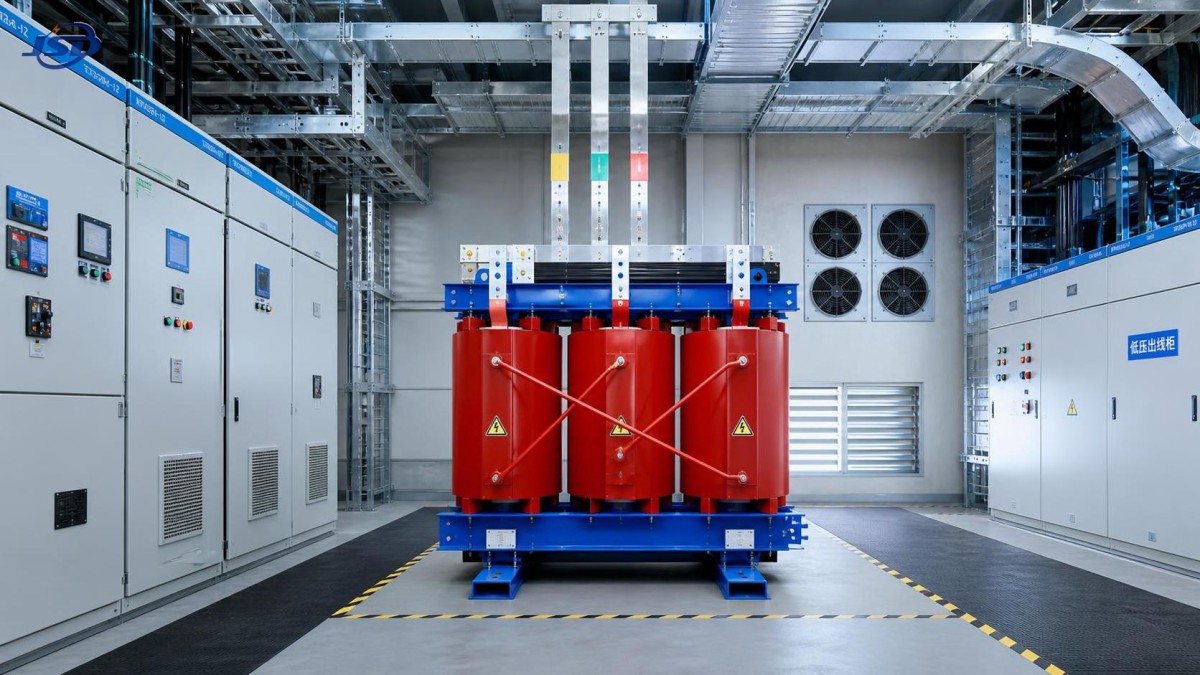
For this reason, dry-type transformers are often preferred in many building retrofit scenarios, especially indoors, because they avoid oil containment concerns and may simplify certain safety and environmental considerations. That said, the choice between dry-type and oil-immersed designs should be based on the specific installation environment, local code requirements, fire protection strategy, and lifecycle efficiency evaluation rather than a blanket preference.
Voltage compatibility is more than matching primary and secondary ratings
Voltage mismatch problems in retrofits are not always obvious during early planning. The primary service voltage may be straightforward, but the downstream system may include a mix of legacy equipment, phased upgrades, and panels added over decades. Selecting the wrong transformer configuration can trigger costly redesign late in the project.
Key checks include:
- primary utility supply voltage and tolerance;
- secondary voltage required by existing distribution boards and major equipment;
- frequency compatibility for special imported equipment;
- phase configuration and grounding method;
- neutral requirements for nonlinear and single-phase loads;
- impedance coordination with the rest of the distribution system.
Impedance deserves particular attention. In retrofit environments, the transformer’s impedance affects fault current levels and coordination with existing protective devices. A replacement that appears electrically equivalent in kVA and voltage may still change short-circuit behavior enough to require relay, breaker, or fuse review. This is one of the areas where “drop-in replacement” assumptions become expensive.
Nonlinear loads and harmonics can change the selection basis
Many older buildings now carry load types that were far less significant when the original transformer was installed. Variable frequency drives, UPS systems, LED lighting, data equipment, building automation electronics, and EV charging systems can all introduce harmonic distortion or atypical load profiles.
Where nonlinear loads are material, the project team should evaluate whether a standard transformer remains appropriate or whether a transformer with harmonic mitigation features, K-factor considerations, or other design adaptations is required. The answer depends on the measured harmonic environment and load composition, not assumption.
This issue matters because harmonic-related overheating often shows up after commissioning, when the root cause is harder to correct. Project managers should push for front-end measurement and modeling where the building includes significant electronic or drive-based loads. It is far cheaper to validate harmonic conditions before procurement than to troubleshoot thermal stress after occupancy resumes.
Energy efficiency should be evaluated as an operating cost issue, not a specification checkbox
In retrofit projects, transformer efficiency is sometimes treated as a secondary concern because the unit is only one line item in a broader capital budget. That view can be short-sighted, especially in buildings with long operating hours or high base loads.
Transformer losses include no-load losses and load losses, and the cost impact depends on the building’s actual duty cycle. A building operating around the clock, such as a hospital, data-heavy office, hotel, or transport facility, may justify higher-efficiency equipment more easily than a building with light and variable occupancy.
The correct question is not whether a high-efficiency transformer is always worth it. The question is whether the incremental acquisition cost is justified by lifecycle savings under the site’s expected loading pattern. For project teams, this means asking suppliers for loss data and comparing options on total cost of ownership rather than purchase price alone.
If the retrofit also includes distributed energy resources, the transformer decision may need to align with broader energy management strategy. In some projects, storage systems are being added to support resilience, peak shaving, or partial backup at the building level. In those cases, adjacent equipment choices may influence transformer loading behavior and future expansion plans. For example, a wall-mounted storage product such as 51.2V Wall-mounted LiFePO4 Energy Storage Battery may be part of a wider low-voltage resilience architecture, even if it does not directly replace the need for a properly selected distribution transformer.
Safety and compliance cannot be left to late-stage procurement
Retrofit schedules often compress procurement decisions, but transformer compliance should be checked early. The applicable requirements depend on project location, building type, utility rules, and the role of the equipment in the electrical system. Certification, testing, insulation class, temperature rise, enclosure rating, fire performance, and installation standards all need verification against project requirements.
Exact standards vary by market, so teams should confirm the governing framework for their jurisdiction and application. Relevant requirements may involve local electrical codes, utility interconnection rules, building fire regulations, and product certifications. Where any standard or project-specific requirement is unclear, it should be marked as 【待核实】 rather than assumed.
From a project delivery standpoint, compliance failures usually create delay in three places:
- submittal approval;
- inspection and commissioning;
- insurance or authority acceptance for occupied buildings.
That is why experienced teams review documentation quality from the supplier as carefully as the equipment specification itself. Dimensional drawings, loss data, test reports, wiring diagrams, installation requirements, and certification records all matter in retrofit execution.
Noise, heat, and maintainability are building-level issues
Building retrofits often happen in spaces that remain occupied. In that environment, transformer performance is not only an electrical matter. Acoustic impact, room temperature rise, and maintenance access can directly affect tenant satisfaction and facility operations.
A transformer located near office floors, hospitality areas, classrooms, or healthcare functions should be assessed for audible noise and vibration transmission. If the room ventilation is weak, a transformer with acceptable electrical performance may still create unacceptable ambient temperatures that shorten equipment life or affect nearby systems.
Maintainability also deserves more attention than it usually gets in bid-stage discussions. Can staff safely inspect, clean, test, and service the unit in place? Are clearances practical once cables are installed? Is there enough space for infrared inspection or future replacement? In many old buildings, the answer becomes “barely,” which means maintainability should be treated as a design criterion, not an afterthought.
Lead time and installation sequence may override a theoretically ideal choice
Project managers know that the best technical option on paper is not always the best project option. Transformer lead times, transport risk, outage windows, and coordination with other trades can reshape selection decisions quickly.
In retrofit work, the transformer often sits on the critical path because:
- shutdown windows are limited;
- temporary power arrangements are costly;
- other electrical works depend on energization milestones;
- late dimensional conflicts can stall installation.
That makes supplier execution capability highly relevant. Manufacturing quality matters, but so do schedule reliability, drawing turnaround, factory testing support, packaging for difficult transport conditions, and responsiveness during site issues. A slightly more expensive option from a supplier with stronger delivery discipline may reduce total project risk far more than a lower initial quote.
Do not ignore the upstream and downstream system consequences
A transformer replacement can force wider system changes than expected. Upstream protection settings, downstream breaker interrupting capacity, grounding arrangements, and metering interfaces may all need review. In some retrofits, introducing a new transformer also exposes pre-existing weaknesses in switchgear or cabling that had been tolerated under the old configuration.
For project leaders, this means the transformer should be treated as part of a coordinated electrical upgrade package. The more constrained and older the building, the more important it is to evaluate the transformer’s interaction with:
- main switchboards and panelboards;
- generator systems and ATS equipment;
- power quality devices;
- surge protection and grounding systems;
- future solar, storage, or EV infrastructure.
Where resilience is becoming a building priority, especially in commercial and institutional assets, the transformer may need to support a more flexible electrical architecture over time. In such cases, distributed storage options, potentially including solutions like the 51.2V Wall-mounted LiFePO4 Energy Storage Battery, may shape future load management patterns, even if the immediate retrofit scope remains focused on core distribution equipment.
A practical selection approach for retrofit teams
In real projects, transformer selection works best when the team asks a short list of disciplined questions before issuing procurement documents:
- What is the verified present load, and how likely is near-term load growth?
- What installation constraints could eliminate otherwise acceptable options?
- Will harmonics, fault current, or protection coordination change with the new unit?
- Which efficiency level makes economic sense under the building’s actual operating profile?
- What compliance documents will authorities, consultants, and owners require?
- Can the supplier meet the project’s logistics, lead time, and documentation demands?
These questions may sound basic, but they address the failure points that most often surface in retrofit execution: hidden site constraints, incomplete load assumptions, and underestimating the effect of one equipment change on the rest of the electrical system.
The right transformer for building retrofits is rarely the cheapest unit and not always the highest-rated one. It is the option that fits the real load, the real room, the real code environment, and the real project schedule. For project managers, that is the standard that matters most, because retrofit success is measured less by catalog specification and more by whether the building returns to service safely, efficiently, and without avoidable surprises.

Get a Quote
Regardless of whether you require general advice or specific support, we are happy to help you.
Send Us Your Inquiry Today

Jinshida Electric remains committed to contributing to global energy development through professional manufacturing and superior service.