





When a commercial transformer should be replaced instead of repaired
For after-sales maintenance teams, few decisions are as uncomfortable as telling a customer that a commercial transformer should be replaced, not repaired. Repair feels practical. It usually costs less up front, avoids immediate procurement delays, and can seem like the fastest way to restore service. But in the field, that instinct is not always the safest or most economical one. A transformer that has crossed certain technical limits may return to operation after repair, only to fail again under load, damage connected equipment, or create a much larger outage later.
Knowing where that line is matters. In commercial and industrial power systems, the right decision is rarely based on one symptom alone. It comes from reading a pattern: aging insulation, heat history, fault recurrence, contamination, rising losses, and the real operating demands of the site. When those indicators point in the same direction, replacement becomes less of a cost burden and more of a risk-control measure.
This article looks at the practical signs that a commercial transformer is no longer a good repair candidate and explains how maintenance personnel can evaluate the situation with more confidence.
When repair stops being a smart maintenance strategy
A repair makes sense when the fault is isolated, the active parts remain healthy, and post-repair testing can reasonably confirm long-term reliability. Typical examples include replaceable accessories, minor bushing issues, gasket leakage, external connection problems, or cooling component faults that have not damaged the windings or insulation system.
Replacement enters the conversation when the defect is no longer local. If the transformer’s core, winding integrity, paper insulation, or dielectric strength has been fundamentally compromised, repair may only restore function temporarily. Maintenance teams often see this after severe through-fault events, prolonged overheating, moisture ingress, or years of overloaded operation. At that point, the question is no longer “Can it be repaired?” but “Will it remain dependable after repair?”
That distinction is especially important in commercial environments where downtime has a chain reaction—production interruptions, HVAC shutdowns, tenant complaints, data loss risks, and safety concerns. A transformer that keeps coming back with new symptoms is no longer just a maintenance issue; it becomes an operational liability.
Clear warning signs that replacement should be considered
1. Repeated failures after previous repairs
If the same commercial transformer has already been repaired more than once for related issues, the pattern itself is a warning sign. Recurrent overheating, recurring insulation test deterioration, repeated oil leakage combined with contamination, or repeated trips under normal loading often suggest underlying degradation rather than isolated faults.
For maintenance personnel, repeat failure is not simply annoying—it changes the economics. Labor, transportation, spare parts, emergency response, and customer disruption accumulate quickly. Even if each individual repair seems reasonable, the total life-cycle cost may already be approaching or exceeding the value of replacement.
2. Insulation system degradation is advanced
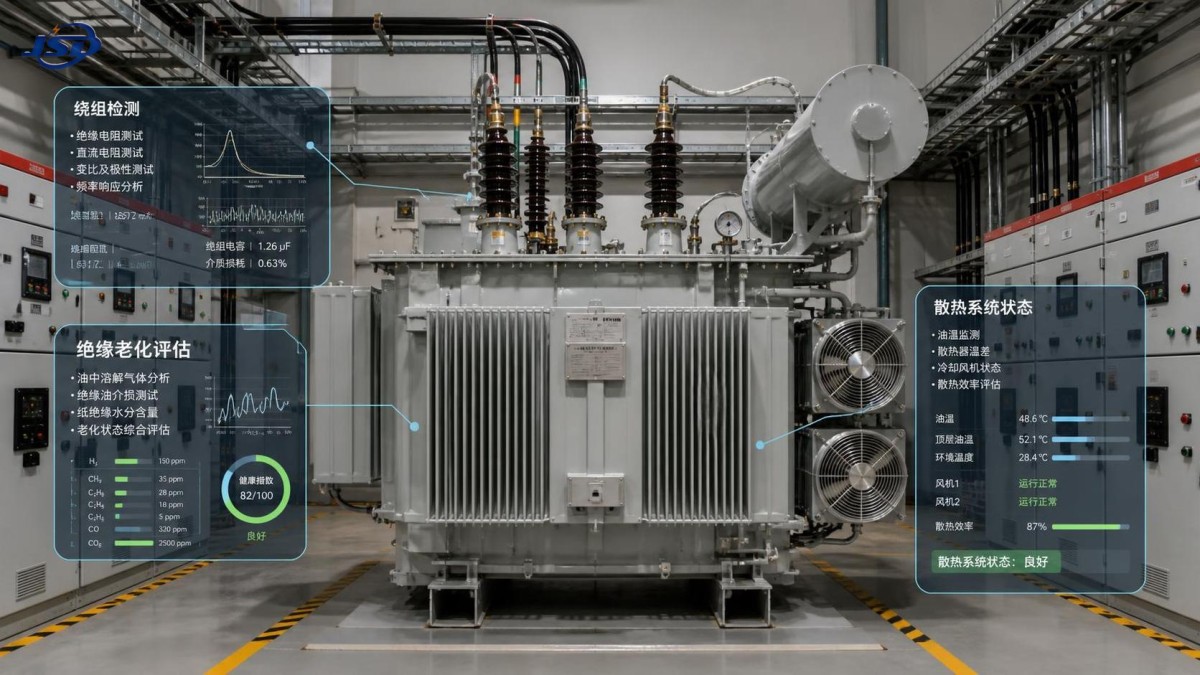
In many aging transformers, insulation condition is the real decision-maker. Once cellulose insulation has lost significant mechanical and dielectric strength, the risk of internal failure rises sharply. Signs can include poor insulation resistance trends, concerning polarization index behavior, abnormal dissolved gas analysis results, persistent moisture issues, and evidence of thermal aging.
What makes insulation damage so serious is that it cannot always be “fixed” in the same straightforward way as an external component. Drying, oil treatment, or limited reconditioning may help in some cases, but badly aged insulation rarely returns to its original condition. If the unit is expected to handle normal commercial loads for years ahead, replacement is often the more honest technical recommendation.
3. Winding deformation or internal short-circuit damage
After short-circuit events, fault currents, or transport/mechanical shocks, winding deformation can occur even if the transformer still energizes. This is a dangerous gray zone. A unit may appear functional while its mechanical withstand capability has been reduced. The next fault or inrush event can trigger a much more severe internal failure.
If testing or inspection indicates winding displacement, turn-to-turn damage, or weakened structural support, repair can become complex and uncertain. In many commercial applications, especially where system reliability is critical, this is one of the strongest arguments for replacement.
4. Chronic overheating and thermal damage
Hot spots leave a history, even when alarms are not always recorded. Burnt odor, darkened oil, carbonization, brittle insulation, localized discoloration on connections, and cooling system strain all point to a transformer that may have operated beyond healthy thermal limits. If overheating has been persistent rather than incidental, internal aging accelerates and residual life drops.
Maintenance teams should be cautious about units that are repaired for fans, pumps, radiators, or temperature controls while the internal thermal damage is overlooked. Solving the cooling symptom does not undo years of heat stress inside the tank.
5. Oil condition and contamination indicate deeper problems
Oil-related issues are not all equal. A simple leak or moderate oil degradation may be manageable. But sludge formation, moisture contamination, dielectric breakdown concerns, or gases consistent with active internal faults are more serious. These conditions may indicate paper insulation deterioration, overheating, arcing, or poor sealing integrity over a long period.
Where oil treatment becomes a recurring necessity just to keep the unit within acceptable operating condition, replacement often deserves serious review. Maintenance teams should ask whether they are preserving equipment life—or only delaying an unavoidable end-of-life event.
6. Capacity no longer matches the site’s demand
Sometimes a commercial transformer should be replaced even if it is still technically repairable. Load growth, electrification upgrades, process expansion, EV charging integration, data center support, or power quality demands may have moved the site beyond the transformer’s intended operating profile.
In that situation, repeated repair can be misleadingly conservative. The transformer may continue to run, but with chronic overloading, poor thermal margin, or insufficient efficiency. Replacing it with a properly rated unit may solve both reliability and future capacity concerns at the same time.
The practical evaluation checklist maintenance teams should use
In real projects, replacement decisions are strongest when they are documented through a structured assessment rather than based on one dramatic symptom. A useful review usually includes the following:
- Age of the transformer and known service history
- Frequency and type of previous repairs
- Insulation test trends rather than one-time values only
- Dissolved gas analysis and oil quality findings
- Evidence of overheating, moisture ingress, or contamination
- Load profile, overload history, and future load expectations
- Criticality of the installation and downtime consequences
- Availability of spare parts and repair turnaround time
- Expected reliability after repair versus after replacement
This kind of checklist helps maintenance professionals communicate clearly with plant managers, facility owners, or procurement teams. It turns a difficult recommendation into a traceable engineering judgment.
Repair cost is not the same as ownership cost
One common mistake in commercial transformer decisions is comparing only the immediate invoice values: repair now versus replacement now. That comparison is too narrow. The more meaningful comparison is total ownership impact over the next several years.
A lower repair cost can still be the more expensive path if it leads to repeated outages, emergency callouts, collateral equipment damage, production loss, or another unplanned replacement under worse conditions. For after-sales teams, this is often the hardest point to explain because customers naturally focus on short-term budget pressure. But maintenance professionals know that unstable equipment drains both money and confidence.
Where system criticality is high, the cost of uncertainty matters almost as much as the cost of hardware. A transformer feeding essential building services, process equipment, or sensitive commercial loads should not be evaluated by parts cost alone.
When replacement is the safer choice from a system perspective
Some replacement decisions are not really about the transformer alone. They are about protecting the wider electrical system. An aging or internally weakened unit can increase the likelihood of upstream trips, downstream equipment stress, voltage instability, and prolonged restoration times after faults. In sites where continuity matters, that risk extends far beyond the transformer bay.
This is why many maintenance teams now frame the decision in terms of system resilience. If one transformer has become the weak link in an otherwise stable distribution network, replacing it can reduce operational uncertainty across the whole facility.
For medium- and high-voltage projects, selecting a new unit should also align with the application environment, loading profile, cooling requirements, and long-term reliability expectations. In larger power distribution scenarios, engineered solutions such as the 110kV Oil-Immersed Transformer are often evaluated not only for basic replacement needs, but also for improved thermal performance, insulation reliability, and suitability for demanding infrastructure or industrial networks.
Situations where repair may still be the right answer
Not every aging commercial transformer needs to be replaced. If the core and windings are sound, diagnostic results are stable, the issue is external or accessory-related, and the site’s load demand remains appropriate, repair can still be the right decision. The same is true when a known fault can be corrected without evidence of progressive internal damage.
The key is discipline. A repair should be followed by meaningful post-maintenance testing and a realistic judgment about residual life. If the unit returns to service, it should do so with a monitoring plan—not just hope.
How to explain the replacement recommendation to customers
After-sales maintenance personnel are often the bridge between technical reality and customer expectation. Simply saying “the transformer is old” is rarely persuasive. A better explanation ties replacement to measurable risk: deteriorated insulation, recurring failure history, internal fault evidence, load mismatch, or low confidence in post-repair reliability.
It also helps to explain what replacement avoids. Customers may respond more clearly to avoided emergency shutdowns, reduced fault risk, better operational stability, and improved fit for future load growth than to abstract engineering language. The most effective conversations are balanced: no scare tactics, no overselling, just a clear picture of what continued repair would realistically mean.
Suppliers with strong technical support and manufacturing discipline also make that transition easier. Companies such as Jinshida Electric Power Technology Co., Ltd., which focus on power transmission and distribution equipment with attention to safety, energy efficiency, and application performance, can support customers not only with equipment supply but with a more application-based view of long-term power reliability.
The decision comes down to confidence in remaining life
In the end, the replacement-versus-repair decision for a commercial transformer is about remaining life, not just present operability. A transformer may still be running and still fail the real-world test of dependability. When internal degradation is advanced, failures are recurring, thermal damage is evident, or system demands have outgrown the unit, replacement is often the more responsible maintenance decision.
For after-sales teams, the goal is not to replace equipment too early or repair it too long. It is to judge when continued intervention stops adding value. When you can no longer defend the transformer’s future performance with reasonable confidence, replacement is no longer a last resort—it is the correct next step.

Get a Quote
Regardless of whether you require general advice or specific support, we are happy to help you.
Send Us Your Inquiry Today

Jinshida Electric remains committed to contributing to global energy development through professional manufacturing and superior service.