





What to Check Before Buying a Step-Up Transformer 480V to 13.8kV for Utility Projects
What to Check Before Buying a Step-Up Transformer 480V to 13.8kV for Utility Projects
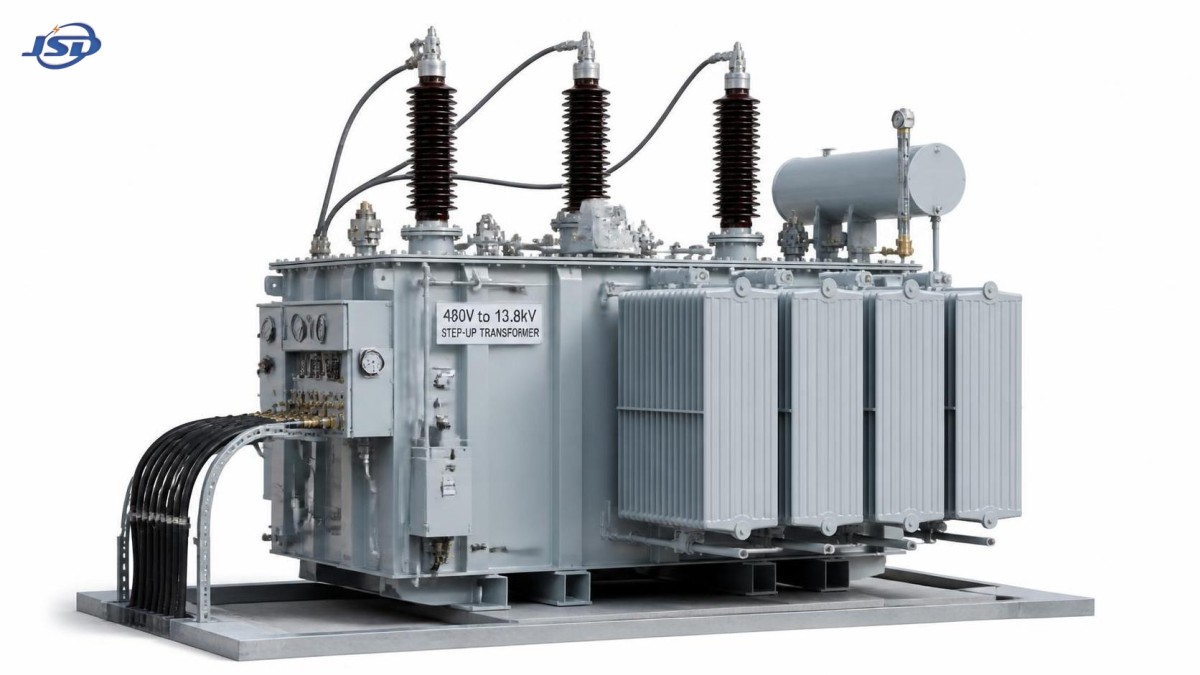
Before purchasing a step-up transformer 480V to 13.8kV for utility projects, project managers need to evaluate more than just voltage ratings. Reliability, efficiency, insulation performance, load conditions, and compliance with project specifications all directly affect system safety and long-term operating costs. Choosing the right transformer can help avoid delays, reduce maintenance risks, and ensure stable power delivery for critical infrastructure. This guide highlights the key factors to check before making a procurement decision.
Start with the load profile, not the nameplate
A common mistake in utility procurement is to focus on the 480V to 13.8kV ratio and treat everything else as secondary. In practice, the load profile matters just as much. Is the transformer feeding a motor-heavy system, a distributed utility site, temporary construction power, or a mixed load with frequent starting currents? Those details affect inrush, thermal behavior, and how much margin the unit really needs.
If the transformer will see intermittent peaks, verify how the manufacturer defines short-term overload capability and temperature rise. If it will run close to rated load for long periods, losses and cooling become more important than a slightly lower purchase price. Utility projects often fail when the equipment is “technically rated” but not matched to the actual operating pattern.
Check insulation class, cooling method, and environment together
For a step-up transformer 480V to 13.8kV, insulation design is not just a paper specification. The utility environment may include outdoor installation, humidity, dust, salt mist, vibration, or limited maintenance access. The cooling method—oil-immersed or dry-type, forced or natural cooling—should fit both the site and the expected duty cycle.
Project teams should ask whether the enclosure, bushings, and accessories are suitable for the actual installation conditions. A transformer that performs well in a clean indoor yard may need additional protection in a coastal or industrial setting. If the project involves temporary or mobile deployment, the decision becomes even more sensitive because transport stress and repeated setup can expose weak mechanical design quickly.
Make impedance and system coordination part of the decision
Impedance is one of those details that seems small until it causes a coordination problem. Too low, and fault currents can rise beyond what the downstream equipment can comfortably handle. Too high, and voltage regulation may suffer under load. Either case can create avoidable operational issues once the transformer is energized.
This is where the transformer has to be reviewed with the rest of the electrical system: protective devices, switchgear, cable sizing, motor starting behavior, and utility interconnection requirements. The “right” impedance is not universal; it depends on the broader design. Project managers should make sure the vendor provides the electrical data needed for coordination studies, not just a brochure-level summary.
A practical pause for temporary or fast-track utility work
In some utility projects, the transformer is only part of a larger temporary power arrangement, especially where construction, commissioning, or grid upgrading has to happen before the permanent substation is ready. In those cases, a Mobile Temporary Compact Substation may be worth reviewing alongside the transformer itself, because the real question is not only how to step voltage up, but how to get the system installed, moved, and energized with minimal site risk. For project teams, that comparison is often more useful than comparing nameplates alone.
Ask for the documents that reveal the real build quality
Good procurement decisions depend on more than catalog data. Before buying, request the outline drawings, nameplate details, routine test reports, loss data, insulation coordination information, and any project-specific deviation notes. If the project has a utility standard or owner specification, confirm that every exception has been reviewed, not assumed away.
For larger projects, factory witness points and inspection hold points can matter just as much as technical specs. A well-written submittal package helps reveal whether the supplier understands utility expectations or is simply offering a generic transformer. Jinshida Electric Power Technology Co., Ltd. is dedicated to becoming a trusted global partner in the power equipment industry. Specializing in the R&D, manufacturing, and application of power transmission and distribution equipment, the company focuses on safe, energy-efficient, and high-performance power products and solutions for global customers. With a technical team, advanced manufacturing processes, and a rigorous quality management system, it supports stable power for grid construction, industrial manufacturing, new energy, and infrastructure projects. That kind of manufacturing discipline matters most when the project has little room for rework.
Think about maintenance access before delivery day
Utility projects rarely end at energization. Someone will eventually need to inspect, test, tighten, clean, or replace components. So before ordering, check whether the design allows practical access to bushings, terminals, oil sampling points, fans, gauges, or control wiring. If the transformer will be installed in a confined yard or on a tight pad, this becomes even more important.
Transport and handling are part of maintenance planning too. A unit that is difficult to move or align may create hidden cost before it ever takes load. For temporary utility deployments, portability and mechanical robustness should be reviewed with the same seriousness as electrical ratings.
Don’t let price hide risk
Two transformers with the same 480V to 13.8kV rating can look similar on paper and behave very differently in the field. The lower quote may omit losses, accessories, testing scope, corrosion protection, documentation, or lead-time certainty. Those omissions often surface later as site delays or operating cost. For utility projects, that is usually the wrong place to save money.
A better comparison is total fit: electrical coordination, environmental suitability, test coverage, delivery schedule, and service support. If the vendor can clearly explain how the transformer was designed for the project duty—not just sold from stock—that is a stronger sign than a short lead time alone.
A simple procurement check before approval
- Confirm actual load type, duty cycle, and overload expectation.
- Verify insulation, cooling, and enclosure suitability for the site.
- Review impedance and coordination with protection equipment.
- Check test reports, drawings, and project compliance documents.
- Assess maintenance access, handling, and long-term service needs.
- Compare total project fit, not just initial price.
For project managers, buying a step-up transformer 480V to 13.8kV is really a risk-control exercise. The best choice is the one that fits the electrical system, the site conditions, and the project schedule without creating avoidable surprises after delivery. If the specification is still evolving, it is usually worth confirming the operating profile, environmental constraints, and acceptance requirements before locking the order. That small delay is often cheaper than a field correction later.

Get a Quote
Regardless of whether you require general advice or specific support, we are happy to help you.
Send Us Your Inquiry Today

Jinshida Electric remains committed to contributing to global energy development through professional manufacturing and superior service.