





Three-Phase Power Transformer: Key Specs You Must Compare Before Procurement
Three-Phase Power Transformer: Key Specs You Must Compare Before Procurement
When sourcing a three-phase power transformer, procurement teams quickly discover that price is only one part of the decision. A transformer that looks economical on paper can become costly if it runs hot, wastes energy, or requires unexpected maintenance. For grid projects, factories, utilities, and infrastructure sites, the real challenge is choosing a unit that fits the electrical system, the operating environment, and the long-term cost target at the same time.
That is why procurement review should go beyond the quotation sheet. Voltage rating, capacity, efficiency, insulation class, loss levels, cooling method, and compliance requirements all shape how the transformer performs after installation. In many projects, the difference between a well-matched transformer and a poor one is not obvious on day one—it shows up later in stability, downtime, and energy bills.
Start with the system, not the catalog
Before comparing models, clarify what the transformer is expected to do in your project. Is it stepping down medium voltage for plant distribution, supporting a substation, or serving a mixed industrial load with frequent variations? A three-phase power transformer is never selected in isolation. It must match upstream voltage, downstream load behavior, fault levels, installation space, and environmental conditions.
Procurement teams often save time by requesting bids too early, before defining these basics. That usually leads to inconsistent quotations that are hard to compare. A better approach is to confirm the application first, then use the same technical baseline for every supplier. Once that is done, the real comparison becomes much clearer.
Voltage rating and ratio: the first filter
Voltage rating is one of the easiest specs to overlook because it seems straightforward. In practice, it is where many selection problems start. You need to confirm both the primary and secondary voltage, the tapping range, and whether the transformer is designed for the actual network variation at the site.
If the grid voltage fluctuates or the load side has sensitive equipment, a transformer with an unsuitable voltage ratio may create operational headaches. Tap settings matter too. On projects with seasonal load changes or grid instability, tap flexibility can support better voltage control without forcing other equipment to work harder than necessary.
The key question is not only “Does it match?” but “Does it still match under real operating conditions?”
Capacity should reflect the load profile, not just peak demand
Many buyers focus on nameplate kVA or MVA and choose a size based on the highest expected load. That is understandable, but it can be misleading. A transformer that is oversized may operate inefficiently at light load. One that is undersized may run too close to its limit and age faster than planned.
For procurement, the better metric is load profile: starting currents, diversity factor, expected expansion, and continuous versus intermittent use. Industrial plants with motors, compressors, welding systems, or variable production schedules often need more careful sizing than a simple peak calculation suggests.
Future expansion should also be considered. If the project is likely to add capacity later, the transformer choice should leave room for growth without forcing an early replacement.
Loss levels and efficiency affect total ownership cost
For many procurement teams, loss levels are where the business case becomes real. Two transformers may look similar in initial cost, but their no-load loss and load loss can produce very different operating costs over time. In energy-intensive operations, that difference can be significant.
No-load loss matters because it is present whenever the transformer is energized. Load loss rises with current and becomes important when the transformer runs heavily. Comparing these values across suppliers helps you estimate long-term cost more accurately than relying on purchase price alone.
Efficiency is not just a technical figure; it is a procurement strategy. Over the life of a project, especially in utility or industrial distribution systems, lower losses can support better operating economics and less heat buildup.
Cooling method and insulation class shape reliability
The cooling method influences how well the transformer handles heat, overloads, and ambient conditions. Oil-immersed designs are widely used where durability and heat dissipation are important. Dry-type units may be preferred in indoor or fire-sensitive environments. The correct answer depends on the installation context, not on habit.
Insulation class should be evaluated alongside cooling. High ambient temperature, altitude, humidity, and dust can all affect thermal performance. If the transformer will operate in a demanding site, the insulation system must be capable of maintaining stable performance without frequent derating.
For projects where the electrical room or substation has limited ventilation, the cooling system deserves extra attention. It is not enough for the transformer to meet the spec sheet; it must keep that performance in the actual room it will live in.
A practical example from medium-voltage distribution
In many industrial and utility projects, buyers looking for a medium-voltage step-down solution compare products such as the 33kV Oil-Immersed Power Distribution Transformer against alternatives with similar capacity but different loss levels, cooling arrangements, or tap configurations. This is where a clean comparison sheet becomes valuable: it helps procurement teams see whether the quoted unit truly fits the electrical environment, rather than just matching the headline voltage.
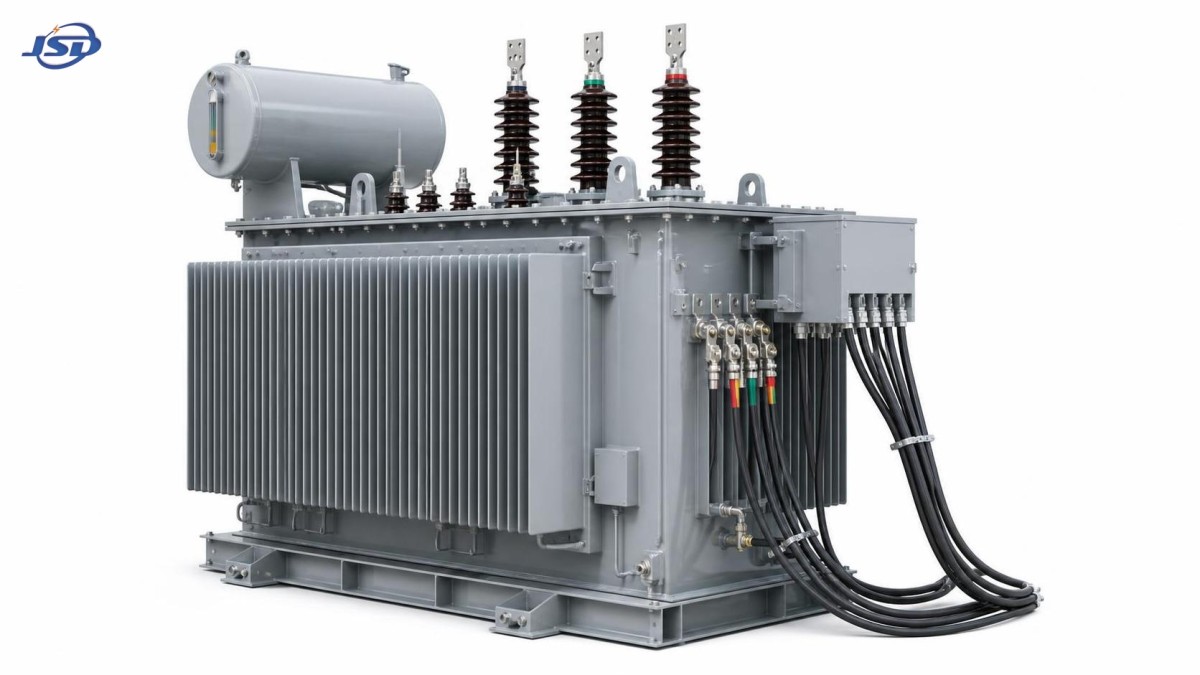
In this kind of procurement, a transformer that appears slightly more expensive may actually reduce lifecycle risk if it offers better loss performance, stronger thermal margin, or a more suitable insulation design for the site conditions.
Compliance is not a formality
Standards and test reports may feel like paperwork, but they are essential to procurement confidence. Buyers should confirm that the transformer meets the applicable IEC, IEEE, or project-specific standards, along with required type tests, routine tests, and inspection documents.
Compliance affects more than acceptance at delivery. It also influences compatibility with the rest of the system, insurance review, project handover, and future maintenance. If your project involves public infrastructure or grid connection, documentation quality can be as important as the hardware itself.
Ask for clarity on short-circuit withstand capability, temperature rise limits, sound level requirements, and partial discharge criteria when relevant. These details often reveal whether a supplier understands real project conditions or is only quoting from a standard catalog.
Do not ignore installation and maintenance realities
A transformer can meet every electrical requirement and still be inconvenient in practice. Procurement teams should check dimensions, terminal arrangement, lifting points, oil containment needs, access for inspection, and maintenance space. These may seem secondary during bidding, but they can affect project schedule and installation cost.
Maintenance expectations matter too. If the transformer will be installed in a site with limited technical staff, simpler inspection routines and reliable component design become important. If spare parts must be sourced quickly, supplier responsiveness should be part of the evaluation.
Buyers often focus on delivery time and overlook the cost of serviceability. Yet a design that is easier to inspect and maintain can reduce downtime and make the entire distribution system more resilient.
A procurement checklist that avoids common mistakes
Before confirming a purchase, compare suppliers using the same checklist:
- Primary and secondary voltage, including tap range
- Rated capacity under actual load conditions
- No-load loss and load loss values
- Efficiency expectations across operating scenarios
- Cooling method and thermal margin
- Insulation class and environmental suitability
- Standard compliance and test documentation
- Dimensions, installation constraints, and maintenance access
- Expected service support and spare parts availability
This checklist is simple, but it helps prevent one of the most common procurement mistakes: comparing transformers on price alone while ignoring how they will perform after commissioning.
For buyers in power grid, industrial manufacturing, and infrastructure projects, the best three-phase power transformer is usually not the cheapest one or the largest one. It is the one that fits the application, protects long-term operating budget, and gives the project room to run safely and steadily.
That is also why many procurement teams prefer working with manufacturers that understand both engineering and delivery realities. A supplier with strong technical support, disciplined manufacturing, and consistent quality control can make specification review far less risky—and far easier to trust.
When the procurement decision is handled carefully, the transformer becomes what it should be: a stable part of the system, not a recurring concern. And in power projects, that quiet reliability is often the real value.

Get a Quote
Regardless of whether you require general advice or specific support, we are happy to help you.
Send Us Your Inquiry Today

Jinshida Electric remains committed to contributing to global energy development through professional manufacturing and superior service.