





Power Distribution Transformer Losses: How to Improve Lifetime Energy Costs
For business decision-makers, a power distribution transformer is more than a capital purchase; it is a long-term energy cost driver.
Transformer losses can accumulate for decades, affecting operating budgets, sustainability targets, equipment reliability, and the overall return from electrical infrastructure investments.
Understanding no-load and load losses helps organizations select efficient equipment, optimize lifecycle performance, and make defensible investment decisions before procurement begins.
The central conclusion is straightforward: the lowest purchase price rarely produces the lowest lifetime cost for a continuously energized transformer.
Organizations should evaluate each power distribution transformer using annual energy losses, expected loading, electricity prices, operating hours, maintenance risk, and planned service life.
That approach shifts procurement from comparing nameplate prices to comparing the economic performance of competing transformer designs over their full operating lives.
Why Transformer Losses Matter More Than Initial Price
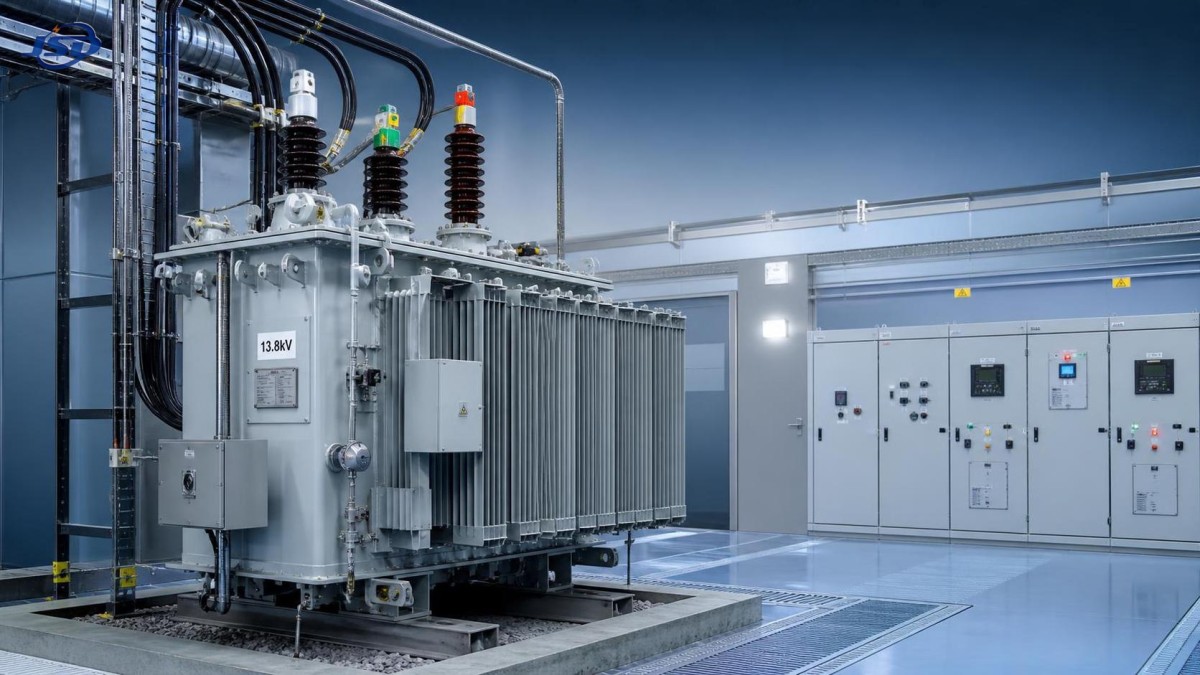
A transformer may operate reliably for 25 to 40 years, so even modest efficiency differences can create substantial cumulative electricity costs.
Unlike many industrial assets, transformers consume energy whenever they are energized, including periods when downstream demand is low or absent.
This makes loss management particularly important for factories, commercial campuses, data-related facilities, public infrastructure, and renewable energy connection projects.
For decision-makers, the issue is not simply efficiency compliance. It is whether the selected unit supports predictable operating costs and long-term capacity plans.
Higher losses increase electricity bills directly, but they can also raise operating temperatures, accelerate insulation aging, and reduce practical loading flexibility.
In locations with high energy tariffs or around-the-clock operation, loss costs can exceed the original transformer purchase price several times over.
The business case becomes stronger when organizations consider carbon accounting, internal energy-reduction targets, utility demand management, and future electricity-price uncertainty.
A procurement decision should therefore include a capitalized loss evaluation, rather than relying only on rated capacity, voltage ratio, and quoted equipment cost.
Understand the Two Loss Categories Before Comparing Designs
Transformer losses are generally divided into no-load losses and load losses. Each behaves differently, so both must be evaluated against actual operating conditions.
No-load losses, also called core losses or iron losses, occur whenever the transformer is energized, regardless of whether it serves significant load.
These losses arise mainly from magnetic hysteresis and eddy currents in the core material as alternating voltage continuously magnetizes the steel.
Because no-load losses occur continuously, they are especially important where transformers remain energized for long hours at relatively light average loading.
Examples include office buildings, housing developments, standby-fed facilities, municipal networks, and industrial sites with seasonal or variable production schedules.
Load losses, often called copper losses, increase as current flows through windings, leads, connections, and other conductive components within the transformer.
They vary approximately with the square of load current. A heavily loaded transformer can therefore experience disproportionately higher load-related energy losses.
Stray losses also contribute under load, caused by leakage magnetic flux inducing circulating currents in windings, tank walls, structural parts, and clamps.
A supplier quotation showing only one loss figure is insufficient. Buyers need separately stated no-load loss, load loss, impedance, temperature-rise, and test conditions.
Calculate Lifetime Cost Using Site-Specific Operating Assumptions
The most useful financial comparison converts losses into annual energy cost, then evaluates those costs across the organization’s expected transformer service life.
Annual no-load energy loss can be estimated by multiplying no-load loss in kilowatts by the number of energized hours each year.
For continuously energized equipment, that figure is normally 8,760 hours. It should be reduced only when a documented operating plan includes de-energized periods.
Annual load-loss energy depends on rated load loss, annual operating hours, and the square of the expected average loading percentage.
For example, a transformer operating at 70 percent of rated current experiences approximately 49 percent of its full-load copper-loss value.
That simplified calculation should be refined when load profiles are highly variable, especially for industrial processes, electric vehicle charging, or renewable generation facilities.
Multiply annual energy losses by the applicable electricity price, including tariffs, demand-related charges where relevant, and expected future price escalation assumptions.
Then discount future operating costs to present value using the organization’s standard investment rate. This allows competing purchase options to be compared consistently.
Decision-makers should request transparent assumptions from suppliers rather than accepting generic savings claims that do not reflect actual loading or tariff conditions.
A reliable model also considers whether electricity costs differ by time of use. Peak-period losses may carry materially greater financial consequences than average-rate estimates suggest.
Match Transformer Efficiency to the Actual Load Profile
Oversizing is a common source of avoidable lifetime cost. It may reduce load losses, but it can increase no-load losses and unnecessary capital expenditure.
Undersizing creates a different problem: elevated operating temperature, higher load losses, reduced overload margin, and potentially faster insulation deterioration under peak demand.
The best rating depends on measured demand data, anticipated expansion, diversity factors, power factor, harmonic content, ambient conditions, and required redundancy.
Many sites do not operate near their original design load. Production changes, efficiency programs, tenant turnover, and distributed generation can alter demand significantly.
Historical interval data is more useful than a single peak-demand reading. It reveals how often the transformer operates at low, medium, and high loading levels.
Where future growth is uncertain, organizations can compare a larger single unit against phased capacity additions, parallel operation, or a modular distribution architecture.
This analysis helps avoid paying continuous core-loss penalties for capacity that may remain unused for much of the transformer’s life.
Conversely, critical facilities may justify additional capacity despite some efficiency compromise when continuity requirements and outage costs outweigh energy savings.
Specify Core, Winding, and Manufacturing Features That Reduce Losses
Loss performance is strongly influenced by core steel quality, core design, winding geometry, conductor selection, insulation systems, and manufacturing process control.
High-quality cold-rolled grain-oriented silicon steel can reduce magnetic losses when cutting, stacking, insulation, and core clamping processes are properly controlled.
Core joints, burr control, lamination alignment, and material handling matter because small manufacturing inconsistencies can increase no-load current, losses, and noise.
Winding design influences resistance, leakage flux, mechanical strength, cooling behavior, and the transformer’s ability to withstand short-circuit forces during faults.
Copper windings can support lower resistance and strong electrical performance, although the final decision should consider total design quality rather than conductor material alone.
Low-voltage foil windings may improve mechanical stability and current distribution in suitable designs, helping manage short-circuit stresses and localized heating.
For industrial applications, buyers should also assess harmonic loading. Nonlinear loads can create extra eddy-current losses that standard load assumptions may overlook.
Ask manufacturers whether quoted loss figures apply at rated frequency, specified temperature, and the expected operating configuration, including tap position where applicable.
Use Procurement Specifications That Protect the Business Case
A strong specification defines guaranteed maximum losses, rather than treating efficiency as a nonbinding product feature or a broad marketing statement.
It should state rated no-load loss, rated load loss, applicable standards, test methods, tolerances, and the financial treatment of excess losses.
Capitalized loss values are particularly useful in competitive tenders. They assign an economic value to each watt of no-load and load loss.
Suppliers can then optimize their designs against the buyer’s actual energy economics, instead of competing primarily through initial equipment price reductions.
The capitalized value for no-load loss should usually be higher when equipment remains continuously energized and the site’s average loading is modest.
The value for load loss should increase where the transformer is expected to operate near capacity, electricity prices are high, or cooling margins are limited.
Specifications should require routine test documentation and identify whether independent witness testing is needed for critical, high-value, or repeat procurement projects.
Compliance with recognized requirements, including relevant IEC, IEEE, ANSI, or local standards, establishes a baseline but does not replace project-specific loss guarantees.
Buyers should compare quotations on a common technical schedule. Differences in temperature reference, accessories, cooling arrangement, impedance, and taps can distort comparisons.
Consider a 13.8kV Solution for Distribution Projects
For facilities supplied by a 13.8kV distribution network, transformer selection should align voltage conversion, load profile, fault duty, installation environment, and lifecycle objectives.
A properly specified 13.8kV Distribution Transformer can step down medium voltage to practical low-voltage levels for industrial, commercial, and civil distribution systems.
Available capacity should reflect measured and forecast demand. A 30 to 2500 kVA range can support varied applications, but correct sizing remains essential.
Typical secondary voltage choices may include 0.4kV, 0.416kV, 0.420kV, 0.440kV, or 0.480kV, depending on regional requirements and connected equipment.
At 50Hz or 60Hz, the transformer design must match the operating system. Frequency, vector group, voltage ratio, and loss targets should be confirmed early.
Jinshida Electric Power Technology Co., Ltd. supports customized voltage, capacity, frequency, connection group, and loss requirements for power distribution applications.
Features such as high-voltage copper winding, low-voltage foil winding, quality insulation materials, and controlled silicon-steel processing can support reliable long-term operation.
For buyers, the relevant question remains measurable performance: request guaranteed losses, test records, applicable certification evidence, delivery commitments, and after-sales support scope.
Reduce Losses After Commissioning Through Better Operations
Procurement establishes the efficiency baseline, but operating practices determine whether the transformer continues delivering its expected lifecycle performance over time.
Monitor loading, voltage, temperature, and power quality routinely. Trending data can reveal overload conditions, unusual losses, cooling problems, or changes in downstream demand.
Thermal inspections can identify loose connections and abnormal hot spots before they develop into energy waste, equipment damage, or unplanned service interruptions.
For oil-filled units, regular oil testing helps assess moisture, dissolved gases, dielectric strength, and insulation condition, supporting informed maintenance planning.
Keep radiators, fans, ducts, and ventilation paths clear. Restricted cooling raises temperature, increases resistance-related losses, and contributes to accelerated insulation aging.
Review tap settings when system voltage conditions change. Incorrect settings can produce undesirable secondary voltage, inefficient operation, and avoidable stress on connected loads.
Where multiple transformers operate in parallel, evaluate load sharing. Uneven loading can cause one unit to incur excessive copper losses while another remains underutilized.
Facilities with substantial nonlinear loads should measure harmonics periodically and confirm that transformer loading limits account for additional heating and eddy-current effects.
Evaluate Reliability and Efficiency Together
Energy efficiency should not be evaluated separately from reliability. A transformer failure can create production losses, safety exposure, repair costs, and reputational consequences.
Low-loss designs must also provide appropriate insulation coordination, short-circuit strength, thermal margin, lightning resistance, and mechanical durability for the application.
Reliable manufacturing quality is therefore part of lifetime economics. Stable loss performance depends on consistent materials, process control, testing, and documented quality management.
Decision-makers should assess supplier experience in comparable climates, voltage classes, industries, and delivery regions rather than relying on a specification sheet alone.
Lead time and service availability also matter. An efficient transformer that cannot be replaced quickly after a major failure may expose the business to unacceptable downtime.
A lifecycle evaluation should assign reasonable financial weight to risk mitigation, spare strategy, warranty terms, technical response capability, and maintenance support.
Make the Final Decision With a Clear Lifecycle Scorecard
Before approving a purchase, management should review initial price, capitalized losses, projected annual energy cost, loading fit, reliability evidence, and supplier support.
The scorecard should distinguish mandatory technical requirements from commercial preferences, ensuring that efficiency claims do not obscure safety, compatibility, or resilience requirements.
Compare at least two operating cases: expected demand and high-growth demand. This reveals whether the selected power distribution transformer remains economical under changing conditions.
Also test sensitivity to electricity-price increases. A design with slightly higher upfront cost may become financially superior much sooner than a simple payback estimate suggests.
Document the assumptions behind every calculation. Clear records make internal approval easier and provide a benchmark for post-installation performance reviews.
The strongest procurement decisions combine accurate site data, guaranteed loss values, disciplined financial analysis, and a supplier capable of delivering verified product quality.
Conclusion
Transformer losses are a controllable lifetime cost, not an unavoidable detail of electrical distribution. The right design can reduce energy spending for decades.
Business leaders should focus first on actual load behavior, annualized loss cost, and reliability requirements before comparing purchase prices or standard product descriptions.
By specifying guaranteed no-load and load losses, selecting capacity carefully, and maintaining the equipment well, organizations can improve both operating economics and resilience.
A power distribution transformer should ultimately be selected as a long-term infrastructure investment: measured by lifecycle value, verified performance, and dependable service.

Get a Quote
Regardless of whether you require general advice or specific support, we are happy to help you.
Send Us Your Inquiry Today

Jinshida Electric remains committed to contributing to global energy development through professional manufacturing and superior service.