





What Should Buyers Compare When Sourcing an Oil Filled Transformer?
What Should Buyers Compare When Sourcing an Oil Filled Transformer?
When sourcing an oil filled transformer, procurement teams should compare lifecycle value, technical fit, quality evidence, efficiency, and supplier capability rather than focusing only on purchase price.
A transformer is a long-term operating asset. A poor specification or unreliable manufacturer can create losses, maintenance costs, outages, safety exposure, and expensive replacement work.
For buyers, the central question is simple: will this unit deliver stable power safely, efficiently, and predictably throughout its expected service life?
This guide explains the practical comparison points that matter most when evaluating an oil filled transformer for utility, industrial, commercial, mining, infrastructure, and renewable-energy projects.
Start With the Actual Operating Requirement
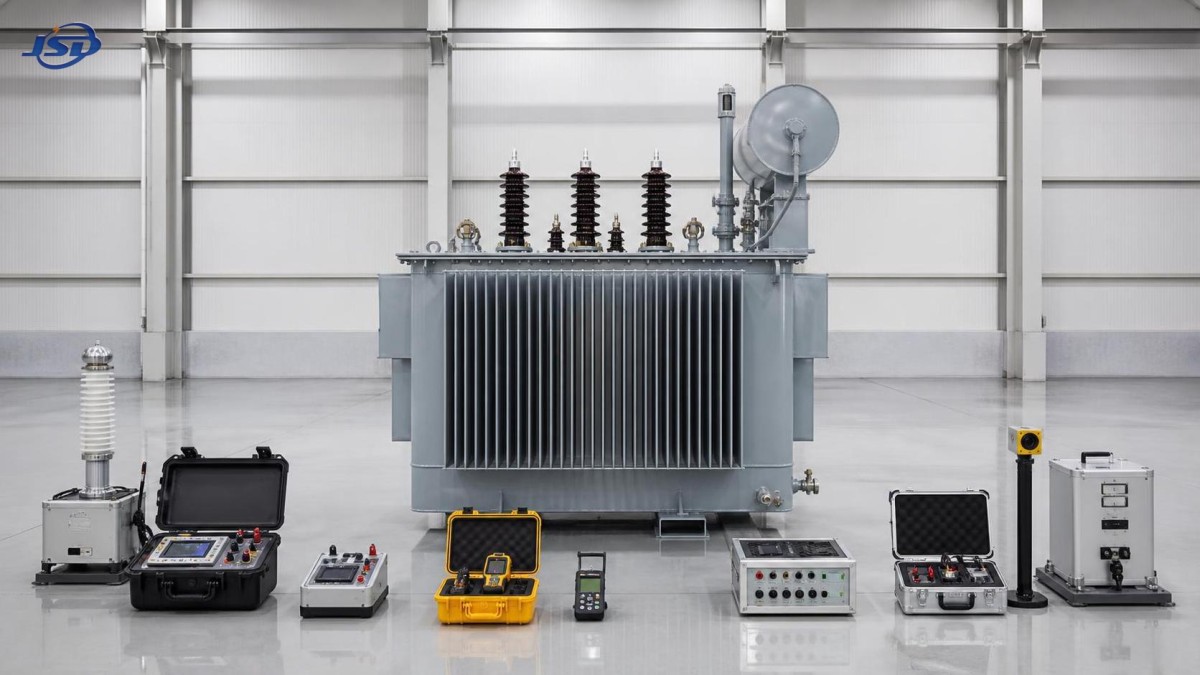
Buyers should first define the installation environment, load profile, voltage requirements, operating hours, future expansion plans, and applicable grid or customer standards before requesting quotations.
Comparing quotations without a consistent technical specification often produces misleading results. Lower-priced offers may exclude accessories, testing scope, insulation margins, or required protection features.
Confirm whether the transformer will serve continuous industrial loads, intermittent commercial loads, motor-heavy processes, sensitive electronics, renewable generation, or a public distribution network.
Each application affects the preferred impedance, cooling arrangement, tap range, overload expectation, insulation class, vector group, and protection arrangement for the oil filled transformer.
Ambient temperature also matters. High temperatures, high altitudes, coastal salt exposure, humidity, dust, and corrosive industrial atmospheres can reduce operating margins significantly.
Ask the engineering team to state the maximum ambient temperature, altitude, installation location, enclosure conditions, and ventilation restrictions in the inquiry document.
Load growth deserves equal attention. Selecting only for current demand can create premature capacity constraints when production lines, buildings, charging stations, or connected equipment expand.
A clear requirement sheet allows procurement personnel to compare equivalent offers and identify whether suppliers are offering an optimized design or simply a basic standard unit.
It also prevents later disputes about assumptions. Rated power, voltage ratio, frequency, connection group, tap positions, impedance, cooling method, and terminal configuration should be documented.
Compare Rated Capacity, Voltage Ratio, and Tap Requirements
Rated capacity is not merely a nameplate figure. Buyers should verify the expected demand, diversity factor, overload profile, power factor, harmonic content, and planned reserve capacity.
An undersized transformer may run continuously at elevated temperature, accelerating insulation aging and increasing losses. An oversized unit may cause unnecessary capital expenditure and no-load losses.
Compare primary and secondary voltage ratings precisely. Nominal system voltage alone is insufficient when local grid tolerances, feeder drops, equipment sensitivity, or generator operation affect actual conditions.
The required low-voltage output should match downstream equipment. Common distribution voltages vary by country, project type, customer equipment, and whether the system serves motors or general loads.
Tap changers help maintain the required secondary voltage when supply voltage changes. Buyers should compare tap range, tap increment, tap location, operating method, and adjustment accessibility.
For many fixed distribution applications, an off-circuit tap changer is sufficient. Projects with frequent voltage fluctuations may require more advanced voltage-regulation arrangements.
Frequency must also match the operating system. A transformer designed for 50 Hz may not perform correctly if applied to a 60 Hz system without proper engineering confirmation.
For projects requiring 13.8 kV primary distribution, the 13.8kV Distribution Transformer can be configured from 30 to 2500 kVA with several low-voltage output options.
That flexibility is useful only when the selected voltage ratio and capacity are based on a verified load study rather than a broad estimate.
Evaluate Losses as an Operating Cost, Not a Technical Footnote
Energy efficiency is one of the most important comparison areas because transformer losses occur for years, often long after the original purchase price is forgotten.
No-load loss occurs whenever the transformer is energized, even with little or no customer load. It is primarily influenced by core material and core manufacturing quality.
Load loss rises as current increases. It is associated with windings, connections, stray losses, and electrical resistance, making conductor design and construction especially important.
Buyers should request guaranteed no-load loss, load loss, total loss, and test tolerances at the specified rated capacity, voltage, frequency, and reference temperature.
A lower initial quotation can become more expensive when excessive losses increase electricity consumption throughout a transformer’s operating life. Procurement evaluation should include loss capitalization.
Loss capitalization assigns a financial value to each watt of no-load and load loss. This approach allows buyers to compare total ownership cost objectively.
Ask suppliers to explain the core steel grade, core joint construction, conductor material, winding arrangement, and manufacturing controls used to achieve quoted loss values.
High-quality cold-rolled grain-oriented silicon steel and controlled cutting and stacking processes can reduce no-load current, heat generation, noise, and energy waste.
Compare guarantees carefully. A supplier should provide clear contractual consequences or remedies if routine test results exceed the stated loss limits.
Review Insulation, Oil, Cooling, and Thermal Performance
The insulation system determines how well an oil filled transformer withstands electrical, thermal, mechanical, and environmental stress over many years of operation.
Buyers should compare insulation materials, conductor insulation, winding supports, oil quality, tank sealing, temperature-rise limits, and the supplier’s approach to moisture control.
Transformer oil serves as both insulation and coolant. Its quality affects dielectric strength, heat transfer, oxidation resistance, moisture behavior, and long-term reliability.
Confirm whether the oil complies with the relevant specification, such as IEC 60296 where applicable, and ask for oil test documentation before delivery.
Cooling type must suit the operating conditions. Common oil-natural, air-natural arrangements are appropriate for many distribution installations, but severe duty may require additional cooling capacity.
Temperature rise deserves close attention because insulation life falls as operating temperature increases. Compare guaranteed temperature-rise values, not only the nameplate capacity.
Ask how the design handles hot spots, especially for irregular loads, high harmonic currents, limited ventilation, and warm climates with long annual operating periods.
Effective sealing prevents moisture ingress and oil leakage. Buyers should examine gasket quality, welding standards, pressure tests, corrosion protection, and conservator or sealed-tank arrangements.
A technically credible supplier can explain how its design protects insulation life under the actual site conditions, rather than only presenting generic material descriptions.
Assess Short-Circuit Strength and Mechanical Construction
Distribution transformers must survive abnormal electrical events. Short-circuit performance is especially important in industrial networks, utility systems, and projects with high available fault current.
During a fault, windings experience powerful electromagnetic forces. Weak supports, poor clamping, inadequate conductors, or loose connections can lead to deformation and failure.
Buyers should request evidence that the design meets the applicable short-circuit withstand requirements, including relevant IEC, IEEE, ANSI, or national standards.
Compare winding technology as well. High-voltage copper wire windings can improve lightning impulse resistance when correctly designed, insulated, and supported during manufacture.
Low-voltage foil winding designs can offer strong mechanical performance and improved current distribution in suitable applications. The correct choice depends on rating and duty.
Core and tank construction influence reliability too. Review the steel thickness, tank design, radiator arrangement, lifting lugs, jacking pads, wheels, grounding terminals, and finish quality.
For outdoor installations, corrosion protection should be specified clearly. Paint system quality, coating thickness, surface preparation, and local environmental exposure affect service life.
Noise may matter in civil buildings, residential areas, hospitals, and commercial sites. Compare guaranteed sound levels and ask whether test data supports the quoted figures.
Do not assume every transformer has the same mechanical strength because capacity and voltage ratings appear similar. Internal design quality can differ substantially between suppliers.
Compare Testing, Certifications, and Traceable Quality Evidence
Certificates are useful, but buyers should prioritize test evidence connected to the actual transformer design, production process, and unit delivered for the project.
Routine tests normally verify electrical ratio, winding resistance, insulation resistance, applied voltage withstand, induced voltage withstand, loss values, impedance, and other specified parameters.
Type tests and special tests provide additional confidence where required. These may cover temperature rise, lightning impulse withstand, short-circuit capability, sound level, or partial discharge.
Before awarding a purchase order, request the supplier’s inspection and test plan. It should define test items, acceptance criteria, witness points, reports, and document responsibilities.
Factory acceptance testing is particularly valuable for larger, critical, or schedule-sensitive projects. It lets the buyer verify nameplate data, workmanship, and tested performance before shipment.
Relevant standards may include IEC 60076, IEEE, ANSI, GB standards, and project-specific requirements. The applicable standard should be written into the technical agreement.
Quality management certification, including ISO 9001, is a useful baseline. However, it does not replace direct review of manufacturing controls and transformer-specific test capabilities.
Ask whether incoming materials are inspected, whether winding and core processes are controlled, and how nonconforming components are isolated and corrected during production.
A supplier with a structured quality system should provide traceability for key materials, routine test reports, inspection records, drawings, manuals, and packing documentation without hesitation.
Check Accessories, Protection, and Installation Compatibility
Accessories are often overlooked during quotation comparison, yet they can materially affect installation cost, commissioning time, protection coordination, and long-term maintenance effort.
Confirm included components such as bushings, terminal boxes, tap changers, pressure-relief devices, oil level indicators, temperature indicators, drain valves, radiators, and grounding provisions.
Critical projects may need alarms, trip contacts, winding temperature indicators, oil temperature indicators, Buchholz relays, or monitoring interfaces depending on transformer design and system requirements.
Buyers should also verify terminal orientation, cable-box dimensions, phase arrangement, clearances, lifting arrangements, total weight, transport restrictions, and foundation load requirements.
Mismatch at the installation stage can delay energization. A technically correct transformer still causes project problems when cable terminations, switchgear interfaces, or civil provisions do not align.
Review drawings before production begins. General arrangement drawings, nameplate drawings, terminal diagrams, foundation dimensions, and schematic diagrams should receive formal buyer approval.
For indoor applications, assess fire protection, ventilation, access routes, oil containment, room dimensions, and compliance with local building and electrical regulations.
For outdoor locations, ensure that the enclosure, protection class, terminal arrangement, and coating system suit rain, sunlight, dust, salt spray, and unauthorized access risks.
A complete accessory schedule makes quotations comparable and helps procurement teams avoid apparent savings that later reappear as change orders or field modifications.
Measure Supplier Capability Beyond the Quotation
Supplier selection should include manufacturing capacity, engineering responsiveness, delivery reliability, export experience, financial stability, and after-sales support alongside the transformer’s technical specification.
Ask how the supplier manages design approval, raw-material sourcing, production scheduling, inspection, packaging, logistics, and documentation for international or project-based orders.
Delivery promises should be tested against available capacity and material lead times. A realistic schedule is more valuable than an aggressive promise that disrupts construction planning.
For global procurement, confirm export packaging, shipping protection, documentation support, destination-country certification needs, and experience serving similar regions or project environments.
Technical communication matters after order placement. Buyers need timely responses to drawing comments, interface questions, test arrangements, installation concerns, and commissioning issues.
Evaluate warranty terms in detail. Confirm warranty duration, defect-response procedures, spare-parts availability, field-service scope, and responsibility for transport or replacement costs when failures occur.
References can be valuable when they involve comparable voltage levels, capacities, applications, climates, and operating conditions. Broad claims are less useful than relevant project evidence.
Jinshida Electric Power Technology supports power transmission and distribution projects through manufacturing, quality management, technical support, and customizable transformer configurations for varied customer requirements.
Procurement teams should seek a supplier that can explain tradeoffs transparently, document commitments clearly, and remain accountable after delivery rather than merely submitting a low quotation.
Use a Weighted Comparison Matrix Before Making the Award
A weighted comparison matrix turns technical and commercial data into a more disciplined sourcing decision. It reduces the risk that the lowest price receives disproportionate attention.
Typical categories include technical compliance, losses, thermal performance, short-circuit strength, testing, accessories, delivery, warranty, supplier history, service capability, and total evaluated cost.
Assign weights based on project risk. A critical industrial plant may give greater weight to reliability and service, while a standardized distribution project may prioritize efficiency and delivery.
Score only documented information. Unsupported claims about low losses, fast delivery, superior materials, or global performance should not receive the same value as verifiable evidence.
Clarifications should be issued consistently to all bidders. This ensures suppliers respond to the same assumptions and prevents hidden differences from remaining inside commercial quotations.
Record all deviations separately. A deviation is not automatically unacceptable, but its technical consequence, commercial impact, and approval status should be visible to decision makers.
Consider lifecycle cost alongside purchase price, freight, installation, losses, maintenance, outage risk, spare-parts needs, and expected operating duration in the financial assessment.
This method gives procurement teams a defensible basis for selection and helps engineering, finance, operations, and project stakeholders align around the same decision criteria.
The final award should go to the offer that provides the best documented balance of technical suitability, operational reliability, efficiency, support, delivery confidence, and commercial value.
Conclusion
Buying an oil filled transformer is a technical procurement decision with long-term operational consequences. Price matters, but it should never be the sole comparison point.
Buyers should validate capacity, voltage ratio, losses, insulation, thermal limits, short-circuit strength, testing, accessories, installation interfaces, and supplier support before awarding the order.
The strongest sourcing outcome comes from a complete specification, evidence-based comparison, and lifecycle-cost perspective. This approach protects project budgets while improving reliability and energy performance.

Get a Quote
Regardless of whether you require general advice or specific support, we are happy to help you.
Send Us Your Inquiry Today

Jinshida Electric remains committed to contributing to global energy development through professional manufacturing and superior service.