





Where an amorphous alloy transformer delivers the biggest energy savings
Where an amorphous alloy transformer delivers the biggest energy savings
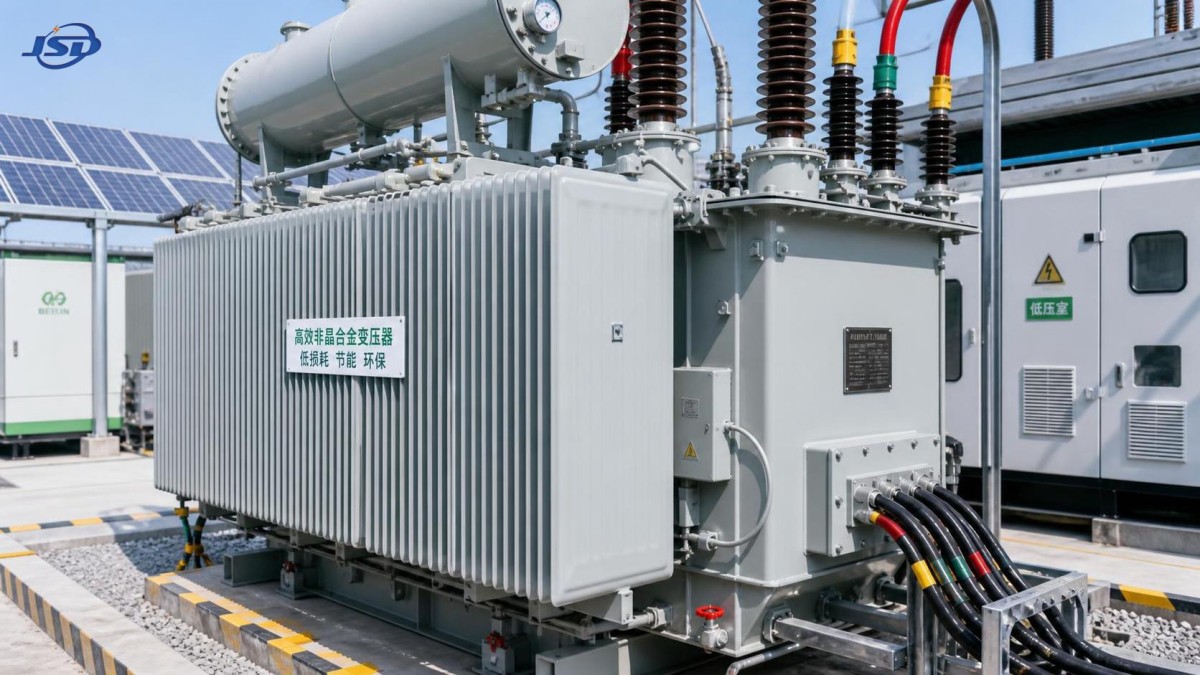
For many power projects, the real cost of a transformer is not decided on the day it is purchased. It is decided quietly over years of operation, through losses that continue whether the load is high, low, or almost absent. That is exactly why the amorphous alloy transformer gets serious attention from engineers and financial decision-makers: it is designed to cut no-load loss, and in the right application that can change the lifecycle economics more than a small difference in upfront price ever could.
The keyword here is “the right application.” An amorphous alloy transformer does not save the same amount of energy everywhere. Its strongest advantage appears in networks where equipment stays energized around the clock and where load variation is significant. In those conditions, lower core loss is not a theoretical benefit. It shows up every hour the transformer remains in service.
For enterprise decision-makers comparing distribution options across industrial plants, renewable energy sites, utility expansion, or infrastructure systems, the practical question is not whether the technology works. It is where it works best, what trade-offs need attention, and how to judge if the savings will be meaningful in a specific project.
Why no-load loss matters more than many buyers expect
Transformer losses are usually discussed in two parts: no-load loss and load loss. No-load loss comes mainly from the magnetic core and exists whenever the transformer is energized. Load loss depends on current and rises with demand. In facilities with stable high loading, both matter. But in many real distribution systems, especially those with daily peaks and long off-peak periods, no-load loss can become the more stubborn cost because it never really switches off.
That is the opening for amorphous core material. Compared with conventional silicon steel designs, amorphous alloy is widely recognized in the industry for its ability to reduce core loss. The exact saving, however, depends on transformer rating, loading pattern, operating hours, ambient conditions, and local electricity prices. It should be modeled project by project rather than assumed from a catalog line.
This also explains why some projects see a fast payback while others do not. A transformer feeding a plant with relatively constant high utilization may justify its investment differently from one serving a lightly loaded distribution point that remains energized 24/7. Ironically, the second case may benefit more from the lower no-load loss.
The applications where energy savings are usually the most visible
Utilities and developers often gain the clearest advantage in broad distribution networks. Residential and mixed-use distribution transformers may spend much of their life under partial load, yet they stay energized continuously. In that situation, reducing core loss across many installed units can have a meaningful cumulative effect. Even when each unit’s saving looks modest on paper, the fleet-level impact can be hard to ignore.
Industrial campuses are another strong candidate, though not automatically. Some industrial sites run with shift-based demand, frequent low-load periods, and oversized transformers kept online for redundancy or future expansion. Those are the cases where an amorphous alloy transformer often deserves a closer lifecycle review. If a plant runs one or more transformers lightly loaded for long periods, the usual assumption that “industrial means load loss dominates” may be incomplete.
New energy projects also deserve separate attention. Solar and wind installations are defined by variability. Their transformers may remain energized even when generation output changes sharply. In some layouts, especially where site conditions or dispatch patterns create long low-output windows, lower no-load loss can help narrow avoidable energy waste in the balance of plant.
Infrastructure networks—rail transit auxiliaries, municipal systems, commercial complexes, hospitals, data-support facilities, and public service nodes—often sit in the middle ground between utility logic and industrial logic. Reliability comes first, but operating efficiency is under more scrutiny than before. Where transformers are expected to run continuously and replacement cycles are long, even incremental loss reduction becomes strategically relevant.
When the technology makes less difference
Not every project should be pushed toward an amorphous core design. If a transformer operates close to rated load for most of its service life, total economics may depend more heavily on load loss, cooling design, and system configuration. Likewise, if the transformer is only energized intermittently, the advantage of lower no-load loss narrows.
There are also practical constraints. Mechanical design, transport conditions, acoustic expectations, installation space, and maintenance preference can all affect the final choice. Different markets may prioritize different loss standards or procurement methods. Some buyers optimize strictly for total owning cost; others must balance energy efficiency with standardization across existing assets.
This is why experienced suppliers do not treat transformer selection as a one-line efficiency claim. At Jinshida Electric Power Technology Co., Ltd., the more useful conversation usually starts with operating profile, voltage level, duty pattern, environmental conditions, and compliance requirements. A professional technical team and disciplined manufacturing process matter because efficiency on paper is only one part of the result; stable, reliable operation over the project life is the other part that decision-makers cannot afford to overlook.
A better way to evaluate savings before procurement
The most reliable evaluation method is surprisingly simple: calculate losses against the real load curve, not an average load assumption that hides operating behavior. Buyers commonly ask for rated loss data, but that alone is not enough. A more useful internal review includes how many hours the transformer remains energized, the expected loading range through the day and year, whether future expansion will leave the unit underloaded for a long time, and what local electricity cost makes those losses worth in operating terms.
It also helps to compare like with like. Voltage class, insulation structure, cooling method, winding material, and applicable standards all influence performance and cost. In oil-immersed distribution applications, for example, the question is not simply “amorphous or conventional,” but whether the transformer’s full design matches the system it serves. A project that needs robust distribution performance may be comparing options such as the 15kV/0.4kV Oil-Immersed Power Distribution Transformer alongside other configurations, with energy loss only one of several decision factors.
This mid-stage evaluation is often where hidden costs surface: oversizing, low annual utilization, unnecessary redundancy kept continuously online, or procurement specifications that emphasize purchase price while ignoring operating loss. None of those issues are unusual. They are common enough that many “high-efficiency” discussions fail not because the transformer technology is unclear, but because the usage profile was never defined carefully.
Common decision mistakes in industrial and infrastructure projects
One common mistake is assuming the biggest transformer savings always happen at the highest load. For an amorphous alloy transformer, that is often not true. Its standout value usually appears where the transformer spends many hours energized below rated output.
Another mistake is evaluating a single unit in isolation. In campuses, substations, renewable portfolios, and public infrastructure, multiple transformers may follow the same load pattern. Small per-unit savings can scale materially across a portfolio, especially in long-life assets.
A third mistake is ignoring delivery and quality stability. Core material choice matters, but so do manufacturing control, insulation reliability, and consistency from batch to batch. Jinshida Electric’s focus on R&D, advanced manufacturing, and rigorous quality management is relevant here for a practical reason: lower losses are only valuable when paired with dependable long-term service in grid construction, industrial manufacturing, new energy, and infrastructure projects.
There is also the temptation to use a generic payback rule across all sites. That rarely holds up. The real answer depends on local tariffs, operational hours, replacement timing, financing logic, and whether efficiency is being assessed against an existing asset or for a new build. Usually, a project-specific comparison produces a much clearer decision than a generalized industry benchmark.
What to confirm before moving forward
Before choosing an amorphous core solution, it is worth confirming a few points with the engineering and procurement teams: the actual annual load profile, the percentage of time the transformer will be energized at low load, whether local standards define loss limits or testing requirements, how much installation space and noise sensitivity matter, and whether the project needs standardization with existing equipment.
It is also sensible to review the maintenance environment. Oil-immersed and dry-type arrangements, site access, ambient temperature, and service practices can all influence the preferred design path. If the project includes both efficiency targets and demanding operating conditions, the selection should not be reduced to a single spreadsheet line.
Where no-load losses are a persistent share of operating cost, an amorphous alloy transformer is often one of the more rational ways to reduce avoidable energy waste. Where load conditions, standards, or site constraints point in a different direction, that should be recognized early. The best decisions usually come from aligning transformer technology with how the system actually runs—not how it looks in a simplified procurement template.
If a project team is weighing options now, the next useful step is not a broad claim about efficiency. It is a grounded comparison based on load pattern, loss evaluation, voltage class, and delivery requirements. That is where the biggest energy savings become visible, and where the wrong assumptions are easiest to avoid.

Get a Quote
Regardless of whether you require general advice or specific support, we are happy to help you.
Send Us Your Inquiry Today

Jinshida Electric remains committed to contributing to global energy development through professional manufacturing and superior service.