





Why an open frame diesel generator runs hotter in confined spaces
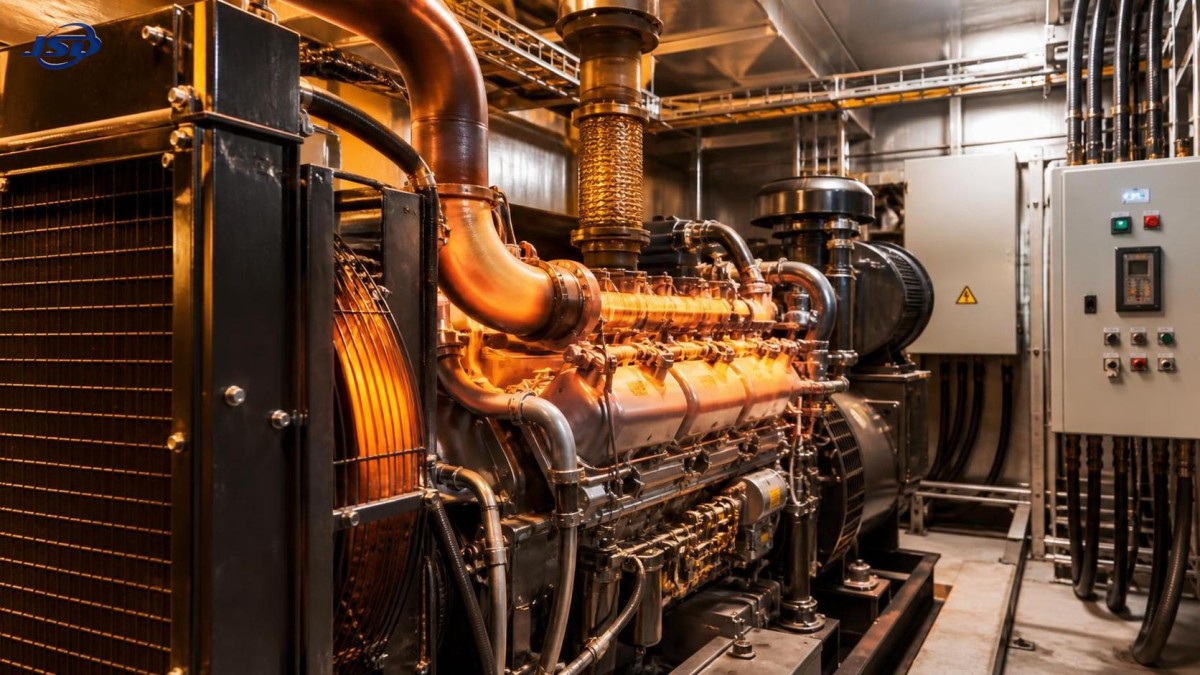
An open frame diesel generator runs hotter in a confined space because its cooling system depends on free air exchange around the engine, alternator, radiator, and exhaust path. Once that air is trapped, the machine starts inhaling warmer air than it was designed for, and every heat-producing part loses margin at the same time. The radiator rejects less heat, the alternator windings stay hotter, the exhaust manifold radiates into the enclosure, and the engine compartment gradually turns into a reservoir of recirculated heat.
In the field, this usually appears as a temperature problem that seems larger than the electrical load alone would suggest. A unit may be carrying a moderate load and still show rising coolant temperature, unstable oil temperature, reduced power response, or nuisance shutdowns. The root cause is often not the engine itself. It is the surrounding air path: too little intake area, too little discharge area, poor duct routing, or hot discharge air finding its way back to the cooling fan inlet.
Heat accumulation starts with air recirculation
An open frame diesel generator is not sealed from its environment. The radiator fan pulls a large volume of air across the core, expecting that cooler ambient air will replace what is discharged. In a narrow room, container corner, temporary shed, basement recess, or fenced service bay with partial walls, the discharged hot air can loop back toward the fan side. Once that happens, inlet air temperature climbs quickly. Even a well-maintained radiator cannot remove enough heat if the cooling air arriving at the core is already hot.
This creates a compounding effect. Hotter intake air reduces combustion air density, which can slightly affect combustion quality and power stability. At the same time, the engine-driven fan works in less favorable conditions, while nearby surfaces absorb heat and re-radiate it back toward the unit. Steel walls, concrete ceilings, cable trenches, and acoustic panels can all store heat during operation and keep the local air temperature elevated after the initial warm-up period.
A common misjudgment is to look only at room size. Volume matters, but airflow direction matters more. A relatively small space with a defined cold-air inlet and a clear hot-air outlet may perform better than a larger room where the air stagnates. In many confined installations, there is enough total air somewhere in the room, yet not enough moving through the generator in the right path.
Restricted airflow affects more than the radiator
The radiator usually gets blamed first, but thermal stress spreads across the entire machine. The alternator on an open frame diesel generator relies on internal ventilation to carry away copper and core losses. When surrounding air is hot, winding temperature rises faster, and insulation ages under higher thermal load. The control panel and wiring terminations also face more heat soak, especially if they are mounted on the side where exhaust or radiator discharge lingers.
Fuel system behavior can also change in hot, stagnant spaces. Fuel lines routed close to the engine block or exhaust side may absorb extra heat. Depending on the fuel system layout, that can contribute to hard restarting after shutdown, rough hot running, or unstable response during sudden load pickup. Lubricating oil temperature may remain elevated as well, reducing viscosity margin under heavy duty or long continuous operation.
The exhaust system is another contributor that gets underestimated. In a confined space, an uninsulated exhaust pipe or poorly supported flexible section can radiate a surprising amount of heat into the room. If the silencer is installed indoors without proper thermal shielding or if the exhaust route includes unnecessary bends that keep the hot section close to the set, the local temperature around hoses, harnesses, and air filters can rise well beyond expectations.
Installation details often create the problem
Many overheating complaints begin after relocation, civil work changes, or the addition of nearby equipment. A generator that ran normally outdoors may struggle once placed close to a wall for security or weather protection. The engine fan may now face a concrete surface at short distance, causing discharge air to rebound. Service doors or temporary partitions can block natural cross-ventilation. Even stacked spare parts, cable drums, or packaging left near the radiator end can disturb the intended airflow.
Wall openings are often sized by rough judgment rather than by the actual air volume demanded by the radiator and combustion process. When intake louvers are too small or fitted with dense mesh, pressure drop rises. The fan still turns, but airflow falls. Dust screens can worsen this if they are selected without considering face velocity. A screen that works in a clean electrical room may clog quickly in a dusty site environment, especially where the open frame diesel generator operates near road dust, aggregate handling, or construction cutting.
Another frequent issue appears when sound reduction is added after commissioning. Acoustic foam, baffles, or lined panels can reduce noise, but they also reshape the air route. If the baffles are too deep, too close to the radiator discharge, or arranged without enough free area, the heat has nowhere to escape. The generator may then operate within acceptable limits in cool weather but overheat during higher ambient conditions or longer duty cycles.
In power distribution projects, this thermal discipline matters beyond the generator itself. When temporary or standby supply is feeding transformer-related loads, the generator room condition can influence upstream and downstream reliability planning. During commissioning support for equipment such as 20kV/0.4kV Oil-Immersed Power Distribution Transformer, stable auxiliary power is expected, and overheating in the generator space can interrupt testing or masking of load-side issues.
Confined spaces distort temperature readings
Temperature diagnosis becomes harder when measurements are taken at the wrong points. A coolant gauge may show a rise, but the useful question is whether the rise comes from engine-side heat generation or from poor heat rejection. Measuring only the thermostat housing does not answer that. It is often more informative to compare air temperature at the radiator inlet, air temperature at discharge, room temperature away from the set, and surface temperature around the exhaust side. If the radiator inlet air is already significantly warmer than the general room air, recirculation is likely.
Infrared checks can be useful, but only when interpreted carefully. Reflective metal surfaces may mislead readings, and hot spots on the exhaust side can distract from the main airflow fault. A practical inspection often combines direct-contact temperature readings, visual smoke or ribbon airflow observation near intake points, and a review of fan-side clearances. Where available, trend logs from the controller help show whether the temperature rise is immediate after load application or gradual as the room heat builds up.
It is also easy to confuse altitude, load imbalance, or fuel quality issues with a ventilation fault. Those factors can affect performance, but in a confined space the strongest clue is often time dependence. If the unit starts normally, carries load for a period, and then temperature steadily climbs without a corresponding load increase, the room is likely storing and recirculating heat.
Mechanical condition still matters
A poor installation can overheat a healthy generator, but an aging cooling system will make the problem worse. Radiator fins may be blocked by oil mist and dust. Fan belts may slip under load. Coolant concentration might be incorrect, reducing heat transfer or affecting boiling margin. Hoses can soften internally and restrict flow even when the outer surface appears normal. The water pump impeller may have wear that lowers circulation. In a confined space, these smaller losses become more visible because there is little thermal reserve left.
Shrouds deserve close attention. On many sets, the fan shroud is essential to drawing air uniformly through the radiator core. If it is damaged, removed during repair, or misaligned after transport, airflow bypasses the core. The machine may still seem acceptable in open air, then overheat once installed indoors. Transport vibration can also loosen guards, brackets, and flexible duct connections, creating gaps that allow hot discharge air to spill back toward the intake side.
Alternator cleanliness is part of the same picture. If ventilation passages are blocked by dust, the alternator will run hotter even if the engine coolant remains within limit. That can lead to varnish odor, insulation stress, and reduced service life. When a generator serves transformer energization or mixed inductive loads, transient heating patterns may be even less forgiving if cooling air is already compromised.
Corrective action starts with the air path, not with larger parts
The first remedy is to establish a defined flow of cool air in and hot air out. That may require repositioning the unit, enlarging wall openings, adding discharge ducting, or separating intake and discharge zones with simple sheet-metal guidance. The target is not just more openings; it is preventing the radiator fan from seeing its own heated discharge air again.
- Increase clear distance around the radiator discharge side where possible, especially from solid walls that reflect hot air back toward the machine.
- Use intake louvers and mesh with realistic free area. Fine protection screens may need a larger panel size to avoid excessive pressure drop.
- Insulate indoor exhaust piping and keep the hottest sections away from fuel hoses, cable bundles, and the alternator air inlet.
- Where ducting is added, support it independently so engine vibration does not crack joints or pull the radiator housing out of alignment.
If powered ventilation is installed, the fan arrangement should complement the generator cooling fan instead of fighting it. Poorly placed extraction fans can create turbulence or negative pressure in the wrong zone. In some rooms, a direct hot-air discharge route from radiator to outdoors works better than trying to cool the whole room. The best layout depends on where the engine draws air, where the radiator sends it, and how nearby walls or ceilings shape the return path.
Routine maintenance should then confirm that the corrected airflow is not being undermined by simpler faults: dirty cores, loose belts, degraded coolant, blocked drains, or collapsed flexible connectors. After any site modification, a loaded temperature run is more meaningful than a short no-load test, because no-load operation may not reveal the way heat accumulates in a confined volume.
When an open frame diesel generator runs hot in a restricted space, the problem usually lies in the interaction between the machine and the room. Once air movement is controlled, most temperature symptoms become easier to interpret, and the remaining mechanical issues are easier to isolate without replacing parts on guesswork.

Get a Quote
Regardless of whether you require general advice or specific support, we are happy to help you.
Send Us Your Inquiry Today

Jinshida Electric remains committed to contributing to global energy development through professional manufacturing and superior service.