





Oil Immersed Power Transformer Procurement: Which Specs Affect Price and Lifecycle Cost?
For procurement teams, the hardest part of buying an oil immersed power transformer is not getting a quotation. It is understanding which specifications genuinely change total project cost, which ones only shift cost from one line item to another, and which omissions create expensive problems after commissioning. In practice, the purchase price is only the visible part of the decision. Losses, loading pattern, installation constraints, maintenance access, grid conditions, and supplier execution quality often have a larger impact over the transformer’s service life.
That is why two transformers with similar kVA ratings can land at very different lifecycle costs. One may be cheaper on paper but run hotter, waste more energy, require earlier intervention, or create hidden site costs. Another may come with a higher initial price but reduce network loss, improve operating margin, and lower outage risk in a way that matters over 15 to 30 years.
Start with the operating scenario, not the nameplate alone
Many procurement errors happen because buyers compare equipment by rated capacity first and business scenario second. Rated power is important, but it does not tell you how the unit will behave under actual duty. A transformer serving a steady industrial load, a utility distribution feeder, a renewable integration point, and a temporary infrastructure project may all require different tradeoffs even if the basic rating looks similar.
The first questions should be practical:
- Is the load stable, cyclic, seasonal, or highly peaky?
- Will the transformer run near full load for long periods, or stay lightly loaded most of the time?
- Is installation in a hot climate, coastal environment, polluted industrial zone, or high-altitude location?
- How costly is downtime for this site?
- Is energy loss a material operating expense in the project model?
- Are transport dimensions, footprint, or noise limits constraining the design?
These conditions determine whether a lower-capex option is actually economical. For example, if the unit will operate continuously at meaningful load, loss performance becomes a commercial issue, not just a technical one. If the project site is remote and maintenance access is difficult, build quality and diagnostics may deserve more weight than a narrow price advantage.
The specifications that most directly move price
Several specifications have a predictable effect on procurement cost. The mistake is to treat them independently. In real sourcing, they interact.
1. Rated capacity and usable loading margin
Higher capacity generally means more core material, more conductor, larger tank volume, and higher transport and installation costs. That part is obvious. What is less obvious is that oversizing can also be expensive over time if it pushes you into a design with unnecessarily high no-load losses for the actual duty profile.
A buyer who expects major future expansion may choose extra capacity intentionally. That can be sensible. But if the load forecast is weak or politically optimistic, the business ends up paying for idle capacity and higher fixed losses. Procurement should ask for a load curve and expansion case rather than relying on a single “future-ready” argument.
2. Voltage level and insulation coordination
As voltage class rises, so do insulation demands, clearances, bushings, testing complexity, and manufacturing control requirements. This increases price. But voltage-related cost is not only about the nominal system voltage. Basic insulation level, switching surge exposure, lightning conditions, and network protection coordination can all influence design decisions.
Buyers sometimes request conservatively high insulation margins without checking whether the system actually requires them. In some projects that caution is justified. In others it produces cost with little operational benefit. Where the application is sensitive, insulation requirements should be aligned with the engineer responsible for system studies, not copied from a previous tender.
3. Core material and conductor material
Core steel quality has a direct impact on no-load loss. Copper and aluminum choices affect resistance, thermal behavior, weight, and price structure. There is no universal rule that one material is always “better” in commercial terms. The right question is how the material choice performs in the specified design and operating profile.
For a transformer that remains energized around the clock, no-load loss can become a serious lifecycle cost driver. For a unit with long idle periods or low average loading, that cost matters even more relative to load loss. This is where a cheaper offer can become more expensive within a few years, especially where electricity cost is high or loss capitalization is part of procurement evaluation.
4. Cooling method and temperature rise
Cooling arrangement affects both initial cost and operating resilience. Simpler cooling configurations may be cheaper, but procurement should check whether the transformer can sustain the expected load under site temperature conditions without excessive thermal stress. Lower temperature rise designs often cost more upfront, yet they can improve insulation life and operational headroom.
For projects with irregular but heavy demand peaks, cooling capability is not just a specification checkbox. It influences how much overload margin the asset really has before aging accelerates. If the site lacks strong monitoring or disciplined operating control, thermal conservatism may be worth paying for.
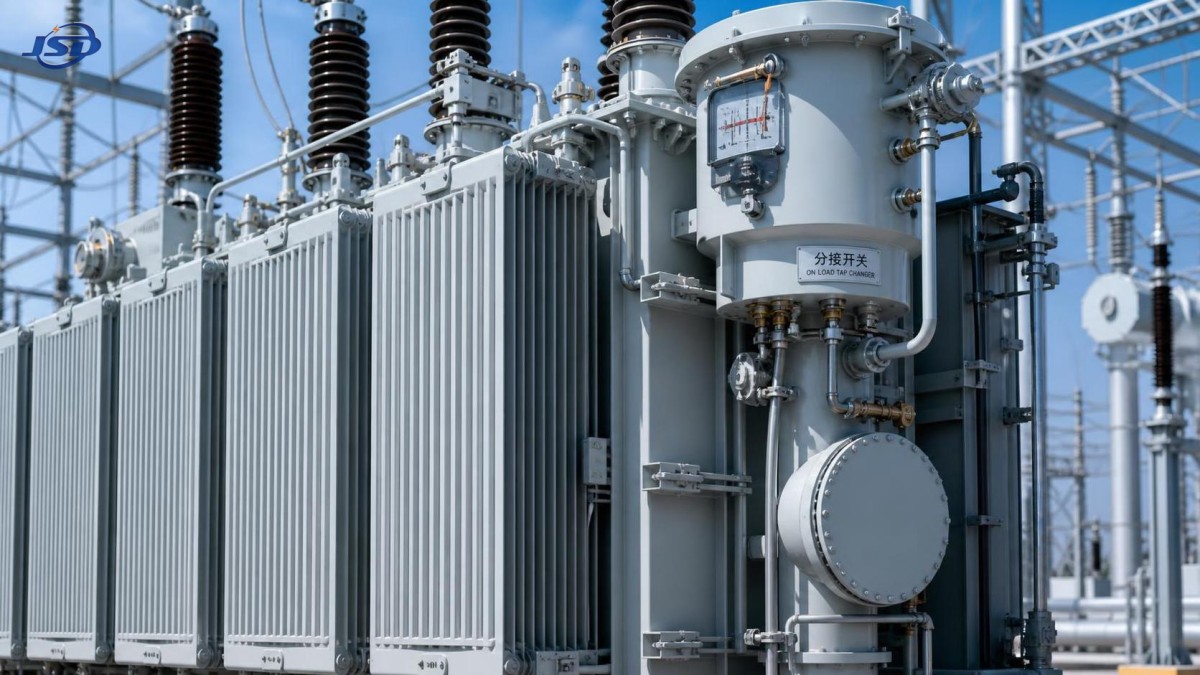
5. Tap changer configuration
Off-circuit tap changers are simpler and less expensive. On-load tap changers add cost, complexity, and maintenance requirements, but they may be necessary where voltage must be regulated under varying conditions. The commercial question is whether that regulation capability solves a real system problem.
Procurement teams sometimes inherit a specification for on-load tap changing because “that is what the last project used.” If voltage variation is limited and switching operations are infrequent, that choice may be harder to justify. On the other hand, in grids with volatile demand or renewable fluctuation, under-specifying voltage control can create downstream performance issues that are much more expensive than the tap changer itself.
6. Loss guarantees and efficiency targets
This is one of the most important and most misunderstood areas in transformer procurement. A lower quoted transformer price can be achieved by relaxing guaranteed losses. That may look attractive during bid comparison, especially if procurement is measured on purchase budget instead of total cost of ownership.
Buyers should separate at least three things:
- Initial equipment price
- No-load and load loss values at stated conditions
- The economic value assigned to those losses over service life
Without that discipline, tender evaluation easily favors the wrong bidder. If your company has not formalized a capitalization method for losses, procurement should push for one. Otherwise, “lowest price” can become a disguised commitment to higher operating cost.
What affects lifecycle cost beyond the datasheet headline
Some of the biggest cost drivers are not the most visible in the specification summary.
Manufacturing consistency and quality control
Two suppliers may both claim compliance with the same standard, yet their process control, material traceability, drying process, winding integrity, sealing practice, and final test discipline may differ significantly. Those differences do not always show up at factory acceptance in an obvious way, but they often surface later through leakage, abnormal heating, dielectric problems, or premature maintenance demand.
For procurement, this means supplier assessment matters. A professional technical team, stable manufacturing process, and disciplined quality management system are not marketing extras in this category. They are risk controls. In projects serving grid construction, industrial manufacturing, renewable energy, or infrastructure, transformer reliability can affect not only repair cost but also production continuity, contractor claims, and reputation.
Transport, installation, and site readiness
A transformer’s delivered cost is rarely its true installed cost. Dimensions, shipping weight, oil handling plan, civil foundation requirements, lifting constraints, and commissioning support can all move the project budget. A competitively priced unit can become expensive if it creates transport exceptions, special crane requirements, or long site delays.
This is especially relevant in remote projects and temporary power deployments. In some hybrid power applications, buyers compare fixed network equipment with mobile energy assets. For instance, where temporary load support, commissioning backup, or staged capacity deployment is needed, it may be commercially useful to compare transformer investment timing with mobile storage options such as 100kW/215kWh Mobile Trailer Energy Storage System. That is not a substitute for a grid transformer in most cases, but it can change how a project sequences capital spending and manages short-term power needs.
Maintenance burden and service access
Oil immersed units are often chosen for robustness, but they are not maintenance-free. Oil condition, seals, bushings, cooling accessories, tap changer components where applicable, and protective devices all affect service planning. Buyers should ask a simple question: what routine tasks will the owner actually be able to perform on this site, with this team, under this operating regime?
A specification that assumes strong maintenance discipline may not fit a site with limited technical staffing. In such cases, the cheapest technical configuration can become the most fragile commercial choice.
Common procurement shortcuts that do not hold up in practice
Several procurement habits sound reasonable but often produce poor outcomes.
“Same rating means comparable offer”
It does not. Capacity and voltage are only the starting point. Loss values, impedance, cooling, insulation margins, tap range, noise, materials, accessories, and test scope all influence real comparability.
“Lowest purchase price reduces project cost”
Only if the operating profile is light, the loss difference is negligible, the quality risk is controlled, and the installation impact is similar. Those conditions are not guaranteed.
“International standard compliance is enough”
Compliance is necessary, but it is not a complete quality screen. Standards define minimum frameworks; they do not erase differences in design margins, workmanship, or production discipline.
“Over-specifying is safer”
Sometimes. But over-specification can also lock in unnecessary capex, longer lead times, higher losses in the wrong duty profile, or maintenance complexity that the owner does not need.
How procurement should compare bids more effectively
A better evaluation model combines technical fit, lifecycle economics, and execution reliability. Even a simple matrix is more effective than comparing headline quotations.
Where possible, ask bidders to state guaranteed losses clearly and provide deviations explicitly instead of burying them in technical annexes. Hidden exceptions are a common source of false price competitiveness.
Questions worth asking before award
Procurement teams do not need to become transformer designers, but they should force clarity in the areas that most often create commercial regret.
- What load profile was assumed when choosing this rating?
- How were no-load and load losses valued in bid comparison?
- What environmental conditions were used for the design?
- Which accessories are included, excluded, or optional?
- What tests are standard, and what is witnessable at factory acceptance?
- What aspects of the offer differ from the tender specification?
- What maintenance tasks are expected over the first five years?
- What project delays could arise from transport or site preparation constraints?
These questions usually reveal whether a supplier is offering a well-matched solution or simply a compliant-looking quotation.
The real purchasing decision
In oil immersed power transformer procurement, the commercial decision is rarely about buying the “best” transformer in abstract terms. It is about buying the right specification for the actual duty, from a manufacturer capable of delivering consistent quality, with loss performance and service characteristics that make sense over the asset’s life.
For that reason, the most useful procurement discipline is straightforward: treat transformer price as one data point, not the decision itself. Once buyers frame the discussion around load behavior, loss economics, reliability exposure, and execution risk, bid evaluation becomes much harder to distort and much easier to defend.

Get a Quote
Regardless of whether you require general advice or specific support, we are happy to help you.
Send Us Your Inquiry Today

Jinshida Electric remains committed to contributing to global energy development through professional manufacturing and superior service.