





Lithium Battery Storage Container Safety Requirements for Outdoor Installation
For quality control and safety management teams, understanding the outdoor safety requirements of a lithium battery storage container is essential to reducing operational risks and ensuring long-term system reliability. From fire protection and thermal management to enclosure design, ventilation, and electrical isolation, every detail affects compliance and performance. This guide outlines the key installation considerations to help professionals build safer, more dependable energy storage environments.
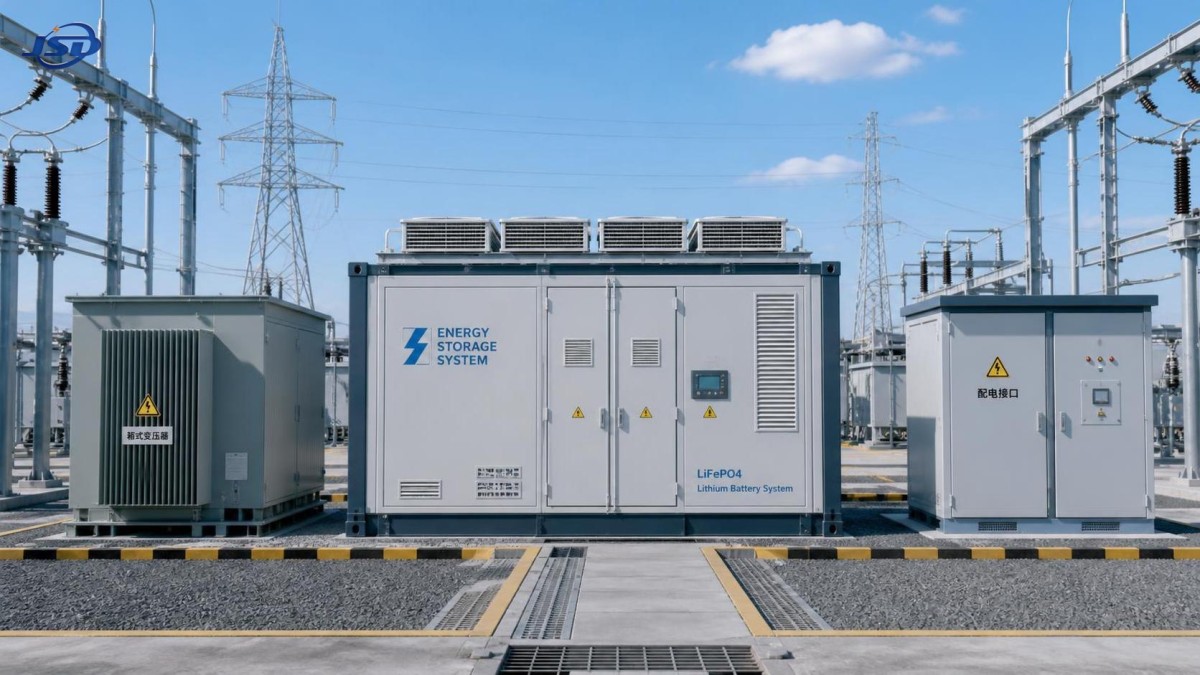
Outdoor battery energy storage has moved well beyond pilot projects. It is now appearing in industrial parks, substations, renewable integration projects, temporary power systems, and infrastructure sites where environmental exposure and fault consequences are both high. In that context, a lithium battery storage container is not simply a steel box holding battery racks. It is a safety-critical electrical installation combining batteries, power conversion equipment, thermal control, fire protection, monitoring, and often transformer or distribution interfaces. For safety teams, the key issue is not whether the container has a certificate on paper, but whether the full installed system can control foreseeable failure modes under real outdoor conditions.
That distinction matters because many field problems do not come from a single defective component. They come from design assumptions failing at site level: inadequate clearances, poor drainage, blocked ventilation paths, incompatible fire suppression media, weak cable sealing, or maintenance routines that were written for indoor electrical rooms rather than exposed containerized systems.
Outdoor installation safety starts with system boundaries, not the container shell
A common mistake in project review is to assess only the enclosure itself. In practice, outdoor safety compliance depends on the whole installation boundary: battery chemistry, rack layout, HVAC, BMS, PCS, isolation devices, earthing, cable entry, emergency shutdown logic, access control, and distance from adjacent assets. If a container passes a factory inspection but is later installed on an uneven base, next to combustible storage, with poor drainage and no emergency access lane, the safety profile changes immediately.
For QC personnel, this means incoming inspection should be linked to site acceptance criteria. Factory FAT documents are useful, but they do not replace SAT verification of ventilation performance, alarm functions, insulation condition after transport, door interlocks, and communication integrity between battery, HVAC, fire system, and remote monitoring platform.
Which standards and certifications matter most
There is no single global checklist that fully defines every outdoor installation requirement for a lithium battery storage container. Compliance usually involves a combination of battery, enclosure, fire, electrical, and site standards. The exact set depends on market, authority having jurisdiction, system voltage, and use case.
Commonly referenced frameworks may include:
- IEC 62933 series for electrical energy storage systems
- IEC 62619 for safety requirements of secondary lithium cells and batteries for industrial applications
- UL 1973 for stationary battery systems
- UL 9540 for energy storage systems and equipment
- UL 9540A test method for evaluating thermal runaway fire propagation in battery systems
- NFPA 855 for installation of stationary energy storage systems
- IEC 62477 or relevant power electronic equipment safety standards depending on configuration
- IEC 61439 where low-voltage assemblies are part of the system
- IP and corrosion protection standards for outdoor enclosure performance
- Local electrical codes, fire codes, building codes, and environmental regulations
For cross-border procurement and project execution, one of the most practical questions is whether the supplier can clearly map product testing to project-level compliance. A battery container can include certified subassemblies and still fail local approval if spacing, gas detection, emergency response provisions, or fire separation distances do not meet local requirements.
Safety managers should also be careful with vague statements such as “designed according to UL/IEC standards.” That wording is not equivalent to third-party certification. Request the exact certificate scope, issuing body, applicable model, test edition, and any limitations or conditions of use.
Fire risk control is the core of outdoor container safety
Most outdoor safety discussions eventually come back to thermal runaway management. That is appropriate, but many teams still treat fire protection too narrowly, focusing on suppression only. In reality, the safety chain has four layers: prevention, early detection, propagation control, and emergency response.
Prevention begins with battery quality consistency, cell traceability, pack design, BMS logic, charge-discharge limits, and thermal uniformity. A container installed outdoors faces broader ambient swings than an indoor battery room, which increases the importance of reliable thermal control and sensor calibration.
Early detection should cover more than smoke. Depending on design and applicable code, systems may use temperature rise monitoring, off-gas detection, smoke detection, and abnormal voltage trend analysis. The value of gas detection is that it can identify incipient failure before open flame appears, but only if detector placement matches actual airflow patterns inside the container.
Propagation control depends on internal compartmentalization, rack spacing, cable routing discipline, and validated system response. This is where UL 9540A-type evidence becomes operationally relevant. Safety teams should ask not just whether a test was performed, but what the result showed about cell-to-cell, module-to-module, and unit-to-unit propagation. A positive test report without clear interpretation does not help site risk assessment.
Suppression remains important, but the agent selection must align with battery chemistry and system design. Water, clean agent, aerosol, and hybrid solutions each have limits. In some designs, suppression can reduce secondary fire spread but may not stop thermal runaway inside affected cells. That is why emergency shutdown, ventilation control, and isolation of adjacent systems must be part of the response plan.
Thermal management is a safety function, not only a performance function
Outdoor installations often fail first in temperature control rather than in battery electronics. High ambient temperatures, direct solar gain, dust-loaded filters, failed compressors, and door seal aging all affect internal thermal stability. Once temperature distribution becomes uneven, cell aging divergence increases, and the probability of overheat alarms, reduced capacity, or localized failure rises.
For QC teams, the key question is whether the thermal management system has been validated for the site’s real climate envelope, not just nominal laboratory conditions. Check the declared ambient operating range, altitude limitations, humidity range, derating behavior, and HVAC redundancy strategy. A system suited to mild climates may not remain safe in coastal, desert, or high-humidity regions without modifications.
It is also worth checking how the system behaves during auxiliary power loss. If external power is interrupted, can the container maintain monitoring, alarms, ventilation logic, or emergency thermal control long enough for safe shutdown? This is often overlooked during document review.
Enclosure integrity must account for weather, corrosion, and maintenance reality
The outdoor enclosure is the first barrier against rainwater ingress, salt mist, dust, and unauthorized access. Yet in field audits, the weak points are rarely the large steel panels. Problems usually appear at door seals, roof penetrations, cable glands, condensate drains, louver interfaces, and base frame corrosion points.
IP rating should therefore be interpreted carefully. A stated enclosure protection level does not automatically apply to the complete installed state if site cabling, penetrations, or modifications are poorly executed. Safety managers should verify:
- Cable entries are sealed and strain-relieved
- Drainage paths do not permit backflow or pooling
- Condensation management is active and documented
- Corrosion protection matches local atmosphere, especially coastal or chemical sites
- Doors maintain gasket compression after repeated access
- Locking and access control support emergency and routine operation
For projects near the sea, in mining areas, or in heavy industry, corrosion resistance should not be treated as a cosmetic issue. Corrosion can impair grounding continuity, enclosure sealing, fire system piping, and mechanical fastening integrity over time.
Electrical isolation and fault protection require container-level thinking
Because these systems combine battery DC circuits, power conversion equipment, auxiliary AC loads, control circuits, and sometimes transformer interfaces, electrical segregation is a major safety requirement. Outdoor conditions add moisture, condensation, and contamination risks that can degrade insulation performance.
The most important checks usually include insulation resistance, creepage and clearance adequacy, protective earthing continuity, short-circuit withstand coordination, arc risk control, and lockout/tagout provisions. Beyond compliance review, safety managers should ask operational questions:
- Can responders isolate the battery from PCS and outgoing circuits quickly?
- Are emergency stop functions clearly labeled and fail-safe?
- Does opening the container create additional electrical exposure hazards?
- Are live parts shielded for maintenance personnel under realistic service tasks?
In projects tied to distribution infrastructure, coordination with upstream and downstream protection is especially important. A battery container may interact with transformers, switchgear, and site grounding systems in ways that change fault current paths or protection selectivity. This is one reason safety review should involve both battery specialists and power distribution engineers.
In mobile or semi-mobile deployments, such as trailer-based systems used for temporary grid support or remote applications, these checks become even more critical because repeated transport can affect terminals, cable restraints, and enclosure seals. A practical example is the 50kW/100kWh Portable Trailer Energy Storage System, where outdoor readiness depends not only on battery performance but also on transport-induced mechanical stability, on-site grounding method, and consistent inspection after relocation.
Ventilation design is frequently misunderstood
Ventilation is often described in general terms, but for safety review it must be specific. Teams should distinguish between normal thermal ventilation, emergency ventilation, and smoke or gas management. These are not always the same airflow path, and they may need different control logic.
One recurring error is assuming that more ventilation always means more safety. In some fault scenarios, uncontrolled airflow can worsen fire development or spread combustion products. Ventilation strategy must therefore align with the fire detection and suppression sequence. If the system is designed to shut dampers or stop fans under certain alarms, that logic should be clearly verified during commissioning.
Vent openings also create environmental exposure points. Louvers, filters, and ducting must be selected for local dust and moisture conditions. Otherwise, a well-designed container on paper can become a maintenance-heavy risk source within a year of operation.
Site layout, spacing, and emergency access are part of compliance
A safe lithium battery storage container can become a poor installation if the site layout ignores fire department access, blast relief considerations where applicable, flooding risk, or separation from occupied buildings and critical assets. The required distances vary by jurisdiction, system capacity, test evidence, and mitigation measures, so project teams should avoid copying spacing rules from unrelated projects.
Points that deserve early review include:
- Distance from transformers, generators, fuel storage, and buildings
- Access routes for firefighting and maintenance
- Flood elevation and drainage grading
- Foundation flatness, anchoring, and load-bearing capacity
- Sun exposure and prevailing wind direction
- Restrictions on public access and perimeter security
Flooding is often underestimated. Even when the battery modules are elevated, standing water can disable auxiliaries, corrode terminals, compromise insulation, and block emergency response. Outdoor energy storage should not be treated like standard container placement for general equipment.
What quality control teams should demand from suppliers
From a practical procurement perspective, the best suppliers are not the ones with the longest marketing spec sheet. They are the ones able to provide a coherent safety file. That file should connect design intent, tested performance, certification status, installation conditions, operating limits, and maintenance requirements.
At minimum, QC and safety teams should request:
- General arrangement and single-line diagrams
- Battery chemistry declaration and safety test references
- BMS protection logic summary
- Fire detection and suppression description
- HVAC design basis and environmental operating limits
- Ingress protection and corrosion protection specification
- Earthing and isolation design documents
- Factory test reports and commissioning test procedures
- Maintenance schedule and consumable replacement intervals
- Certificate list with exact standard editions and scope
If the project involves relocation or temporary deployment, ask for transport inspection criteria and recommissioning steps. In many cases, a mobile system can be safe and effective, but only if post-transport checks are formalized rather than left to operator judgment. The same principle applies whether the system is a fixed BESS container or a compact mobile solution like the 50kW/100kWh Portable Trailer Energy Storage System.
Frequent compliance blind spots in outdoor projects
Several issues appear repeatedly in audits and incident reviews:
- Relying on component certificates without validating whole-system integration
- Ignoring local fire code requirements during import procurement
- Underestimating condensate and humidity effects
- Placing containers too close to other critical electrical assets
- Failing to test alarms, interlocks, and remote shutdown after installation
- Using generic maintenance procedures that do not reflect battery-specific hazards
- Assuming suppression alone can solve thermal runaway risk
These are not minor administrative issues. They directly affect whether a site can detect, isolate, and control an abnormal event before it escalates.
The real decision standard: safe in documents, or safe in operation?
For safety managers and quality professionals, the most useful approach is to evaluate outdoor battery storage in layers. The first layer is formal compliance: standards, test reports, and certifications. The second is engineering suitability for the actual site environment. The third is operational resilience: inspection routines, emergency procedures, spare parts, remote monitoring, and training.
A lithium battery storage container is suitable for outdoor installation only when all three layers are aligned. If one layer is weak, the system may still pass procurement review while carrying avoidable risk into operation. In today’s market, where energy storage projects are scaling quickly and being deployed across varied climates and infrastructure conditions, that gap is exactly where many future incidents will emerge.
For organizations responsible for power equipment quality and project safety, the priority is clear: treat outdoor battery container safety as a full-system compliance task, not a packaging detail. That is the level at which long-term reliability and real risk reduction are decided.

Get a Quote
Regardless of whether you require general advice or specific support, we are happy to help you.
Send Us Your Inquiry Today

Jinshida Electric remains committed to contributing to global energy development through professional manufacturing and superior service.