





How to Choose a Container Battery Storage System for Remote Energy Projects
If you are evaluating a container battery storage system for a remote energy project, the first question is not “How many kilowatt-hours do I need?” It is “What failure can this site tolerate?” In isolated mines, telecom stations, temporary construction camps, island microgrids, and rural infrastructure projects, the wrong system usually fails in practical ways: unstable output, poor temperature performance, difficult maintenance, weak integration with transformers or diesel generators, or an enclosure that looks robust on paper but struggles in the field. A good selection process starts with the operating reality of the site, then works backward into battery chemistry, power architecture, thermal control, safety design, and service support.
That is the difference between buying storage and choosing a system that can actually carry a project.
What project managers should evaluate first in a container battery storage system
A lot of selection mistakes happen because teams compare battery capacity before they define the job of the system. For remote projects, a containerized solution may be asked to do several different things at once: shave diesel runtime, smooth solar output, provide backup power, stabilize voltage, support black start, or carry critical loads during transfer events. Those are not the same duty cycle.
So before reviewing quotations, clarify five points internally:
- What loads are critical, and which can be shed?
- How long must the system support the site during low generation or outage conditions?
- Will it work with solar, wind, diesel, utility extension, or a hybrid combination?
- Is the project optimized for lowest capex, lowest fuel consumption, or highest uptime?
- Who will maintain it on site, and how quickly can support reach the location?
If those answers are still vague, any supplier comparison will be superficial. A 1 MWh system can be undersized, oversized, or exactly right depending on the load profile and dispatch strategy.
In practice, the best buying decision usually comes from matching the storage system to the site’s daily operating pattern, not from chasing the biggest battery cabinet within budget.
Capacity matters, but usable energy matters more
Remote project owners often focus on nominal capacity because it is easy to compare. The more useful figure is usable energy under real operating conditions. That depends on depth of discharge limits, ambient temperature, inverter efficiency, auxiliary consumption, aging margin, and the way the system is controlled.
For example, if your site sees high daytime heat and cold nights, the thermal management system will consume energy. If the project requires battery life preservation through a restricted operating window, not all rated capacity will be available every day. If the battery must hold reserve for emergency loads, part of the capacity is operationally locked.
A short rule of thumb: do not size a remote site battery only for ideal laboratory conditions. Build in a performance buffer for climate, degradation, and operational reserve.
This is also where many teams confuse energy rating with power rating. A site may need modest storage duration but high discharge power for motor starts, switching events, or short peak support. Another site may have the opposite profile: moderate power, long duration. A container battery storage system should be selected around both kWh and kW, not one or the other.
Remote environments punish weak enclosure and thermal design
Containerized systems are attractive because they are transportable, compact, and easier to deploy than a distributed battery room. But “containerized” by itself says very little about field suitability. Remote projects tend to expose weak points quickly: dust, salt fog, humidity, temperature swings, poor road transport conditions, and inconsistent maintenance access.
When reviewing a supplier’s design, ask about:
- Ingress protection of the enclosure and key internal components
- Corrosion protection, especially for coastal or high-humidity sites
- HVAC strategy and redundancy
- Fire detection and suppression method
- Internal compartment layout and service clearance
- Transportation shock and vibration considerations
One detail people underestimate is service access. A neatly packed container may look efficient in a brochure, but if technicians cannot safely replace a module, inspect cable terminations, or isolate a faulty string without major downtime, the project will feel that cost later.
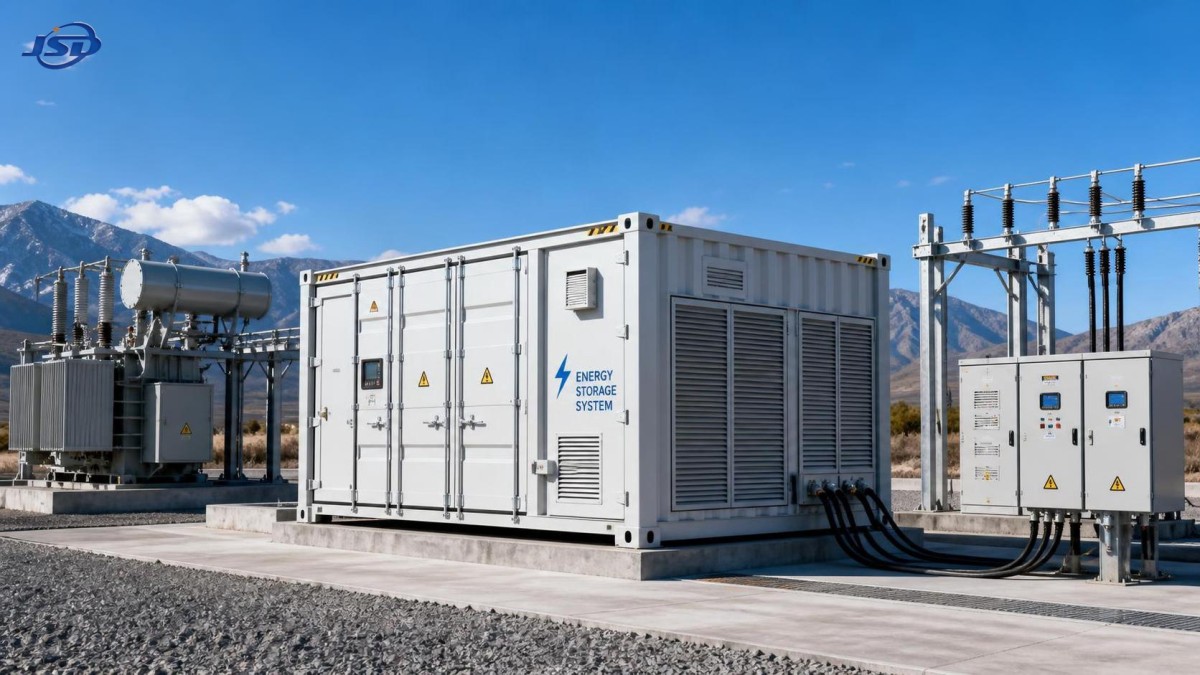
In transformer-linked remote installations, enclosure design also affects the rest of the power system. Poor thermal control or dust ingress can increase fault risk, and once the battery side behaves unpredictably, stress shifts to the inverter, switchgear, and transformer interface. This is one reason experienced power equipment manufacturers tend to look at storage as part of a wider transmission and distribution package, not as a standalone box.
Battery chemistry is not a branding issue. It is a risk decision.
For many remote energy projects, lithium iron phosphate (LiFePO4) is often considered because of its thermal stability, cycle life potential, and suitability for stationary storage. But even when the chemistry choice is sensible, it does not remove the need to assess cell consistency, battery management logic, thermal control, and protection coordination.
That is where project teams sometimes oversimplify the market. They hear “LiFePO4” and assume two systems are roughly equivalent. They are not. The battery management system, pack architecture, monitoring depth, and quality control discipline can create a large reliability gap between products that appear similar on the surface.
For smaller distributed sub-systems inside a broader energy architecture, it can also help to review modular options such as 51.2V Wall-mounted LiFePO4 Energy Storage Battery. Not because a wall-mounted unit replaces a containerized plant, but because some remote sites mix central storage with localized backup at control rooms, communications nodes, or auxiliary power points. In those cases, consistency of battery technology and maintenance logic across the site can simplify operations.
Integration with transformers, inverters, and site controls is where many projects get delayed
In remote power projects, storage rarely works alone. It sits inside a system that may include step-up or step-down transformers, PCS units, protection relays, EMS controls, diesel gensets, photovoltaic inverters, and local distribution panels. A battery container that looks fine on a datasheet can still become a commissioning problem if those interfaces are loosely defined.
Three areas deserve close attention.
First, voltage matching and transformer coordination. If the battery system connects into medium-voltage distribution through a transformer, make sure the supplier has clearly defined the AC-side configuration, harmonics handling, grounding approach, and protection scheme. In hybrid sites, unstable power conversion behavior can show up as nuisance trips or poor power quality long before it shows up as a battery alarm.
Second, controls integration. Decide early whether the site will run on simple dispatch logic or a more advanced energy management strategy. Remote projects with solar-plus-storage-plus-diesel need control priorities to be explicit. Which source leads? When does the battery charge? What reserve threshold is protected? What happens during communications failure?
Third, black start and transfer behavior. Some projects need seamless ride-through for sensitive loads; others can accept a short interruption. That difference materially changes the control and power conversion requirements.
A practical buying question is this: can the supplier explain the single-line logic clearly, including protections and operating modes, or are they only selling battery capacity? If the conversation stays at cabinet level, the project risk is still unresolved.
Do not ignore maintenance reality just because the system is “intelligent”
Remote project leaders are often promised low-maintenance operation. That can be true compared with fuel-heavy generation, but low-maintenance does not mean maintenance-free.
Ask what routine inspection is required, how alarms are prioritized, what spare parts are recommended on site, and whether remote diagnostics are available with enough granularity to support decisions. If the nearest qualified service team is far away, response time matters almost as much as equipment quality.
This is where supplier background matters. A company working across power transmission and distribution equipment will usually have a stronger view of how storage behaves inside real electrical infrastructure. Jinshida Electric Power Technology Co., Ltd., for example, positions its work around safe, energy-efficient, and high-performance power products supported by technical engineering, disciplined manufacturing, and quality management. For remote projects, that broader power-system perspective is more useful than a narrow battery-only pitch, because the battery container must live comfortably with transformers, switchgear, and field operating conditions over time.
Another point that deserves blunt treatment: if your site has no trained local staff and no stable communications link, do not overcomplicate the control strategy unless the value is clear. Elegant optimization logic is not much help if troubleshooting depends on specialists who cannot reach the site quickly.
Common selection mistakes that cost time later
Some issues appear again and again in remote deployments:
- Choosing based on upfront price without modeling fuel savings, replacement intervals, and downtime risk
- Assuming all containers have similar fire protection and thermal performance
- Underspecifying HVAC for harsh climates
- Ignoring transformer and PCS compatibility until late-stage engineering
- Buying for peak demand only and missing actual daily cycling behavior
- Overestimating how much technical support the site can realistically provide
The fix is not complicated, but it does require discipline: write an operating scenario first, then test each proposal against it.
How to compare suppliers without getting lost in specification sheets
When bids are close, the better supplier is usually the one that gives clearer engineering answers. Ask each vendor to explain the system in the context of your site, not in generic brochure language.
Useful questions include:
- What is the expected usable energy under this site’s temperature range?
- What protections are built into the battery, PCS, and AC connection?
- How is the fire event handled inside the container?
- What data points can be monitored remotely?
- What are the maintenance intervals and consumable items?
- How will the system interface with our transformer, switchgear, and control architecture?
- What assumptions are you making about load profile and dispatch logic?
If a supplier answers these with precision, they are probably engineering the project. If they answer mainly with capacity and price, they are probably quoting a product.
That distinction matters in remote energy projects more than in urban, well-supported installations.
When a container battery storage system is the right choice, and when it is not
A containerized solution makes sense when the project needs scalable storage, faster field deployment, centralized thermal and safety design, and easier transport to site. It is often a strong fit for off-grid industrial locations, renewable-diesel hybrids, utility support in remote areas, and infrastructure projects where equipment needs to arrive pre-integrated.
It may be a weaker fit when the site has extremely constrained access, highly fragmented load points, or very small storage needs spread across multiple buildings. In those cases, a distributed architecture using smaller batteries in selected locations may be more practical than forcing everything into one central container. That is also where a smaller-format option such as 51.2V Wall-mounted LiFePO4 Energy Storage Battery can become relevant as part of a layered design rather than a single large installation.
Near the end of the decision process, the key question is simple: does this container battery storage system fit the way the site actually operates, or only the way the tender document describes it?
FAQ
How much reserve should a remote battery system have?
There is no universal percentage. Reserve should reflect load criticality, weather variability, generator backup strategy, and acceptable outage risk. It needs project-specific verification.
Is LiFePO4 always the best option for remote projects?
Often it is a strong candidate for stationary storage, but chemistry alone does not decide reliability. System integration, BMS quality, thermal control, and service support still matter.
Can a battery container reduce diesel fuel consumption significantly?
It can, especially in hybrid systems, but the result depends on dispatch logic, renewable contribution, load profile, and generator operating strategy. This should be modeled before purchase.
What causes the biggest delays after purchase?
Interface issues: controls integration, transformer and PCS coordination, unclear protection logic, and site conditions that were not fully captured during design.
Image Placeholder Notes
- : Suggested near the section on enclosure and thermal design; image content could show a containerized battery storage unit in a remote industrial or off-grid setting with visible HVAC, access doors, and surrounding power equipment; alt text: “Container battery storage system installed for a remote hybrid energy project”
Internal Link Anchor Text Suggestions
- Transformer selection for hybrid power systems: guide page on matching transformers with storage and distributed generation
- Battery energy storage safety design: technical article on fire protection, thermal management, and enclosure standards
- Remote microgrid power distribution solutions: solution page for off-grid and islanded projects
- How to size industrial energy storage systems: educational page on load profile and duration planning
- PCS and switchgear integration basics: technical support page for system interface planning
External Source Directions
- Grid or electrical safety guidance from government regulatory agencies
- Official technical documentation from battery, PCS, or fire suppression manufacturers
- Industry association materials on energy storage system design, testing, and deployment

Get a Quote
Regardless of whether you require general advice or specific support, we are happy to help you.
Send Us Your Inquiry Today

Jinshida Electric remains committed to contributing to global energy development through professional manufacturing and superior service.