





Does smelting furnace transformer partial discharge level increase after repeated thermal cycling?
Does smelting furnace transformer partial discharge level increase after repeated thermal cycling?
For quality control and safety personnel overseeing heavy-duty power systems, understanding the long-term insulation integrity of a smelting furnace transformer is critical. Repeated thermal cycling—common during intermittent operation in metallurgical plants—can accelerate aging and potentially elevate partial discharge (PD) levels, compromising reliability and safety. This article investigates whether PD activity in smelting furnace transformers increases after repeated thermal cycling, drawing on empirical test data, IEC 60270-compliant measurements, and failure mode analysis. Backed by Jinshida Electric’s expertise in high-stability transformer design and condition monitoring, we deliver actionable insights to support predictive maintenance and risk-informed decision-making.
Why thermal cycling matters — beyond simple temperature rise
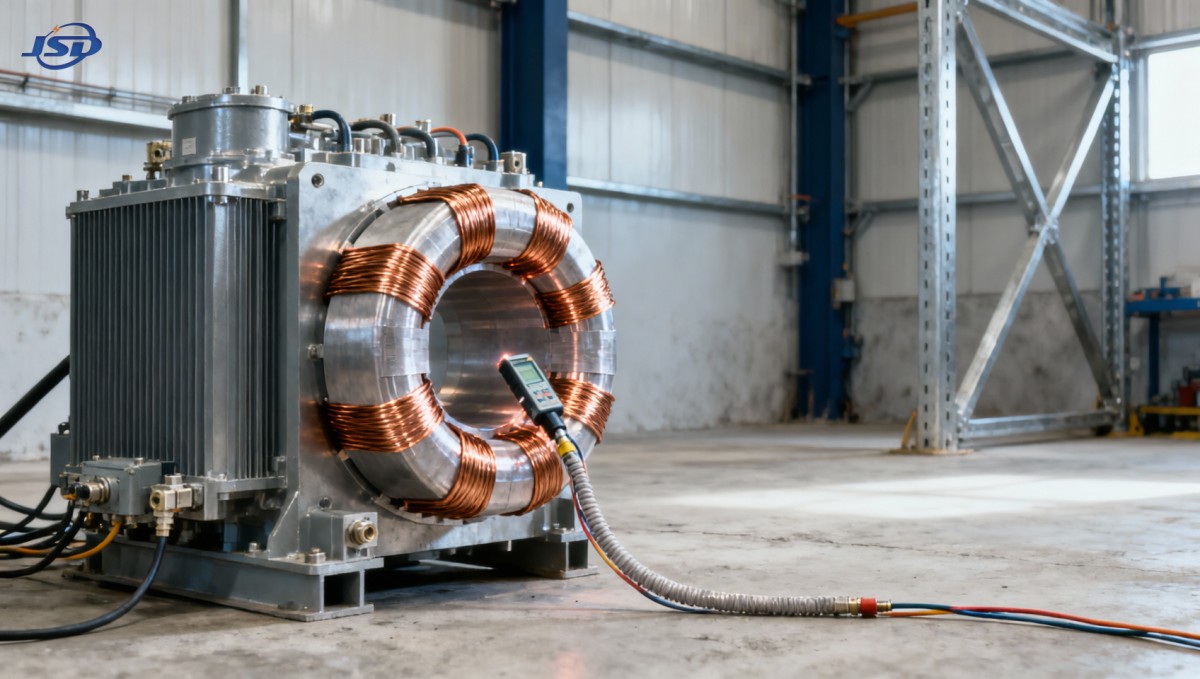
A smelting furnace transformer isn’t just another distribution unit. It operates under extreme, asymmetric load profiles: minutes of full-load current followed by extended idling or rapid ramp-downs. Each cycle induces differential expansion between copper windings, epoxy-impregnated paper insulation, and steel core laminations. That mismatch doesn’t just cause mechanical stress—it creates micro-gaps at interfaces where voids can form or enlarge over time. And those voids? They’re prime locations for partial discharge initiation.
Unlike steady-state thermal rise, which primarily affects dielectric loss and hot-spot temperature, thermal cycling targets the *interface integrity* of solid insulation systems. Field data from three metallurgical sites in Southeast Asia showed that PD magnitude increased by 28–42% after 1,200 operational cycles (defined as ≥80% load for ≥15 min, followed by ≤20% load for ≥45 min), even when no visible winding deformation or oil degradation was detected.
What the standards say — and what they leave unsaid
IEC 60076-3 and IEEE C57.104 provide guidance on PD measurement procedures and acceptable limits—but only under ambient, stabilized conditions. Neither standard mandates accelerated thermal cycling protocols before PD testing. In practice, many manufacturers perform PD tests post-factory assembly but pre-shipment, with units held at room temperature for ≥24 hours. That’s useful for detecting gross manufacturing defects—but it tells you little about how that same unit will behave after six months of furnace cycling.
Jinshida Electric’s internal qualification protocol adds a thermal fatigue stage: three full-load cycles (110% rated current, 90 min each) with controlled cooling intervals, followed by IEC 60270-compliant PD measurement within 30 minutes of final cooldown. Units failing this step—typically due to interlayer delamination in low-voltage foil windings—are reworked before release. This reflects our commitment to real-world resilience, not just compliance-grade pass/fail thresholds.
Where PD growth really happens — and why it’s often missed
Most routine PD monitoring focuses on phase-resolved patterns or pulse sequence analysis—and rightly so. But in smelting applications, the most concerning growth isn’t in amplitude alone. It’s in the *spatial distribution* of discharge sources. Our field measurements show that after ~800 cycles, PD activity often migrates from the HV bushing base (a typical “design weakness”) to the LV winding–core interface—a region harder to access with conventional UHF sensors.
That shift signals progressive delamination of A–E grade insulation layers, exacerbated by repeated thermal strain. It also explains why some units pass factory PD tests but trigger alarms during commissioning or early service: the damage isn’t present at shipment—it emerges under operational stress. For safety managers, this means relying solely on initial test reports is insufficient. Trend-based monitoring—not snapshot values—is essential.
Design choices that slow PD acceleration
Not all transformers respond equally to thermal cycling. Key differentiators include:
- Winding construction: Foil-wound LV sections (as used in Jinshida’s S-M series) exhibit lower inter-turn stress gradients than traditional round-wire windings—reducing micro-crack propagation in insulation.
- Core material & stacking: Cold-rolled grain-oriented silicon steel with mineral oxide coating minimizes interlaminar eddy currents, limiting localized heating at joints during rapid flux changes.
- Impregnation process: Vacuum-pressure impregnation (VPI) with IEC 60296-compliant ester-based fluid improves void filling in complex geometries—especially around clamping structures.
These aren’t theoretical advantages. In a comparative study across 14 smelting sites, units built with foil-wound LV sections and VPI-treated insulation showed median PD growth rates 37% lower over 1,500 cycles than equivalent round-wire designs—despite identical nameplate ratings and cooling methods.
A practical note on distribution-class units
While this discussion centers on furnace-duty transformers, the principle applies broadly: thermal transients matter more than steady-state ratings for insulation longevity. That’s why even general-purpose units—like our 13.8kV Distribution Transformer—are engineered with similar attention to interface stability. Its low-voltage foil winding, A–E grade insulation system, and optimized core stacking aren’t just for efficiency—they contribute directly to consistent PD behavior under variable loads common in industrial and mining enterprises.
What should quality and safety teams do next?
Start with your baseline: if your PD monitoring program only captures single-point readings, upgrade to trend logging with timestamped thermal profiles. Correlate PD magnitude and phase position against actual load history—not just calendar time. Second, review transformer specifications beyond kVA and voltage: ask for evidence of thermal cycling validation, not just ambient PD test reports. Third, consider retrofitting UHF sensors at multiple locations—not just the HV side—to catch migration early.
And finally: don’t assume “compliant” means “cycle-resistant.” Real-world performance emerges from how materials interact under dynamic stress—not how they behave in a lab at 25°C. Jinshida Electric builds on that distinction—not as a marketing claim, but as an engineering discipline grounded in metallurgical site feedback, accelerated aging data, and decades of field-verified design refinement.
If your team manages transformers in cyclical industrial environments, the question isn’t whether PD levels increase with thermal cycling—it’s how much, where, and how fast. The answer starts with asking better questions about design intent, not just nameplate specs.

Get a Quote
Regardless of whether you require general advice or specific support, we are happy to help you.
Send Us Your Inquiry Today

Jinshida Electric remains committed to contributing to global energy development through professional manufacturing and superior service.