





Can Oil Filled Transformers Reduce Lifecycle Costs in High-Load Industrial Facilities?
Can Oil Filled Transformers Reduce Lifecycle Costs in High-Load Industrial Facilities?
For a high-load industrial facility, transformer selection is rarely just a question of purchase price. A transformer sits behind production lines, compressors, furnaces, pumps, data systems, and increasingly, on-site renewable generation. If it runs too hot, is undersized for the actual duty cycle, or cannot tolerate repeated load swings, the cost shows up elsewhere: lost operating hours, emergency repairs, higher losses, shortened insulation life, and difficult capacity upgrades.
An oil filled transformer can reduce lifecycle cost in this environment, but not automatically. Its value comes from the way it handles heat, sustained loading, and serviceability over many years. The real procurement question is not whether oil-filled technology is “better” in general. It is whether the transformer’s thermal design, losses, insulation system, cooling arrangement, and maintenance plan fit the plant’s actual electrical profile.
That distinction matters. A facility with a steady, near-continuous process load has a different transformer problem from a site with short, severe motor starts, electric arc equipment, photovoltaic export, or a battery system that charges overnight and discharges during peak tariff periods. Looking only at nameplate kVA is one of the more expensive shortcuts a buyer can take.
Why thermal performance has such a large cost impact
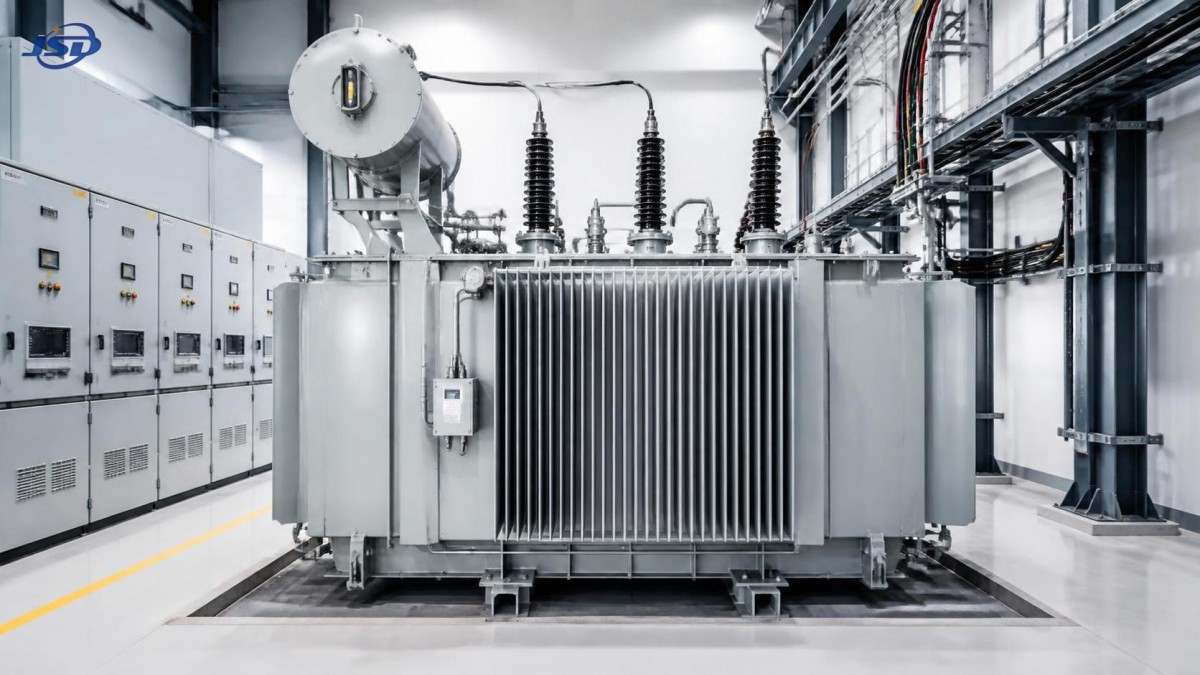
In a conventional oil-filled unit, insulating oil performs two jobs at once: it provides dielectric insulation and carries heat away from the core and windings toward radiators or other cooling equipment. This is why oil-immersed transformers remain common in utility substations and demanding industrial installations. Good heat transfer helps limit excessive winding temperatures during sustained load conditions.
Heat is not simply an operating inconvenience. It affects insulation aging. Paper insulation and oil quality must both be preserved if a transformer is expected to provide reliable long-term service. When a unit repeatedly operates above the conditions assumed in its design, insulation degradation can accelerate. That may not create an immediate failure, which is precisely why it is often missed during procurement. The transformer may appear acceptable during commissioning but become a maintenance burden years earlier than expected.
For high-load sites, the economic benefit of effective cooling usually comes from avoiding several smaller costs rather than producing one dramatic saving. Lower operating temperatures can support longer insulation life; stable temperatures can reduce stress associated with recurring overloads; and a transformer with suitable cooling margins may postpone the need for a replacement or parallel unit. Whether those benefits outweigh a higher initial cost depends on load duration, ambient temperature, energy pricing, outage exposure, and the facility’s tolerance for production interruption.
The phrase “high load” also deserves scrutiny. A plant may report a peak demand that occurs for only a few minutes, while another may operate above 80% of transformer capacity for most of the day. These are not equivalent conditions. Procurement teams should request interval load data where available, ideally covering normal production, seasonal extremes, planned expansion, and abnormal operating modes. A single peak-demand figure does not reveal the transformer’s real thermal duty.
Lifecycle cost is broader than transformer efficiency
Energy losses are a legitimate consideration, especially when the transformer remains energized around the clock. Core losses occur whenever the unit is energized, while load losses rise as current increases. A low-loss design may command a higher upfront price, yet be economically sound where electricity cost, operating hours, and loading are high. The calculation should be based on the expected operating profile, not on a generic efficiency claim.
Still, transformer losses are only one part of the equation. In heavy industry, the financial consequences of an unplanned outage can exceed years of incremental loss savings. That is why experienced buyers look at lifecycle cost through several lenses: acquisition and installation cost, energy losses, routine inspection and oil testing, spares availability, outage risk, repairability, environmental controls, and end-of-life handling.
Oil-filled equipment does require disciplined maintenance. Oil condition should not be treated as an afterthought. Periodic testing can help identify moisture, dielectric deterioration, acidity changes, dissolved gases, or contamination before the issue becomes severe. The appropriate test scope and frequency depend on the transformer’s criticality, voltage class, loading, age, and local practices. A lightly loaded warehouse transformer and a continuously loaded process transformer should not necessarily receive the same monitoring strategy.
This maintenance obligation is sometimes presented as a disadvantage compared with dry-type alternatives. It can be, particularly where site access is limited or the operator lacks a competent maintenance partner. But for a major industrial transformer, planned oil analysis and condition-based intervention are often preferable to discovering deterioration only after thermal alarms, insulation faults, or forced shutdowns occur. The cost issue is not “maintenance versus no maintenance.” It is planned maintenance versus unmanaged risk.
Where purchasing decisions commonly go wrong
The first mistake is specifying capacity from current average demand alone. New drives, future production lines, electrified process equipment, and reactive-power correction can change the load picture. Oversizing without analysis is not ideal either, because unnecessary capital cost and higher no-load losses may follow. The right approach is to review load growth alongside the transformer’s permissible loading capability, cooling class, ambient conditions, and redundancy philosophy.
Another weak point is ignoring the character of the load. Harmonics from variable frequency drives, rectifiers, welders, and other nonlinear equipment can introduce additional heating. Frequent starts and stops can create thermal cycling. Large motor starting currents may cause voltage dips and mechanical stress. These conditions do not automatically rule out an oil filled transformer, but they should be disclosed during design. A supplier cannot sensibly recommend impedance, winding arrangement, tap range, cooling provisions, or accessories from kVA alone.
Fire safety and installation constraints must also be addressed early. Because mineral insulating oil is combustible, projects may require specific separation distances, containment measures, fire protection arrangements, or alternatives such as less-flammable fluids, depending on the jurisdiction and site layout. Requirements differ by country, insurer, and facility type. It is unwise to assume that a familiar substation design can simply be copied into a chemical plant, indoor manufacturing hall, or densely developed urban site.
Finally, buyers sometimes compare quotations without making sure they include the same scope. A price can appear attractive until the project team identifies omissions such as protective devices, marshalling equipment, cable boxes, radiators, on-load tap changer requirements, monitoring interfaces, transport limitations, site assembly, oil filling, testing support, or spare parts. A technically comparable bid matrix is more useful than a short list of transformer prices.
Questions that expose the real cost of ownership
Before selecting a unit, it is worth asking the manufacturer and internal engineering team a few direct questions:
- What does the measured or estimated 24-hour load profile look like, including peak duration and seasonal ambient conditions?
- What no-load and load losses are offered, and how will those losses be evaluated against the facility’s annual operating hours and electricity cost?
- Are harmonics, rapid load cycling, large motor starts, or future capacity additions part of the expected duty?
- Which cooling configuration is proposed, and what operating margin remains if ambient temperature rises or production expands?
- What inspection, oil sampling, alarm, and service access provisions are included from day one?
- Can the supplier provide clear factory test documentation, drawings, and a practical spare-parts recommendation for the installed configuration?
These questions often reveal whether a proposal is engineered around the facility or simply adapted from a standard rating. Neither standardization nor custom engineering is inherently better. Standard designs can improve delivery certainty and simplify service. Customization is justified when the load, environment, or integration requirements genuinely demand it.
Load management can protect the transformer investment
In some facilities, the most economical transformer strategy is not to install a much larger unit. It is to reduce the duration and severity of peak loading. Energy storage can be relevant here, particularly for sites facing demand charges, photovoltaic variability, constrained grid connections, or a need for short-duration backup support.
For example, a containerized battery system can be scheduled to absorb energy during lower-demand periods and discharge during selected peaks, reducing stress on upstream distribution assets when controls and protection coordination are properly engineered. Jinshida Electric’s 500kW/1MWh Air Cooling Container Energy Storage System combines LiFePO4 batteries, a 500kW PCS, BMS, optional EMS, air cooling, and fire protection options in a standard 20-foot container. It is designed for commercial and industrial applications such as peak shaving, photovoltaic energy storage, backup power, and microgrids.
That does not mean storage should be used as a substitute for proper transformer sizing. A battery system has its own duty-cycle, protection, fire-safety, maintenance, and financial considerations. But where short peak events are driving an otherwise oversized transformer decision, modeling transformer loading and storage dispatch together can produce a more balanced capital plan. The key is to assess the whole electrical system rather than buying each asset in isolation.
Supplier capability matters after the purchase order
A transformer can have sound headline specifications and still become a difficult asset if drawings are late, accessories are poorly matched, quality records are incomplete, or service questions cannot be resolved quickly. For industrial buyers, manufacturing discipline is therefore part of lifecycle-cost control. It influences consistency in materials, assembly, testing, documentation, transport preparation, and the ability to support the equipment after commissioning.
Jinshida Electric Power Technology Co., Ltd. focuses on the research, manufacturing, and application of power transmission and distribution equipment for grid, industrial, new-energy, and infrastructure projects. In practical terms, a useful supplier relationship should involve more than supplying a transformer rating. It should include reviewing the application conditions, confirming technical interfaces, maintaining rigorous quality management, and helping the project team make decisions that remain sensible once the facility is operating under real load.
An oil filled transformer can be a lower-lifecycle-cost choice for high-load industrial service when its thermal capability, losses, protection, maintainability, and site constraints are considered as one package. The best procurement outcome is usually not the lowest initial quotation or the largest kVA rating. It is the unit that can carry the expected duty reliably, be monitored and maintained without difficulty, and leave the facility with a credible path for growth.

Get a Quote
Regardless of whether you require general advice or specific support, we are happy to help you.
Send Us Your Inquiry Today

Jinshida Electric remains committed to contributing to global energy development through professional manufacturing and superior service.