






For 24/7 industrial plants, no-load losses can quietly inflate operating costs long after equipment is installed. A low loss amorphous alloy transformer offers a practical path to improved energy efficiency.
It can help decision-makers reduce wasted electricity while maintaining reliable power distribution. The real question is whether the energy savings justify the higher initial purchase price.
This article examines how amorphous alloy technology affects lifecycle costs, operational performance, investment value, and procurement decisions for continuously running industrial facilities.
Can It Deliver Meaningful Savings for a Continuous Plant?
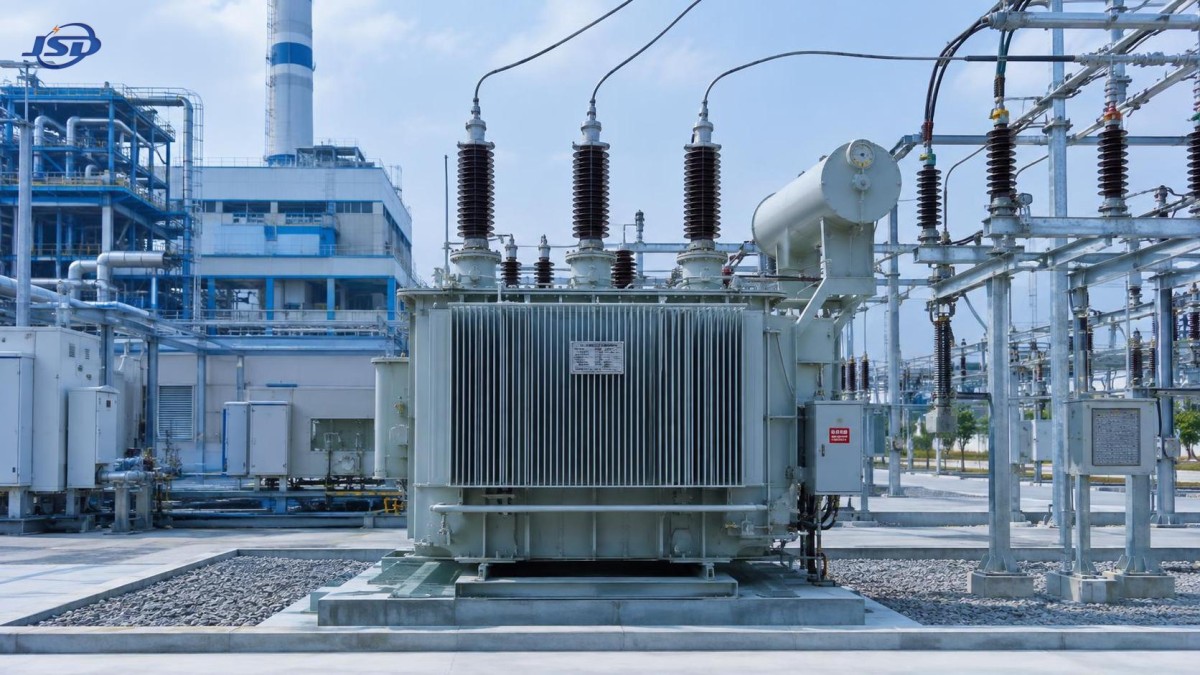
Yes, in many continuously operating facilities, lower no-load loss can produce meaningful savings because transformers remain energized every hour, including periods of low production demand.
A conventional transformer consumes energy whenever its core is magnetized. This consumption continues during nights, maintenance windows, shift changes, holidays, and reduced-load operating conditions.
For a plant operating around the clock, annual energized time is typically close to 8,760 hours. That makes permanent no-load loss a financial issue, not merely a technical specification.
The strongest business case usually appears where transformers stay energized but actual loading varies significantly across shifts, seasons, production lines, or facility expansion phases.
A low loss amorphous alloy transformer reduces core loss by using an amorphous metal core with lower hysteresis and eddy-current losses than many conventional electrical steel designs.
Decision-makers should not assume that every installation will achieve identical results. Savings depend on transformer size, actual no-load loss values, electricity tariffs, operating hours, and load profiles.
However, plants with uninterrupted service requirements often have the operating duration needed to turn modest watt-level reductions into material lifecycle savings over twenty-five years.
Why No-Load Losses Matter More Than Many Buyers Expect
Transformer losses are generally divided into no-load losses and load losses. Both matter, but they behave differently and should be evaluated using different commercial assumptions.
No-load loss occurs in the magnetic core whenever voltage is applied. It remains relatively constant regardless of the customer’s production output or downstream electrical demand.
Load loss occurs mainly in windings and increases with current. It becomes more significant when a transformer runs heavily loaded for long periods.
Procurement teams sometimes focus primarily on rated efficiency or purchase price. That approach can overlook the fact that a lightly loaded transformer may still operate continuously.
A plant with multiple distribution transformers can accumulate losses across substations, auxiliary systems, warehouses, pumping stations, process lines, and emergency-support infrastructure.
Even when each individual loss value seems small, continuous operation converts watts into kilowatt-hours every day. Electricity cost inflation further increases the economic importance of those losses.
For capital planning, the relevant figure is not only transformer efficiency at rated load. It is the total cost of energy consumed across the facility’s expected operating life.
How to Estimate the Annual Value of Lower Core Loss
The basic calculation is straightforward. Multiply the no-load loss reduction in kilowatts by annual energized hours and then multiply the result by the applicable electricity cost.
For example, a 500-watt reduction equals 0.5 kilowatts. Over 8,760 annual hours, that reduction avoids approximately 4,380 kilowatt-hours of electricity consumption.
If delivered electricity costs USD 0.12 per kilowatt-hour, the annual saving would be about USD 526. The result increases where tariffs are higher.
That example is intentionally simple. A serious investment assessment should include demand charges, loss capitalization rules, energy escalation assumptions, tax treatment, and local utility incentives.
Buyers should also compare actual tested or guaranteed no-load loss values at the required voltage and frequency. Generic efficiency claims are insufficient for financial evaluation.
When evaluating several transformer sizes, calculate savings separately for each rating. Larger units may offer higher absolute savings, while smaller distributed units may have better deployment flexibility.
The final comparison should show purchase price, annual energy cost, projected cumulative savings, maintenance expectations, replacement timing, and residual operating risks under realistic scenarios.
When Amorphous Alloy Technology Is the Best Fit
Amorphous alloy transformers are particularly attractive where equipment remains energized for long periods and average loading is moderate rather than consistently close to rated capacity.
Industrial plants with variable production schedules are common candidates. Mines, petrochemical sites, process plants, logistics facilities, water systems, and renewable-energy support networks may fit this profile.
They can also suit facilities planning phased expansion. A transformer may be energized years before downstream demand reaches its expected design level, increasing the importance of no-load losses.
Data centers and hospitals need a more careful assessment. Reliability, redundancy architecture, harmonic conditions, and fault coordination may carry equal or greater weight than energy savings.
Conversely, a transformer that remains heavily loaded almost continuously may require closer examination of winding losses, cooling design, impedance, and thermal performance alongside core losses.
The technology should therefore be selected by operating profile, not by a blanket assumption that lower no-load loss always produces the fastest payback.
A competent supplier should model the proposed installation using site-specific data, including annual loading patterns, voltage variation, ambient conditions, power quality, and future capacity plans.
How to Compare Purchase Price Against Lifecycle Cost
The relevant decision is not whether an amorphous alloy unit costs more initially. The relevant decision is whether its incremental price is lower than discounted lifetime savings.
Start with the price premium, then estimate annual energy savings from reduced no-load loss. Use conservative electricity price assumptions rather than optimistic forecasts designed to justify procurement.
Next, choose a financial evaluation period aligned with plant ownership expectations. For many industrial assets, ten, fifteen, or twenty-five years provides a useful planning horizon.
Discount future savings using the organization’s normal capital hurdle rate. This allows finance teams to compare transformer efficiency investments with other operational improvement projects.
Include replacement avoidance only when it is defensible. A transformer with better efficiency does not automatically have a longer life unless design quality, loading, installation, and maintenance are comparable.
Also consider energy-loss capitalization requirements in tenders. Some owners assign a monetary value to each watt of guaranteed loss, changing the apparent value of competing proposals.
For decision-makers, the most useful output is a transparent sensitivity table showing payback and net present value under low, expected, and high electricity-price scenarios.
What Technical Checks Protect Reliability and Performance?
Low loss should never be accepted as a substitute for sound transformer engineering. Continuous plants need reliable insulation systems, appropriate cooling, adequate short-circuit strength, and verified manufacturing quality.
Confirm the required primary voltage, secondary voltage, frequency, vector group, tap range, impedance, installation conditions, and applicable national or utility standards before comparing losses.
Review the guaranteed no-load loss and load loss values in the technical offer. Ask whether values are routine-tested, type-tested, or simply calculated design estimates.
Oil-immersed units require particular attention to insulation fluid, sealing, tank protection, thermal behavior, accessories, transport limits, and site maintenance capability.
Where environmental goals or fire-risk considerations matter, buyers may evaluate biodegradable insulating fluids such as FR3 vegetable oil, subject to project-specific technical requirements.
For sites with harmonics, frequent motor starts, variable-speed drives, or nonlinear loads, request a power-quality review. These conditions can affect losses, heating, and service life.
Finally, verify supplier quality controls, factory test documentation, warranty terms, spare-parts availability, field support, and references from comparable industrial applications.
A Practical Distribution Option for 35kV Industrial Supply
For facilities converting medium-voltage utility supply to low-voltage plant distribution, transformer selection must balance energy performance with capacity, protection, installation, and long-term service needs.
Jinshida Electric Power Technology provides a 35kV/0.4kV Oil-Immersed Power Distribution Transformer for three-phase applications requiring 35kV to 0.4kV voltage conversion.
The available capacity range spans 50 to 5,000 kVA, giving industrial projects flexibility to match equipment rating with present demand and planned facility growth.
Specified no-load losses vary by capacity, beginning at 210 watts for smaller ratings and increasing with transformer size. Buyers should match the selected rating to measured site demand.
The product can use copper coils and offers optional FR3 vegetable oil. It also supports 50Hz or 60Hz requirements and no-load tap changer voltage adjustment.
For short-duration operational peaks, the copper-coil design can support overload up to 150 percent of rated capacity for no more than two hours, with oil-temperature monitoring.
Its stated efficiency can exceed 99 percent, while configuration options for voltage, capacity, frequency, connection group, and losses support project-specific engineering requirements.
How Procurement Teams Should Structure the Tender
A well-written transformer tender prevents suppliers from hiding important loss assumptions inside generic compliance statements. It should request separate guaranteed no-load and load-loss figures for every offered rating.
State the annual energized hours used for commercial evaluation. For a true 24/7 facility, 8,760 hours is usually appropriate unless planned shutdowns are documented and reliable.
Specify the electricity-loss valuation method clearly. This may include an energy price, escalation rate, capitalization formula, discount rate, and required financial evaluation period.
Require bidders to identify core material, winding conductor, insulation fluid, cooling method, temperature-rise limits, impedance, tap configuration, and factory test standards in writing.
Ask for guaranteed losses with defined tolerances and consequences for noncompliance. Acceptance criteria should be established before purchase order issuance, not after delivery.
Evaluation should also include delivery lead time, logistics constraints, commissioning support, warranty response, documentation quality, and the supplier’s ability to support future expansion.
This approach gives finance, engineering, operations, and sustainability teams a shared basis for comparing proposals without reducing the purchase decision to nameplate price alone.
What Can Limit the Financial Benefit?
The first limitation is low annual energized time. If a transformer is routinely de-energized for long periods, annual no-load savings will be lower than a 24/7 model predicts.
The second limitation is an excessively large transformer. Oversizing can create avoidable no-load losses and weaken the business case even when an efficient core material is selected.
A third concern is focusing solely on core loss while ignoring load loss. A heavily loaded unit may benefit more from optimized winding design and thermal performance.
Site voltage conditions also matter. Operating outside the intended voltage range can affect magnetizing behavior, losses, sound level, and equipment stress.
Cost assumptions require scrutiny as well. Electricity prices, operating hours, and future production volumes should be supported by operational data rather than broad estimates.
Finally, a low-loss design must be sourced from a manufacturer capable of consistently achieving guaranteed performance. Poor construction quality can erase projected lifecycle advantages.
These limitations do not weaken the case for amorphous alloy technology. They show why a disciplined engineering and financial review is essential before committing capital.
Making the Investment Decision
For many 24/7 plants, a low loss amorphous alloy transformer can reduce no-load electricity consumption enough to justify its upfront premium over the asset lifecycle.
The opportunity is strongest when transformers remain energized continuously, loading varies, electricity costs are significant, and the buyer evaluates total ownership cost rather than purchase price alone.
Decision-makers should request guaranteed loss data, model annual savings using actual operating assumptions, test the result against financial scenarios, and confirm that reliability requirements remain fully satisfied.
When those checks support the business case, lower core losses become a measurable operating-cost reduction and a practical contribution to industrial energy-efficiency objectives.
