





What might be missing from a distribution transformer supplier's quote?
A distribution transformer supplier’s quote can leave out more than freight or installation. The gaps that matter most are often the agreed operating conditions, guaranteed electrical performance, the exact equipment boundary, and responsibility when delivery or commissioning does not go as planned. A low price remains attractive only if those omissions do not become the buyer’s cost later.
Before ranking bids, check whether each supplier has priced the same duty, included the same hardware and evidence of compliance, and accepted comparable delivery and warranty obligations. A short quotation is not automatically a weak offer; it may reference a detailed specification. The risk appears when important requirements are absent from both the quotation and the documents incorporated into the purchase contract.
The rating may be clear while the operating duty is missing
A quote showing capacity, voltage ratio, and frequency can look technically complete. Yet those headline values do not establish whether the transformer suits the site. Ambient temperature, altitude, installation arrangement, load profile, and cooling conditions can affect the design or usable capacity. If the supplier has assumed conditions that differ from the project, the quoted unit may require modification or a different rating.
Ask for a completed technical schedule tied to the project specification. It should identify the winding arrangement and vector group, impedance and its tolerance, tapping range and tap changer type, insulation requirements, cooling method, and temperature rise limits. For fluid-filled units, specify the insulating fluid; for dry-type units, establish the relevant insulation and enclosure requirements. The required detail depends on the installation, but unresolved choices should not disappear behind “standard design.”
Interfaces deserve particular attention. Cable entry direction, terminal arrangement, neutral provision, earthing connections, and enclosure dimensions determine whether the transformer fits the surrounding electrical and civil works. An electrically suitable transformer can still create expensive site changes if its terminations conflict with the cable route or its access requirements exceed the available space.
Require the supplier to list deviations explicitly. “Complies with specification” is difficult to evaluate if another page reserves the right to supply the manufacturer’s standard arrangement. The order should identify which documents govern and how conflicting requirements will be resolved.
Guaranteed losses need a measurement basis
Efficiency claims are difficult to compare without guaranteed no-load and load losses, the conditions under which they are stated, and the applicable acceptance tolerances. Load losses depend on temperature, so figures stated on different reference bases can mislead a bid comparison. An efficiency percentage alone may also hide the loading point used to calculate it.
The financial consequence depends on how the transformer operates. No-load losses accrue while the unit is energized, including periods of light demand. Load losses vary approximately with the square of current under comparable conditions. A continuously energized transformer serving a variable load therefore presents a different purchasing calculation from one operating close to rated load for long periods.
If losses influence the award, use one agreed evaluation method across all bids. Apply the same operating assumptions, energy cost basis, and evaluation period. Ask what happens if acceptance testing exceeds the contractual guarantees: correction, replacement, a defined price adjustment, or another agreed remedy. Without that provision, “guaranteed” may provide less commercial protection than the buyer expects.
The equipment boundary can hide substantial project costs
One supplier may quote a transformer ready for the specified connections; another may quote the principal unit with several accessories excluded. The price difference can reflect scope rather than manufacturing cost. Resolve that distinction before negotiating discounts.
A useful scope schedule gives each item a clear status: included, separately priced, supplied by others, or not applicable. Items to examine include:
- Connections: cable boxes, busbar interfaces, separable connectors where specified, termination hardware, and neutral connections.
- Monitoring and protection: temperature devices, fluid level indication, pressure protection where applicable, alarm contacts, and wiring to accessible terminals.
- Mechanical provisions: wheels or skids, lifting and jacking arrangements, mounting hardware, and any specified enclosure.
- Installation materials: initial insulating fluid fill, items removed for transport, connection kits, and agreed commissioning spares.
- Site services: assembly, testing after installation, commissioning attendance, and operator instruction.
These items are not necessary on every transformer. The procurement problem is ambiguity over which ones the design requires and who supplies them. For example, a monitoring device may be included while its communication interface, auxiliary power supply, or integration into the site control system remains outside the price.
Accessories also need functional descriptions. “Temperature monitoring included” does not establish whether the buyer receives local indication, alarm and trip contacts, remote communication, or the sensors alone. Define the required function and connection point so that the electrical contractor can price its work accurately.
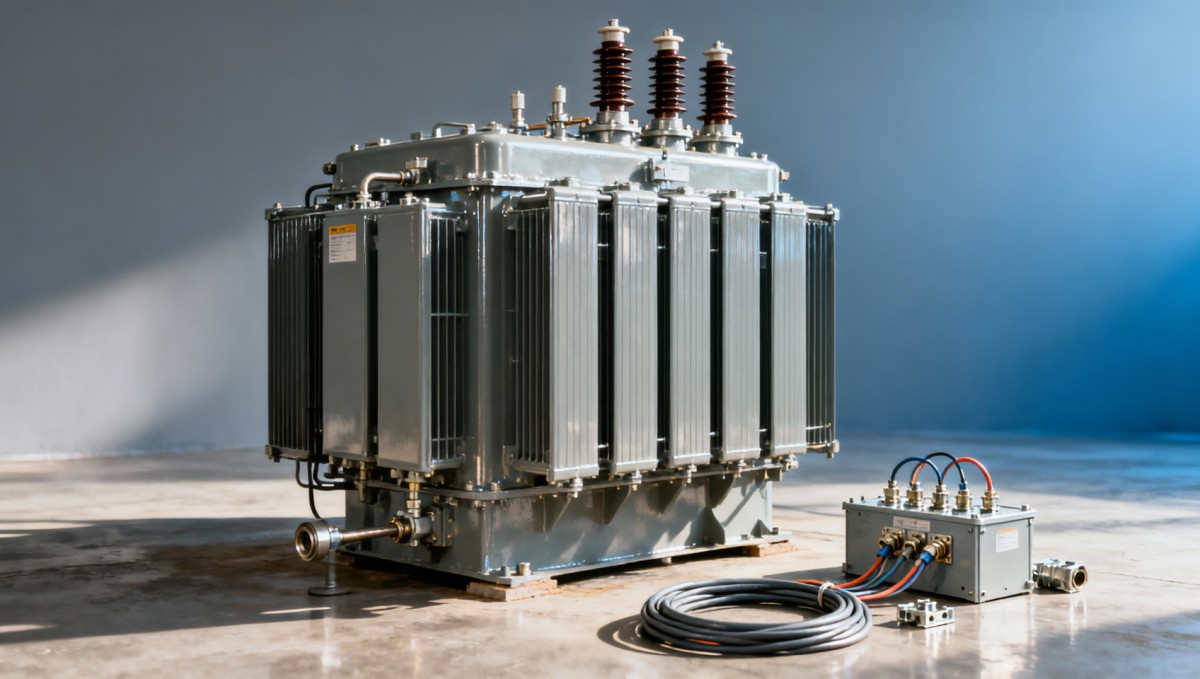
Packaged energy projects need an explicit interface schedule
Scope boundaries become especially important when a transformer connects a packaged energy system to a site network. Consider a project using a 1MW/2MWh Liquid Cooling Container Energy Storage System. Its power and energy ratings help describe the storage application, but they do not establish the required transformer ratio, apparent power rating, protection arrangement, or connection equipment.
The procurement team needs the power conversion system’s AC interface data and the project’s operating requirements. Confirm who supplies the converter, transformer, switchgear, interconnecting cables, protection controls, and commissioning support. Reactive power requirements, permitted overload duty, harmonic conditions, and site constraints may affect transformer selection. A containerized package description should not be treated as evidence that every item needed for grid connection is included.
The same discipline applies to an industrial distribution project: draw the supply boundary at identifiable terminals and physical connection points. That gives each contractor a defined starting point and makes omissions easier to price before the order.
Testing and delivery promises may depend on unstated conditions
“Tested before shipment” leaves several questions unanswered. Which tests are included? Which standard and edition apply? Will the buyer receive results for the actual unit supplied? Are any required design verification reports available, and do they apply to the offered design? A factory quality certificate cannot answer all of these questions.
The quotation should distinguish routine tests on the supplied transformer from type tests and any special tests required by the project. Where the supplier relies on an existing report, check its relevance to the offered design and the project’s acceptance requirements. A demand for new testing can affect price and schedule, so settle it before the purchase order rather than during drawing approval.
Witnessing arrangements also belong in the commercial scope. State whether buyer or third-party attendance is allowed, what notice the factory must provide, and whether inspection charges are included. Agree how failed results, corrective work, and retesting will be handled. Otherwise, a nominally included test can still generate additional expense or shipment disputes.
Documentation can be just as consequential. Approved drawings may be needed before foundations, cable systems, and protection settings can be finalized. Operating instructions, certified test reports, and final drawings may be required before energization or handover. Give these documents delivery dates and acceptance requirements; “documents supplied with equipment” may be too late for construction planning.
Lead time needs a starting event and a delivery destination
A quoted manufacturing period is not necessarily the time from purchase order to usable equipment on site. The supplier may start its clock only after receipt of the deposit, approval of drawings, or release of outstanding technical information. Inspection, packing, transport, customs clearance, and site assembly can add further time.
Ask for a schedule that separates drawing submission, buyer review, manufacturing, factory testing, dispatch, and arrival at the agreed destination. Identify the buyer’s deadlines as well. If a revised cable arrangement requires redesign, the contract should provide a way to assess its schedule and cost effects before the change proceeds.
Delivery terms need the applicable Incoterms rule, version, and named place where used. A port name or a phrase such as “freight included” does not fully describe responsibility. Check export packing, transport insurance, destination handling, customs duties and taxes, inland haulage, unloading, and final positioning individually. Incoterms allocate specified delivery responsibilities and risks; payment, ownership, and acceptance still need their own contract provisions.
Transport condition also matters. Establish whether the transformer arrives ready for placement or requires installation of removed components, fluid work, or other preparation. Assign responsibility for suitable lifting equipment, receiving inspection, storage, and any preservation measures before energization. These obligations can sit between the supplier’s delivery scope and the installer’s quotation.
Warranty wording may leave the buyer carrying the repair cost
A warranty duration tells only part of the story. Its starting point could be shipment, delivery, commissioning, or another contractual milestone, sometimes subject to an outside limit. A project with a long interval between delivery and energization needs to understand how much coverage remains when operation begins.
Read the remedy alongside the duration. Does the supplier repair on site, replace the unit, or require return to the factory? Who pays for fault diagnosis, removal, lifting, transport, reinstallation, and retesting? Even when a defective component is covered, the surrounding work may remain the buyer’s responsibility unless the contract says otherwise.
Review exclusions against realistic site conditions. Storage requirements, maintenance obligations, loading limits, and installation procedures should be available early enough for the buyer to follow them. If supplier attendance is a condition of warranty coverage, its price, availability, and booking requirements should appear in the offer. A commissioning service left as an unpriced option can become a practical dependency.
Ask how a claim will proceed: what evidence is required, who provides technical support, and what response commitments apply. If an extended outage would seriously affect operations, evaluate replacement access, critical spares, or temporary supply arrangements separately. A warranty can allocate responsibility for a defect without providing rapid restoration of power.
Turn omissions into a comparable evaluated price
Before awarding the order, send each shortlisted supplier the same clarification schedule. Focus on unresolved items that could change suitability, delivered cost, or the date the transformer can enter service. Request revised pricing where scope changes and incorporate the accepted responses into the contract.
Build the comparison from the quoted price plus excluded equipment, logistics, site services, required testing, and other identifiable buyer costs. Where relevant, evaluate losses using the common method already agreed. Keep uncertain allowances visible: an unpriced item should not silently count as zero.
The final purchasing decision becomes clearer when each bid shows what the buyer will receive, what remains to be purchased, and which obligations continue after delivery. A higher initial offer may include work another supplier has left outside its price. Equally, a lower offer may remain the better purchase once every material gap has been resolved in writing.

Get a Quote
Regardless of whether you require general advice or specific support, we are happy to help you.
Send Us Your Inquiry Today

Jinshida Electric remains committed to contributing to global energy development through professional manufacturing and superior service.