





What can portable energy storage systems power during short outages?
When people ask what portable energy storage systems can power during short outages, they usually want a practical answer, not a brochure claim. In most real situations, these systems are best for essential, moderate loads: LED lighting, phones, laptops, Wi-Fi routers, small fans, modems, CPAP machines, some TVs, and selected low-power control devices. What they usually cannot handle for long are high-wattage heating elements, large air conditioners, electric water heaters, ovens, and heavy industrial motors. The difference comes down to three things: battery capacity, inverter output, and how wisely the loads are chosen.
A short answer is this: portable energy storage systems work well when the goal is continuity, not full replacement of the grid. They are strongest at keeping communication, visibility, monitoring, and a few key devices alive until normal power returns.
Where portable energy storage systems help most
One common misunderstanding is that backup power is mainly about running “more things.” In practice, the better question is which things matter most for the next one to four hours. During a brief outage, users usually need to preserve safety, communication, and control. That is why these units are often more useful than people expect, even when the total battery size is not very large.
In a home or small office, the first tier is simple:
- LED lights
- Mobile phones and tablets
- Wi-Fi routers and modems
- Laptops
- Small monitors
- Portable fans
- Security cameras or alarm hubs
These are relatively light loads, and many portable energy storage systems can support them comfortably during a short outage. A router and a few LED lights may only require a modest share of available output, so runtime can be longer than many buyers first assume.
The second tier includes devices that are still realistic, but need closer checking:
- Mini fridges or efficient refrigerators
- CPAP machines
- Televisions
- Small desktop PCs
- Point-of-sale terminals
- Low-power medical or monitoring devices
These can be supported in many cases, but only if the inverter rating and startup surge are within the unit’s limits. A refrigerator, for example, may draw far more power for a moment when the compressor starts than it does during steady operation. That short surge is where many assumptions fail.
The third tier is where people often get disappointed:
- Electric kettles
- Microwaves
- Hair dryers
- Space heaters
- Large pumps
- Window or central air conditioning
- Electric cooking equipment
These loads are power-hungry, often resistive, and they drain stored energy fast even if the inverter can start them. For short outages, using stored power on heat-generating equipment is usually poor load planning unless the battery system is much larger than a typical portable unit.
That is the core judgment: portable backup is excellent for continuity of function, but not for recreating normal life with every appliance running.
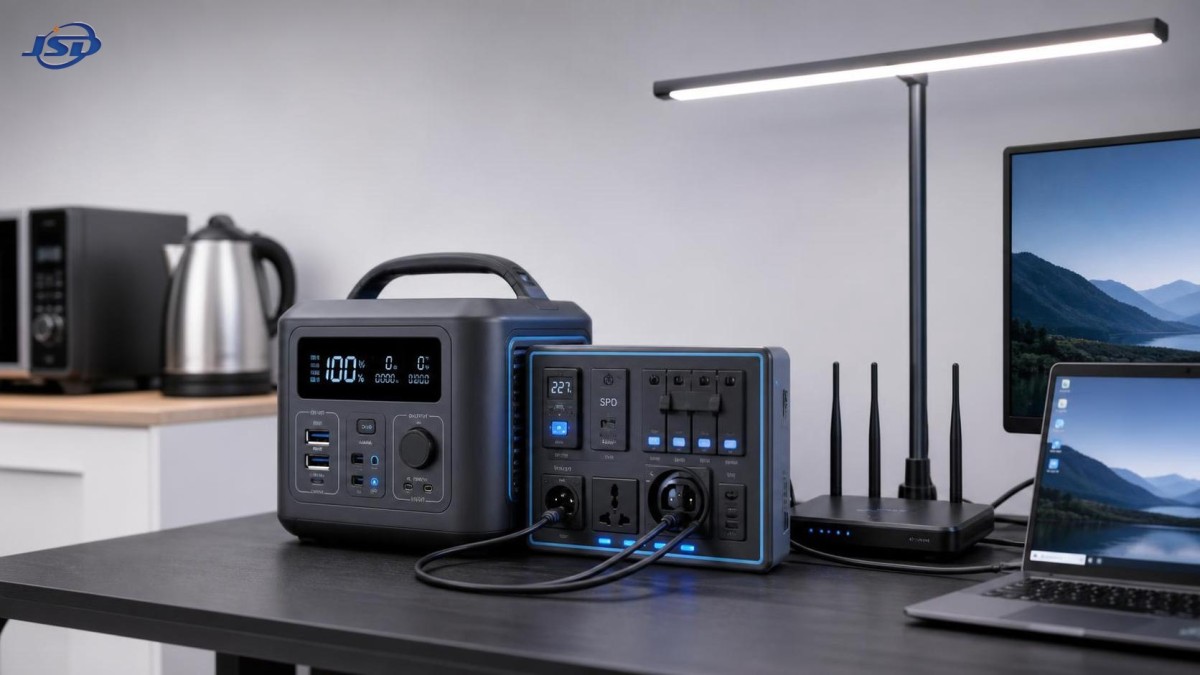
Capacity tells you runtime; output tells you what can start
People often focus on battery size first, but runtime is only half the story. Capacity, usually shown in watt-hours, estimates how long a system can supply a given load. Inverter output, shown in watts, tells you whether the unit can run that load at all.
Take a simple example. If your outage plan is a router, two LED lamps, and two laptops, the total draw may stay fairly manageable. A portable unit with enough battery capacity could keep that setup running through a typical short interruption. But replace one laptop with a microwave or add a space heater, and the calculation changes immediately. The system may either shut down from overload or run flat much sooner than expected.
This is why experienced buyers do not ask only, “How big is the battery?” They ask:
- What is the continuous AC output?
- What is the peak or surge output?
- Which devices must stay on first?
- Are those loads sensitive electronics, motor loads, or heating loads?
If you remember just one rule, make it this: capacity determines duration, but output determines possibility.
Real short-outage scenarios people care about
At home, a short outage usually creates three immediate problems: darkness, no internet, and no charging. That is exactly where portable energy storage systems make sense. They can keep the household connected, preserve some comfort, and prevent disruption to remote work or study.
In small commercial settings, the priorities are slightly different. Retail counters may need a router, receipt printer, payment terminal, and one light over the service area. A small clinic may only need to protect communication devices and a few key instruments until power is restored. A site office may want to maintain a laptop, a monitoring screen, and a communication link.
In industrial or infrastructure support, the conversation becomes more selective. Portable systems are not substitutes for full standby installations, but they are useful for temporary support of low-power controls, communication nodes, inspection tools, and commissioning work. In the broader power equipment field, that matters. Reliable power is not only about the main transformer or distribution line; it is also about maintaining visibility and operational continuity at the edges when an interruption occurs.
That is also where companies with a transmission and distribution background tend to view backup power differently. Jinshida Electric Power Technology Co., Ltd., for example, works across power transmission and distribution equipment with a focus on safe, efficient, and reliable power support for grid, industrial, infrastructure, and new energy applications. From that perspective, short-outage backup is not judged by marketing language. It is judged by whether the right loads stay stable at the right moment.
What these systems are not good at
Some buyers compare portable battery systems with fuel generators as if they do the same job. They do not.
Portable battery storage is quiet, clean at point of use, and easy to deploy indoors for appropriate loads. It is usually much better for electronics, communication gear, and temporary low-noise backup. But it is not the best fit when the expected load includes long-duration heating, large pumps, workshops with heavy motor starts, or a whole-building backup requirement.
Another weak point is overconfidence in nameplate numbers. Real runtime varies with battery condition, ambient temperature, inverter efficiency, and the way a device cycles on and off. Refrigeration loads are a good example. The average draw may look acceptable, but startup behavior and compressor cycling can still affect results. So if a load is important, it should be verified in actual use or confirmed against the manufacturer’s technical data.
This matters even more in professional settings. A portable system may keep a control panel alive, but that does not automatically mean it is suitable for critical process continuity. If the load has a high startup surge, strict waveform sensitivity, or safety implications, the user needs a more careful assessment.
A practical way to judge your own outage needs
A lot of confusion disappears once you stop thinking in terms of “everything I might want” and switch to “what cannot go off.”
Start with three groups:
- Must stay on: router, phone charging, basic lighting, communication equipment, essential monitoring
- Nice to have: TV, extra screens, fan, small appliance use
- Usually avoid on portable storage: heaters, cooking devices, large cooling loads, heavy tools
Then check the rated power and startup demand of each must-run device. Add a margin instead of matching the numbers too tightly. Many users get into trouble because a system looks large enough on paper but has no comfortable headroom.
For people comparing backup options, this is often the point where portable energy storage systems become easier to evaluate. If your goal is several hours of communications, lighting, and light electronics, they are often a smart fit. If your goal is to operate a full kitchen, large HVAC, or industrial machinery, you are looking at a different class of solution.
In renewable and distributed energy discussions, this distinction also connects to the rest of the power chain. Storage handles temporary continuity, while transformers and distribution equipment handle voltage conversion, grid interfacing, and stable delivery across the wider system. In wind projects, for instance, equipment such as Transformer for Wind Power Generation belongs to that larger infrastructure picture, not to the same short-outage role as a portable battery unit. The two are related in the energy ecosystem, but they solve different problems.
Common mistakes first-time buyers make
The first is assuming every AC device is equally easy to run. It is not. A laptop charger and a refrigerator may both plug into the same outlet, but they behave very differently from the inverter’s point of view.
The second is ignoring runtime after seeing a high output rating. A unit might start a device successfully and still deliver a disappointing backup window if the battery reserve is limited.
The third is failing to prioritize. During short outages, the smartest users reduce loads aggressively. They do not treat portable backup like unlimited grid power.
The fourth is overlooking charging strategy. If outages are frequent, recovery time matters. A system that takes too long to recharge may be less practical than expected, especially in business settings where interruptions can happen repeatedly.
And one more point that often gets missed: if your use case involves sensitive field work, commissioning, or remote energy assets, the backup conversation should include the surrounding power architecture. That is where a company with broader equipment knowledge can be useful, because the right answer may involve not only portable storage but also distribution planning, protection coordination, or application-specific equipment selection.
So, what can portable energy storage systems power during short outages?
In plain terms, they can reliably support the essentials: lights, phones, internet equipment, laptops, small electronics, and some low-to-moderate appliances or control devices if the output and surge limits match. They are often a very sensible choice for temporary home backup, small commercial continuity, and selected field or site support tasks.
They are a weaker fit for heat-producing appliances, large motor loads, and anything that needs full-building or process-critical backup without careful engineering review. That does not make them limited in a negative sense. It simply means they perform best when used for the job they were actually built to do.
If you are comparing options, the most useful next step is simple: list the exact devices you need during an outage, check both running wattage and startup demand, and then compare that against real product specifications. That approach will tell you far more than a generic “home backup” label ever will. Near the end of the decision process, portable energy storage systems should be judged by fit, not by headline numbers.
FAQ
Can a portable energy storage system run a refrigerator during a short outage?
Sometimes yes, sometimes no. It depends on the refrigerator’s running load, startup surge, and the inverter rating of the storage unit. This should be checked case by case.
Are portable energy storage systems better than generators for short outages?
For quiet indoor use with electronics and light loads, often yes. For long-duration heavy loads, generators may be more suitable.
Can these systems power industrial equipment?
Small control devices, communication tools, and light electronic equipment may be possible. Heavy motors, heaters, and larger process equipment usually need a different backup approach.
How do I know what size I need?
Make a list of the devices you must keep on, note their wattage, check startup demand where relevant, and compare that with both battery capacity and inverter output.
Image Placeholder Notes
Suggested placement: after the section explaining what these systems can and cannot power.
Suggested image content: a simple visual comparison of essential loads, moderate loads, and unsuitable high-wattage loads during short outages.
Suggested alt text: Portable energy storage systems load examples for short outages
Internal Link Anchor Text Suggestions
- backup power for small commercial equipment: product category or solution page
- how transformer systems support power distribution reliability: educational article
- temporary power solutions for industrial sites: application page
- energy storage vs generator for short-term backup: comparison article
- wind power distribution equipment basics: industry knowledge page
External Authoritative Source Directions
- official technical documentation from energy storage equipment manufacturers
- government or utility guidance pages on emergency backup power safety
- industry association materials on battery energy storage and power quality

Get a Quote
Regardless of whether you require general advice or specific support, we are happy to help you.
Send Us Your Inquiry Today

Jinshida Electric remains committed to contributing to global energy development through professional manufacturing and superior service.