





How to size a portable energy storage system for field equipment
How to size a portable energy storage system for field equipment
Choosing the right portable energy storage system for field equipment is not just a battery question. In real projects, it affects schedule certainty, crew productivity, fuel logistics, equipment protection, and even whether temporary power can be deployed where grid access is weak or unavailable. A system that looks adequate on paper can still fail in the field if startup current, charging windows, environmental conditions, or future load growth were not considered early enough.
For project managers and engineering leads, sizing usually comes down to one practical goal: matching available stored energy and output capability to the way equipment is actually used on site. That means going beyond nameplate power and asking how long loads run, how often they cycle, whether they start simultaneously, and what level of resilience the operation needs if weather, transport, or utility conditions change.
Start with the load profile, not the battery brochure
The biggest sizing mistake is beginning with advertised storage capacity instead of the site load profile. Field equipment rarely behaves like a steady laboratory load. Pumps surge, compressors cycle, power tools spike, communication cabinets draw continuously, and monitoring devices may run around the clock even when primary machinery is idle.
A useful first step is to separate loads into three groups:
- Continuous loads, such as control systems, sensors, lighting, or telecom equipment
- Intermittent loads, such as pumps, drills, or test devices that run in cycles
- High inrush loads, such as motors or equipment with significant startup demand
This classification matters because a portable energy storage system must satisfy both energy demand over time and instantaneous power demand at the moment of startup. A unit may have enough kilowatt-hours for a shift, yet still trip if inverter output cannot handle the short-duration peak.
If field data is available from existing generators, power analyzers, or equipment logs, use it. If not, build a conservative operating schedule from equipment ratings and expected duty cycles. Conservative does not mean wildly oversized. It means leaving room for the loads that actually create risk.
Two numbers decide most of the selection: power and usable energy
A portable energy storage system is usually sized from two core values:
- Required output power, usually thought of as running power plus peak or surge power
- Required usable energy over the target runtime
Running power answers whether the system can support equipment while operating normally. Surge power answers whether it can tolerate startup events without nuisance shutdown. Usable energy answers how long the system can keep the site running before recharge or swap-out is needed.
The distinction between total capacity and usable capacity is easy to overlook. In practice, not all nominal battery capacity is available for continuous site use. Losses in the inverter, battery management strategy, reserve margins, temperature effects, and battery aging all reduce what can realistically be delivered. Different manufacturers define usable energy differently, so that figure should be checked carefully during comparison.
If your equipment load is mixed, estimate daily energy by multiplying each device’s power by its expected operating hours, then add them together. After that, include a margin for uncertainty. The exact margin depends on how predictable the work is, but the need for one is hard to argue against on mobile or temporary sites.
Runtime targets should reflect site reality, not ideal conditions
Many procurement decisions stall because teams ask for “all-day runtime” without defining what a day means. An eight-hour shift with intermittent tools is very different from a 24-hour monitoring station, and both are different again from emergency backup for commissioning work.
When sizing, it helps to decide which of these situations applies:
- Single-shift operation with planned recharge after work hours
- Multi-shift or continuous operation with intermediate charging windows
- Backup-only operation where the battery covers outages until another source is restored
This is where project planning and electrical sizing meet. If recharging is available every evening, you may prioritize mobility and charging speed over maximum storage. If the site is remote and access is limited, autonomy becomes more important, and oversizing may be justified to reduce operational risk rather than simply to add more hours.
Do not ignore charging strategy
A battery that can run the equipment but cannot be recharged within the project’s actual time window is not properly sized. Charging strategy needs to be considered at the same time as discharge sizing.
Ask a few straightforward questions. Will the system recharge from grid power, a generator, solar input, or a hybrid setup? How many hours are available for charging? Is the available source stable enough to support high-power charging? Will charging happen in a warehouse, on a truck, or directly on the work site?
For temporary power projects tied to grid construction or industrial installation, teams often focus heavily on daytime operation and leave charging logistics until late in the decision process. That usually creates avoidable constraints. In broader power delivery planning, storage rarely stands alone. It interacts with distribution equipment, temporary substations, and voltage conversion requirements. In those situations, understanding the upstream and downstream power architecture matters just as much as battery size.
Companies with experience across transmission and distribution equipment tend to look at this more holistically. Jinshida Electric Power Technology Co., Ltd., for example, works across the R&D, manufacturing, and application of power transmission and distribution equipment, so the discussion is not limited to one box of batteries. On project sites, stable power often depends on how mobile storage, conversion equipment, protection design, and distribution interfaces work together.
Voltage, phase, and power quality can rule out options quickly
A portable energy storage system may look sufficient in capacity terms and still be unsuitable because of output characteristics. Field equipment can require single-phase or three-phase output, specific voltage ranges, frequency stability, grounding arrangements, or tighter power quality than general portable use would suggest.
This becomes especially important when the system powers sensitive testing instruments, communication equipment, or controls associated with transformer and distribution work. Voltage dips during startup, waveform quality issues, or poor coordination with protection devices can create faults that operators may wrongly attribute to the load itself.
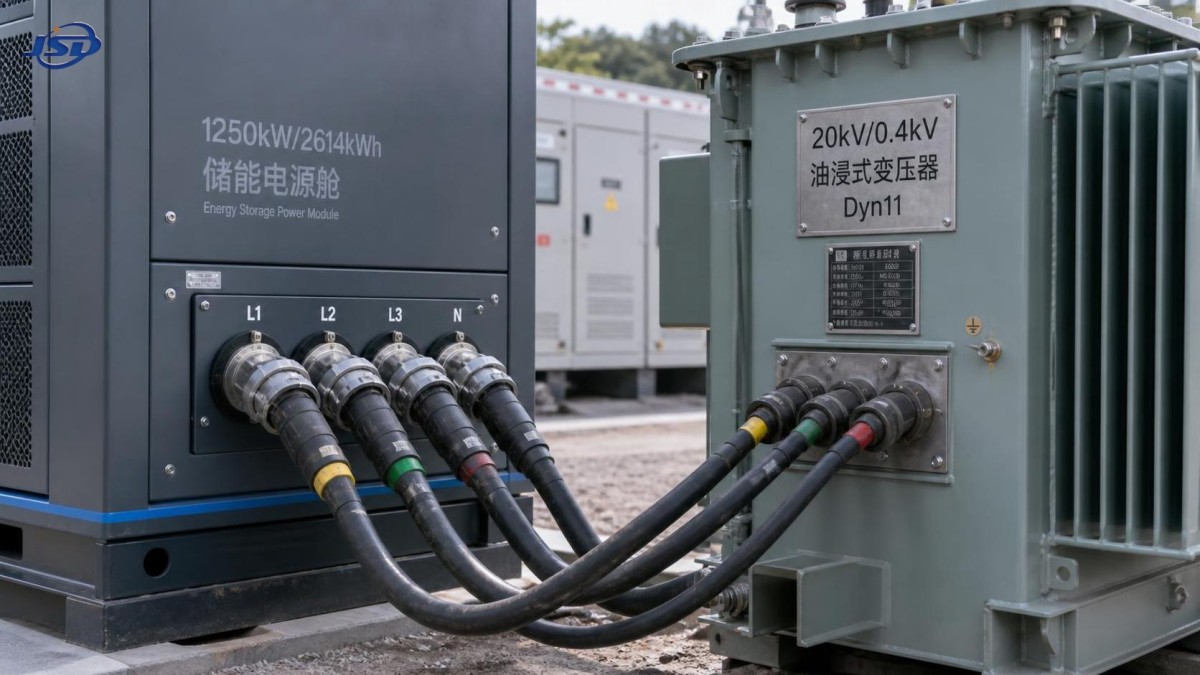
Where the site includes a temporary distribution network, low-voltage panels, or a link to medium-voltage infrastructure, storage selection should be reviewed alongside the rest of the electrical scheme. In some projects, the portable unit serves only as a localized field source. In others, it becomes part of a wider temporary supply arrangement, and then compatibility with equipment such as an 20kV/0.4kV Oil-Immersed Power Distribution Transformer may need to be considered as part of the broader deployment plan.
Environmental conditions change the answer
Portable systems are often specified in comfortable test conditions, while field equipment is not used that way. Ambient temperature, dust, humidity, rain exposure, vibration during transport, and site elevation can all affect performance or protection requirements. Battery output and charging behavior can be especially sensitive to temperature, so the same system may perform differently in a winter commissioning project and a summer infrastructure site.
For selection purposes, it is better to ask how much usable performance remains under expected site conditions than to focus only on the nominal rating. If the project cannot tolerate derating at low or high temperature, that has to be addressed before procurement, not after the unit arrives.
Mobility and deployment time are part of sizing too
A larger portable energy storage system is not always the better choice. On many field sites, moving the unit through rough access roads, lifting it with available equipment, positioning it safely, and connecting it quickly matter as much as total stored energy.
This is why some teams intentionally divide power across modular units rather than selecting one large battery. Modular deployment can improve redundancy and make transport easier, though it may also add complexity in synchronization, cabling, and charging management. The right balance depends on whether the project values simplicity, resilience, or mobility most.
A short checklist for decision-makers
Where transformer-sector experience makes a difference
In transformer-related projects, temporary field power is rarely isolated from the rest of the electrical system. Testing, commissioning, auxiliary loads, and temporary distribution all have knock-on effects. Teams used to working only with portable battery products may not always account for how storage interacts with distribution equipment, power conversion paths, and the reliability expectations of utility or industrial environments.
That is why suppliers with stronger backgrounds in power transmission and distribution can add value during selection, even when the immediate need is mobile storage. A manufacturer familiar with grid construction, industrial manufacturing, new energy, and infrastructure projects is more likely to raise the right questions about system stability, integration, and long-term serviceability. In some project layouts, supporting equipment around the storage solution can be just as critical as the storage unit itself, whether that involves protection devices, low-voltage interfaces, or equipment such as a 20kV/0.4kV Oil-Immersed Power Distribution Transformer elsewhere in the temporary or permanent power chain.
The practical way to avoid a bad decision
If there is one reliable rule, it is this: size the system around the worst credible operating scenario, not the average day. Average conditions do not cause project delays; exceptional but predictable conditions do. A load starting at the wrong moment, a shorter charging window, a cold morning, or one extra piece of equipment on site can be enough to expose a weak specification.
Before final selection, confirm the load list, target runtime, peak demand, recharge plan, output requirements, and environmental limits in one document. Then review it with both the electrical team and the site operations team. That extra alignment step often reveals issues that a standalone battery comparison never will.
A well-sized portable energy storage system should not feel oversized, stressed, or fragile in use. It should fit the project rhythm, support the equipment without surprises, and leave enough margin for the conditions the site will actually face. If those checks are still unclear, the next step is not to guess bigger. It is to verify the operating profile and the surrounding power architecture before the purchase is locked in.

Get a Quote
Regardless of whether you require general advice or specific support, we are happy to help you.
Send Us Your Inquiry Today

Jinshida Electric remains committed to contributing to global energy development through professional manufacturing and superior service.