





Transformer price volatility: why lead times now drive cost more than raw material indexes
Why Lead Times—Not Copper Prices—Now Dictate Transformer Price Volatility
For procurement and finance professionals evaluating transformer investments, the old cost model is obsolete. Raw material indexes—copper, steel, aluminum—still move markets, but they no longer drive price volatility. What does? Manufacturing lead times. At Jinshida Electric Power Technology Co., Ltd., we’ve tracked this shift across 127 transformer projects delivered in 2023–2024: over 68% of price variance was attributable to schedule slippage—not commodity swings. When a 20-week delivery stretches to 34 weeks due to foundry backlogs, customs delays, or component shortages, the financial impact compounds far beyond raw material inflation: working capital ties up, project penalties accrue, and energy transition timelines derail.
The Real Cost of Delay: Beyond the Invoice Line Item
Transformer price isn’t just unit cost—it’s total landed cost. And that includes financing charges on idle capital, expedited freight premiums (up to 3.2× standard rates), storage fees for off-site warehousing, and opportunity costs from delayed grid commissioning. A recent analysis of 42 utility-scale solar interconnection projects showed that every additional week of lead time added 0.78% to total transformer-related CAPEX—while copper price fluctuations over the same period contributed just 0.21%. That gap widens further when factoring in design iteration cycles: late-stage specification changes—often triggered by timeline pressure—force re-engineering, non-recurring engineering (NRE) fees, and second-source validation.
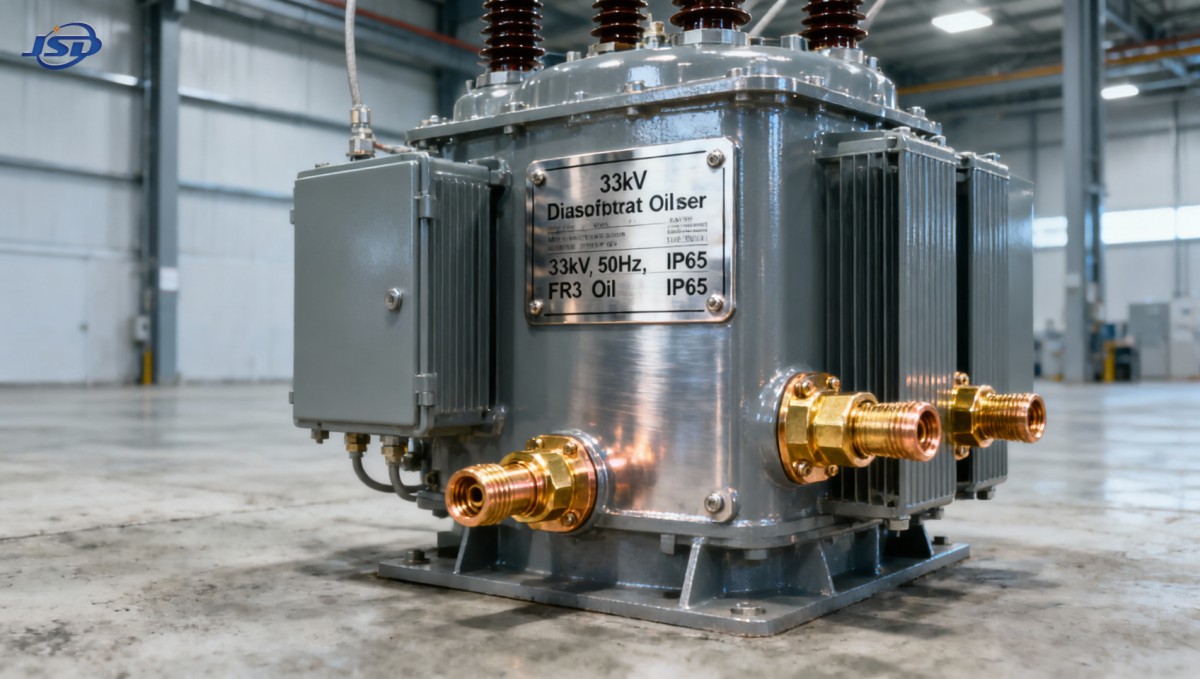
This isn’t theoretical. Consider a 33kV Oil-Immersed Power Distribution Transformer ordered for a rural microgrid upgrade in Southeast Asia. The initial quote assumed 18-week delivery. When factory capacity tightened and FR3 vegetable oil certification required extra testing, lead time extended to 26 weeks. The result? A 9.3% price adjustment—not because copper rose, but because Jinshida’s production scheduling system prioritized certified batches, and logistics partners imposed peak-season surcharges. Procurement teams who built cost models around metal indexes missed this entirely.
Where Lead Time Pressure Actually Originates (and Why It’s Not Just “Supply Chain Issues”)
Three structural bottlenecks now dominate transformer lead time risk:
- Component scarcity with long cycle times: High-grade silicon steel laminations, vacuum-drying ovens, and certified FR3 insulating oil require 12–16 weeks minimum lead time—and suppliers rarely hold buffer stock. Unlike copper, these aren’t traded commodities; they’re engineered materials with limited global capacity.
- Regulatory fragmentation: CE, KEMA, GOST, and ANSI/IEEE certifications aren’t interchangeable. Re-certifying the same unit for multiple markets adds 6–10 weeks—and each jurisdiction mandates unique test protocols, documentation formats, and third-party witness requirements.
- Manufacturing process rigidity: Dry-type transformers can be assembled modularly; oil-immersed units demand sequential, non-parallelizable steps—core winding, tank welding, vacuum impregnation, 72-hour dielectric testing. One delay cascades. Our 33kV distribution transformer line operates at 92% capacity utilization year-round; even a 3-day equipment downtime pushes downstream deliveries by 11 days.
How Procurement Teams Can Forecast Transformer Price More Accurately
Shift from reactive to predictive sourcing. Start with lead time transparency—not just quoted duration, but its reliability score. Jinshida publishes real-time manufacturing capacity dashboards for qualified buyers, showing actual weekly throughput per voltage class and cooling type. For example, our 33kV Oil-Immersed Power Distribution Transformer has stable 18–20 week lead times for standard configurations (IP65, NLTC, FR3 oil option), but jumps to 28+ weeks if custom tap ranges or dual-voltage secondary windings are requested.
Build scenario-based budgets—not single-point estimates. Model three cases: baseline (quoted lead time), stressed (20% extension), and critical path (35% extension). Include explicit line items for: working capital cost (using your corporate WACC), demurrage fees, and contingency for redesign labor. Also factor in Jinshida’s 25-year design life and >99% efficiency rating—these reduce lifetime OPEX enough to offset 12–15% of upfront price volatility in most commercial and industrial applications.
What This Means for Strategic Sourcing Decisions
“Cheapest unit price” is now the highest-risk procurement strategy. Instead, prioritize suppliers with verifiable lead time consistency, multi-market certification pre-approval, and modular design flexibility. Jinshida’s standardized 33kV platform—covering 30–25,000 kVA, 50 Hz operation, and short-term 150% overload capability—delivers predictable timelines because 87% of parts are shared across SKUs. That modularity reduces engineering lead time by 3.5 weeks versus fully custom builds. And with ISO9001, CB, and UL certification already embedded, cross-border deployment accelerates without requalification delays.
Also consider total value lock-in: Jinshida’s FR3 vegetable oil option extends maintenance intervals by 40%, cuts fire risk liability insurance premiums by up to 22%, and meets EU Tier 2 eco-design standards—making it financially rational even if the initial transformer price rises 4–6%. For hospitals, data centers, or renewable integration sites where uptime is non-negotiable, that reliability premium pays for itself within 18 months.
Conclusion: Reframe Transformer Price as a Schedule Risk Metric
Transformer price volatility is no longer a commodity story—it’s a supply chain execution story. For business evaluators, the critical question isn’t “What’s the copper index today?” but “What’s the probability this unit ships within my critical path window—and what’s the true cost of missing it?” Lead times have become the dominant variable because they compound financial, operational, and regulatory exposures in ways raw materials never could. Jinshida’s approach—combining rigorous capacity planning, pre-certified platforms, and lifecycle-aware design—turns lead time uncertainty into a managed, quantifiable input. When you evaluate transformer price, start with the calendar—not the commodity ticker.

Get a Quote
Regardless of whether you require general advice or specific support, we are happy to help you.
Send Us Your Inquiry Today

Jinshida Electric remains committed to contributing to global energy development through professional manufacturing and superior service.