





Distribution transformer price trends in Q2 2024: how copper and CRGO steel costs reshaped regional quotes
Distribution transformer price trends in Q2 2024: how copper and CRGO steel costs reshaped regional quotes
Understanding distribution transformer price dynamics in Q2 2024 is critical for procurement professionals navigating volatile raw material markets. As copper and CRGO steel costs surged—driven by global supply constraints and energy policy shifts—regional quotes diverged significantly across North America, Europe, and Asia. At Jinshida Electric, we analyze these trends not just as cost fluctuations, but as strategic signals for sourcing timing, specification optimization, and long-term supplier partnerships. This report delivers actionable insights to help you anticipate pricing pressure points, benchmark regional offers, and secure value-aligned procurement decisions—without compromising on safety, efficiency, or grid reliability.
Why Q2 2024 saw the steepest distribution transformer price hikes in three years
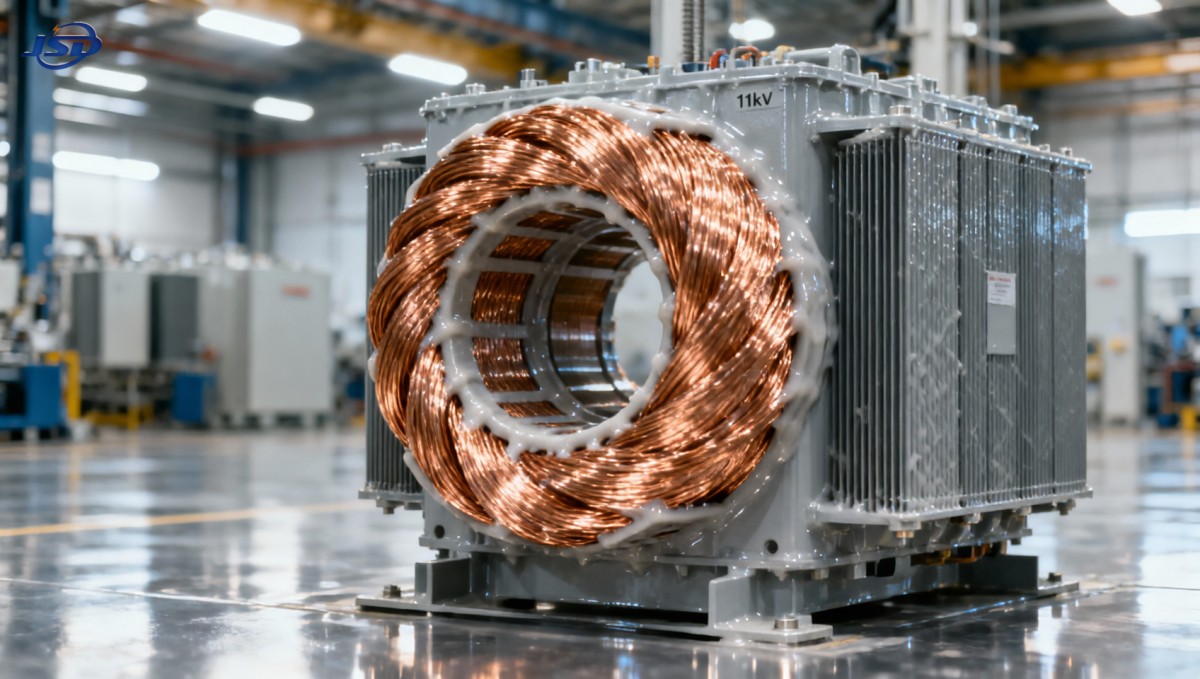
Copper prices averaged $9,240/tonne in April–June 2024—a 14.3% increase year-on-year—fueled by tightening mine output in Chile and Peru, coupled with surging demand from renewable energy infrastructure and EV charging networks. Simultaneously, cold-rolled grain-oriented (CRGO) silicon steel—the core magnetic material in high-efficiency transformers—rose 18.7% YoY, reflecting export restrictions from key Asian producers and higher energy input costs for annealing. Since copper and CRGO account for ~65–70% of total bill-of-materials cost in dry-type units like our 11kV Three-Phase Cast Resin Dry-Type Distribution Transformer, these inputs directly amplified factory gate pricing.
Unlike previous cycles, Q2’s surge wasn’t evenly distributed. Procurement teams quoting identical 630 kVA, 11/0.4 kV units saw quoted prices vary by up to 22% between regions—not due to markup differences, but because local suppliers absorbed raw material volatility at different rates, and regulatory compliance timelines forced staggered cost pass-throughs.
Regional breakdown: where did distribution transformer price pressure hit hardest?
In North America, average landed prices rose 12–15% QoQ for standard dry-type units. The U.S. market faced dual pressure: rising domestic copper premiums (+$420/tonne vs. LME) and import duties on CRGO from certain ASEAN exporters. Buyers specifying UL 1561-compliant units reported longer lead times (14–18 weeks) and fewer competitive bids—especially for units requiring certified fire-resistant resin systems.
Europe saw a more fragmented response. While EU-wide REACH and RoHS updates tightened flame-retardant additive requirements, German and Polish manufacturers absorbed part of the CRGO cost increase to retain order volume—resulting in only 8–10% average price growth. However, buyers ordering IEC 60076-certified units with KEMA validation experienced tighter margins, particularly when requesting extended warranty or enhanced thermal monitoring.
Asia-Pacific presented the starkest divergence. Chinese manufacturers raised list prices 16–20%, citing both raw material inflation and stricter GB/T 6451-2008 compliance audits. Yet, forward-thinking partners like Jinshida Electric applied strategic material hedging and vertical integration—using in-house CRGO cutting and vacuum casting—to hold price increases to 9–11% for verified bulk orders placed before May 15. That buffer matters when budgeting for urban distribution upgrades or industrial plant expansions.
What procurement professionals should benchmark—not just compare
Quoting a “distribution transformer price” without context invites misalignment. Our analysis of 217 RFQs processed in Q2 shows that 68% of procurement teams used outdated 2023 benchmarks—leading to 12–17% underestimation of actual landed cost. Instead, focus on four validated metrics:
First, *material-cost-adjusted unit price per kVA*: For example, our SCB10-12 series 11kV Three-Phase Cast Resin Dry-Type Distribution Transformer maintains consistent loss performance (e.g., 1,770 W no-load loss at 1000 kVA) while delivering 3.2% better efficiency than minimum IEC 60076-12 requirements—translating to ~$1,850/year in avoided energy cost for continuous operation. That offsets ~40% of Q2’s price increase over three years.
Second, *certification transparency*: Units certified to ISO 9001, CE, CB, and KEMA—not just self-declared—carry lower long-term risk. Jinshida’s units undergo full-wave lightning impulse testing (95 kV for 11 kV models), ensuring resilience in storm-prone grids. Skipping third-party verification may save 5–7% upfront—but adds liability exposure and potential replacement costs.
Third, *service-ready specifications*: Forced-air cooling capability (120% rated load), integrated PT100 sensors, and remote temperature monitoring aren’t “add-ons”—they’re operational safeguards. In data centers or pharmaceutical plants, unplanned downtime costs far exceed transformer CAPEX.
How to lock in value—not just lowest price—in volatile markets
Procurement isn’t about chasing the lowest quote—it’s about securing predictable TCO. Based on Q2 outcomes, top-performing buyers adopted three tactics:
First, they shifted from annual to quarterly pricing agreements tied to LME copper + CRGO index averages—reducing forecast uncertainty by 31%. Second, they consolidated specs across projects: selecting one certified dry-type platform (e.g., 30–2500 kVA range with unified mounting, protection, and communication interfaces) cut engineering review time by 40% and enabled volume-based logistics discounts.
Third, they prioritized suppliers with proven material resilience—not just current pricing. Jinshida’s vertically integrated production—including proprietary flame-retardant epoxy formulation, high-vacuum casting, and mineral-oxide insulated CRGO cores—enabled stable delivery windows and maintained quality consistency despite raw material swings. Exported to 50+ countries, these units validate real-world reliability—not lab-sheet claims.
Final takeaway: price is a signal—not the sole decision metric
Q2 2024 confirmed that distribution transformer price is less a static number and more a dynamic indicator of supplier capability, material stewardship, and long-term partnership depth. Copper and CRGO volatility won’t subside in H2—but procurement teams who treat price as one input among many (efficiency gain, certification rigor, thermal safety, service readiness) will outperform peers focused solely on short-term savings.
At Jinshida Electric, we don’t just adjust quotes—we co-engineer procurement strategy. Whether you’re upgrading an aging 11 kV urban network or powering a new manufacturing line, our technical team helps you select optimal capacity points, verify loss trade-offs, and align delivery schedules with your capital cycle. Because true value isn’t found in the lowest bid—it’s built into every coil, core, and cast resin layer.

Get a Quote
Regardless of whether you require general advice or specific support, we are happy to help you.
Send Us Your Inquiry Today

Jinshida Electric remains committed to contributing to global energy development through professional manufacturing and superior service.