





Medium Voltage Transformer for Sale: How to Evaluate Supplier Offers Beyond Price
Medium Voltage Transformer for Sale: How to Evaluate Supplier Offers Beyond Price
If you are searching for a medium voltage transformer for sale, price should be only one part of your decision. Procurement teams also need to evaluate supplier engineering capability, quality control, delivery reliability, and after-sales support to reduce project risk and ensure long-term performance. As a trusted power equipment partner, Jinshida Electric Power Technology Co., Ltd. helps buyers compare offers with confidence by delivering safe, energy-efficient, and high-performance transformer solutions for industrial, utility, and infrastructure applications.
That matters because a transformer purchase is rarely just a line item. It affects commissioning schedules, system losses, maintenance workload, and sometimes the entire credibility of a project team. A low quote can look efficient on paper, but if it hides unclear specifications, weak documentation, or a long rework cycle, the real cost becomes much higher. For procurement, the useful question is not “Which supplier is cheapest?” but “Which offer gives the lowest project risk over the full life of the equipment?”
Start with the specification, not the quotation
Many buying mistakes begin when suppliers are asked to quote before the technical scope is fixed. Medium voltage transformers vary widely by application: indoor or outdoor installation, oil-immersed or dry-type design, regional grid codes, insulation level, cooling method, altitude, ambient temperature, and load profile all influence the final design. If these points are missing, price comparison becomes unreliable because each bidder may be pricing a different product.
A serious offer should clearly state rated voltage, capacity, vector group, impedance, temperature rise limits, accessories, testing scope, and applicable standards. If one supplier gives a simple number and another gives a full technical schedule, the second offer often looks more expensive only because it is actually comparable. Procurement teams should insist on a shared technical baseline before any commercial discussion starts.
What a good supplier offer usually reveals
The strongest offers usually answer the questions buyers ask after the first price check: how will the transformer be manufactured, how is quality verified, what documents are included, and what happens if the project schedule changes. This is where supplier capability becomes visible. A mature manufacturer can explain design choices, provide test procedures, and identify limits without trying to oversell.
For procurement teams, it is useful to separate “quoted product” from “quoted support.” Engineering review, factory testing, packing method, spare parts, supervision, and commissioning support may all affect total cost. An offer that looks slightly higher but includes clearer technical responsibility is often easier to manage than a cheaper quote that leaves many items open-ended.
In practice, this is similar to how buyers evaluate a broader power package, whether they are sourcing a transformer or a project-level solution such as a 1MW/2MWh Liquid Cooling Container Energy Storage System. The name on the quotation matters less than the clarity behind it: interface conditions, delivery scope, commissioning responsibility, and the discipline of the supplier’s documentation.
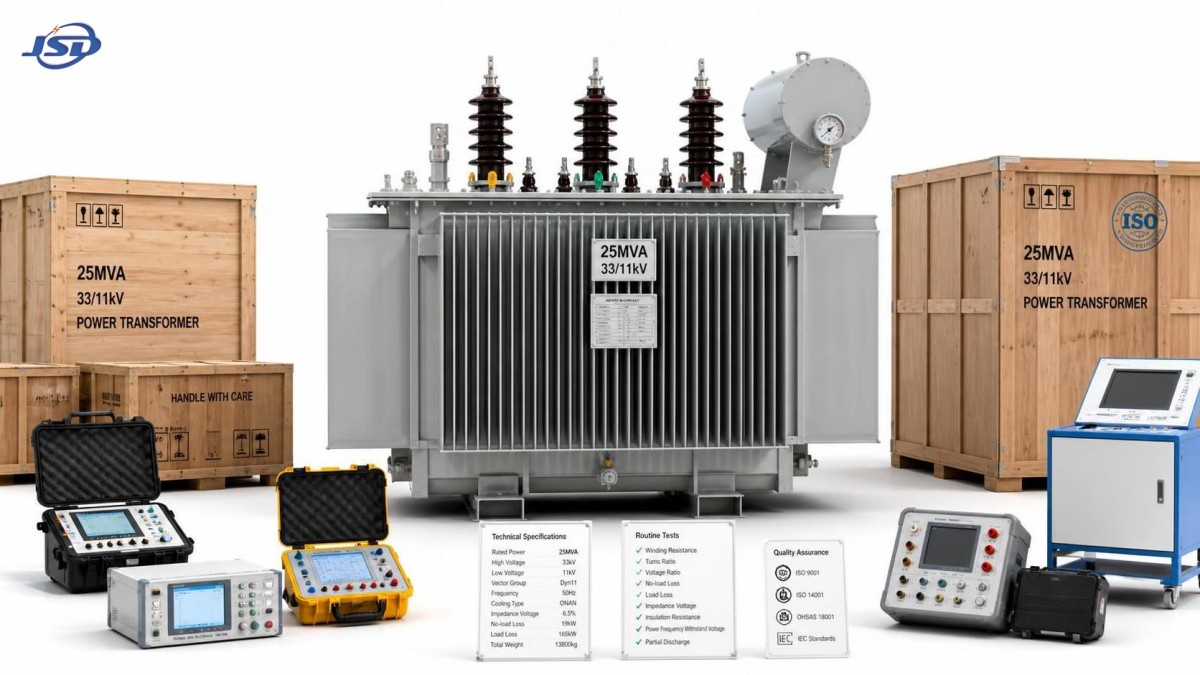
Quality control is not a slogan; it is evidence
When buyers compare a medium voltage transformer for sale, quality control is one of the easiest topics to mention and one of the hardest to verify. A reliable supplier should be able to explain incoming material inspection, process control, routine testing, and final inspection. Not every buyer needs to audit a factory in person, but the offer should make it possible to understand how quality is controlled from design to shipment.
Ask for the test scope in writing. Routine tests are standard expectations, but projects may also require additional verification depending on the market, utility rules, or contract conditions. If the supplier cannot clearly separate standard tests from optional or project-specific tests, that can create friction later, especially during acceptance.
This is also where Jinshida Electric Power Technology Co., Ltd. positions its work: through professional technical teams, advanced manufacturing processes, and a rigorous quality management system. For buyers, that should translate into something practical—stable product consistency, fewer surprises during inspection, and better control over delivery quality. Those are not marketing phrases in a project meeting; they are what keeps the schedule intact.
Delivery reliability often changes the real cost
Procurement teams know that a transformer delayed by weeks can affect civil completion, cable installation, energization, and downstream equipment work. A low-cost offer that misses the delivery window can create standby labor, liquidated damages, or costly resequencing. That is why supplier lead time should be judged against actual manufacturing capacity, not just the date written in the quotation.
A good way to test this is to ask how the supplier plans production, what components are critical-path items, and how they handle change requests after order confirmation. Suppliers with disciplined order management can usually explain this without vague promises. If the answer is only “we will try to expedite,” procurement should treat that as a warning sign.
Delivery scope also includes packing, inland transport, and export documentation where applicable. Medium voltage equipment is sensitive to damage from moisture, impact, and storage conditions. If a quotation ignores packaging method or shipment protection, the buyer may inherit hidden risk before the transformer even reaches site.
After-sales support is part of procurement, not an extra
Many teams only think about after-sales support when a problem appears, but it should be evaluated before the contract is signed. Transformers are long-life assets, and project teams often need guidance on installation, commissioning checks, maintenance intervals, and spare parts planning. The value of this support depends on the project type, location, and the buyer’s in-house maintenance capability.
For industrial buyers, the relevant issue is often response speed. For utility or infrastructure projects, documentation quality and traceability may matter more. A supplier that can support the product throughout its service life reduces uncertainty, especially when the transformer is part of a larger network or tied to critical production loads.
This is also why many procurement teams now prefer partners that can support not only transformers but adjacent power systems as well. When a supplier understands grid construction, industrial manufacturing, new energy, and infrastructure requirements, it is easier to align technical choices with the real operating environment instead of selecting equipment in isolation.
A practical way to compare supplier offers
If two or three quotes look close on price, compare them on the issues that actually affect project risk. The list does not need to be complicated:
- Are the electrical and environmental parameters fully aligned?
- Is the testing scope clear, and are acceptance documents included?
- Can the supplier explain the lead time and critical components?
- Are installation, commissioning, and support responsibilities defined?
- Does the supplier’s manufacturing and quality process match the project’s sensitivity?
This approach works because it turns the purchase from a price race into a risk review. That may sound slower, but it usually saves time once the project enters execution. Teams that compare offers only by headline price often spend more time later clarifying what was never written down.
What procurement teams should ask before signing
Before moving forward, buyers should confirm whether the offer is really complete. Is the transformer designed for the intended load profile? Are the losses acceptable for the operating model? Do the drawings, nameplate data, and testing plan match the project file? Is the supplier willing to clarify deviations in writing?
These are not theoretical questions. In real purchasing work, they often decide whether the project runs smoothly or gets stuck in technical back-and-forth after the order is placed. A supplier with strong engineering and a disciplined quality system usually welcomes this stage because it reduces ambiguity on both sides.
For buyers reviewing a medium voltage transformer for sale, the best offer is rarely the cheapest one. It is the one that gives a clear design basis, verifiable quality, realistic delivery, and support that still makes sense after installation. If those elements are visible early, procurement can make a decision with less risk—and much less regret.

Get a Quote
Regardless of whether you require general advice or specific support, we are happy to help you.
Send Us Your Inquiry Today

Jinshida Electric remains committed to contributing to global energy development through professional manufacturing and superior service.