





How C&I Energy Storage Systems Reduce Peak Demand Charges for Factories
In many factories, the highest electricity bill shock does not come from total energy consumption. It comes from a few short periods when equipment, motors, compressors, HVAC systems, or production lines all draw power at once. Those peaks may last only minutes, but they can shape the demand charge for the entire billing cycle. That is why a c&i energy storage system is no longer viewed only as a sustainability tool. For industrial decision-makers, it is increasingly a cost-control asset tied directly to operating margins.
For factories facing rising electricity costs, a c&i energy storage system offers a practical way to reduce peak demand charges while improving energy flexibility. By storing power during off-peak hours and discharging it when demand spikes, businesses can lower operating expenses, strengthen power reliability, and support more efficient production. This article explains how the technology works and why it is becoming a smart investment for industrial energy management.
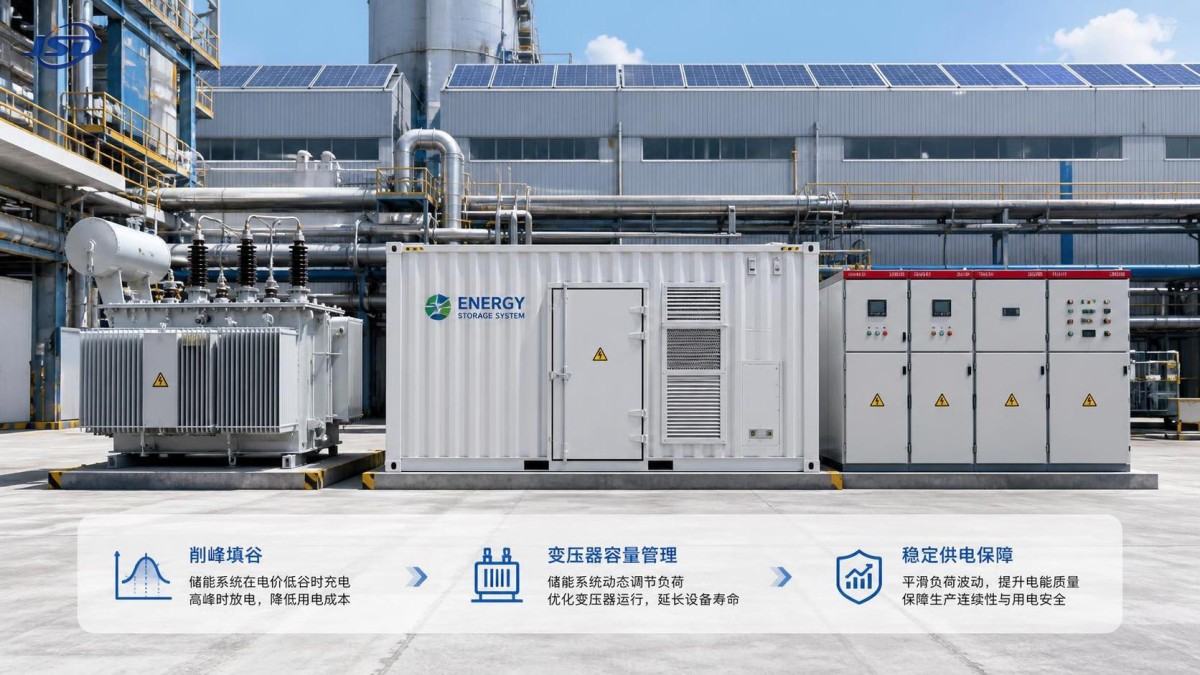
The appeal is simple: instead of allowing the grid to supply every sudden load spike, the battery system steps in at the right moment. But the real value goes beyond that simple idea. A well-designed industrial storage solution can help stabilize load profiles, support transformer capacity management, improve the use of onsite solar, and create more breathing room for future expansion without rushing into costly electrical upgrades.
Why demand charges hit factories so hard
Most industrial leaders already track kilowatt-hours. Fewer pay equal attention to how utilities bill peak demand in kilowatts. Yet demand charges can represent a significant portion of a factory’s power costs, especially in operations with intermittent heavy loads.
Consider a plant where stamping equipment, chillers, air compressors, and material handling systems start within the same window. Even if average daily consumption is manageable, that short spike can push the billing peak far above the normal operating range. The utility does not care that it happened briefly. It sees a higher maximum demand and bills accordingly.
This is where many factories feel trapped. Production cannot simply stop during busy hours, and rescheduling every high-load process is often unrealistic. Expansion plans make the situation even more difficult, because new equipment may increase the site’s peak load faster than the existing power infrastructure was designed to handle.
In transformer-related planning, this matters even more. A factory may not only be paying high demand charges, but also pushing its internal distribution assets closer to their practical operating limits. Reducing peaks helps both the utility bill and the stress placed on electrical equipment.
How a c&i energy storage system actually reduces peak demand
The core operating logic is known as peak shaving. During lower-demand periods, or when electricity prices are lower, the battery charges. When facility demand rises toward a preset threshold, the system discharges power to offset part of the load that would otherwise come from the grid.
That sounds straightforward, but effective peak shaving depends on control strategy. The battery is not supposed to discharge randomly. It should respond based on load patterns, production schedules, tariff structures, and the facility’s electrical constraints.
For example, the system can be configured to:
- Discharge during known production peaks
- Limit grid import to a target maximum demand level
- Support startup of large equipment to avoid sharp spikes
- Coordinate with rooftop PV to retain more solar value onsite
- Reserve part of its capacity for backup or power quality support
In practice, this means the factory is shaping its load profile rather than passively accepting it. Over time, that flatter demand curve can translate into more predictable billing and better use of existing electrical infrastructure.
What factory managers usually want to know before investing
Most enterprise buyers are not asking whether energy storage works in theory. They want to know whether it works in their plant, under their tariff, with their production rhythm. That is the right question.
A c&i energy storage system delivers the strongest value when several conditions come together: the site has noticeable demand charges, load peaks are repeatable enough to manage, the operating schedule creates charge/discharge opportunities, and the electrical system can support integration safely.
Factories with batch production, large motor loads, process cooling, metalworking, plastics processing, food manufacturing, logistics hubs, and mixed day-night shifts often fit this profile well. Facilities with highly stable loads and low demand penalties may still benefit, but the savings logic is usually less compelling unless reliability or renewable integration is also a priority.
Three practical questions to evaluate site fit
1. How often do your peaks occur, and what causes them?
If peaks are driven by repeatable process events, they are easier to manage than fully random spikes.
2. What share of the bill comes from demand charges?
A tariff review often reveals savings potential that is larger than expected.
3. Is your power infrastructure close to a capacity threshold?
If the answer is yes, storage may help defer upgrades to transformers, switchgear, or other distribution assets.
More than bill savings: the transformer and power infrastructure angle
Because this topic sits close to the power equipment sector, it is worth looking beyond the battery itself. In factories, energy storage should not be evaluated in isolation. It interacts with the broader transmission and distribution environment inside the plant.
When peak load is reduced, transformers and related power equipment may operate under smoother conditions. That can support thermal management, improve system stability, and give operators more flexibility when planning future capacity. For facilities considering line expansion, this can be strategically important. A storage-assisted load management plan may buy time before major infrastructure upgrades are required.
That is one reason companies such as Jinshida Electric Power Technology approach industrial power solutions from a system perspective rather than a single-product perspective. In real projects, the quality of integration matters as much as the battery specification. Safe and reliable performance depends on sound electrical design, suitable power conversion, coordinated controls, and disciplined quality management across the whole installation.
Where the savings can be lost if the system is poorly planned
Not every storage project produces the expected result. In many cases, the issue is not the battery technology itself but an overly simplified deployment plan.
One common mistake is sizing the system only by total energy capacity while ignoring the site’s real power peaks. A factory may need stronger discharge power over a short period rather than a large energy reservoir spread over many hours. Another mistake is failing to study the tariff carefully. If the utility calculates demand in a specific interval or applies seasonal rules, the control logic must reflect that.
There is also the operational side. If production schedules change frequently, the control strategy needs enough intelligence and flexibility to adapt. Otherwise the battery may discharge too early, hold back when it should respond, or prioritize the wrong objective.
Decision-makers should also avoid treating storage as a substitute for basic electrical discipline. Poor power factor correction, uncoordinated equipment startup, or outdated distribution design can still undermine performance. The best results usually come when storage is part of a wider energy management plan.
Deployment formats are becoming more flexible
One reason adoption is accelerating is that industrial energy storage is no longer limited to large, permanent installations with long project cycles. In some situations, mobility and deployment speed matter almost as much as capacity.
For temporary peak management, remote industrial sites, infrastructure projects, or facilities that want a more adaptable deployment path, trailer-based systems can be a practical option. A solution such as the 100kW/215kWh Mobile Trailer Energy Storage System reflects this trend toward modular and movable energy support. It is especially relevant where load patterns shift by project phase, where site layout constraints make fixed installation less attractive, or where businesses want to test operating value before scaling further.
This kind of format does not replace detailed engineering judgment. But it does expand the range of industrial use cases, particularly for enterprises balancing flexibility, site readiness, and capital planning.
How storage works alongside solar and time-of-use pricing
Many factories are now evaluating energy decisions across several layers at once: demand charges, time-of-use pricing, decarbonization pressure, and resilience. A c&i energy storage system becomes more attractive when it can serve more than one purpose.
If the site has rooftop or ground-mounted solar, midday generation may not always align with factory demand peaks. Storage can capture more of that energy for later use, reducing grid dependence when tariffs are higher or loads are heavier. In this scenario, the battery is doing more than shaving peaks. It is improving self-consumption and making solar investment work harder.
For factories with variable tariff periods, the economics can also improve through energy arbitrage, charging when electricity is cheaper and discharging when it is more expensive. However, enterprise buyers should be careful not to focus only on one benefit. In industrial settings, the strongest business case often comes from stacking multiple value streams: peak reduction, tariff optimization, renewable integration, and operational support.
What to ask a supplier before making a decision
By the time a project reaches procurement review, the biggest risk is often not technical feasibility but incomplete questioning. A supplier should be able to discuss more than battery chemistry or container size.
Useful questions include:
- How will the proposed system be sized against actual load data?
- What demand-control strategy will be used on this tariff?
- How will the system integrate with existing transformers, switchgear, and protection schemes?
- What operational priorities can be configured: peak shaving, backup reserve, solar absorption, or mixed modes?
- What maintenance and monitoring approach supports long-term reliability?
These questions matter because the investment is ultimately about predictable industrial performance, not just installed hardware. The quality of the power equipment ecosystem around the storage system influences safety, uptime, and commercial return.
Why this is becoming a board-level energy decision
Electricity is no longer a background utility cost for manufacturers. It is becoming a strategic variable tied to profitability, expansion planning, sustainability targets, and supply continuity. That shift is why storage conversations are moving beyond engineering departments and into executive discussions.
For decision-makers, the value of a c&i energy storage system is not limited to “saving power.” It is about making energy demand more controllable in an operating environment that feels less predictable each year. Utility prices are changing. Production needs are becoming more dynamic. New energy assets are entering the mix. Grid constraints are more visible than they used to be.
In that context, reducing peak demand charges is often the first and clearest win. But the broader benefit is operational control. A factory that can shape when and how it draws power is in a stronger position than one that simply absorbs every tariff increase and every load spike.
For manufacturers evaluating next steps, the smartest path is usually a site-specific assessment grounded in real load data, tariff analysis, and infrastructure conditions. When the system is correctly matched to the plant, energy storage can become a practical industrial tool, not a speculative add-on. And in factories where peak demand charges are quietly eroding margins month after month, that difference can be substantial.

Get a Quote
Regardless of whether you require general advice or specific support, we are happy to help you.
Send Us Your Inquiry Today

Jinshida Electric remains committed to contributing to global energy development through professional manufacturing and superior service.