





Distribution transformer price negotiation leverage: how MOQ and delivery window affect final unit cost
Distribution Transformer Price Negotiation Leverage: How MOQ and Delivery Window Affect Final Unit Cost
Negotiating the best distribution transformer price demands more than just comparing quotes—it hinges on strategic levers like Minimum Order Quantity (MOQ) and delivery window. At Jinshida Electric, we empower procurement professionals with transparent, volume- and timeline-sensitive pricing models that directly impact your unit cost. Understanding how MOQ flexibility and lead time adjustments influence total landed cost is critical for budget optimization and supply chain resilience. Discover how partnering with a trusted transformer manufacturer—backed by R&D expertise, ISO-certified production, and global project experience—turns negotiation from a transaction into a value-driven collaboration.
Why MOQ Isn’t Just a Number—It’s Your First Pricing Lever
For procurement teams sourcing distribution transformers, MOQ isn’t merely an administrative threshold—it’s a primary driver of per-unit cost. Most manufacturers quote tiered pricing, but few disclose how much cost reduction stems from volume scaling versus internal efficiency gains. At Jinshida Electric, our MOQ structure reflects real manufacturing economics: raw material procurement leverage, coil winding batch optimization, and core assembly line utilization. Ordering 5 units instead of 1 may reduce unit cost by 8–12%, but jumping from 20 to 50 units often unlocks an additional 4–6%—not because of “bulk discounts,” but because we reconfigure production scheduling to minimize setup downtime and maximize material yield.
This transparency matters when evaluating total cost of ownership. A lower MOQ may seem flexible—but if it triggers premium labor allocation or fragmented logistics, your effective unit cost rises. Conversely, committing to a realistic MOQ aligned with your annual demand forecast lets us lock in favorable material contracts and allocate dedicated QA resources—reducing defect risk and warranty exposure over the transformer’s 25+ year lifespan.
Delivery Window: The Hidden Cost Multiplier You Can Control
Lead time is the second most underutilized negotiation lever—and the one with the highest ROI for procurement professionals. Standard delivery windows for custom distribution transformers range from 12–20 weeks. Yet many buyers accept “standard lead time” without probing how acceleration or extension affects unit cost. Here’s what actually happens behind the scenes: compressing delivery by 4 weeks typically adds 3–7% to unit cost—not due to overtime, but because it forces expedited raw material imports, air-freighted laminations, and priority slotting on test benches. That premium compounds across large orders.
Conversely, extending lead time by 6–8 weeks—especially when aligned with our quarterly production planning cycle—can yield 2–4% savings. Why? Because longer windows allow us to consolidate orders, optimize steel core cutting patterns, and schedule thermal testing during off-peak energy hours. For projects with flexible commissioning dates—like rural grid upgrades or non-critical industrial expansions—this timing leverage delivers measurable CAPEX relief without compromising quality or compliance.
How Jinshida Turns Negotiation Into Partnership
We don’t treat MOQ and delivery as fixed constraints—we treat them as collaborative variables. Our procurement support team works directly with your project schedule and budget cadence to model three scenarios: baseline (standard MOQ + standard lead time), optimized (volume-adjusted MOQ + extended window), and agile (moderate MOQ + buffer-aligned delivery). Each scenario includes full landed cost breakdowns—not just FOB price, but inland freight, customs duties, insurance, and warehousing implications.
This approach proved critical for a recent infrastructure rollout across Southeast Asia. By consolidating 14 regional orders into a single 86-unit MOQ and aligning delivery with our Q3 production peak, the client achieved 9.2% lower unit cost while gaining 100% on-time-in-full (OTIF) performance—eliminating costly demurrage fees and emergency air shipments. That’s not discounting; it’s engineering procurement efficiency.
When Mobile Energy Storage Complements Your Transformer Strategy
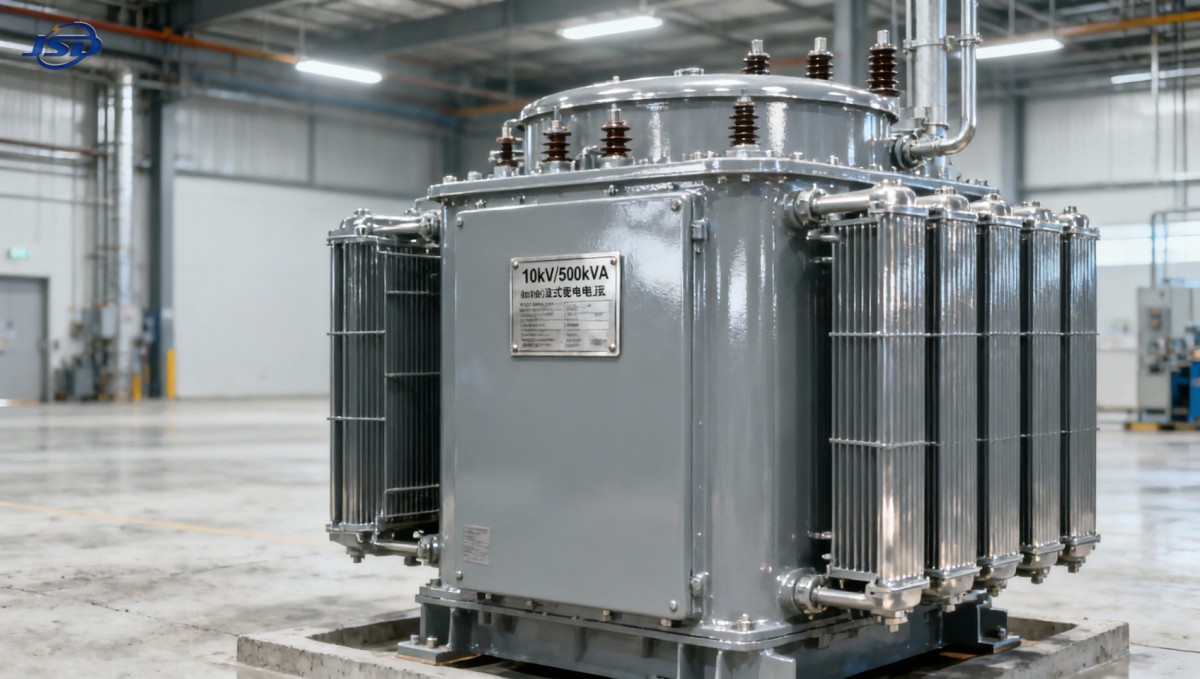
In modern grid projects, distribution transformers rarely operate in isolation. Increasingly, they integrate with mobile energy assets to enhance reliability, load balancing, and disaster response. For example, pairing a 10 kV/500 kVA distribution transformer with a 100kW/215kWh Mobile Trailer Energy Storage System enables rapid black-start capability, peak shaving, and seamless transition during maintenance outages. Jinshida supports such hybrid deployments with coordinated lead times—so your transformer and storage system arrive synchronized, avoiding staging delays and integration bottlenecks.
This synergy also influences negotiation dynamics. Bundling transformer procurement with complementary assets like the 100kW/215kWh Mobile Trailer Energy Storage System qualifies for cross-product MOQ aggregation and shared logistics optimization—further lowering total project cost per kW/kWh delivered.
Avoiding the “Lowest Quote” Trap: What Procurement Teams Overlook
Many procurement officers fixate on the headline distribution transformer price—only to discover hidden costs post-award: extended payment terms tied to MOQ thresholds, penalties for partial shipments, or surcharges for split deliveries. Worse, rigid MOQs can force overstocking of low-utilization SKUs or create inventory obsolescence in fast-evolving applications like EV charging infrastructure.
Jinshida avoids these pitfalls through modular design and configurable MOQs—for instance, offering 30% MOQ flexibility on standard 10–35 kV units when paired with long-term framework agreements. We also provide dynamic delivery windows: “guaranteed 14-week lead time” for base orders, plus “priority lane” options (at transparent cost) for urgent needs—no opaque rush fees, no last-minute surprises.
Your Action Plan: Three Questions Before You Negotiate
Before engaging any supplier on distribution transformer price, ask yourself: (1) What’s my *true* annual demand profile—not just this order, but next year’s forecast? (2) Where does my project timeline have built-in float—and where is it truly inflexible? (3) Which ancillary systems (protection relays, SCADA interfaces, or mobile storage like the 100kW/215kWh Mobile Trailer Energy Storage System) could be bundled to unlock systemic savings?
At Jinshida Electric, we answer those questions collaboratively—not with static brochures, but with live cost modeling tools, factory tour access, and technical-commercial alignment sessions. Because the best distribution transformer price isn’t the lowest number on a quote sheet. It’s the unit cost that reflects your operational reality, honors your timeline integrity, and scales with your growth—without hidden trade-offs.
In summary: MOQ and delivery window aren’t negotiation tactics—they’re strategic inputs you control. When grounded in real manufacturing logic and aligned with your project execution plan, they transform procurement from cost containment into value creation. With Jinshida Electric, you don’t just buy transformers—you engineer smarter power infrastructure partnerships.

Get a Quote
Regardless of whether you require general advice or specific support, we are happy to help you.
Send Us Your Inquiry Today

Jinshida Electric remains committed to contributing to global energy development through professional manufacturing and superior service.