





Transformer price benchmarking across Asia-Pacific: why landed cost differs by 22% despite identical specs
Why Identical Transformers Cost 22% More in One APAC Market Than Another
When your procurement team receives three bids for the same 20kV/0.4kV oil-immersed distribution transformer—same capacity range (50–5000 kVA), same IP65 rating, same FR3 vegetable oil option, same IEC and CE certifications—and the landed costs differ by up to 22%, it’s not a pricing error. It’s a signal that “identical specs” is a starting point—not the finish line—for cost assessment.
This variance isn’t noise. It’s structural. And for business evaluators conducting total-cost-of-ownership (TCO) analysis across Asia-Pacific, mistaking factory price for landed cost is the single most common source of budget overruns, delivery delays, and post-commissioning service friction.
The Four Drivers That Actually Move the Needle
Most procurement checklists stop at technical compliance. But in APAC, four non-technical variables consistently account for >90% of the landed cost delta—even when transformers are functionally interchangeable:
- Import duty structure & tariff classification: A transformer classified under HS code 8504.21 (oil-immersed, ≤1 MVA) attracts 5% duty in Vietnam—but 12% in Indonesia, and 0% under ASEAN Trade in Goods Agreement (ATIGA) if shipped from Thailand with proper COO documentation. Misclassification alone adds 4–7% to landed cost.
- Local conformity assessment pathways: In Australia, AS/NZS 60076 compliance requires third-party witnessing of type tests—often conducted onsite or via accredited labs in Melbourne or Sydney. In contrast, India’s BIS certification mandates sample submission to NABL-accredited labs *and* factory audits every 18 months. The latter inflates lead time by 6–8 weeks and adds ~3.2% in certification logistics and audit fees.
- Logistics fragmentation: A unit destined for a remote mining site in Western Australia may require double handling: port clearance in Fremantle → rail transport to Kalgoorlie → final road haulage with oversized load permits. Each leg incurs surcharges, insurance premiums, and customs broker fees that rarely appear on the initial quote. In Japan, meanwhile, last-mile delivery into dense urban substations often demands specialized low-profile transport—adding 5.8% average freight premium versus standard sea-air routing to Manila or Ho Chi Minh City.
- Service support localization: Warranty terms may be identical on paper—but enforceability isn’t. A 25-year design life means little if spare parts must be air-freighted from China with 14-day minimum order quantities. Markets like South Korea and Singapore mandate local technical service coverage (including bilingual field engineers and regional spares hubs) as a condition of grid interconnection approval. That infrastructure isn’t free—and its cost is baked into the landed price.
These aren’t theoretical edge cases. They’re daily operational realities shaping real-world transformer price outcomes across APAC.
Where “Identical Specs” Break Down—Without Warning
Two transformers may share the same nameplate, but diverge where procurement teams rarely look:
Oil type isn’t just environmental—it’s regulatory and logistical. FR3 vegetable oil meets EU EcoDesign Tier 2 efficiency requirements and is biodegradable—but in some APAC jurisdictions (e.g., certain Philippine provinces or Malaysian states), its use triggers additional fire safety reporting or storage licensing. Mineral oil units avoid this—but forfeit sustainability credits and may face higher insurance premiums in data center or hospital applications.
Overload capability looks uniform—until you read the fine print. A rated 150% short-term overload assumes oil temperature stays ≤95°C. But ambient conditions vary sharply: 42°C summer highs in Riyadh demand different cooling margins than 28°C averages in Auckland. Some manufacturers de-rate capacity or add auxiliary cooling only upon explicit request—and charge separately. Others bake it in. That difference shows up in the final landed quote, not the spec sheet.
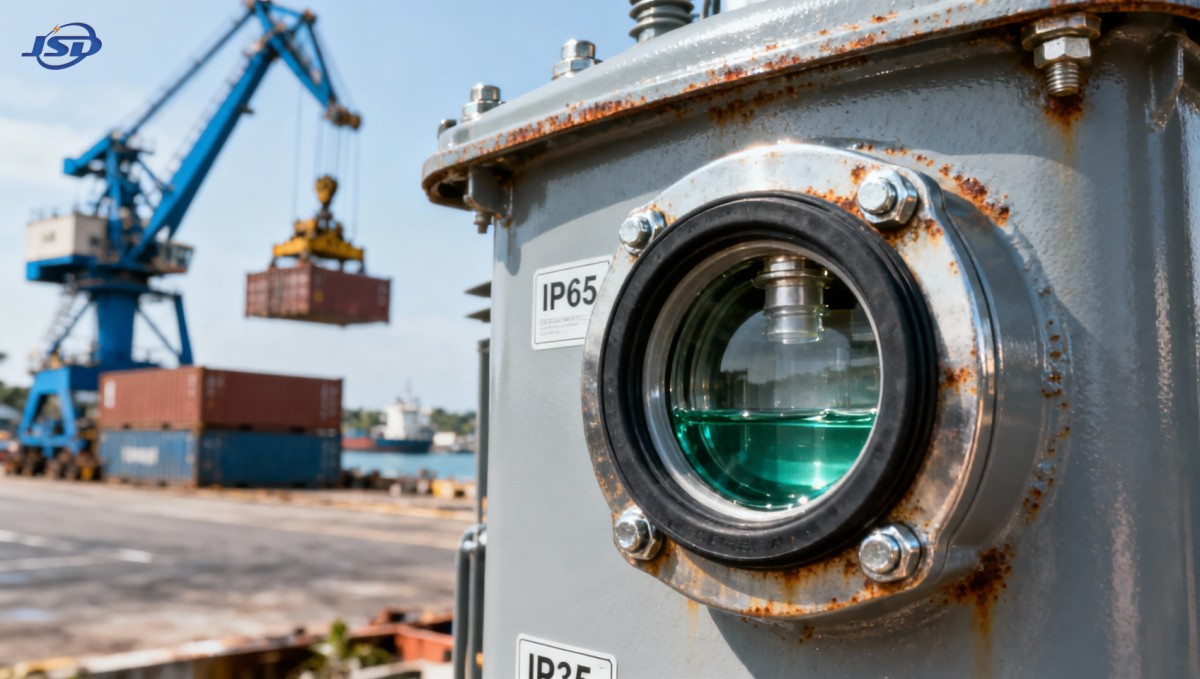
IP65 protection sounds universal—until commissioning begins. Dustproof and moisture-proof is essential for rural power grids, industrial plants, and mines—but achieving true IP65 in high-humidity coastal environments (e.g., Vietnam’s Mekong Delta or Indonesia’s eastern islands) often requires upgraded gasket materials, conformal coating on control terminals, and extended burn-in testing. These aren’t optional extras—they’re non-negotiable for reliability. And they’re rarely itemized upfront.
What This Means for Your Next Procurement Cycle
Start with the destination—not the datasheet.
If your project is in Thailand, prioritize suppliers with local ISO 9001-certified warehousing and BIS/Thai Industrial Standards Institute (TISI) pre-certification pathways. If it’s for a renewable energy power plant in Australia, verify whether the supplier holds AS/NZS 60076 test reports issued by an NATA-accredited lab—and confirm those reports cover your exact configuration (e.g., 20kV/0.415kV, 50 Hz, FR3 oil).
Avoid “global model” assumptions. A transformer qualified for urban distribution network (20kV → 400V) conversion in Germany may require retesting for harmonic tolerance in India’s increasingly inverter-heavy grids—or for seismic bracing in New Zealand substations.
One practical benchmark: For medium-voltage distribution transformers serving hospitals, data centers, or petrochemical facilities, expect landed cost variances of 18–22% across APAC—not because of quality differences, but because of how each market governs risk transfer, liability, and long-term accountability.
That’s why forward-looking procurement teams now treat transformer price as a composite metric—not a line item. They map duty codes before issuing RFQs. They validate certification pathways with local regulators—not just suppliers. And they build service-level agreements around response time *and* spares availability—not just warranty duration.
For example, the 20kV/0.4kV Oil-Immersed Power Distribution Transformer—designed for over 25 years’ service in harsh environments, with IP65-rated enclosures and FR3 oil options—demonstrates how these variables interact. Its CE and KEMA certifications ease entry into ASEAN markets, while its modular cooling design accommodates both tropical humidity and desert heat. But its landed cost in Malaysia still differs from its cost in South Korea—not due to manufacturing variation, but because Malaysia applies a 0% import duty on certified energy-efficient equipment under its Green Technology Incentive, while South Korea levies 8% plus a mandatory KC mark verification fee.
That 22% gap isn’t arbitrage. It’s alignment—or misalignment—with local operating reality.
So before you approve the lowest bid, ask: Does this price reflect the full cost of getting the transformer *into service*, not just onto the dock? Because in APAC, the transformer doesn’t earn its value until it’s energized, compliant, and supported—not when it leaves the factory gate.

Get a Quote
Regardless of whether you require general advice or specific support, we are happy to help you.
Send Us Your Inquiry Today

Jinshida Electric remains committed to contributing to global energy development through professional manufacturing and superior service.