





BESS Storage System Market Outlook: What Integrators Should Watch Next
One of the more frustrating situations in energy storage sales and project planning happens before a system is even specified. A buyer asks a simple question about the next six to eighteen months: will the market keep expanding, will pricing stay unstable, and which product types are likely to be easier to place? The problem is that the bess storage system market no longer moves in a straight line. Demand is rising in many regions, but so are safety expectations, grid compliance requirements, and the pressure to prove long-term serviceability.
That creates a practical headache for companies trying to decide what to stock, which suppliers to develop, and how to avoid getting trapped with products that look attractive on paper but become difficult to deploy in real projects. Many people run into this when they move from asking, “Is storage growing?” to the more useful question: “Which parts of this market will stay workable for channel partners?” The answer usually comes from watching a few less obvious signals, not just shipment headlines or broad energy transition talk.
The market is growing, but the easy assumptions are disappearing
A common mistake is to treat energy storage as a single category with one demand pattern. In reality, the bess storage system market is splitting into several practical tracks: utility-side support, commercial and industrial applications, backup-oriented installations, renewable integration, and projects driven mainly by local grid constraints. These tracks do not develop at the same speed, and they do not reward the same product strategy.
For companies evaluating future opportunities, this matters because the old shortcut—choose the lowest-cost box with acceptable headline specifications—is becoming less reliable. End users and EPC teams are asking harder questions about usable integration, dispatch logic, thermal management, response under cycling conditions, fire protection design, and after-sales clarity. If a supplier cannot support those discussions well, the project pipeline may look healthy at first but become difficult during technical review.
Another shift worth noticing is that project selection is becoming more conservative in some segments even while overall interest remains high. Buyers are taking more time to confirm local interconnection expectations, operating environment limits, and maintenance access. That does not mean the market is slowing in a simple sense. It means purchasing decisions are becoming more technical and less impulsive.
Why channel partners get stuck at the evaluation stage
In many discussions, the first comparison still starts with capacity, power rating, and rough cost position. Those factors matter, but they rarely explain whether a system will be easy to deliver, commission, and support. The real bottleneck often appears later, when someone asks whether the equipment matches local transformer and distribution conditions, whether communication protocols are practical for the site, or whether enclosure design and control architecture fit the application rather than just the brochure.
That is especially important in projects tied to industrial loads, small campuses, factories, logistics sites, and distributed renewable assets. In those settings, storage does not operate in isolation. It interacts with switchgear, transformers, load profiles, protection schemes, and site operating routines. A market outlook that ignores those interfaces is not very useful.
For this reason, one of the clearest signals to watch next is whether suppliers are improving integration readiness instead of only expanding model counts. A broad product catalog can look impressive, but if documentation is inconsistent, interface support is weak, or application guidance is vague, channel development becomes harder than expected.
Watch grid compatibility more closely than headline capacity
As projects move from pilot thinking to practical deployment, grid compatibility becomes one of the most important filters. This is where some opportunities quietly fail. A system may have a competitive energy capacity and a reasonable footprint, but if its electrical integration path is unclear, the project team spends extra time on redesign, clarification, and risk control.
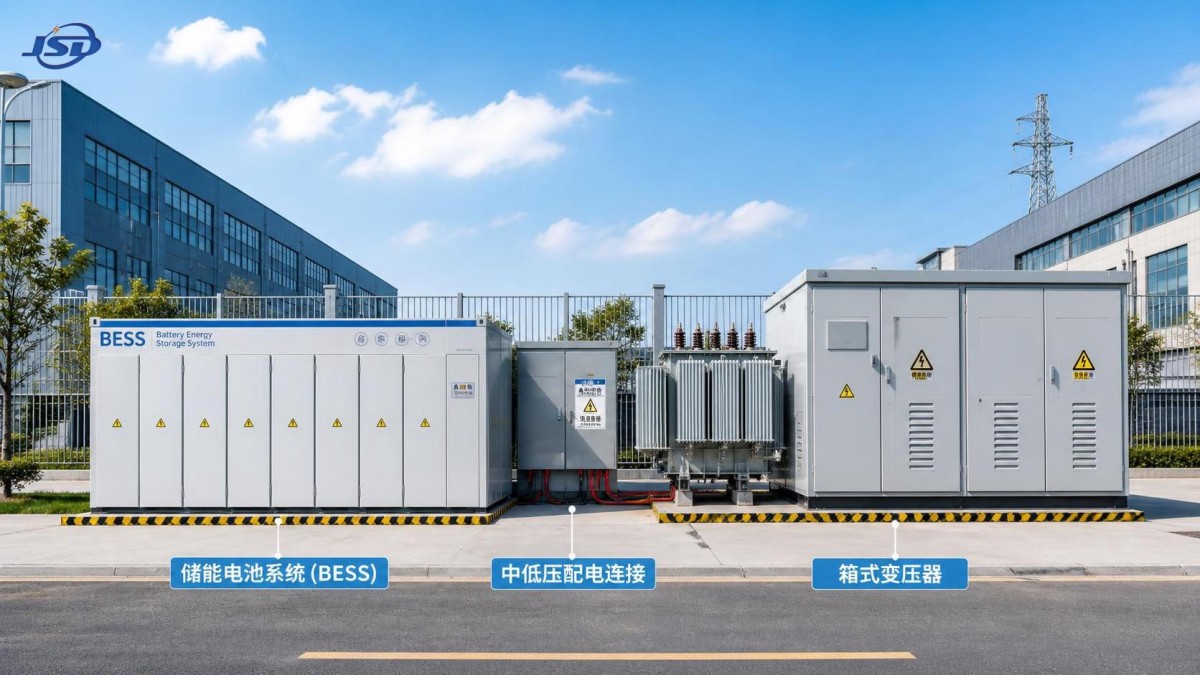
For companies working around power distribution equipment, this trend is especially relevant. Storage selection increasingly connects with transformer matching, voltage adaptation, protection coordination, and site-level power quality concerns. In other words, the storage conversation is moving closer to traditional power equipment logic. That is good news for technically minded partners, but only if they recognize the shift early.
When reviewing future-ready suppliers, it helps to ask practical questions:
- Can the supplier explain application boundaries in plain engineering terms?
- Is the system designed for realistic operating conditions rather than only ideal rated conditions?
- Are communication, control, and protection discussions handled clearly?
- Can the product fit into a broader distribution or industrial power architecture without excessive custom work?
These questions do not make a sales discussion slower. They usually make it more honest.
Safety is no longer a supporting topic
Another thing to watch next in the bess storage system market is how safety moves from a background requirement to a front-end purchasing factor. In earlier market phases, some buyers focused primarily on return assumptions and basic operating function. That is changing. More stakeholders now want visibility into cell management logic, thermal control, enclosure design, fault isolation thinking, and maintenance procedures.
This does not mean every buyer will ask deeply technical questions. Often they will not. But project teams, insurers, site operators, and technical reviewers increasingly will. If channel partners are not prepared for that conversation, they may lose time translating generic supplier claims into project-relevant answers.
One useful way to evaluate supplier readiness is to listen for specificity. Vague safety language is easy to produce. Clear explanations about system architecture, monitoring pathways, and operational limits are more valuable. Even when full project details are not available yet, suppliers should be able to discuss how their equipment is intended to be used and where extra engineering attention is typically needed.
The C&I segment deserves careful attention
Among the areas drawing steady interest, commercial and industrial storage remains worth watching because it sits close to real operating pain points: peak demand management, resilience planning, renewable self-consumption, and site-level power balancing. At the same time, this segment can be deceptively complex. Load variability, space constraints, electrical room layout, and operating responsibility all shape whether a product is practical.
That is why many partners are no longer looking only for “a storage unit.” They are looking for equipment that can be positioned more confidently in actual site discussions. In some cases, a modular commercial and industrial option such as 125kW/261kWh Commercial & Industrial Energy Storage System fits naturally into those conversations because the power and energy balance is already framed for this type of application. The point is not that one model suits every project. The point is that products aligned with recognizable use cases are often easier to evaluate than oversized, underspecified, or overly generic options.
When people ask what comes next, this is one realistic answer: more buyers will favor application-fit over broad promises. Products that help narrow the technical discussion can save time long before procurement starts.
Supplier capability will matter more than temporary market noise
Price swings, policy adjustments, and regional demand shifts will continue to influence the market. But for channel strategy, supplier capability may matter more over the next stage than short-term noise. The reason is simple. Storage projects can stall for many small reasons: missing drawings, slow technical response, unclear commissioning support, inconsistent configuration advice, or uncertainty about replacement and service processes. None of those issues appear in a top-line market forecast, yet they have direct impact on whether a partnership becomes durable.
So when reviewing the bess storage system landscape, it helps to separate visible market excitement from operational reliability. A supplier that can support product selection, technical clarification, and coordinated deployment across power equipment environments may be more valuable than one offering a more aggressive initial quote but weaker engineering follow-through.
This becomes even more relevant in projects where storage must sit alongside transformers, low-voltage distribution assets, or industrial loads with limited tolerance for commissioning delays. In those situations, documentation quality and engineering discipline are not secondary. They are part of the product value.
What to compare when choices start to look similar
At a certain point, several storage offers can appear close enough that differentiation becomes difficult. When that happens, the most useful comparison is often not a simple feature table. Instead, look at the friction points that tend to appear during project execution.
For example, does the supplier clearly define installation conditions and operating boundaries? Are there straightforward answers on integration with site electrical infrastructure? Is maintenance access considered in the physical design? Can the team explain control coordination in a way that makes sense to the installer and the end operator?
If those answers remain blurry, there is a good chance the project will require extra interpretation later. That is manageable in some large custom jobs, but it creates unnecessary risk in repeatable channel business.
A practical way to think about future opportunity is this: the next winners in the market may not be the products with the loudest positioning, but the ones that reduce uncertainty for everyone between quotation and operation. In many commercial and industrial contexts, that can make a right-sized option like the 125kW/261kWh Commercial & Industrial Energy Storage System easier to discuss than a loosely defined platform that still needs major interpretation before deployment. The important thing is to judge fit carefully rather than assume standardization where it does not yet exist.
Signals worth tracking over the next planning cycle
If you are trying to make sense of the market without overreacting to every new headline, focus on a handful of recurring signals.
First, watch whether buyers are shortening or lengthening technical review cycles. Longer review does not automatically mean weaker demand; it can indicate more mature purchasing behavior. Second, pay attention to how often safety and integration questions appear early in discussions. That usually tells you the market is moving toward more disciplined procurement. Third, observe whether suppliers can support site-specific application logic rather than only generic sales positioning. That is often where channel confidence is built or lost.
Also pay attention to the relationship between storage and surrounding electrical infrastructure. In many projects, the key question is not whether storage is attractive in theory, but whether it can be integrated into a stable power distribution environment with acceptable complexity. Partners with experience around power equipment are in a good position here, provided they apply that knowledge directly to storage evaluation rather than treating it as a separate world.
Where this leaves the next round of decisions
The market outlook is still positive, but “positive” is not enough to guide product strategy. The more useful view is that the bess storage system business is becoming less forgiving of vague positioning and more rewarding for technically grounded selection. That changes how opportunities should be screened.
If a product fits a clear application, if the supplier can discuss integration without hand-waving, and if safety and service expectations are addressed early, the opportunity is usually more durable. If those elements are missing, even strong initial interest can become difficult to convert into repeatable business.
For anyone deciding what to watch next, the best move is not to chase every market signal at once. Start with the factors that affect project survivability: compatibility with real power systems, clarity of technical support, application-fit for actual user scenarios, and a supplier’s ability to stay useful after the quotation stage. Those are not the most dramatic trends, but they are often the ones that matter when the market gets crowded.

Get a Quote
Regardless of whether you require general advice or specific support, we are happy to help you.
Send Us Your Inquiry Today

Jinshida Electric remains committed to contributing to global energy development through professional manufacturing and superior service.