





What protection features matter most in a silent diesel generator set?
For quality control and safety management teams, the most important protection features in a silent diesel generator set are the ones that prevent equipment damage, reduce fire and electrical hazards, and keep operators informed before a fault becomes a shutdown. In practice, that means overload and short-circuit protection, high coolant temperature alarms, low oil pressure shutdown, overspeed protection, battery and charging protection, fuel system monitoring, grounding and leakage safeguards, and a control system that records faults clearly. Low noise matters, but protection logic matters more when uptime, compliance, and operator safety are on the line.
When buyers search for a silent diesel generator set, they are usually not looking for a generic list of functions. They want to know which protections actually reduce risk in daily operation, which ones are standard versus optional, and how to judge whether a generator is suitable for industrial, infrastructure, or backup power use. For safety-focused readers, the real question is simple: which protective features make the unit safer, easier to manage, and less likely to fail under load?
Which protection features should be treated as essential, not optional?
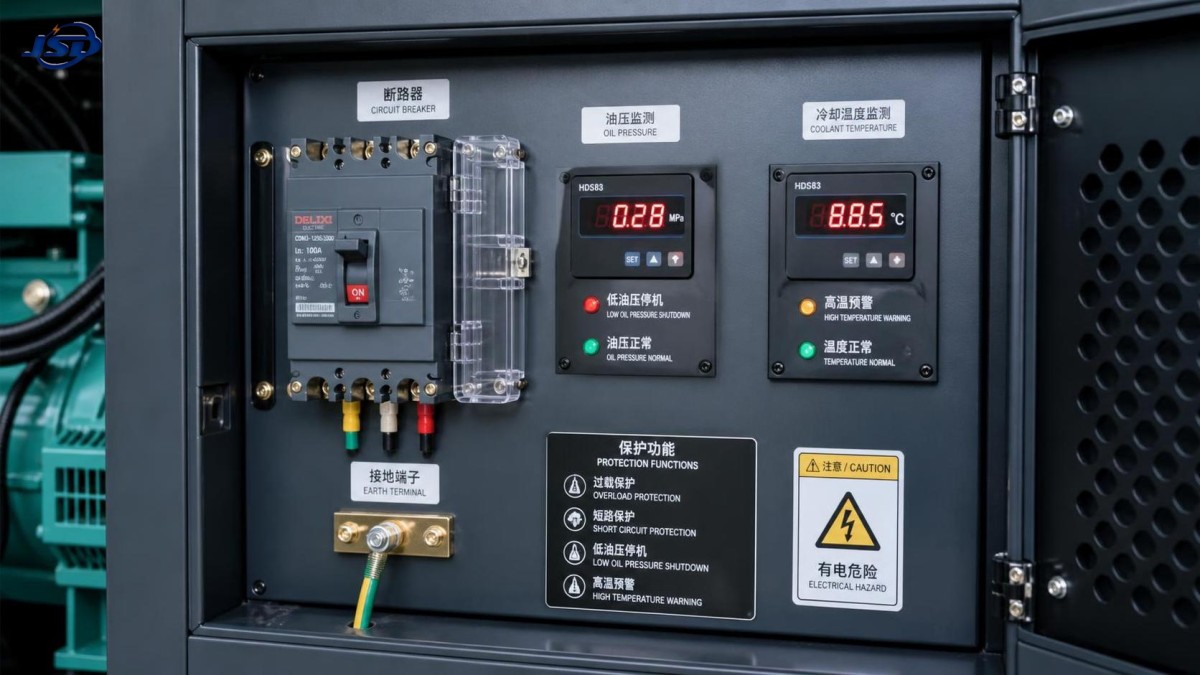
A silent diesel generator set should first protect itself against the most common causes of serious failure. These include overload, short circuit, overcurrent, low oil pressure, high engine temperature, overspeed, and abnormal output voltage or frequency. If any of these protections are missing or poorly calibrated, the generator may still run, but it becomes much harder to manage safely.
For quality control teams, essential protections are the baseline for acceptance, not a premium add-on. A generator that lacks dependable shutdown and alarm logic may pass a simple operational test but still expose the site to avoidable downtime, component damage, and increased maintenance costs over time.
It is also important to distinguish between alarm-only functions and actual shutdown protections. An alarm gives operators time to respond, but in high-risk fault conditions, automatic shutdown is often the safer design choice. The right balance depends on the application, but critical engine and electrical faults should never rely only on manual intervention.
Why do overload and short-circuit protection matter so much?
Among all electrical protections, overload and short-circuit protection usually deserve the highest priority. Overload protection prevents the generator from operating beyond its rated capacity for too long, which helps avoid alternator overheating, insulation stress, voltage instability, and premature wear on the engine.
Short-circuit protection is even more critical because fault currents can rise rapidly and cause severe thermal and mechanical damage. A silent diesel generator set used in industrial or infrastructure settings should include a reliable breaker system and coordinated trip settings that isolate faults quickly before they escalate.
For safety managers, the key question is not only whether these protections exist, but whether they are matched to the actual load profile. A generator serving motor starts, pumps, compressors, or mixed nonlinear loads needs protection settings that reflect those realities. Otherwise, nuisance trips or delayed fault clearing can create their own operational risks.
Good suppliers should also provide clear data on breaker ratings, current thresholds, and fault response behavior. Without this information, it is difficult to verify whether the protection design supports real-world use rather than just catalog specifications.
How do engine protection features reduce fire risk and mechanical failure?
Engine-related protection features are central to both safety and asset life. Low oil pressure shutdown protects bearings, crankshaft surfaces, and other moving parts from severe lubrication failure. If a diesel engine continues operating without adequate oil pressure, the damage can be fast and expensive.
High coolant temperature alarm and shutdown functions are equally important. Excessive engine temperature can result from blocked airflow, radiator fouling, coolant leakage, pump issues, or sustained overload. In a silent enclosure, heat management is especially important because acoustic design can also restrict ventilation if the system is not engineered properly.
Overspeed protection should also be considered mandatory. If engine speed rises beyond safe limits due to governor malfunction or control failure, the mechanical consequences can be catastrophic. Automatic overspeed shutdown is therefore not just a performance feature, but a core safety control.
Fuel-related protection is another area buyers sometimes underestimate. Fuel leakage detection, low fuel alarms, and secure fuel line design help reduce fire hazards and unexpected stoppages. For installations with long running periods, these protections support safer operating continuity and better preventive maintenance planning.
What control and monitoring functions help safety teams act before a failure happens?
Strong protection is not only about tripping the generator after a fault appears. It is also about giving operators enough visibility to catch abnormal conditions early. A well-designed silent diesel generator set should include a controller that displays fault codes, operating history, warning levels, and key engine and alternator parameters.
At a minimum, safety and quality teams should expect monitoring for voltage, current, frequency, oil pressure, coolant temperature, battery voltage, running hours, and start failure status. More advanced systems may also track insulation condition, fuel consumption trends, remote alarms, and event logs for post-incident analysis.
From a management perspective, event logging has real value. When a trip occurs, teams need to know whether the root cause was overload, cooling failure, voltage instability, wiring faults, or poor maintenance. A controller that only shows a general fault light creates delays, while a controller with usable diagnostics supports faster corrective action.
Remote monitoring can also be highly relevant for distributed sites, temporary projects, and backup installations with limited on-site staff. In these cases, alarms sent to building systems or remote maintenance teams reduce response time and help prevent small problems from becoming equipment failures.
How should buyers assess battery, starting, and auxiliary protection?
Starting reliability is often overlooked until a generator fails during an actual outage. Battery under-voltage alarms, charging system monitoring, and start failure protection are essential because a generator that cannot start on demand creates the same operational problem as a generator with no protection at all.
Battery protection matters especially in standby applications where the unit may sit idle for long periods. If the charger fails, terminals corrode, or battery condition drops unnoticed, the risk only becomes visible at the worst possible time. Quality control teams should therefore verify the charger design, battery supervision logic, and maintenance access.
Auxiliary protections can also improve safety in practical ways. Emergency stop circuits, enclosure door interlocks where required, exhaust temperature management, and proper cable termination safeguards all help reduce human error and unsafe intervention during operation or maintenance.
For sites integrating multiple power assets, coordination between generator protection and upstream or downstream equipment becomes important as well. In broader power systems, teams often care about the same reliability principles when evaluating equipment such as the 33kV Oil-Immersed Power Distribution Transformer, where protective performance, thermal stability, and fault resilience directly affect system continuity.
What enclosure and environmental protections matter in a silent design?
A silent diesel generator set is defined partly by its enclosure, so protection cannot be limited to the engine and alternator alone. The enclosure should support safe ventilation, weather resistance, fire-conscious material selection, and easy access for inspection without exposing operators to rotating parts or hot surfaces.
Ingress protection level matters when the unit is installed outdoors or in dusty environments. Moisture, airborne particles, and corrosive atmospheres can degrade electrical connections, control components, and insulation systems. Environmental protection therefore contributes directly to operational safety, not just cosmetic durability.
Acoustic insulation should not come at the cost of thermal performance. Safety managers should pay attention to airflow paths, radiator discharge layout, exhaust routing, and whether the manufacturer has tested the enclosure under rated load in realistic ambient conditions. A quiet unit that traps heat is a long-term risk.
Vibration isolation is another practical detail. Excessive vibration can loosen terminals, damage piping, increase noise over time, and create maintenance hazards. In inspection terms, good enclosure protection means the generator remains quiet, stable, and serviceable throughout its operating life.
How can quality control teams verify protection quality before purchase?
Protection features should be evaluated through evidence, not brochure language. Buyers should request a detailed protection list, controller logic description, component brand information, testing records, wiring diagrams, and factory inspection procedures. A serious supplier should be able to explain how each major protection is triggered, displayed, and reset.
Factory acceptance testing is especially useful. It helps verify alarm thresholds, shutdown behavior, breaker action, emergency stop response, and the consistency of the control interface. If possible, teams should witness or review tests for simulated overload, abnormal temperature behavior, low oil pressure response, and voltage or frequency deviation alarms.
It is also worth reviewing whether protective devices are easy to inspect and replace. A well-protected generator should not become difficult to maintain because sensors, breakers, relays, or wiring points are hidden behind poor layout decisions. Practical maintainability is part of protection effectiveness.
Documentation quality should not be underestimated either. Clear manuals, fault code tables, maintenance schedules, and commissioning records make it easier for site teams to keep protections functional after installation. Poor documentation often leads to bypassed alarms, misunderstood trips, and delayed troubleshooting.
Which protection features are most useful in real operating scenarios?
For standby power in commercial buildings or infrastructure, start reliability, battery protection, low oil pressure shutdown, and automatic fault alarms are often the most immediately important. These sites need the generator to respond correctly during rare but high-consequence events.
For industrial use with variable or heavy loads, overload protection, short-circuit coordination, temperature monitoring, and robust controller diagnostics usually become more important. The generator is more likely to face sustained stress, load transitions, and a higher need for maintenance visibility.
For remote or unattended sites, remote communications, event logs, fuel monitoring, and predictive warning functions can deliver strong value. In these environments, early alerts often matter more than basic fault indication because maintenance access may be delayed.
Across all scenarios, the best silent diesel generator set is not the one with the longest feature list. It is the one whose protections are relevant, reliable, testable, and appropriate for the actual risk profile of the installation.
What is the practical bottom line for safety and quality decision-makers?
If you are selecting a silent diesel generator set for a project where safety, compliance, and reliability matter, focus first on the protections that prevent severe electrical and mechanical failure. Overload, short-circuit, low oil pressure, high temperature, overspeed, battery monitoring, and clear fault diagnostics should be treated as core requirements.
After that, evaluate how well those protections are implemented. Ask whether alarms are distinct from shutdowns, whether settings fit the load type, whether event logs support root-cause analysis, and whether the enclosure design protects both the equipment and the people around it.
For companies working across broader power infrastructure, this same disciplined approach to protection review often carries into adjacent equipment decisions, including assets such as the 33kV Oil-Immersed Power Distribution Transformer. The principle is consistent: protection features only create value when they are engineered for real operating conditions and verified in practice.
In the end, low noise is a useful benefit, but it is not the main decision factor for quality control and safety teams. The silent diesel generator set that matters most is the one that can detect faults early, shut down safely when needed, support clear troubleshooting, and keep operational risk under control throughout its service life.

Get a Quote
Regardless of whether you require general advice or specific support, we are happy to help you.
Send Us Your Inquiry Today

Jinshida Electric remains committed to contributing to global energy development through professional manufacturing and superior service.