





What load capacity range do utility transformers typically support for rural grid applications?
2026.09.12
Jinshida
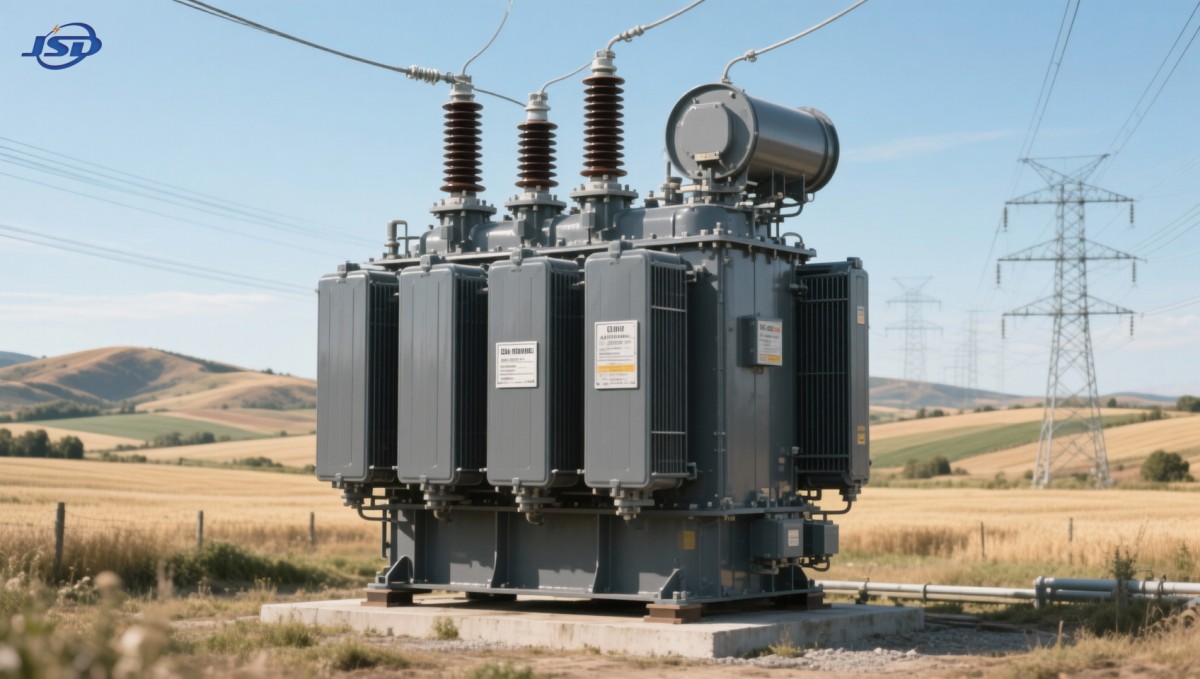
When you’re standing at the edge of a winding rural road—where power lines stretch across fields, hills, and sparse settlements—you’re not just looking at infrastructure. You’re looking at resilience. At continuity. At the quiet hum of transformers keeping clinics open, schools lit, and irrigation pumps running—often under conditions no urban grid would tolerate. For project managers overseeing rural electrification or grid modernization, the question isn’t *whether* to deploy a utility transformer—it’s *which one*, and *why that capacity makes sense today—and five years from now*.
Utility transformers in rural applications operate in a distinct reality: low load density, long feeder distances, seasonal demand swings (think irrigation peaks in summer or heating surges in winter), and exposure to dust, moisture, temperature extremes, and limited maintenance access. That’s why capacity isn’t just a number on a nameplate—it’s a strategic decision point. Too small, and voltage sags compromise equipment lifespan and service reliability. Too large, and inefficiency creeps in during light-load periods, eroding energy savings and increasing lifecycle costs.
Typically, utility transformers for rural grids span **25 kVA to 2,500 kVA**, with the most common sweet spot falling between **100 kVA and 1,000 kVA**. This range reflects real-world trade-offs:
- Below 100 kVA suits very small villages, remote telecom sites, or single-farm connections—but offers little headroom for growth or intermittent loads like solar inverters.
- Above 1,000 kVA often signals regional substations or interconnection points—not distribution-level rural nodes—unless serving clustered communities, agro-processing hubs, or microgrids integrating renewables.
What matters more than the nominal rating is how that capacity behaves *in context*. A 500 kVA unit designed for steady-state loading may falter under repeated short-term overloads from motor startups or PV export surges—unless its thermal design, insulation class, and cooling system account for dynamic duty cycles. That’s where material choice and engineering intent separate adequate units from truly fit-for-purpose ones.
Take insulation, for example. Conventional mineral oil works—but it degrades faster under thermal cycling and poses environmental risks if leaked. Jinshida’s 110kV Oil-Immersed Transformer uses FR3—a natural ester-based fluid with higher fire point, superior moisture tolerance, and biodegradability. In humid river valleys or dusty arid zones, this isn’t just “eco-friendly”—it’s operational insurance. Moisture absorption doesn’t catastrophically compromise dielectric strength; aging slows; maintenance intervals extend. And because FR3 extends paper insulation life by up to 5× compared to traditional oils, the unit’s 30+ year service horizon isn’t aspirational—it’s engineered.
 Then there’s scalability. Rural grids aren’t static. A village of 200 households today may host a cold-storage facility tomorrow—or become part of a distributed solar corridor feeding into a regional substation. That’s why Jinshida designs its 110kV units not only for primary voltage transformation but as adaptable nodes: three-phase double-winding configurations handle straightforward step-up/step-down duties; three-winding variants support multi-voltage tap-off (e.g., 110kV/35kV/10kV) for layered rural networks; autotransformer options optimize efficiency where voltage ratios permit. All meet Tier 2 Ecodesign standards—exceeding 99% efficiency—even at 30–40% load, which is typical for much of rural operation.
Certification depth matters too. When your project spans borders—say, upgrading a cross-border mini-grid linking villages in Laos and Cambodia—you need documentation that travels. Jinshida’s compliance footprint includes GB, IEC, EN, ANSI/IEEE, GOST, CSA, UL, SABS, and CE—not as checkboxes, but as verified interoperability. Each certificate represents field-tested performance: voltage regulation within ±0.5% under fluctuating reactive loads; harmonic suppression meeting IEEE 519-2022 thresholds; noise levels held below 65 dB(A) near residential clusters. These aren’t lab-only specs—they’re validated across over 50 countries, from Himalayan foothills to Sahelian drylands.
But here’s what rarely appears in datasheets: the human factor in selection. Project managers don’t choose kVA—they weigh risk. Risk of downtime during monsoon season. Risk of retrofitting costs when a new health center doubles local demand. Risk of stranded assets if policy shifts toward decentralized generation. That’s why capacity evaluation must go beyond peak load calculations. Ask:
- What’s the *load profile shape*? Is it flat, spikey, or bimodal?
- How much *future-proofing margin* does the community actually need—not just for population growth, but for EV charging, heat pumps, or agrivoltaic integration?
- Does the transformer support *smart monitoring readiness*? Even basic temperature and oil-level telemetry enables predictive maintenance—critical where technician response time exceeds 4 hours.
Jinshida embeds sensor-ready interfaces into its 110kV platform—not as add-ons, but as integral architecture. No retrofitted boxes. No compromised seals. Just native ports for IoT gateways, aligned with IEC 61850-9-2 sampling protocols. Because in rural settings, visibility *is* reliability.
None of this negates the importance of foundational discipline—proper grounding, correct vector group matching, coordinated protection schemes. But those are table stakes. What elevates a utility transformer from functional to foundational is how thoughtfully it bridges technical spec with lived reality: the farmer checking his pump at dawn, the teacher powering laptops before class, the clinic refrigerating vaccines through a brownout. Capacity isn’t abstract. It’s the difference between “power available” and “power trusted.”
So when you review tender specs or compare bids, look past the kVA label. Trace the thermal path. Check the oil’s oxidation stability. Verify the insulation system’s impulse withstand. Confirm whether “30-year life” comes from accelerated aging tests—or from decades of field validation in similar topographies and load patterns.
That’s how rural grid projects stop being about hardware—and start delivering continuity.
Then there’s scalability. Rural grids aren’t static. A village of 200 households today may host a cold-storage facility tomorrow—or become part of a distributed solar corridor feeding into a regional substation. That’s why Jinshida designs its 110kV units not only for primary voltage transformation but as adaptable nodes: three-phase double-winding configurations handle straightforward step-up/step-down duties; three-winding variants support multi-voltage tap-off (e.g., 110kV/35kV/10kV) for layered rural networks; autotransformer options optimize efficiency where voltage ratios permit. All meet Tier 2 Ecodesign standards—exceeding 99% efficiency—even at 30–40% load, which is typical for much of rural operation.
Certification depth matters too. When your project spans borders—say, upgrading a cross-border mini-grid linking villages in Laos and Cambodia—you need documentation that travels. Jinshida’s compliance footprint includes GB, IEC, EN, ANSI/IEEE, GOST, CSA, UL, SABS, and CE—not as checkboxes, but as verified interoperability. Each certificate represents field-tested performance: voltage regulation within ±0.5% under fluctuating reactive loads; harmonic suppression meeting IEEE 519-2022 thresholds; noise levels held below 65 dB(A) near residential clusters. These aren’t lab-only specs—they’re validated across over 50 countries, from Himalayan foothills to Sahelian drylands.
But here’s what rarely appears in datasheets: the human factor in selection. Project managers don’t choose kVA—they weigh risk. Risk of downtime during monsoon season. Risk of retrofitting costs when a new health center doubles local demand. Risk of stranded assets if policy shifts toward decentralized generation. That’s why capacity evaluation must go beyond peak load calculations. Ask:
- What’s the *load profile shape*? Is it flat, spikey, or bimodal?
- How much *future-proofing margin* does the community actually need—not just for population growth, but for EV charging, heat pumps, or agrivoltaic integration?
- Does the transformer support *smart monitoring readiness*? Even basic temperature and oil-level telemetry enables predictive maintenance—critical where technician response time exceeds 4 hours.
Jinshida embeds sensor-ready interfaces into its 110kV platform—not as add-ons, but as integral architecture. No retrofitted boxes. No compromised seals. Just native ports for IoT gateways, aligned with IEC 61850-9-2 sampling protocols. Because in rural settings, visibility *is* reliability.
None of this negates the importance of foundational discipline—proper grounding, correct vector group matching, coordinated protection schemes. But those are table stakes. What elevates a utility transformer from functional to foundational is how thoughtfully it bridges technical spec with lived reality: the farmer checking his pump at dawn, the teacher powering laptops before class, the clinic refrigerating vaccines through a brownout. Capacity isn’t abstract. It’s the difference between “power available” and “power trusted.”
So when you review tender specs or compare bids, look past the kVA label. Trace the thermal path. Check the oil’s oxidation stability. Verify the insulation system’s impulse withstand. Confirm whether “30-year life” comes from accelerated aging tests—or from decades of field validation in similar topographies and load patterns.
That’s how rural grid projects stop being about hardware—and start delivering continuity.

Get a Quote
Regardless of whether you require general advice or specific support, we are happy to help you.
Send Us Your Inquiry Today

Jinshida Electric remains committed to contributing to global energy development through professional manufacturing and superior service.