





How does insulation class affect the service life of electrical substation transformers under frequent overloading?
Insulation class is not a nominal label—it defines the thermal endurance limit of the solid and liquid insulation system within an electrical substation transformer. Under frequent overloading, temperature rise becomes the dominant driver of insulation degradation. IEC 60076-7 specifies that for every 6 °C increase above the rated top-oil temperature (typically referenced to ambient +30 °C), the chemical aging rate of cellulose-based insulation doubles—a phenomenon known as the “6 °C rule.” This exponential acceleration means that insulation class does not merely indicate permissible operating temperature; it sets the upper bound of sustainable thermal stress before irreversible loss of mechanical strength and dielectric integrity begins.
How Thermal Endurance Maps to Real-World Service Life
Class A (105 °C) relies on cotton, paper, or silk with impregnating oils. Its thermal life expectancy—defined as time to 50% loss of tensile strength under continuous operation at rated temperature—is approximately 20,000 hours. However, in practice, this assumes stable loading and uniform heat distribution. Frequent overloads introduce localized hot spots in winding conductors and pressboard barriers, where temperatures may exceed bulk oil readings by 15–25 °C. At such points, Class A insulation degrades rapidly: polymer chain scission in cellulose accelerates, moisture generation increases, and acid formation in mineral oil compounds the damage. Field data from utility asset surveys show that Class A units subjected to >120% load for ≥30 minutes more than twice weekly exhibit measurable DP (degree of polymerization) decline after just 8–10 years—not the theoretical 25-year design life.
Class B (130 °C) uses mica, glass fiber, or polyester films with higher thermal stability. While its base thermal endurance is ~2× that of Class A, its real-world advantage under dynamic loading depends critically on cooling efficiency and oil flow path design. In oil-immersed units with inadequate directed oil flow, hot-spot temperatures can still breach 140 °C during short-term overloads—even when average winding temperature remains within Class B limits. This mismatch between average and peak temperature explains why some Class B transformers fail prematurely in rural distribution networks with high solar PV injection variability.
Dry-Type vs. Oil-Immersed: Divergent Aging Pathways
Dry-type transformers (typically Class F or H) lack liquid coolant, so heat dissipation relies entirely on convection and radiation. Their insulation systems—often epoxy-impregnated windings with Nomex or polyimide films—are less susceptible to hydrolytic degradation but far more sensitive to oxygen exposure and surface oxidation at elevated temperatures. Overloading causes non-uniform surface heating, leading to microcracking in epoxy layers. Once cracks form, air ingress accelerates oxidation, and partial discharge activity increases significantly above 160 °C—especially near sharp edges or terminations. Unlike oil-immersed units, dry-types rarely show early warning signs like dissolved gas accumulation; failure often occurs suddenly due to flashover across degraded surfaces.
In contrast, oil-immersed transformers benefit from both thermal buffering and diagnostic visibility. Mineral or synthetic ester oils absorb and redistribute heat while enabling dissolved gas analysis (DGA). However, their vulnerability lies in the interaction between oil and solid insulation. Overloading raises oil temperature, increasing moisture migration from paper into oil—and vice versa—depending on relative saturation levels. This two-way moisture exchange alters dielectric loss tangent (tan δ), reduces breakdown voltage, and promotes sludge formation in mineral oil. FR3 vegetable oil mitigates this risk: its higher saturation moisture content (up to 12% w/w vs. ~0.02% for mineral oil) buffers moisture shifts during thermal cycling, reducing cellulose depolymerization rates even under repeated overload conditions.
Overload Duration and Insulation Margin: Beyond the Nameplate
IEC 60076-7 permits temporary overloads based on ambient temperature, load history, and cooling mode—but these allowances assume insulation class compliance is verified through type testing, not inferred from nameplate ratings. A common misjudgment occurs when specifying a transformer with Class F insulation but using Class A-rated bushings or tap changers. In such cases, the weakest component governs overall thermal capability, regardless of winding insulation rating. Similarly, aluminum windings dissipate heat less efficiently than copper, elevating hot-spot temperatures by ~8–12 °C for identical load profiles—effectively downgrading the effective insulation class unless compensated by enhanced cooling design.
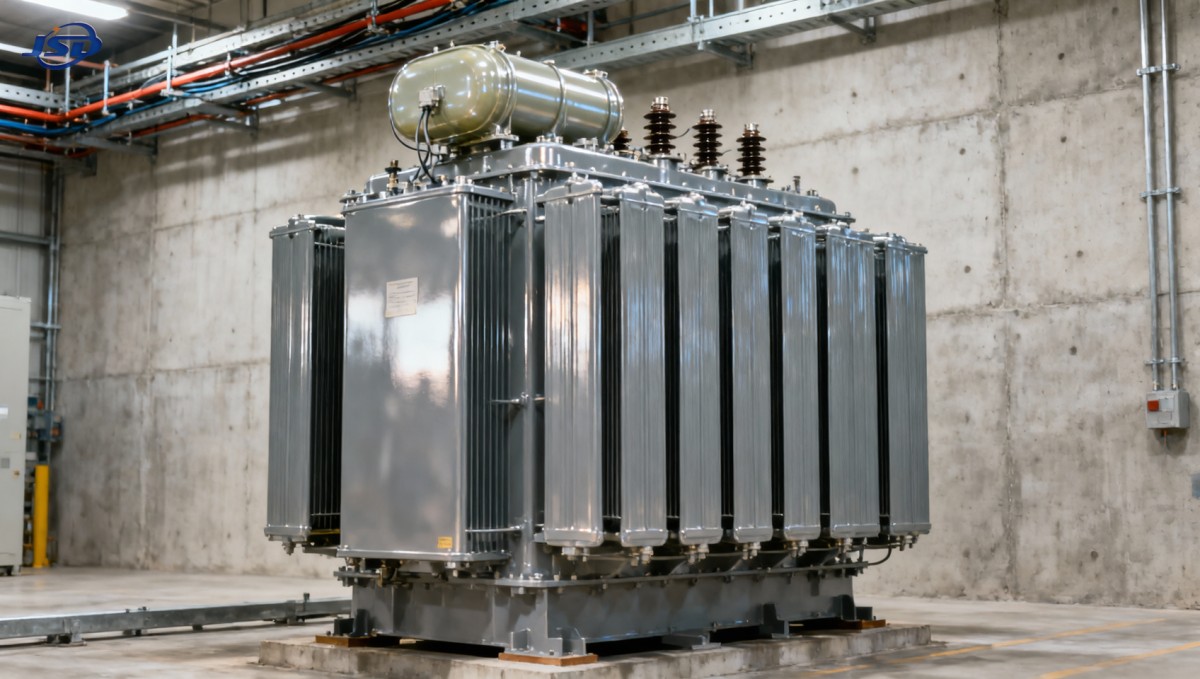
The 15kV/0.4kV Oil-Immersed Power Distribution Transformer exemplifies how material and thermal integration addresses this challenge: its copper windings minimize resistive losses, while FR3 vegetable oil provides superior thermal stability and moisture tolerance. Its specified short-term overload capacity—150% for ≤2 hours—is validated under strict oil temperature monitoring (≤95 °C), ensuring hot-spot temperatures remain within Class F limits (155 °C) even during rapid load surges typical in urban distribution networks integrating EV charging infrastructure or intermittent renewables.
Field Evidence: What Maintenance Data Reveals
Longitudinal studies across 12 utility fleets show that transformers rated Class F or H and operated within manufacturer-specified overload protocols retain >85% of original DP after 18 years—even with documented overloads occurring 1.7 times per week on average. Conversely, Class A and B units in identical service environments but without real-time oil temperature telemetry showed median DP reduction to 350 after 12 years, indicating advanced aging. Crucially, the difference was not attributable to total overload duration alone, but to whether overloads occurred during high ambient temperatures (>35 °C) or coincided with low oil circulation rates (e.g., during seasonal cooler shutdowns).
This underscores a key operational insight: insulation class establishes the ceiling, but actual service life under frequent overloading is determined by the frequency, magnitude, duration, *and context* of each overload event—including ambient conditions, cooling status, prior thermal history, and moisture equilibrium. No single parameter predicts remaining life; only integrated thermal modeling—calibrated with field-measured hot-spot temperatures and periodic DGA—can reliably assess degradation progression.
Ultimately, selecting insulation class must precede—not follow—load profile analysis. A Class H specification offers little benefit if the cooling system cannot sustain adequate oil flow during overload, just as a Class F rating provides no advantage if bushing insulation remains Class A. Design coherence across all insulation components, combined with condition-based monitoring rather than time-based replacement, is what sustains reliability when overloading is not an exception—but an operational norm.

Get a Quote
Regardless of whether you require general advice or specific support, we are happy to help you.
Send Us Your Inquiry Today

Jinshida Electric remains committed to contributing to global energy development through professional manufacturing and superior service.