





Maintenance Intervals for Oil-Cooled Substation Power Transformers
Reliable operation of an oil cooled substation power transformer is rarely the result of one major maintenance event. It comes from small, disciplined checks performed at the right time: noticing a rising oil temperature before insulation ages prematurely, correcting a minor seepage before moisture enters the tank, or investigating a changing dissolved-gas trend before it becomes a forced outage.
For after-sales maintenance personnel, the difficult question is not whether maintenance is necessary. It is how often each task should be completed, which findings require immediate action, and when a routine interval must be shortened because operating conditions have changed. A practical program combines calendar-based inspections with condition-based diagnostics. The calendar keeps essential work from being missed; the condition data tells the team where to focus its effort.
Start with operating risk, not a generic maintenance calendar
Two transformers with the same nameplate rating may need very different service intervals. A unit operating at a moderate, stable load in a clean indoor substation does not age in the same way as a transformer exposed to heat, dust, coastal salt, frequent overloads, or repeated switching events. Before setting intervals, review the transformer’s service history and current duty.
The following conditions usually justify more frequent monitoring:
- High ambient temperatures or poor ventilation around radiators and cooling equipment
- Load profiles that regularly approach rated capacity or include severe daily peaks
- Known oil leaks, previous moisture concerns, or a history of abnormal oil-test results
- Locations with dust, humidity, salt contamination, flooding risk, or heavy industrial pollution
- Frequent tap-changer operations, fault events, lightning exposure, or network disturbances
- Older units with incomplete maintenance records or evidence of insulation aging
In other words, maintenance intervals should be treated as a controlled baseline, not a promise that every transformer can safely wait the same number of months. A condition that changes quickly deserves attention quickly, regardless of what the calendar says.
A field-ready interval plan for oil-filled transformers
The schedule below is a practical framework for distribution and substation assets. Site procedures, utility requirements, manufacturer instructions, and local safety regulations should always take precedence. All intrusive work must be performed under approved isolation, grounding, and lockout/tagout procedures.
Every shift, weekly, or through remote monitoring
For critical transformers, the most valuable observations are often the simplest ones. Check top-oil temperature, winding temperature where available, load current, cooling fan or pump status, oil level indication, alarm panels, and unusual sound or vibration. Walk around the transformer and look for fresh oil beneath valves, radiators, bushings, gasket joints, and cable boxes.
A single temperature reading is less meaningful than a trend. If load has remained relatively stable but top-oil temperature is slowly increasing, investigate cooling performance, radiator cleanliness, oil level, sensor accuracy, and possible internal losses. Similarly, a sudden change in sound—a stronger hum, intermittent clicking, or fan noise that does not match the control sequence—should be recorded and assessed rather than dismissed as normal background noise.
Monthly visual and functional inspection
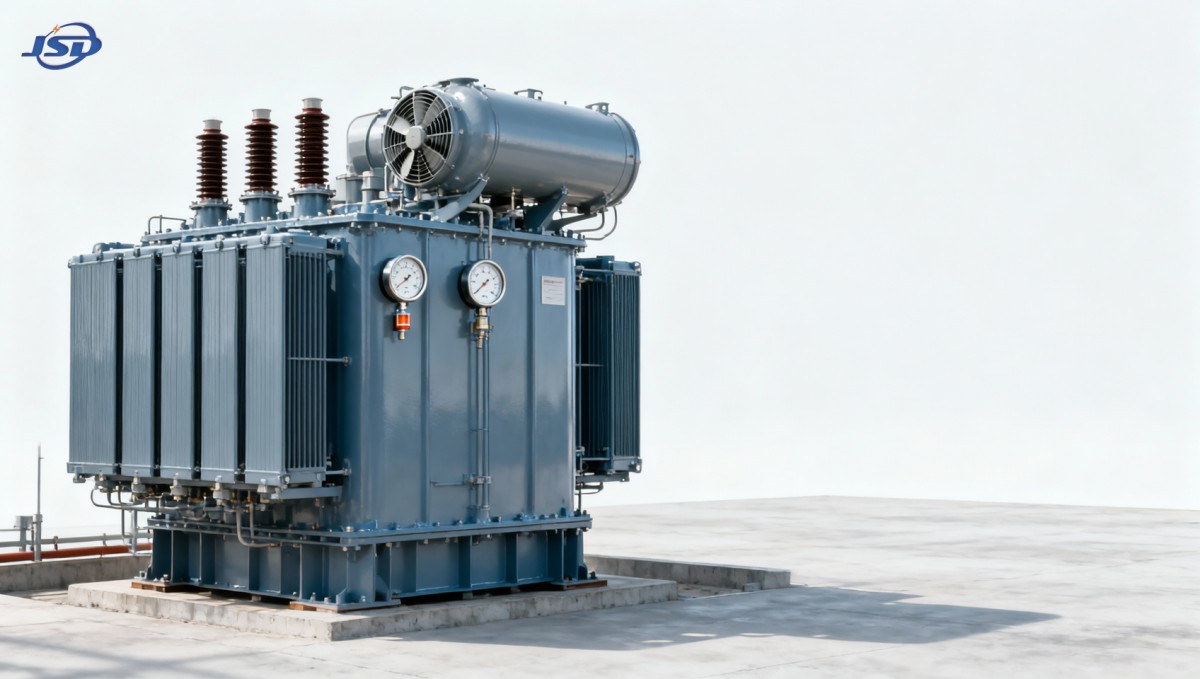
Monthly checks are a sensible minimum for many energized installations, especially where personnel can safely access the site. Inspect the exterior condition of the tank, conservator, radiators, pressure-relief device, breather, gauges, surge arresters, grounding conductors, and cable terminations. Confirm that labels remain readable and that access areas are clear of vegetation, stored materials, or standing water.
Pay close attention to the silica-gel breather. Discolored or saturated desiccant may indicate that the breather needs servicing; a damaged seal or blocked air path can allow moisture into the transformer as oil expands and contracts. Check oil-level indicators against the expected temperature range and verify that gauges are not cracked, fogged, or obviously stuck.
Where cooling fans are fitted, confirm automatic and manual operation according to the control scheme. A fan that runs continuously may point to a control issue, while a fan that fails to start under rising temperature can rapidly reduce thermal margin during peak loading.
Quarterly or semiannual checks
At three- to six-month intervals, perform a more deliberate review of condition trends. Compare load and temperature records, inspect bushing surfaces for contamination or tracking, tighten accessible external connections to the approved torque values where maintenance procedures allow, and examine grounding connections for corrosion or damage.
Infrared thermography is particularly useful during meaningful load. Scan bushings, cable terminations, radiator headers, bolted connections, cooling-control panels, and arresters. A hot connection is not automatically an internal transformer fault, but it is a warning that demands verification. Loose hardware, oxidation, unequal current sharing, or poor contact surfaces can all create localized heating.
In wet, dusty, or coastal environments, exterior cleaning may need to occur more often than the normal semiannual cycle. Contamination on bushings and terminal insulation can contribute to surface leakage and flashover risk, particularly when humidity rises after a dry period.
Annual electrical and oil-condition review
Annual maintenance is the point at which a routine visual program becomes a true condition assessment. The exact test package depends on transformer class, age, criticality, and previous results, but it commonly includes a representative insulating-oil sample and a review of protective devices.
For an oil cooled substation power transformer, oil testing may include dielectric breakdown voltage, moisture content, acidity, interfacial tension, color, and dissolved gas analysis (DGA). These tests answer different questions. Breakdown voltage and moisture help assess dielectric strength; acidity and interfacial tension can indicate oil oxidation and sludge formation; DGA can reveal developing thermal or electrical faults when interpreted as a trend.
A result outside a guideline range should not automatically trigger expensive intervention. Sampling quality, laboratory method, transformer loading, oil type, and historical data all matter. However, a rapidly changing result is often more important than one isolated value. Maintenance teams should retain test reports in a consistent asset record so that changes can be evaluated over years, not guessed from memory.
Annual shutdown work, where a planned outage is available, may also include insulation resistance testing, winding resistance checks, ratio testing, bushing assessment, functional verification of alarms and trips, and inspection of tap-changer mechanisms. Follow the manufacturer’s instructions and test only when the asset condition, isolation state, and work scope make the test appropriate.
Three- to five-year detailed service interval
A deeper inspection is usually warranted every three to five years, or sooner for heavily loaded or high-consequence units. The scope may include cleaning and servicing cooling equipment, inspecting and replacing aging gaskets, checking pressure-relief and temperature-control devices, examining internal connections where safely accessible, and reviewing the condition of oil preservation equipment.
On transformers equipped with an on-load tap changer, the tap changer often requires its own maintenance strategy because switching contacts and diverter components experience mechanical and electrical wear. Do not assume that the main tank oil condition represents the tap-changer compartment. Separate oil, separate operating counts, and separate inspection requirements may apply.
What findings should override the normal interval?
The calendar should be suspended when evidence suggests active deterioration. The following conditions merit prompt engineering review and, depending on severity, an accelerated inspection or outage plan:
- Repeated operation of pressure, temperature, gas, or differential protection alarms
- A noticeable increase in top-oil or winding temperature at comparable load
- Rapid oil-level loss, persistent leakage, or oil found near energized external components
- Sharp deterioration in moisture, dielectric strength, acidity, or DGA trends
- New bushing cracks, oil seepage around bushings, abnormal capacitance/power-factor results, or visible tracking
- Abnormal vibration, humming, internal arcing indications, or unexplained protection trips
- Cooling-system failure during high load or evidence that radiators are not transferring heat effectively
One common mistake is responding only to the visible symptom. For example, topping up oil without identifying the source of a leak may restore the level while leaving the transformer exposed to continued moisture ingress. Another is treating DGA as a pass/fail test. Gas data must be interpreted in context: gas type, concentration, rate of change, loading history, and prior results all influence the maintenance decision.
Oil management: preserve insulation life, not just oil appearance
Transformer oil serves as both an insulating medium and a coolant. Its condition is tightly linked to paper insulation life, because water, oxygen, and heat accelerate cellulose degradation. Clean-looking oil can still contain dissolved moisture or gases, while darkened oil does not always mean immediate failure. Field decisions should be based on test evidence rather than appearance alone.
When oil processing is needed, distinguish between filtration, dehydration, degassing, reclamation, and replacement. Filtration removes particles; vacuum dehydration targets moisture; degassing reduces dissolved gases; reclamation can restore certain aged-oil properties through adsorbent treatment. Each method has a different purpose. Applying the wrong treatment may improve one measured value without addressing the underlying cause.
After any oil handling activity, verify oil level, inspect for leaks, confirm that valves have returned to their proper operating positions, and update the maintenance record with oil type, quantity, laboratory results, and the reason for intervention. Good documentation is not administrative clutter—it prevents incompatible oil practices and gives the next technician a reliable starting point.
Maintenance priorities for pole-mounted distribution units
Pole-mounted transformers face a different working environment from large substation units. Access constraints, weather exposure, wildlife activity, surge events, and limited cooling clearance can shape the maintenance plan. For compact single-phase applications in rural and urban distribution, crews should give extra attention to mounting hardware, high-voltage connections, arresters, cutouts or fuses, low-voltage terminals, grounding, and the condition of the pole structure.
For example, the Pole-Mounted Oil-Immersed Single-Phase Transformer is designed for applications such as suburban networks, agricultural production, civil-building distribution, and rural power supply. With capacities from 5 kVA to 500 kVA and voltage options up to 36 kV, its maintenance requirements should still reflect actual exposure and load behavior. Built-in protection components such as fuses, surge arresters, and overload protection deserve the same careful inspection as the transformer tank itself, particularly after storms or known network faults.
For these units, a practical routine often includes visual inspection after severe weather, periodic checks for corrosion and loose mounting hardware, verification of grounding continuity, and investigation of any repeated fuse operation rather than simply replacing the fuse. Repeated operation may be telling the crew about overload, secondary faults, arrester problems, or an upstream coordination issue.
Build a record that makes the next decision easier
The best maintenance interval is one that evolves from evidence. Each service visit should capture date, load, ambient conditions, oil level, temperatures, leak locations, alarm status, test results, corrective actions, photographs where permitted, and recommended follow-up. Over time, these records reveal whether a transformer is stable, gradually aging, or changing faster than expected.
Jinshida Electric Power Technology Co., Ltd. supports power equipment applications with an emphasis on reliable manufacturing, technical service, and long-term operating performance. For maintenance teams, that same mindset is useful in the field: protect the asset through disciplined observation, verify concerns with meaningful diagnostic data, and act before a manageable condition becomes an outage.
A well-maintained oil cooled substation power transformer can provide dependable service for many years, but longevity is never accidental. Set sensible baseline intervals, shorten them when environment or condition demands it, and treat every trend—temperature, oil level, gas, moisture, or sound—as part of the transformer’s operating story.

Get a Quote
Regardless of whether you require general advice or specific support, we are happy to help you.
Send Us Your Inquiry Today

Jinshida Electric remains committed to contributing to global energy development through professional manufacturing and superior service.