





How to compare battery energy storage system safety features
How to compare battery energy storage system safety features
When a battery energy storage system is being shortlisted, safety should not be treated as a secondary checklist item behind capacity, cycle life, or price. In industrial projects, grid-connected applications, and mobile power support scenarios, safety design directly affects uptime, insurance acceptance, maintenance burden, and the consequences of a single fault. For quality control and safety managers, the more useful question is not whether a system is “safe” in general, but how its safety architecture is built, layered, tested, and matched to the real operating environment.
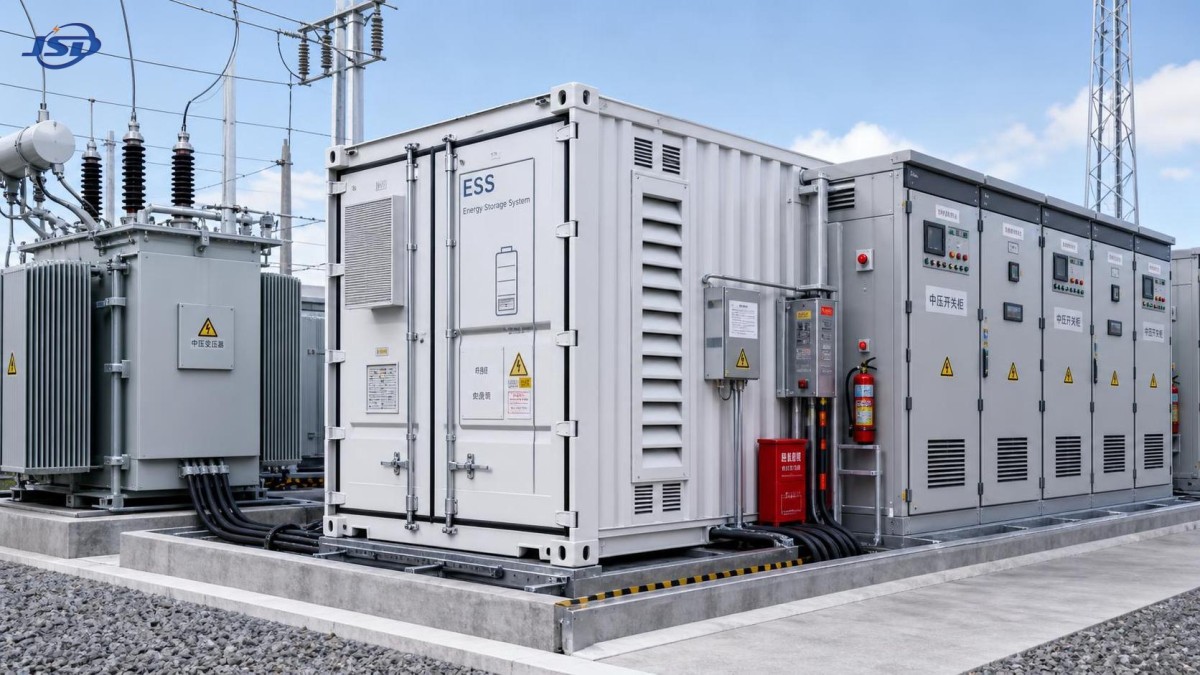
That matters even more when energy storage is deployed alongside transformers, switchgear, distribution equipment, or other core power assets. A fire event, thermal runaway propagation, or control failure inside the storage container does not stay isolated for long if the installation is integrated into a substation, industrial feeder, or renewable energy interface. The comparison process therefore needs the same rigor usually applied to critical power equipment selection.
Start with the failure path, not the brochure
A practical way to compare systems is to trace what happens when something goes wrong. If one cell overheats, how quickly is it detected? Can the module be electrically isolated? Will the event spread to adjacent cells, racks, or the enclosure? What triggers the fire suppression system, and what happens to connected transformers, inverters, and upstream protection devices during the fault?
Vendors often present safety in layers: cell chemistry, battery management system, thermal management, mechanical enclosure, suppression, and monitoring. That framework is useful, but it only helps if each layer can be connected to a fault scenario. A well-prepared supplier should be able to explain sequence, not just features. Quality and safety teams should push for that explanation early, because it reveals whether the design was engineered around risk reduction or just assembled around market expectations.
Cell chemistry and propagation resistance are not the same thing
Many buyers begin by comparing chemistry types, especially when lithium iron phosphate is positioned as a safer choice than some other lithium-ion chemistries. That comparison has value, but it is incomplete. A battery energy storage system is not made safe by chemistry alone. Thermal runaway behavior depends on cell design, module spacing, venting path, pack structure, gas management, and the control logic used to detect abnormal temperature rise.
The better question is whether the manufacturer can show how propagation risk is limited. In project reviews, this often separates mature designs from weaker ones. A system may use a conservative chemistry and still expose the site to unnecessary risk if adjacent cells are packed too tightly, fault energy cannot be contained, or hot gases have no controlled release path.
For installations near transformer yards or compact industrial electrical rooms, this point becomes operational rather than theoretical. Reduced propagation risk can simplify site protection coordination and may influence where the system can be positioned relative to other equipment, subject to local codes and project engineering review.
Thermal management deserves closer scrutiny than many teams give it
If one safety feature is frequently underestimated during selection, it is thermal management. Buyers tend to check whether the system is air-cooled or liquid-cooled and stop there. In reality, the comparison should go deeper: temperature uniformity, sensor layout, response speed, redundancy, maintenance accessibility, and behavior under partial cooling failure all matter.
A battery system operating in high ambient temperature, dusty industrial conditions, or mobile outdoor service cannot rely on nominal cooling performance alone. Ask how the system handles blocked airflow, pump or fan failure, sensor drift, and high-load operation during summer peaks. Also check whether alarms are graded. A good design does not jump from “normal” to “shutdown” without intermediate warning and controlled derating.
This is especially relevant in power distribution environments, where transformers and storage units may share constrained footprints and elevated ambient heat. Jinshida Electric Power Technology, with its focus on transmission and distribution equipment, quality management, and stable power support for grid, industrial, and new energy applications, reflects an approach that many serious buyers now expect: the storage system cannot be evaluated in isolation from the broader electrical infrastructure around it.
Fire protection should be compared as a full strategy
Fire safety comparison often gets reduced to one line item: “suppression included.” That is not enough. The full strategy should cover early warning, gas or smoke detection, enclosure segmentation, automatic suppression, pressure relief, and emergency shutdown logic. In some projects, the distinction between fire detection and thermal runaway detection becomes important, because they are not triggered by the same conditions and may require different sensor arrangements.
Ask what initiates the suppression event and whether it is local, centralized, or both. If the suppression system activates, does the battery remain energized? Is there a coordinated response with the power conversion system and upstream disconnects? Can the event be safely handled without exposing maintenance staff to delayed hazards during inspection or restart?
For portable or temporary deployments, this comparison becomes even more practical. A trailer-based solution used at infrastructure sites, emergency support locations, or temporary industrial loads may face changing surroundings and inconsistent site controls. In that context, a solution such as the 50kW/100kWh Portable Trailer Energy Storage System should be judged not only on mobility, but on whether its protective design remains effective when site conditions are less predictable than in a fixed plant.
Monitoring and fault response often reveal the true maturity of the platform
A modern battery energy storage system produces a great deal of operational data, but data volume is not the same as useful protection. Safety managers should compare what is measured, how often it is sampled, how alarms are prioritized, and what automatic actions the control system can take. Cell voltage deviation, insulation monitoring, overcurrent events, enclosure temperature, and communication faults are all common signals, yet their value depends on response logic.
One useful test during evaluation is to ask for the fault matrix. What happens under overtemperature, sensor failure, communication interruption, or inconsistent state-of-charge readings? Does the system isolate the affected string, reduce power, lock out restart, or continue running with warnings? The answer says a lot about whether the platform was designed for safe degradation or only for normal operation.
This is also where integration with transformers and distribution assets matters. Fault response should align with site protection philosophy. If the storage unit trips abruptly under a non-critical condition, it can create nuisance events for connected loads or switching equipment. If it fails to trip under a serious condition, the risk is obvious. Good coordination requires electrical and control design to be reviewed together rather than by separate procurement streams.
Compliance matters, but check what is actually being claimed
Certification and standards compliance should absolutely be part of the comparison, but this area is easy to misunderstand. Different markets, project owners, insurers, and authorities may ask for different evidence. Instead of accepting a general statement that the system is “certified,” verify which component, subsystem, or complete assembly is covered, and under which standard. Cell-level documentation is not the same as pack-level or system-level validation.
The same caution applies to fire testing, enclosure ratings, and transport suitability. If the project is moving across jurisdictions, the requirements may shift again. Usually, this needs to be confirmed against project specifications and local regulations rather than assumed from a global brochure. Quality managers should request document traceability, revision dates, and the scope of each test or certificate.
Mechanical design is a safety issue too
In transformer and distribution projects, teams are used to paying attention to creepage distance, enclosure strength, grounding continuity, and cable entry quality. Energy storage should be reviewed with the same mindset. The enclosure, rack structure, internal segregation, ingress protection, and service clearances all affect safety in day-to-day operation.
This becomes more important when equipment is exposed to vibration, transport movement, outdoor weather, or repetitive relocation. A portable unit may be electrically sound on paper, yet still introduce risk if connectors loosen, doors are difficult to secure, or maintenance access encourages unsafe workarounds. These are not minor usability concerns; they often shape the real safety record of field-deployed equipment.
A simple comparison framework for decision-making
What often gets missed during vendor comparison
Three gaps appear repeatedly in selection reviews. One is assuming that all battery management systems provide the same level of protection. They do not. Another is separating electrical design review from operational safety review, even though the two are tightly linked. The third is focusing on normal-state efficiency while giving too little weight to abnormal-state behavior.
For companies working across transmission, distribution, and industrial power applications, these gaps are not trivial. Jinshida Electric’s positioning around R&D, manufacturing discipline, and rigorous quality management reflects a broader truth in this market: the supplier’s process capability often matters as much as the visible hardware. A storage system meant to support grid construction, manufacturing facilities, or new energy projects has to be consistent in production, not just well presented in a technical document.
If you are comparing offers now, ask each supplier to walk through one credible fault scenario from detection to isolation, shutdown, site alarm, and inspection readiness. That conversation usually tells you more than another slide listing safety features. For final decisions, align the review with the project’s actual environment: transformer proximity, load profile, ventilation limits, emergency response conditions, maintenance access, and local compliance requirements. A battery energy storage system that looks similar on paper can behave very differently when those details are put back into the picture.

Get a Quote
Regardless of whether you require general advice or specific support, we are happy to help you.
Send Us Your Inquiry Today

Jinshida Electric remains committed to contributing to global energy development through professional manufacturing and superior service.