





How Mining Dust and Vibration Affect Distribution Transformer Reliability
How Mining Dust and Vibration Affect Distribution Transformer Reliability
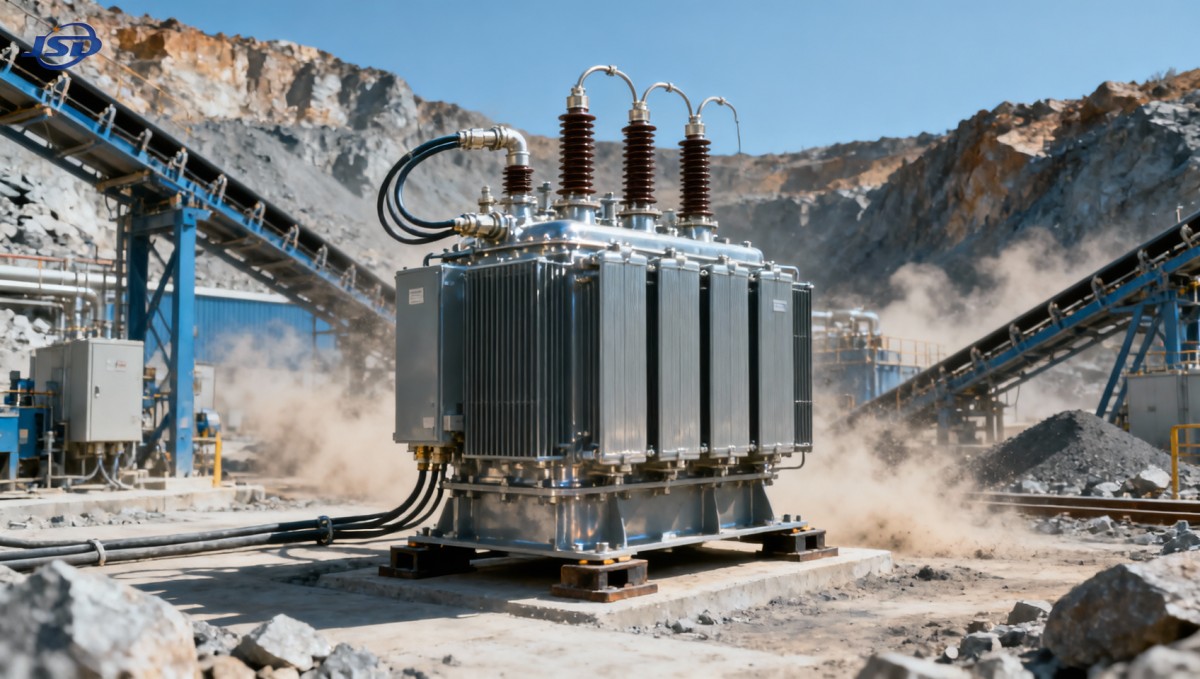
A distribution transformer in a mining site rarely operates in the clean, stable conditions assumed by a basic nameplate review. It may sit beside a crusher, near a conveyor transfer point, on a mobile substation skid, or at the edge of an open-pit haul road. Fine mineral dust enters every available gap. Vibration travels through steel structures and cable trays. Moisture, temperature swings, and heavy cyclic loads add further stress.
For quality and safety teams, the concern is not simply whether a transformer can energize at commissioning. The more important question is whether it can maintain insulation integrity, stable connections, adequate cooling, and protective-function reliability after months or years of exposure. A failed distribution transformer for mining operations can stop pumps, ventilation, conveying systems, dewatering equipment, processing lines, or underground auxiliary power. In some situations, the immediate safety consequence is more serious than the repair cost.
Dust and vibration are often treated as separate maintenance issues. In practice, they interact. Dust raises operating temperature and can support surface tracking when moisture is present; vibration gradually loosens the interfaces that should keep current paths, seals, and internal assemblies secure. A transformer may look acceptable during a quick walk-around while these mechanisms are already developing inside.
Dust Is Not Just a Housekeeping Problem
Mining dust varies widely. Coal dust, silica-bearing rock dust, metallic ore fines, cementitious dust around processing plants, and salt-laden material near coastal mines do not behave in exactly the same way. Some are highly abrasive. Some retain moisture. Some may become electrically conductive when mixed with water or process residues. The site-specific dust profile matters when defining enclosure protection, cleaning intervals, and inspection priorities.
The first visible effect is usually blocked cooling. Dust accumulates on radiator fins, fan guards, heat exchangers, cabinet filters, and cooling-air paths. On an oil-filled unit, reduced heat dissipation can increase oil and winding temperatures under the same load. On dry-type equipment, packed dust around ventilation paths can be equally troublesome. Higher temperature accelerates insulation ageing; it also makes a marginal connection or overloaded circuit less forgiving.
The less obvious risk is contamination on insulating surfaces. Bushings, cable terminations, surge arresters, and low-voltage connection compartments are particularly exposed. A dry layer of dust may appear harmless, but when condensation, rain ingress, washdown water, or process humidity occurs, the surface can become a leakage path. Repeated wet-and-dry cycles can lead to tracking, local heating, carbonized marks, or flashover under unfavorable conditions.
Dust also hides early warning signs. Oil seepage, cracked gaskets, loose hardware, corroded earth connections, and discolored terminals are harder to identify when the transformer tank and control cabinet are uniformly dirty. This is one reason cleaning should be tied to inspection, not treated as a cosmetic activity completed after inspection.
How Vibration Turns Small Defects into Electrical Failures
Vibration in mining facilities is not always dramatic. Continuous low-level vibration from crushers, mills, screens, pumps, and conveyors can be more damaging over time than a single obvious impact. The transformer itself produces normal magnetostriction-related vibration, but external mechanical vibration adds a different load path through the plinth, base frame, cable connections, and enclosure.
Bolted electrical joints are a common weak point. Thermal expansion and contraction already work against connection torque. Add vibration, and terminal lugs, busbar joints, neutral links, earthing conductors, and control wiring can gradually lose the contact pressure needed for a low-resistance connection. The result may be localized heating, insulation discoloration, nuisance tripping, or eventually arcing. A loose connection is especially dangerous because it can be difficult to detect before heat damage becomes substantial.
Mechanical movement can also affect cable glands, flexible conduits, relay terminals, meter wiring, fan assemblies, and cabinet door seals. In skid-mounted or containerized substations, vibration should be assessed as a system issue rather than a transformer-only issue. A robust transformer mounted on an inadequate foundation can still suffer from damaged auxiliaries or stressed cable terminations.
Inside the tank or dry-type enclosure, severe or sustained vibration may contribute to winding-support movement, core-clamp loosening, or changes in the mechanical restraint of internal components. These conditions require professional assessment; they cannot be confirmed by external inspection alone. Abnormal sound, a new vibration pattern, unexplained temperature behavior, or changes in electrical test trends are reasons to investigate rather than simply tighten external bolts and move on.
Where Quality Control Should Focus Before Installation
The best time to manage environmental risk is before the transformer arrives at the mine. Procurement specifications should describe the actual location: distance from crushing and screening areas, likely dust burden, altitude, ambient-temperature range, moisture exposure, access for cleaning, expected vibration source, and whether the unit will be installed indoors, outdoors, on a skid, or in a compact substation.
A general-purpose outdoor transformer may be suitable for some mine sites, but not for every location within a mine. There is a practical difference between a fenced substation on stable ground and a unit beside a transfer tower. Quality reviews should avoid accepting broad wording such as “industrial duty” without checking how the cooling arrangement, terminal compartment, cable entry, sealing method, paint system, mounting base, and auxiliary equipment address the stated environment.
Acceptance inspection should include more than document review. Inspect transportation restraints, lifting damage, external coating condition, gasket compression, bushing condition, radiator and fan security, marshalling-box sealing, and the continuity of grounding connections. For oil-filled units, oil level and any visible evidence of leakage deserve attention before energization. Torque records for accessible primary and secondary connections are useful only if the specified torque values and the responsible inspection process are clear.
Installation Decisions That Reduce Future Maintenance Burden
Moving a transformer a short distance away from a dust source can be more effective than adding layers of maintenance later. Where layout permits, avoid placing distribution equipment directly downwind of transfer points, crusher discharge areas, or unsealed haul routes. Do not create a protected enclosure that solves dust ingress but leaves inadequate ventilation; overheating is simply substituted for contamination.
The foundation should be level, stiff, and designed around the actual equipment mass and dynamic environment. If vibration cannot be avoided, assess the full arrangement: transformer base, anti-vibration elements if specified, anchoring hardware, flexible cable sections, bus duct supports, and adjacent structures. Soft mounting without proper engineering can create movement rather than control it. Likewise, rigidly restraining cables can transfer vibration into terminals.
Earthing must remain inspectable. Mine sites often have corrosive soil conditions, mobile equipment, fault-current considerations, and complex bonding arrangements. A buried or dust-covered earth connection that is never checked is not a reliable safety control. The grounding design and testing approach should follow the project electrical design and applicable local requirements.
Maintenance: Use Condition Signals, Not Only Calendar Dates
A fixed monthly inspection schedule is useful, but it is not enough on its own. Cleaning and inspection frequency should increase during dry, high-production periods, after changes in nearby processing equipment, and following events such as flooding, blasting activity, severe storms, or abnormal trips. The operating environment can change faster than the maintenance plan.
A practical inspection routine normally combines visual checks with targeted condition monitoring. Look for dust loading that blocks cooling surfaces, new oil traces, degraded seals, corrosion, cracked insulators, damaged glands, loose support hardware, and signs of heat at cable or busbar joints. Infrared inspection can help identify temperature differences at accessible terminations and cooling components, but readings must be interpreted under meaningful load conditions. A cool connection during low load does not prove that it will remain sound at peak demand.
For oil-filled transformers, the maintenance plan may also include oil tests and electrical diagnostic testing selected according to transformer criticality, age, loading, and observed condition. The appropriate test scope is a technical decision; it should not be copied blindly from another site. For dry-type units, attention often centers on winding cleanliness, ventilation, insulation surfaces, temperature sensors, enclosure condition, and signs of partial discharge or localized overheating where applicable.
One recurring mistake is using compressed air indiscriminately. It can drive dust deeper into controls, damage delicate components, or disperse hazardous material. Cleaning methods must suit the equipment design, isolation procedure, dust type, and site safety rules. Never allow cleaning to become an informal live-work practice.
Protection Design Must Match the Mine’s Electrical Reality
Transformer reliability is also influenced by what happens upstream and downstream. Large motor starts, variable-speed drives, power-factor correction equipment, long cable runs, fault levels, and intermittent process loads can affect heating and insulation stress. Harmonics and voltage variation should be assessed from the system rather than assumed away. A transformer that is mechanically well protected can still have a shortened service life if its loading and waveform environment were not properly considered.
This is particularly relevant where mines add solar generation to reduce diesel consumption or support remote power systems. The transformer selection principles overlap, but the application duty is different. For grid-connected photovoltaic projects, a Step-Up Transformer for Photovoltaic Power Stations may be configured for inverter-side voltages such as 0.315kV, 0.4kV, or 0.69kV and grid-side levels of 10kV, 20kV, or 35kV, depending on project design. Equipment built to IEC 60076 and specified with suitable cooling, tap range, copper windings, and harmonic considerations can be relevant to renewable integration, but it should not be treated as a direct substitute for a mine-duty distribution transformer without reviewing the site environment and load profile.
A Reliable Transformer Starts with a More Exact Question
Instead of asking for a “rugged transformer,” ask what dust is present, where vibration originates, how the unit will be cooled and cleaned, which loads are critical, and how faults will be detected before they become outages. Those answers lead to better decisions on enclosure arrangement, mounting, terminal protection, inspection access, spare strategy, and condition monitoring.
Jinshida Electric Power Technology Co., Ltd. approaches power equipment reliability through engineering review, controlled manufacturing processes, and quality management suited to transmission and distribution applications. For mining-related projects, the useful conversation is not limited to rated capacity and voltage. It should include the physical installation, maintenance capability, environmental exposure, and the real consequence of transformer failure. That is where dust and vibration stop being background conditions and become design inputs that can be managed.

Get a Quote
Regardless of whether you require general advice or specific support, we are happy to help you.
Send Us Your Inquiry Today

Jinshida Electric remains committed to contributing to global energy development through professional manufacturing and superior service.