





Where a 15 kva generator silent makes more sense than an open unit
Where a 15 kva generator silent makes more sense than an open unit
Choosing between an open-frame generator and a 15 kva generator silent model sounds simple until the unit has to run near people, inside a project schedule, or under local noise restrictions. On paper, both may deliver similar backup capacity. In practice, the difference often shows up in complaints, placement limits, weather exposure, and how comfortable the site is once the generator is actually working.
For many end users, power rating gets all the attention. Noise, enclosure design, ventilation path, and installation flexibility get noticed later—usually when it is expensive to change direction. A 15 kVA set sits in an interesting middle ground. It is large enough to support a home backup system, a small workshop, a telecom point, a retail operation, or selected equipment on a construction site, but still compact enough that location and operating conditions matter a lot.
That is exactly where a silent model often starts to make more sense than an open unit.
The real question is not power alone
An open generator is usually chosen for accessibility, simpler structure, and sometimes a lower upfront price. Service teams often like the easy access. In controlled industrial environments, where the set is placed in a dedicated generator room or far from occupied areas, that can be a reasonable choice.
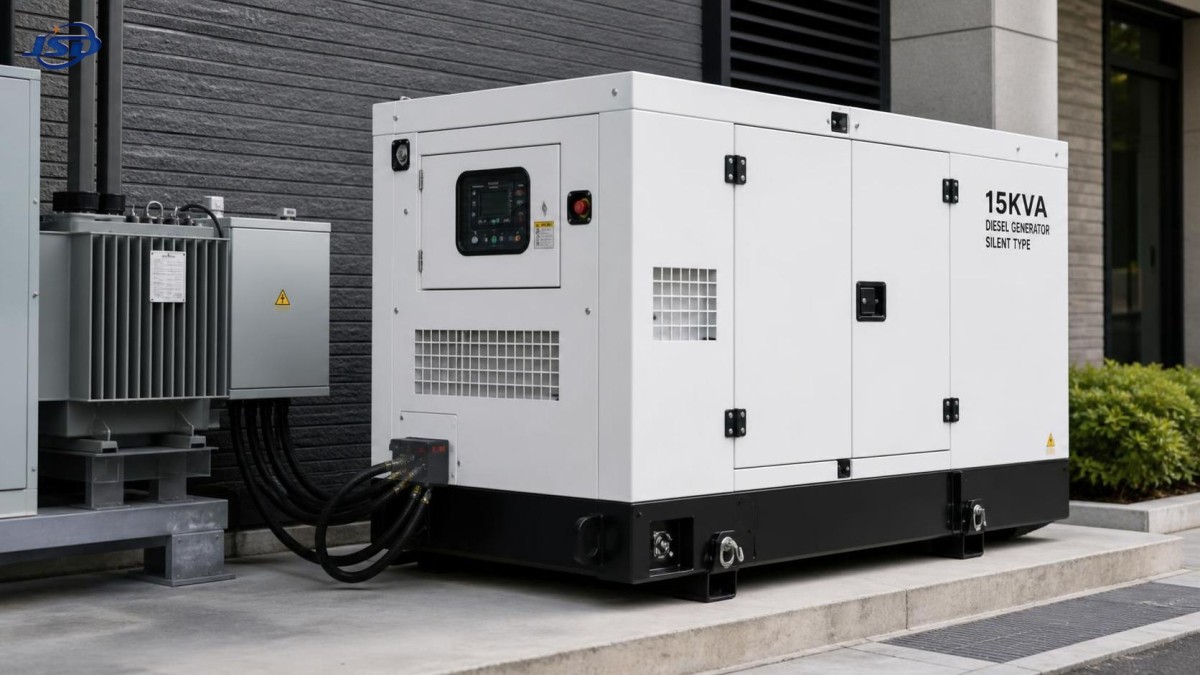
But end users rarely operate in ideal conditions. They place the generator behind a shop, beside a house, near a boundary wall, under a temporary shelter, or close to staff who need to work next to it. In those situations, the acoustic enclosure is not a luxury feature. It changes where the unit can be installed and how often it can run without creating friction.
A silent generator also usually arrives with a more integrated package: canopy, sound attenuation, some degree of weather shielding, and a neater footprint. That matters when the buyer is not building a full generator room around the equipment.
Where silent models are the better fit
Residential backup is the most obvious example. A 15 kva generator silent can cover essential loads for many homes or villas, depending on the actual starting current of pumps, air conditioning, kitchen equipment, and other circuits. In a home setting, the issue is rarely whether the generator can start. The issue is whether the household, and the neighbors, can tolerate it for several hours. Open units become tiring faster than buyers expect, especially at night or during longer outages.
Small commercial sites come next: cafés, clinics, convenience stores, offices, and service shops. These businesses often need backup power during customer-facing hours. Even when local regulations do not fully prohibit a noisy set, the customer experience can suffer. A loud generator outside a clinic or small hotel sends the wrong message. It also makes communication harder for staff.
Construction sites are a bit more nuanced. On a remote site, an open unit may be acceptable. On an urban renovation project, a school expansion, or a night-shift municipal job, silent models are much easier to justify. Noise can trigger complaints long before fuel use or maintenance cost becomes the deciding factor.
Then there are sensitive environments—temporary event support, roadside maintenance, health-related spaces, and mixed-use buildings. In these places, a generator is not judged only by output. It is judged by how little disruption it causes.
Noise is only part of the advantage
People often reduce the comparison to “quiet versus loud,” but the enclosure changes more than sound level. A silent canopy can help protect the generating set from dust, light rain exposure, accidental contact, and general site mess. It can also make transport and placement feel more finished, especially for end users who are not operating within a large industrial maintenance system.
That said, not every silent unit is automatically better. Poor canopy design can create heat management problems, difficult maintenance access, or vibration issues. This is where manufacturer capability matters. Companies working across power transmission and distribution equipment tend to pay closer attention to system stability, operating safety, and quality control rather than treating the generator as a stand-alone commodity. Jinshida Electric Power Technology Co., Ltd., for example, positions its work around reliable power support for grid construction, industrial manufacturing, new energy, and infrastructure projects. That kind of engineering mindset matters because backup equipment should be evaluated as part of a broader power solution, not just by brochure appearance.
In some user setups, especially where outages are frequent but not always long, it is also worth looking beyond the generator alone. A hybrid arrangement using storage to handle short-duration demand and a generator for extended backup can reduce runtime, noise exposure, and fuel consumption. In that context, products such as 51.2V Stackable LiFePO4 Energy Storage Battery may enter the conversation—not as a substitute in every case, but as part of a cleaner and quieter power strategy.
When an open unit can still be the smarter buy
Silent models are not universally better. If the generator will stay in a dedicated plant area, far from personnel and residential boundaries, an open unit may be more practical. The same applies when the installation already includes a proper acoustic room, exhaust routing, ventilation design, and security measures. In those cases, paying for a canopy may duplicate what the site already provides.
Open units can also be easier to service quickly, especially where technicians need frequent access or the operating environment is managed by trained staff. For some industrial buyers, that matters more than noise. The problem is that many end users assume they have industrial-style conditions when they really do not. A corner behind a warehouse is not the same thing as a designed generator bay.
So the better question is this: are you buying a generator, or are you also buying the infrastructure needed to make that generator acceptable where it will run?
What to check before deciding
A lot of poor buying decisions happen because the buyer compares headline price only. A better comparison includes these practical checks:
One more thing: ask for the noise measurement condition, not just the noise number. Sound figures can be presented in different ways, and comparison without test distance or operating condition can be misleading. The same caution applies to fuel use. Without a stated load condition, those numbers are hard to compare honestly.
The transformer and distribution side should not be ignored
Even though the buying decision here focuses on a generator, the surrounding power system still matters. In small commercial and infrastructure applications, trouble often comes from switching, cable sizing, grounding, transfer arrangements, or mismatched downstream equipment—not from the engine itself.
That is one reason companies with experience in transmission and distribution equipment can add value to the conversation. A generator that is quiet but poorly integrated into the site power scheme is still a bad solution. Voltage behavior under changing load, coordination with protection devices, and the quality of the transfer setup all influence how “reliable backup” feels in real use.
If your site already uses batteries or is planning a phased backup system, the earlier-mentioned 51.2V Stackable LiFePO4 Energy Storage Battery type of storage can also make sense in that broader architecture. The practical benefit is not just energy storage itself, but fewer generator starts for very short events, which is often easier on both users and equipment.
A useful rule of thumb
If people will regularly hear the generator, see it, work beside it, or complain about it, a 15 kva generator silent usually deserves serious priority. If the site already has proper enclosure infrastructure and the unit can operate away from occupied areas, an open set may still be justified.
Buyers often regret underestimating noise and installation constraints more than they regret paying for a better enclosure. The cheapest option at delivery is not always the simpler option six months later. Before deciding, map the real operating location, the load sequence, and the hours the set may need to run. That quick exercise usually makes the right answer much clearer.

Get a Quote
Regardless of whether you require general advice or specific support, we are happy to help you.
Send Us Your Inquiry Today

Jinshida Electric remains committed to contributing to global energy development through professional manufacturing and superior service.