





How long can a 10kw generator silent run before refueling is needed
How long can a 10kw generator silent run before refueling is needed? For operators, the practical answer is never a single number. A quiet generator rated at 10 kW may run only a few hours in one site condition and much longer in another, even if the same model is used. What decides the result is usually not the rated power on the nameplate, but the relationship between tank capacity, actual load, fuel quality, ambient temperature, and the condition of the engine and fuel system.
For daily users, this matters because runtime is not just a technical detail. It affects shift planning, fuel delivery, site safety, noise management, and whether connected equipment can stay online without interruption. In industrial plants, temporary power systems, construction work, infrastructure maintenance, and backup applications, estimating runtime correctly helps avoid one of the most common operating mistakes: assuming that “10 kW” tells you how long the machine will last on one tank.
Why there is no universal runtime figure
A silent 10 kW generator is designed to reduce operating noise through an enclosed canopy, sound insulation, and controlled airflow. That enclosure improves usability in urban projects, night operation, telecom sites, hospitals, and facilities where noise limits matter. But the enclosure itself does not determine runtime. Fuel consumption does.
The basic runtime calculation is simple in principle:
Runtime = usable fuel tank volume ÷ actual fuel consumption per hour
The difficulty is that actual fuel consumption changes continuously with operating conditions. Most generators are more efficient at moderate, stable load than at very low or highly fluctuating load. So two operators using the same 10kw generator silent unit may report very different refueling intervals.
Manufacturers sometimes publish fuel consumption values at 50%, 75%, and 100% load. If that data is available for your specific set, it is the best starting point. If it is not available, any estimate should be treated as approximate rather than exact.
Tank size is the first variable operators should check
When people ask how long a generator can run, they often focus on engine power and ignore the fuel tank. In real use, tank size is usually the first limiting factor.
A 10 kW silent generator may be offered with very different tank capacities depending on design purpose. Compact portable units may prioritize size and mobility, while stationary or trailer-mounted versions may have larger integrated tanks for longer shifts. Some projects also use external fuel tanks, but then local safety rules, spill prevention, and connection integrity become part of the decision.
Another point that gets missed: not all fuel in the tank is always usable. In practice, operators should not plan to consume the full nominal tank volume. A safety margin is needed to avoid drawing sediment, air entry, or unexpected shutdown before scheduled refueling. For that reason, “advertised tank capacity” and “practical operating fuel” are not always the same.
Load level changes runtime more than many new users expect
The most important operating factor is load percentage. A generator supplying 3 kW continuously behaves very differently from one carrying 8 kW to 9 kW for long periods. Higher electrical load generally means more fuel burned per hour.
For operators, the useful question is not “What is the rated power?” but “What is the average real load over time?”
That includes:
- continuous running load
- motor starting surges
- cyclic loads such as pumps and compressors
- reactive loads that affect engine effort indirectly through generator behavior
- temporary peaks during startup or process switching
A common mistake is to total equipment nameplate values and assume that equals real generator demand. In field operation, some loads cycle on and off, while others have poor power factor or high inrush current. Silent generators used for mixed jobsite loads often see uneven demand profiles, which makes runtime harder to predict from a simple average.
As a general operating judgment, a generator working at moderate, stable load is usually easier to plan than one running near maximum capacity or one repeatedly jumping between low and high demand.
What “silent” changes—and what it does not
The word “silent” is widely used in the market, but operators should read it as “low-noise” rather than literally silent. The enclosure, muffler design, and cooling path affect sound performance, but they also influence ventilation and heat rejection. If the unit is installed in a poorly ventilated area, engine temperature may rise, which can affect performance and, in some cases, fuel efficiency.
So while a 10kw generator silent model is often preferred where noise limits apply, it still needs proper clearance, airflow, and routine inspection. Running a low-noise set in a cramped corner to reduce perceived sound at the work area can create a different problem: poor cooling and unstable operation.
Typical runtime expectations: think in ranges, not promises
Without a confirmed manufacturer fuel consumption chart and tank specification, it is not responsible to give a guaranteed number of hours. Still, for operator understanding, it is reasonable to say that runtime commonly falls into a broad range depending on configuration and load.
A 10 kW silent diesel generator with a modest built-in tank may cover a partial shift under heavier load, while a version with a larger tank and lighter average load may run through a longer shift before refueling. In other words, “overnight capable” or “full-day capable” depends less on the 10 kW rating itself and more on whether the set was designed for standby duty, rental use, site support, or continuous field operation.
If you need a reliable answer for your own unit, the practical method is better than guesswork:
- confirm actual tank capacity from equipment documents;
- identify the typical load profile, not only peak load;
- check manufacturer fuel use data if available;
- measure real operating hours over several shifts;
- build a site-specific refueling schedule with safety margin.
This approach is far more useful than relying on generic internet estimates.
Maintenance condition has a direct effect on refueling frequency
Operators sometimes treat increased fuel use as normal aging, but in many cases it points to maintenance issues. A dirty air filter, injector problems, contaminated fuel, poor combustion, carbon buildup from prolonged low-load running, or incorrect servicing can all reduce efficiency.
For silent generators, blocked airflow paths inside the enclosure are especially worth checking. If cooling air intake or exhaust passages are restricted by dust, debris, or poor placement, the set may run hotter and less efficiently. Heat does not always produce immediate shutdown, but it often shows up first as unstable performance, heavier fuel use, or nuisance alarms.
Routine checks that support predictable runtime include:
- fuel filter condition
- air filter cleanliness
- engine oil level and service interval
- coolant condition where applicable
- battery and starting reliability
- fuel line leakage or loose connections
- load bank testing or periodic performance verification
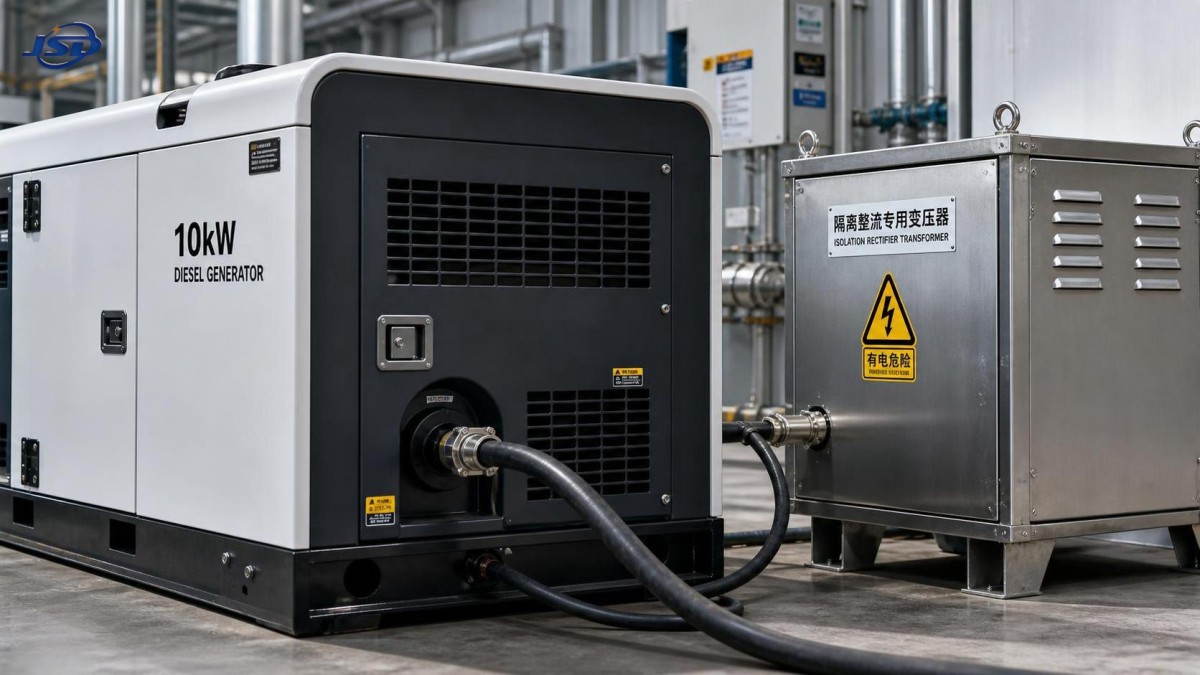
For operators in industrial environments, power quality upstream and downstream also matters. In some systems, generators support rectification, isolation, or specialized electrical equipment where transformer coordination affects the overall load behavior. In that context, components such as the Isolation and Rectifier Special Transformer are relevant not because they change the generator’s fuel tank size, but because they influence how power is conditioned and used in the broader system. Stable electrical design often leads to more predictable generator loading, which helps runtime planning.
Fuel quality and storage practices are often underestimated
Two generators with identical ratings can show different operating behavior if fuel quality differs. Water contamination, sediment, microbial growth in stored diesel, or long storage periods can reduce combustion quality and increase the risk of filter blockage. That does not just threaten engine health; it also makes runtime estimates less dependable.
Operators responsible for temporary or remote sites should pay attention to:
- how long fuel has been stored
- whether tanks are protected from water ingress
- whether transfer containers are clean
- whether site refueling introduces dust or debris
- whether seasonal fuel suitability is being observed
Where local fuel standards or treatment practices are uncertain, runtime planning should include extra caution. A unit that should have completed a shift may require earlier shutdown if fuel filters clog or combustion becomes unstable.
Ambient conditions also change the answer
Altitude, temperature, and humidity can affect engine output and operating efficiency. High ambient temperature raises cooling demand. High altitude reduces available oxygen, which can reduce engine performance unless the equipment is rated or adjusted for that environment. Under these conditions, an operator may find that the generator carries load less comfortably and consumes fuel differently than expected.
This is particularly relevant on infrastructure projects, remote worksites, and export markets where equipment may be installed in climates very different from the factory test environment. Runtime estimates should always be validated in the real site condition when power continuity is critical.
How operators can estimate runtime more accurately in the field
The most reliable field method is simple recordkeeping. After several operating cycles, you can establish a realistic consumption pattern for your own machine.
Track these four items each shift:
- start fuel level
- stop fuel level or refilled volume
- running hours
- average connected load or major equipment in use
After a few days, patterns become visible. You may discover, for example, that the set runs much longer during lighting and control-duty shifts than during pump-starting or compressor-heavy work. That gives a much stronger basis for refueling decisions than a generic specification sheet alone.
If the generator supports a repetitive industrial process, this data can also reveal whether the load profile is appropriate. In some cases, resizing loads, sequencing startups, or improving associated power components can reduce stress on the generator. Systems involving conversion equipment may also benefit from better coordination with devices such as an Isolation and Rectifier Special Transformer, depending on the application architecture.
Common misunderstandings that lead to poor runtime planning
Several misconceptions appear repeatedly in field use.
“Rated power tells me the runtime.”
It does not. Rated power tells you the maximum output capability under defined conditions, not how many hours the fuel supply will last.
“Low load always means ideal fuel economy.”
Not necessarily. Running diesel generators at excessively low load for long periods can cause inefficient combustion and maintenance issues, including wet stacking in some cases.
“Silent models need less attention because they are enclosed.”
The enclosure reduces noise exposure but also hides problems if inspections are neglected. Airflow, leaks, vibration, and early warning signs can be missed more easily.
“If the unit ran 10 hours last time, it will do the same next time.”
Only if load, temperature, maintenance condition, and fuel quality are similar. Runtime is a moving operating result, not a fixed product feature.
What matters most for stable daily operation
For most operators, the useful goal is not chasing the maximum possible hours before refueling. It is building a safe and repeatable operating window. In practice, that means refueling before the tank reaches a critical low level, keeping the load within a sensible range, maintaining clean fuel and airflow, and documenting real consumption rather than relying on assumptions.
If you are responsible for a 10kw generator silent unit in industrial or infrastructure service, the best working answer is this: refueling is needed when your site-specific fuel consumption reaches the usable limit of the tank, and that point is shaped mainly by load, tank design, operating environment, and maintenance discipline. Once those variables are understood, runtime stops being a guess and becomes something you can plan with confidence.

Get a Quote
Regardless of whether you require general advice or specific support, we are happy to help you.
Send Us Your Inquiry Today

Jinshida Electric remains committed to contributing to global energy development through professional manufacturing and superior service.