





When does a 10kva silent diesel generator make sense for backup power?
When a 10kVA Silent Diesel Generator Is the Right Backup Choice
A 10kva silent diesel generator sits in a very practical middle ground. It is not a whole-facility power plant, and it is not just a light-duty portable unit for a few lamps and chargers. It makes sense when the goal is to keep a limited but important load running during an outage, without creating the noise problems that often come with conventional open-frame diesel sets.
That usually means backup power for site offices, small workshops, telecom support points, pump controls, security systems, refrigeration for selected circuits, retail POS equipment, or a small group of essential machines. In other words, it is a solution for continuity, not for powering everything as if the grid never failed.
In the power equipment field, this distinction matters more than many first-time buyers expect. Teams often focus on the generator rating first, but the better question is simpler: what exactly must stay on, for how long, and under what installation conditions?
The capacity fits selective backup, not unlimited backup
A 10kVA set is usually chosen when the real load is modest and disciplined. If the site only needs emergency lighting, a control panel, a small air compressor, a few office loads, or one water pump at a time, this size can be very sensible. If the plan is to support multiple motors starting together, large HVAC, welding equipment, or a full production line, it is generally too small.
This is where experience matters. Many backup failures are not caused by poor generator quality, but by poor load planning. A motor may have a starting current several times higher than its running current. A site may calculate connected load on paper and still end up with nuisance trips because starting sequence, power factor, or surge demand was ignored. A 10kva silent diesel generator works well when the load profile is stable, predictable, and prioritized.
If the backup list keeps growing during project discussions, that is often a sign to pause and recalculate rather than forcing everything onto the same unit.
Noise is not a side issue in many real installations
The “silent” part is often what makes this generator category attractive. In remote construction zones, noise may not be the first concern. But in urban commercial buildings, schools, clinics, mixed-use properties, roadside service points, and temporary installations near occupied spaces, acoustic performance can decide whether the generator is acceptable at all.
A silent enclosure does not make a diesel generator silent in the literal sense, but it usually lowers noise enough to make operation more manageable. That matters during nighttime outages, maintenance testing, and longer utility interruptions. For facilities that must remain operational without disturbing staff, nearby tenants, or the public, that is a practical advantage rather than a marketing feature.
It is still worth checking the actual sound rating method, measurement distance, and site layout. Walls, exhaust routing, and reflective surfaces can change the real experience significantly.
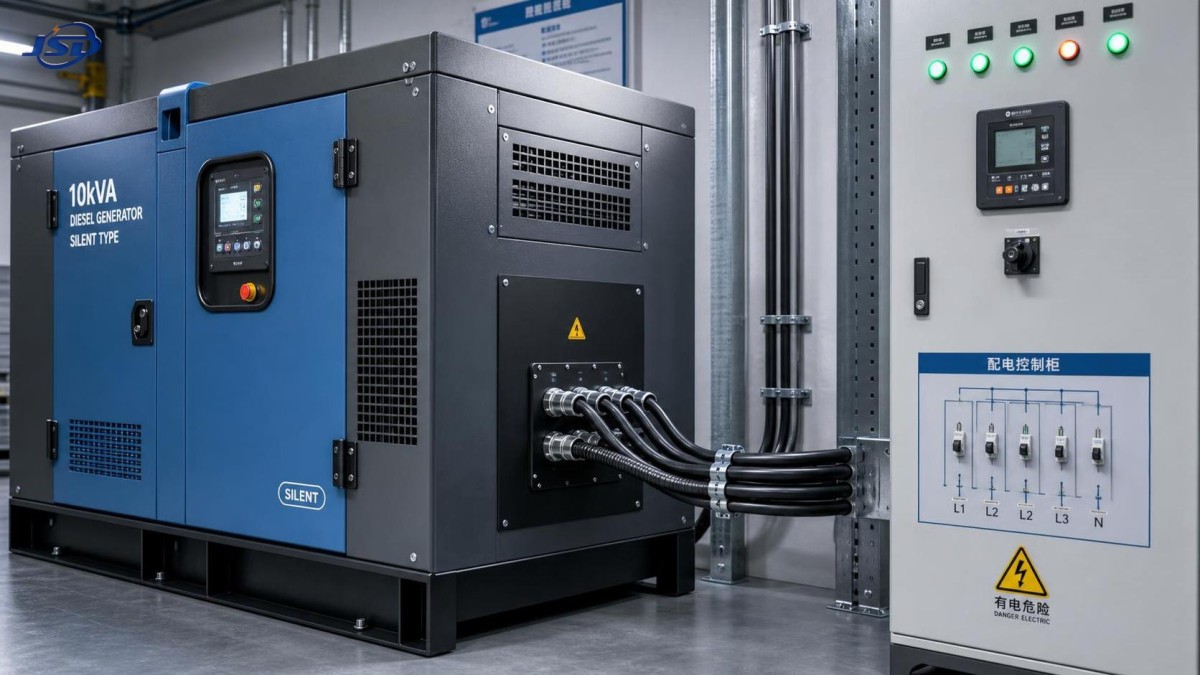
Common situations where this size makes sense
One good fit is a small commercial facility that cannot afford a complete shutdown but does not need full building backup. Think of a convenience store keeping lighting, billing systems, and a few refrigeration points alive, while larger nonessential loads remain off.
Another is a field project or temporary site office. Construction teams, utility contractors, and civil engineering crews often need reliable standby support for communication equipment, laptops, basic lighting, and instrument charging. Here, diesel remains attractive because fuel is relatively easy to store and transport compared with building a permanent electrical infrastructure for a short-term project.
Small industrial support applications also come up often. A workshop may not need to keep all machines running during a grid failure, but it may need controlled shutdown capability, selected safety systems, or limited process continuity. In these cases, a backup generator is protecting operations from disorder, not simply replacing the entire utility supply.
There are also infrastructure support roles. In the broader power sector, companies involved in transmission and distribution equipment know that reliability is not only about the main network. Auxiliary systems, field maintenance points, and control-related loads sometimes need local standby power. Businesses such as Jinshida Electric Power Technology, which work across power transmission and distribution equipment, usually approach backup power with this systems view: equipment sizing has to match the actual duty, site conditions, and reliability target rather than just the nameplate.
When it does not make sense
A 10kVA unit is a poor fit when the outage strategy depends on running large inductive loads, multiple air-conditioning systems, heavy pumps, or broad building coverage. It is also not ideal where emissions rules, fuel storage constraints, or extremely long run-time expectations make diesel operation difficult.
Another weak fit is a site with very sensitive electronic loads that cannot tolerate transfer interruption or waveform instability from an improperly matched setup. In those cases, the discussion usually shifts beyond generator size and toward transfer systems, UPS support, harmonic sensitivity, and load conditioning.
Some buyers also choose this size because it is affordable up front, then discover they actually needed a larger standby strategy. That is not really a generator problem; it is a planning problem.
What to check before deciding
Before concluding that a 10kva silent diesel generator is enough, it helps to work through a short list of practical questions:
- What are the essential loads, and which ones can stay off?
- Are there motors or compressors with high starting current?
- How long do typical outages last in that location?
- Is the site noise-sensitive or close to occupied areas?
- Will the unit run occasionally for emergency use, or frequently as a routine backup source?
- What are the local requirements for exhaust, ventilation, fuel storage, and electrical connection?
These questions sound basic, but they often reveal whether the project needs a compact standby generator, a larger diesel package, or a hybrid setup.
Generator-only thinking is not always the best approach
In some commercial and industrial projects, especially where power quality, fuel cost, or runtime strategy matters, backup planning no longer starts and ends with diesel. A small generator may still be the right emergency source, but it can be complemented by storage or managed load control. For sites with fluctuating demand, short interruptions, or a desire to reduce generator runtime, an energy storage layer may be worth reviewing alongside conventional standby equipment.
That is why some facility owners compare diesel backup with systems such as the 125kW/261kWh Commercial & Industrial Energy Storage System. Not because the two options are interchangeable in every case, but because outage duration, transfer expectations, maintenance planning, and on-site operating conditions can lead to very different technical choices. A quiet battery-based system may suit short-duration continuity needs, while diesel remains stronger for longer outages where fuel logistics are manageable.
A few mistakes that come up again and again
One common mistake is sizing from total connected load without deciding what is truly critical. Another is forgetting ambient and installation realities. A generator placed in a hot, poorly ventilated corner may not behave the same way it does in a catalog scenario. Cable runs, switchgear coordination, and transfer switching also affect whether the backup system works smoothly when an actual outage happens.
Maintenance expectations are another blind spot. Diesel backup is dependable when it is exercised, serviced, and fueled properly. It is less dependable when it sits neglected and is only tested after the grid fails. For smaller facilities, this becomes a management issue as much as a technical one.
There is also a misconception that “silent” means no operational planning is needed. In reality, enclosure design, airflow, exhaust routing, and access for service still need attention. Quiet operation is valuable, but it does not replace good installation practice.
So, when does it make sense?
A 10kva silent diesel generator makes sense when backup power has a clear boundary: limited essential loads, realistic runtime needs, manageable fuel logistics, and an environment where noise control matters. It is especially suitable for small facilities and project sites that need dependable standby power without the cost, footprint, or disturbance of a larger unit.
It makes less sense when the load list is vague, motor starting demand is high, or the expectation is full-site continuity. In those cases, the better decision is usually not to stretch a small generator beyond its role.
If there is one practical takeaway, it is this: decide the backup mission before choosing the machine. Once the critical loads, transfer method, runtime target, and site constraints are clear, the right answer usually becomes much easier to see.

Get a Quote
Regardless of whether you require general advice or specific support, we are happy to help you.
Send Us Your Inquiry Today

Jinshida Electric remains committed to contributing to global energy development through professional manufacturing and superior service.