





What affects the real purchase cost of a 5kva silent generator
The real purchase cost of a 5kVA silent generator is rarely the number printed on the quotation. For procurement teams, the visible price is only the entry point. What matters in practice is whether the unit can start reliably under load, run within acceptable noise limits, hold voltage steadily for connected equipment, and remain serviceable over its working life without creating repeated hidden costs. A low initial offer can quickly become an expensive decision if fuel burn is high, maintenance intervals are short, spare parts are difficult to source, or the generator is oversized or undersized for the actual duty cycle.
That is why buyers searching this topic are usually trying to answer a more practical question: how do you compare offers that all appear similar on paper, but may behave very differently once deployed? In small backup or mobile-power applications, a 5kVA silent generator often sits at the point where budget sensitivity is high, but operational expectations are still serious. It may support a site office, telecom point, maintenance team, field service crew, security system, temporary facility, or a small commercial load. In those environments, a poor buying decision shows up quickly in fuel expense, noise complaints, unstable output, or downtime during critical hours.
Why the quotation alone tells you very little
Two suppliers can quote a similar 5kVA silent generator and still be selling very different levels of value. One may include a better engine platform, a heavier canopy, a higher-grade alternator, more complete controller protection, and clearer after-sales terms. Another may reach a lower headline price by using thinner enclosure material, lighter acoustic insulation, a smaller fuel tank, limited factory testing, or components from less stable supply channels.
For procurement, the mistake is not buying cheap; the mistake is buying on incomplete cost visibility. In most real projects, the purchase price should be tested against five cost layers:
- energy consumption over expected runtime;
- maintenance frequency and service labor;
- failure risk and business interruption exposure;
- compliance with local noise, emissions, or site rules【待核实】;
- end-of-life support, spare parts, and replacement timing.
If those layers are not discussed before PO issuance, they will show up later as operating friction.
Load profile is the first cost variable, not the catalog rating
A common procurement error is to treat 5kVA as a complete selection answer. It is not. The real issue is the load profile: what equipment will be connected, what the startup current looks like, how long the generator will run each day, and whether the load is stable or fluctuating. A unit that is technically “sufficient” on average may still be a poor fit if motors, compressors, pumps, or certain electronic devices create startup spikes or sensitivity to voltage variation.
Undersizing usually produces the obvious problems: overloaded operation, nuisance trips, shortened engine life, and unstable power quality. Oversizing is less dramatic but still costly. Small diesel or gasoline generators operating for long periods at very light load can suffer from inefficient fuel use, carbon buildup, and poor operating economics. So the question is not just whether the generator can supply 5kVA, but whether that rating matches the site’s normal and peak demand in a healthy operating band.
Procurement should ask for the expected load in kW, the power factor assumption, motor-start conditions if any, and the planned daily runtime. Without that, quotation comparison is largely cosmetic.
Fuel efficiency often outweighs small differences in purchase price
For units expected to run regularly rather than only during emergencies, fuel becomes one of the biggest real cost drivers. A cheaper generator with weaker fuel efficiency can surpass the price of a better unit in a relatively short period, especially in remote operations where fuel delivery itself adds logistics cost.
Buyers should be cautious with broad fuel-consumption claims unless the supplier states the test condition clearly. Consumption at 25%, 50%, 75%, and full load can differ significantly, and some quoted figures come from ideal lab conditions rather than realistic field use. The useful comparison is fuel use at your expected operating load, not the supplier’s most favorable point.
In practical RFQ review, it helps to request:
- fuel consumption by load band;
- tank capacity and runtime at typical load;
- recommended fuel grade;
- whether the engine platform has established local service support.
This is where many low-price offers begin to lose their advantage.
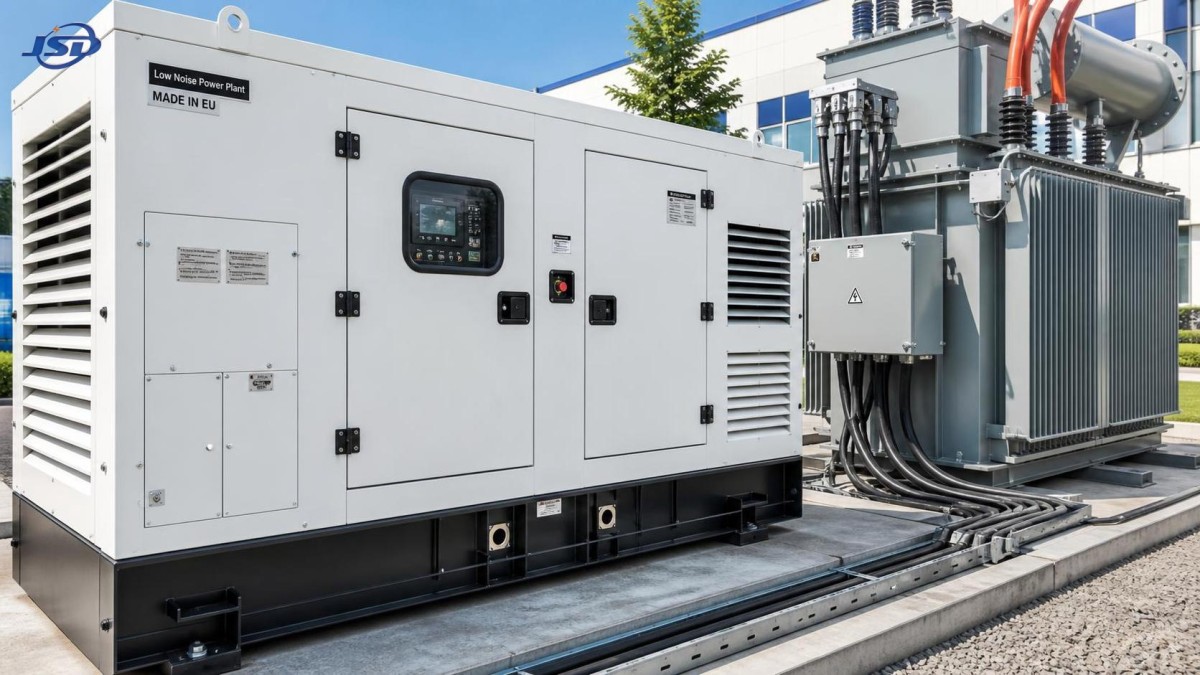
“Silent” is not a uniform standard
Many buyers focus on the word silent as if it were a fixed performance category. It is not. Noise performance depends on measurement distance, test environment, enclosure design, engine speed, load condition, cooling-air path, and vibration isolation. One supplier may quote dB(A) at 7 meters, another at 1 meter, and another may not define the condition at all. Without a consistent basis, the number is not comparable.
Noise matters not just for comfort, but for site acceptance. Residential-adjacent projects, commercial compounds, temporary urban work sites, hospitals, schools, telecom shelters, and night operations may all face stricter practical limits. If a quieter canopy requires a higher upfront cost, that premium may be justified if it avoids complaints, restricted operating hours, or additional acoustic treatment after installation.
Ask what exactly supports the noise claim: canopy structure, insulation material, muffler grade, base-frame rigidity, and cooling design. Noise reduction that compromises heat dissipation can create another type of cost later.
Alternator quality is easy to overlook and expensive to regret
In procurement discussions, engine brand often gets more attention than the alternator, but the alternator has direct impact on voltage stability, temperature rise, insulation life, and compatibility with the connected load. If the generator will supply sensitive electronics, controls, communication devices, or variable small industrial loads, output quality matters more than many buyers expect.
A weaker alternator may still pass a basic factory demonstration, yet perform poorly when ambient temperature rises, load steps change quickly, or long operating hours accumulate. This does not always fail dramatically; sometimes it shows up as shortened equipment life, nuisance alarms, charger faults, or unstable system behavior that operations teams struggle to trace back to the generator.
Procurement should review alternator origin, insulation class, voltage regulation method, protection details, and test records where available. If documentation is vague, the low quote may be hiding the exact component that determines long-term reliability.
The control panel and protection logic affect operating risk
For a small generator, buyers sometimes accept minimal instrumentation in order to reduce cost. That can be shortsighted. Basic but dependable protection for low oil pressure, high coolant temperature, overload, short circuit, and abnormal voltage or frequency can prevent failures that cost far more than the panel upgrade.
If the unit is intended for rental fleets, distributed sites, or unattended backup use, control simplicity and alarm clarity also matter. A procurement team should think beyond commissioning and ask who will operate the set six months later. If local operators cannot quickly understand alarms, restart procedures, and maintenance reminders, service calls increase and downtime lengthens.
In broader power distribution projects, this same logic applies across equipment classes. For example, when a temporary or auxiliary generating solution interfaces with packaged distribution infrastructure such as European-Type Compact Substation, the buying decision depends not only on equipment price but on how reliably each part fits into the larger operating scheme. Small power equipment and medium-voltage distribution assets are different categories, but procurement discipline is the same: lifecycle cost comes from system behavior, not isolated catalog numbers.
Transportation, installation, and site adaptation can distort the budget
A 5kVA unit is small compared with industrial standby systems, but logistics still affect real cost. Shipping method, export packing, lifting points, wheel kit or skid configuration, battery isolation, pre-delivery fluids, and destination climate preparation all influence what the buyer ultimately pays. If the unit is going to a hot, dusty, humid, coastal, or high-altitude environment, site adaptation may be necessary. Those costs are often omitted from early quotations.
Buyers should also confirm what is included at delivery. Is the battery supplied and installed? Is the fuel tank integrated? Are cables, earthing accessories, ATS compatibility, manuals, spare filters, and commissioning checks included? The more fragmented these details are, the more likely the total purchase cost will drift upward after order confirmation.
After-sales support is part of the purchase price, whether visible or not
Procurement teams sometimes separate equipment cost from service cost too aggressively, especially for smaller units. In reality, supplier responsiveness, spare parts availability, technical documentation, and warranty handling have a direct monetary value. If a generator fails during a peak business period and the supplier cannot provide fast diagnosis or replacement parts, the initial savings become irrelevant.
Good after-sales support does not always mean a large global brand, but it does require evidence. Buyers should look for service scope, standard response expectations, parts lead time, warranty exclusions, and availability of consumables in the target market. If the supplier cannot state these clearly, the risk premium belongs in the procurement decision even if it does not appear on the quote sheet.
Certification and compliance should be checked early, not after selection
Depending on the destination market and project type, the generator may need to satisfy certain safety, emissions, noise, or electrical conformity requirements【待核实】. These may vary by country, application, and end user. Procurement should avoid assuming that all export-ready products carry the same compliance status. A unit that is technically acceptable but lacks the right documentation can trigger delays at customs, rejection by project owners, or the need for costly substitution.
This point is especially relevant when the generator is being purchased for resale, EPC supply, public projects, or multinational customer frameworks. In those cases, documentation quality itself becomes part of product value.
What to compare when offers look similar
When several quotations are close in price, procurement can bring discipline to the decision by using a short comparison framework instead of debating headline cost only.
This kind of side-by-side review often changes the ranking of suppliers.
Some common assumptions that deserve more scrutiny
Several purchasing assumptions sound reasonable but often fail in practice.
- “A small generator is a simple product, so differences between suppliers are minor.” In reality, component quality and assembly discipline can vary widely.
- “If it is called silent, it will be acceptable for any noise-sensitive site.” The measurement basis matters.
- “For backup use, fuel efficiency is less important.” That is true only if runtime is genuinely rare and short.
- “Any 5kVA unit can run a 5kVA load.” Starting current, power factor, and load type can change that conclusion quickly.
- “Warranty length tells you everything.” The practical value of a warranty depends on exclusions, response, and parts availability.
These are not technicalities. They are the points where procurement outcomes usually diverge from procurement expectations.
The better question is total fit, not lowest entry price
For a procurement professional, the real purchase cost of a 5kVA silent generator is the cost of obtaining dependable power with manageable operating burden over the intended service life. That means the best offer is often the one that aligns load profile, fuel performance, acoustic requirements, component quality, documentation, and support capability with the actual business scenario.
If the buying team can define how the generator will be used, what failure would cost, and which technical details affect day-to-day operation, the comparison becomes much clearer. At that point, the market noise around “cheap,” “silent,” or “high quality” matters less than the evidence behind the quote. That is usually where a sound procurement decision starts.

Get a Quote
Regardless of whether you require general advice or specific support, we are happy to help you.
Send Us Your Inquiry Today

Jinshida Electric remains committed to contributing to global energy development through professional manufacturing and superior service.